

The Significance of Alcohol’s Impact on Reproductive Health
The long-term effects of alcohol on the reproductive system are significant and well-documented. Research indicates that chronic alcohol consumption disrupts hormonal regulation, impairs fertility, and causes damage to the reproductive organs in both males and females.
Primary Reproductive Consequences of Chronic Alcohol Use
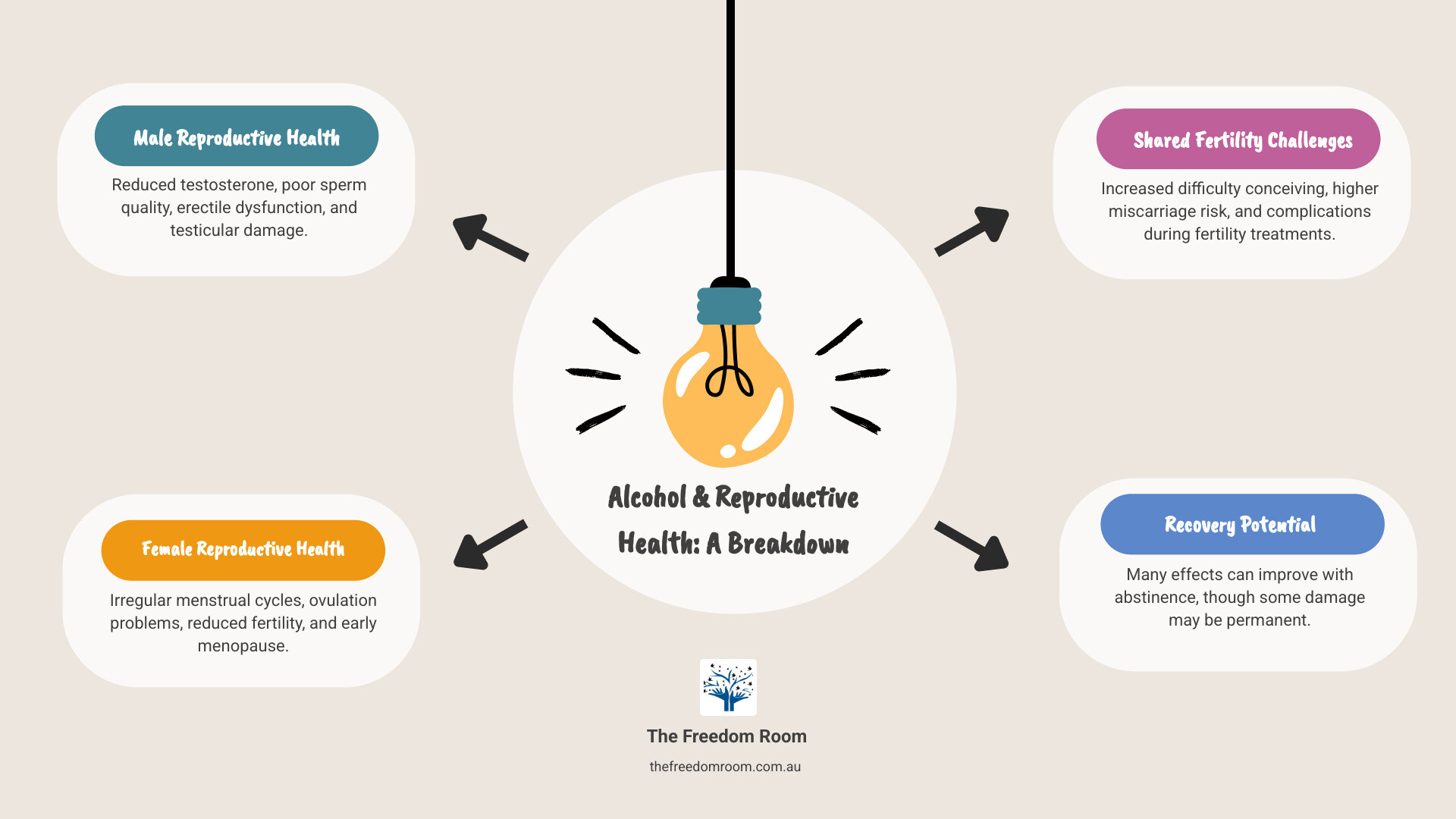
Key long-term reproductive effects of alcohol include:
- For men: Reduced testosterone levels, diminished sperm quality, erectile dysfunction, and testicular damage.
- For women: Irregular menstrual cycles, ovulatory dysfunction, reduced fertility, and the potential for early menopause.
- For both: Increased difficulty in conceiving, a higher risk of miscarriage, and complications during fertility treatments.
- Recovery potential: Many effects can improve with abstinence, although some damage may be permanent.
The reproductive system is particularly vulnerable to the toxic effects of alcohol. Even moderate consumption can interfere with the delicate hormonal balance required for optimal reproductive function.
The Physiological Impact of Alcohol
Studies reveal that women consuming four or more standard drinks per week exhibit decreased live birth rates compared to those with lower consumption. For men, alcohol damages spermatogenic cells and can suppress testosterone production for days following consumption.
The impact extends beyond conception. Alcohol disrupts the hypothalamic-pituitary-gonadal axis—the critical communication system between the brain and the reproductive organs. This disruption affects a wide range of functions, from hormone production to sexual function.
Understanding these risks is essential for making informed decisions regarding alcohol consumption and reproductive health. This knowledge is critical for individuals planning conception, undergoing fertility treatment, or seeking to protect their long-term wellbeing.
The Effects of Chronic Alcohol Use on Male Reproductive Health
Chronic alcohol consumption can significantly compromise male reproductive health, with consequences that may develop over extended periods. The long term effects of alcohol on the reproductive system in men encompass a range of issues affecting fertility and sexual function.
The male reproductive system depends on a precise hormonal balance regulated by the hypothalamus, pituitary gland, and testes. Chronic alcohol use disrupts this equilibrium, leading to lasting damage.
Impact on Testosterone and Hormone Levels
Testosterone is fundamental to male reproductive health, regulating libido and sperm production. Alcohol acts as a potent suppressor of testosterone, with studies showing it can lower levels within 30 minutes of consumption.
Disruption of the Hypothalamic-Pituitary-Gonadal (HPG) Axis
Research highlights alcohol’s impact on male hormones. One study demonstrated that healthy men consuming a significant quantity of whisky daily for 30 days experienced a substantial drop in testosterone levels, eventually matching those of men with chronic alcoholism. This decline is caused by alcohol’s disruption of the hypothalamic-pituitary-gonadal (HPG) axis—the communication pathway between the brain and reproductive organs.
Alcohol interferes with the cerebral release of key hormones, including gonadotropin-releasing hormone (GnRH), luteinizing hormone (LH), and follicle-stimulating hormone (FSH). As LH signals the testes to produce testosterone and FSH supports sperm maturation, interference with these signals compromises the entire system.
Direct Toxic Effects and Hormonal Imbalance
The damage is not solely hormonal. Acetaldehyde, a toxic byproduct of alcohol metabolism, directly damages the Leydig cells in the testes responsible for testosterone production. Furthermore, alcohol increases the aromatisation of testosterone into oestrogen, leading to elevated female hormone levels in men.
For men with alcohol-related liver disease, the correlation is stark: over 90% present with low testosterone, illustrating the profound link between liver function and reproductive health. Further details are available in scientific research on male hypogonadism.
Alcohol’s Effect on Sperm and Fertility
Beyond hormonal disruption, alcohol directly impairs sperm quality and production. Semen analysis in chronic drinkers reveals widespread damage.
Spermatogenic arrest, an interruption in sperm development, affects approximately 50% of heavy drinkers, compared to 20% of men without alcohol-related issues. This results in a significantly lower count of mature, healthy sperm. Alcohol also damages Sertoli cells, which are essential for nourishing developing sperm, thereby impairing spermatogenesis at every stage.
A study involving over 16,000 men found that heavy drinking negatively affected all primary semen parameters: semen volume, sperm concentration, sperm motility (movement), and sperm morphology (structure). These individuals also exhibited smaller testicular size, indicating physical atrophy.
While moderate drinking has less severe effects, any level of alcohol consumption can impact fertility. For couples attempting to conceive, these changes can be significant. Additional information can be found in this study on alcohol and semen quality.
Contribution to Sexual Dysfunction
Chronic alcohol use is a common contributor to erectile dysfunction (ED) and other forms of sexual dysfunction. Although some individuals may use alcohol to reduce anxiety related to intimacy, long-term use exacerbates such issues.
Testosterone suppression is a contributing factor to ED, but the damage is also neurological and vascular. As a central nervous system depressant, alcohol can cause nerve damage over time, disrupting the neural signals required to achieve an erection. It also impairs the vascular system, which can reduce blood flow to the penis.
Men with chronic alcohol problems frequently experience conditions such as delayed or absent orgasm, premature ejaculation, and diminished libido. These issues can cause psychological distress that may persist even after achieving abstinence. Addressing alcohol consumption is a critical first step toward restoring sexual health.
The Extensive Impact of Alcohol on Female Reproductive Health
Women experience distinct challenges related to alcohol’s impact on reproductive health. The long term effects of alcohol on the reproductive system in women can be severe, affecting menstrual cycles, conception, and pregnancy outcomes.
Due to differences in body composition and enzyme activity, women metabolise alcohol differently than men, meaning smaller quantities can produce more pronounced physiological effects. These consequences can manifest at every stage of a woman’s reproductive life.
Disruption of the Menstrual Cycle and Ovulation
The menstrual cycle is governed by a precise hormonal balance. Chronic alcohol use disrupts this balance, leading to irregular cycles and related health concerns.
Alcohol interferes with the hypothalamic-pituitary-ovarian (HPO) axis, the communication network between the brain and ovaries. This can result in delayed menstruation, amenorrhoea (absent periods), and unpredictable cycles, which complicates conception planning.
The disruption extends beyond cycle timing. Alcohol can suppress the luteinizing hormone (LH) surge required for ovulation, leading to anovulation (the absence of egg release). Even social drinking may induce these effects, with some regular drinkers experiencing a temporary cessation of normal cycles.
Alcohol consumption also tends to lower progesterone while increasing oestrogen levels. This hormonal imbalance affects not only conception but also mood, energy levels, and overall wellbeing. For detailed information, research provides an overview of alcohol’s effects on female reproductive function.
Impact Across Different Life Stages
Alcohol’s influence extends beyond the primary childbearing years. During adolescence, even moderate drinking can interfere with pubertal development and delay the onset of reproductive maturation by disrupting essential growth hormones during this period of hormonal changes.
During menopause, alcohol continues to disrupt hormonal balance. It can also accelerate bone density loss by interfering with oestrogen, which is vital for bone health. This effect, combined with the direct toxic effects of alcohol on bone cells, increases the risk of osteoporosis, leading to bone fragility and a higher incidence of fractures in heavy drinkers.
Alcohol, Conception, and Ovarian Reserve
For individuals attempting to conceive, chronic alcohol consumption presents multiple barriers, affecting both the difficulty of conceiving and the quality of oocytes (eggs).
Reduced fertility manifests in several ways. Alcohol is toxic to the ovarian reserve (the finite supply of eggs), and heavy consumption can accelerate this decline, effectively aging the reproductive system. The remaining eggs may exhibit poorer quality, reducing their viability for successful fertilisation and thereby lowering the chances of conception.
Alcohol also negatively affects the uterine environment by altering the receptivity of the endometrial lining to an embryo. This can impede implantation and contribute to complications in early pregnancy.
Key mechanisms by which alcohol impairs female fertility:
- Disrupts ovulation through hormonal interference.
- Reduces egg quality and accelerates the depletion of the ovarian reserve.
- Impairs uterine receptivity for embryo implantation.
- Causes irregular menstrual cycles, making conception timing difficult.
- Affects cervical mucus production, which is necessary for sperm transport.
Abstinence from alcohol can lead to the reversal of many of these effects. The female reproductive system has a notable capacity for recovery once exposure to alcohol’s toxic properties ceases.
Alcohol’s Role in Fertility Treatments and Pregnancy
For individuals planning a family, the long term effects of alcohol on the reproductive system are particularly relevant during fertility treatments and pregnancy.

Navigating Assisted Reproductive Technology (ART)
For those undergoing assisted reproductive technology (ART) such as in vitro fertilisation (IVF), understanding alcohol’s impact is critical. The significant investment involved in such treatments necessitates a thorough examination of all contributing success factors.
Research indicates that women consuming four or more standard drinks per week experience significantly reduced live birth rates following IVF. Alcohol can interfere with multiple stages of the treatment process, leading to fewer eggs being successfully retrieved and compromising egg quality. It can also create an unfavourable uterine environment, increasing the likelihood of implantation failure. Furthermore, couples who achieve pregnancy after fertility treatment face higher miscarriage rates if alcohol consumption continues.
It is important to note that both partners’ alcohol consumption is a factor. A man’s alcohol intake affects sperm quality and can influence treatment outcomes. Therefore, a collaborative approach to alcohol reduction is advisable.
The Risks of Alcohol Use During Pregnancy
Following conception, no level of alcohol consumption is considered safe for the developing foetus. The effects of maternal alcohol use are transferred directly to the baby.
Foetal Alcohol Spectrum Disorders (FASD)
The most severe consequence is Foetal Alcohol Spectrum Disorders (FASD), a range of lifelong conditions that affect a baby’s physical, behavioural, and intellectual development. These can include distinctive facial features, growth deficits, learning disabilities, and memory problems.
Other Pregnancy and Birth Complications
Additional risks include an increased chance of miscarriage (particularly in the first trimester), stillbirth, and premature birth, which carries its own set of health challenges for the newborn. Alcohol can also cause a variety of physical birth defects affecting the heart, kidneys, and bones, often requiring ongoing medical intervention.
Emerging research on parental alcohol use and birth defects suggests that a man’s heavy drinking prior to conception may also increase the risk of birth defects, reinforcing that reproductive health is a shared responsibility.
Alcohol readily crosses the placental barrier, exposing the foetus to similar blood alcohol concentrations as the mother. A developing foetus lacks the metabolic capacity to process alcohol, leading to high concentrations in its tissues and organs.
A Comparison of Alcohol’s Effects on Male and Female Reproductive Systems
Alcohol consumption is detrimental to both male and female reproductive systems, though its specific effects differ. These distinctions arise from physiological differences in how men and women metabolise alcohol and from their unique hormonal environments. Acknowledging these differences helps to clarify the long term effects of alcohol on the reproductive system and why recovery timelines may vary.
Differences in Alcohol Metabolism
Women exhibit biological factors that result in a lower tolerance for alcohol compared to men. They typically achieve higher blood alcohol concentrations more quickly and remain intoxicated for longer periods, even when consuming the same amount.
This is attributable to several factors:
- Body water content: Women generally have a lower percentage of body water, causing alcohol to be more concentrated in the bloodstream.
- Enzyme activity: Women produce less alcohol dehydrogenase (ADH), a primary enzyme for alcohol metabolism, allowing more unmetabolised alcohol to enter the system.
- Body size and composition: General differences in body mass and muscle-to-fat ratio influence how alcohol is distributed and processed.
- Hormonal influences: Fluctuations in female hormones throughout the menstrual cycle can alter the rate of alcohol metabolism.
These metabolic differences render women more susceptible to alcohol’s adverse effects, including reproductive consequences, at lower levels of consumption.
Contrasting Impacts on Hormones and Fertility
The mechanisms by which alcohol disrupts fertility also differ between men and women.
For men, the primary issue is testosterone suppression. Alcohol damages testicular cells and disrupts the hypothalamic-pituitary-gonadal axis, which can lead to reduced libido, erectile dysfunction, and impaired sperm production. It can also increase oestrogen levels, creating further hormonal imbalance.
For women, alcohol disrupts the delicate balance between oestrogen and progesterone. It typically elevates oestrogen and suppresses progesterone by interfering with the hypothalamic-pituitary-ovarian axis. This can result in irregular periods, anovulation, and difficulty conceiving.
Sperm and eggs are also affected differently. In men, alcohol is toxic to spermatogenic cells, negatively impacting sperm count, motility, and morphology. In women, it can diminish the ovarian reserve and compromise the quality of the remaining oocytes.
The potential for recovery differs between the sexes. In males, improvements in sperm quality can be observed within months of abstinence due to the regenerative cycle of spermatogenesis. For females, recovery can be more complex, particularly concerning the finite ovarian reserve; however, menstrual cycle regularity and ovulation can often be restored with abstinence.
Frequently Asked Questions Regarding Alcohol and Reproductive Health
This section addresses common questions about the impact of alcohol on fertility and reproductive health, providing information to support informed decision-making.
Can the reproductive damage from alcohol be reversed?
Many of the long term effects of alcohol on the reproductive system are reversible with sustained abstinence, as the body possesses a significant capacity for healing.
For men, improvements can be observed relatively quickly. Testosterone levels may normalise, while sperm quality and erectile function can improve. Animal studies on recovery indicate that some testicular damage is reversible with abstinence, suggesting a potential for human recovery.
For women, menstrual cycles may become more regular as hormonal balance is restored. The disruption to the hypothalamic-pituitary-ovarian axis can often resolve once alcohol consumption ceases.
However, the extent of recovery is contingent on factors such as the duration and severity of alcohol use. Chronic, heavy consumption may lead to permanent damage. For instance, a significant reduction in ovarian reserve or severe testicular atrophy may not be fully reversible. Nonetheless, even partial improvement can yield meaningful benefits for fertility.
How much alcohol is considered safe when trying to conceive?
Based on current medical and scientific understanding, there is no established safe level of alcohol consumption for individuals trying to conceive or during pregnancy.
Australia’s National Health and Medical Research Council (NHMRC) advises that for women who are pregnant or planning a pregnancy, not drinking is the safest option. This guidance is also extended to their partners, as paternal alcohol use can negatively impact sperm quality and has been linked to adverse foetal development outcomes.
This recommendation is based on the fact that individual sensitivity to alcohol varies, and even low levels of consumption can interfere with the complex processes of conception. It also serves to prevent inadvertent alcohol exposure during the early, often unrecognised, stages of pregnancy. Complete abstinence from alcohol eliminates this risk factor and optimises the function of the reproductive system.
Does moderate drinking affect fertility?
The relationship between moderate alcohol consumption and fertility is complex. While heavy alcohol use is associated with the most severe effects, research indicates that even moderate intake can negatively impact conception.
Studies have shown that even social drinkers may experience menstrual irregularities and temporary periods of infertility, demonstrating that these effects are not confined to individuals with alcohol use disorders.
Moderate drinking presents a risk for several reasons. The effects are dose-dependent, and individual sensitivity varies considerably. The cumulative impact of regular moderate drinking can subtly disrupt hormonal balance over time, interfering with ovulation, sperm production, and the hormonal regulation necessary for conception.
For women, moderate consumption can disrupt the luteinizing hormone (LH) surge required for ovulation and affect progesterone levels. For men, it can still have a negative impact on testosterone and sperm quality.
Given these factors, reducing or abstaining from alcohol is the most effective approach for individuals seeking to optimise their fertility.
Conclusion and Professional Guidance
Understanding the long term effects of alcohol on the reproductive system is a critical step toward safeguarding reproductive health. The evidence clearly demonstrates that reducing or eliminating alcohol consumption can lead to significant improvements in fertility, hormonal function, and overall wellbeing.
Recovery from many of alcohol’s reproductive effects is possible. With sustained abstinence, physiological functions can be restored. Men may experience improved testosterone levels and sperm parameters, while women may see a return to regular menstrual cycles and hormonal equilibrium. The human body has a considerable capacity for healing once the toxic burden of alcohol is removed.
Taking proactive steps to address alcohol consumption is a crucial health decision. The path to reducing intake and achieving recovery is a process that requires commitment and support.