

Alcohol Rehab Group Therapy: 7 Powerful Benefits in 2025
Why Alcohol Rehab Group Therapy Works So Well
Alcohol rehab group therapy brings people together in a safe, supportive environment where they can share experiences, learn coping skills, and build lasting recovery connections. Research shows that 93% of substance abuse treatment facilities offer group counselling because it’s proven to be as effective as individual therapy – sometimes even more so.
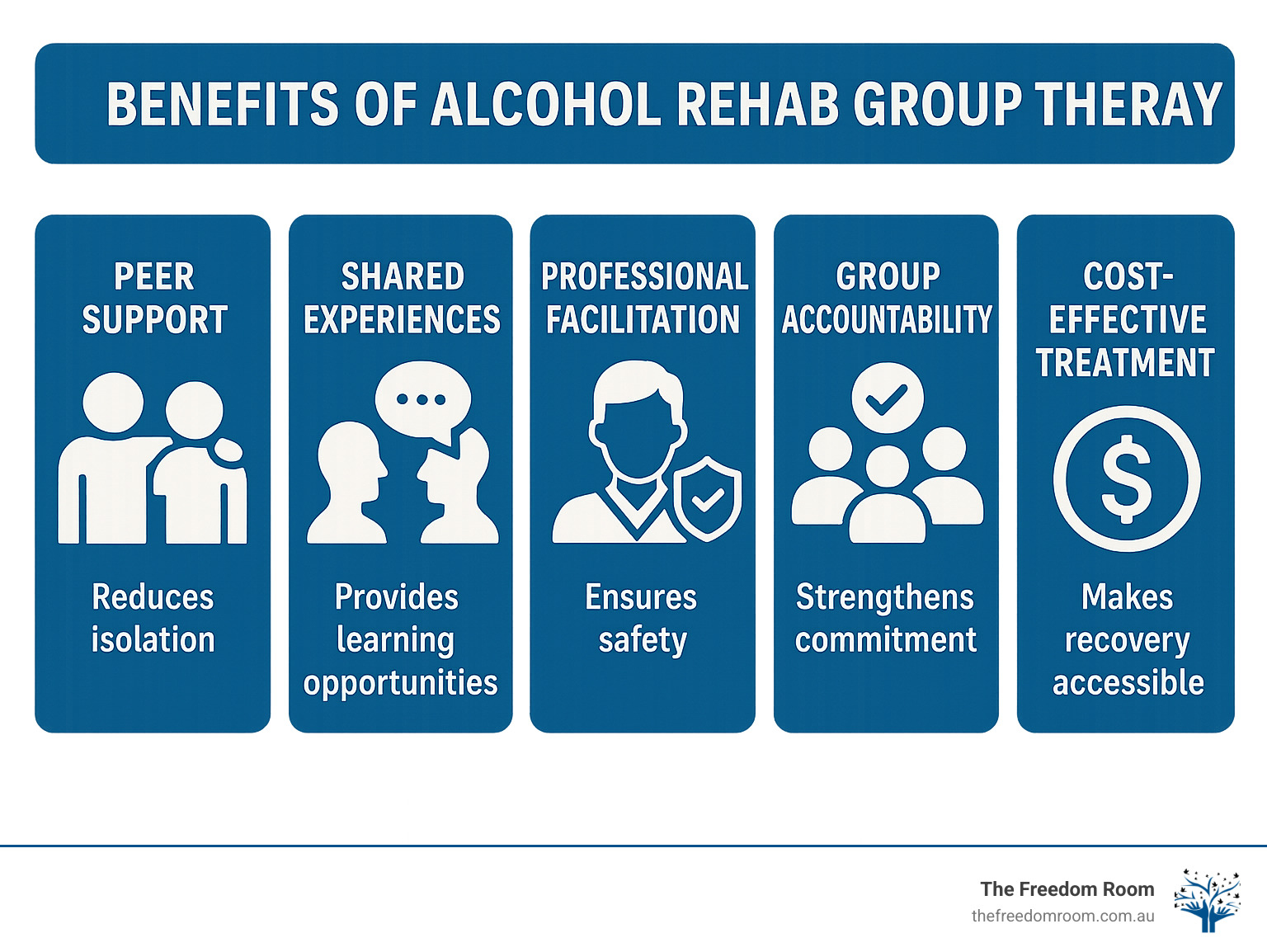
What makes group therapy effective for alcohol recovery:
- Peer support – You realise you’re not alone in your struggles
- Shared experiences – Learn from others who understand your journey
- Social skills practice – Rebuild healthy relationships in a safe space
- Cost-effective treatment – Reach more people with quality care
- Accountability – Group members support each other’s sobriety goals
- Hope and motivation – See others succeed in their recovery
The power of group therapy lies in our natural human need for connection. When you’re struggling with alcohol addiction, isolation often makes everything worse. Group therapy breaks that isolation by connecting you with others who truly understand what you’re going through.
Research from multiple studies shows that people in group therapy often have higher rates of sustained abstinence compared to those receiving only individual treatment. The combination of professional guidance and peer support creates a unique healing environment that addresses both the psychological and social aspects of alcohol addiction.
What Is Alcohol Rehab Group Therapy?
Alcohol rehab group therapy is a structured treatment approach where a small group of people – typically 6 to 12 individuals – come together regularly with trained therapists to work through their alcohol addiction. Unlike casual support groups you might find in community centres, this is a professional therapeutic environment with specific goals and evidence-based methods.
What makes group therapy special is the therapeutic alliance that forms between group members. There’s something powerful about sitting in a circle with people who truly understand your struggle. You’re not just getting help from a therapist – you’re learning from peers who’ve faced the same challenges, made similar mistakes, and are working toward the same goals.
Confidentiality is the foundation that makes everything else possible. Every group member makes a commitment to keep what’s shared in the room strictly private. This isn’t just a verbal agreement – most groups formalise this through written confidentiality pledges that everyone signs. This creates a safe space where people can be completely honest about their struggles without worrying about gossip or judgement.
The approach is grounded in solid research. According to the Scientific research on group therapy TIP-41, effective group therapy for alcohol addiction requires specialised training for leaders and specific adaptations to address the unique needs of people with substance use disorders.
Core Principles of Alcohol Rehab Group Therapy
The magic of group therapy lies in several core principles that work together to create healing. Instillation of hope happens naturally when you see others at different stages of recovery. When you’re struggling through your first month of sobriety and you meet someone who’s been alcohol-free for two years, it provides concrete proof that recovery is possible.
Universality addresses one of the most painful aspects of alcohol addiction – the crushing sense of isolation and shame. In group therapy, you quickly find you’re not the only one who’s hidden bottles around the house, lied to family members, or felt overwhelmed by cravings.
Altruism emerges as group members begin helping each other. There’s something healing about being able to offer support to someone else when you’re used to feeling like a burden. When you share a coping strategy that worked for you or offer encouragement to someone having a tough week, you’re rebuilding your own sense of worth.
Evidence for Effectiveness of Alcohol Rehab Group Therapy
The research supporting alcohol rehab group therapy is genuinely impressive. Multiple meta-analyses show that people in group therapy often have higher rates of sustained abstinence compared to those receiving only individual treatment, particularly when measured at six-month follow-ups.
Studies focusing on relapse prevention groups show that group therapy doesn’t just reduce the likelihood of relapse – when relapse does occur, it tends to be less severe and shorter-lived. This suggests that the skills and support networks developed in group therapy continue to provide protection even during difficult times.
Main Types of Therapy Groups Used in Alcohol Addiction Treatment
When you’re exploring alcohol rehab group therapy options, you’ll find that different types of groups serve different purposes in your recovery journey. Think of it like having different tools in a toolbox – each one is designed for specific situations and stages of recovery.
Psychoeducational groups are often where people start, especially early in recovery. These sessions focus on teaching you the essential facts about alcohol addiction – how it affects your brain, what triggers look like, and what recovery strategies actually work. You’ll learn about the science behind addiction, which can be incredibly reassuring when you realise that struggling with alcohol isn’t a personal failing but a recognised medical condition.
Skills development groups take things a step further by giving you hands-on practice with recovery tools. Rather than just talking about stress management or communication techniques, you’ll actually practice them with feedback from both peers and facilitators.
Cognitive-behavioural groups help you recognise and change the thought patterns that contribute to drinking. Relapse prevention groups focus specifically on staying sober long-term, whilst twelve-step facilitation groups introduce you to the principles of programmes like AA. Mindfulness groups teach you to stay present and manage cravings through awareness techniques.

Twelve-Step Facilitation & Secular Options
Twelve-Step Facilitation (TSF) groups introduce you to the principles and practices of programmes like Alcoholics Anonymous, but you have choices about how to approach these concepts. Traditional twelve-step programmes include spiritual elements that don’t resonate with everyone, which is why secular alternatives have become increasingly popular.
Secular twelve-step programmes follow the same powerful core structure – acceptance that you can’t control your drinking through willpower alone, surrender of the need to manage everything in your life, honest self-examination of your behaviours and their consequences, and building a strong support network for ongoing recovery. The difference is that these programmes remove references to a higher power or God, focusing instead on personal empowerment within a non-religious framework.
Relapse Prevention-Focused Alcohol Rehab Group Therapy
Relapse prevention groups are among the most researched and effective forms of alcohol rehab group therapy. The Marlatt model of relapse prevention, widely used in group settings, teaches you to identify high-risk situations, develop coping strategies, and create lifestyle balance to reduce relapse risk.
In these groups, you’ll learn to recognise your personal triggers – whether they’re emotional like stress or loneliness, environmental like certain places or people, or physical like fatigue or hunger. Craving management becomes a shared learning experience where you’ll hear strategies that have worked for others.
Specialised Alcohol Rehab Group Therapy for Families and Diverse Populations
Recovery doesn’t happen in a vacuum – it affects and involves the important people in your life. Family systems therapy recognises that alcohol addiction impacts entire families, not just the person drinking. Family-focused groups help your loved ones understand addiction as a disease and learn healthy communication skills.
Women-focused groups address unique challenges that women face in recovery, including trauma history, parenting concerns, and societal pressures around drinking. LGBTQ+ support groups recognise that sexual and gender minorities may face additional stressors that can contribute to alcohol use.
Inside a Typical Session: Structure and Facilitation
Walking into your first alcohol rehab group therapy session can feel a bit nerve-wracking, but there’s something reassuring about the predictable structure that helps everyone feel safe and supported. Most sessions run for 60-90 minutes and follow a gentle rhythm that becomes familiar over time.
Everything starts with a check-in – a simple but powerful way for each person to share how they’re travelling since the last session. After everyone’s had a chance to check in, the facilitator introduces the session’s agenda. Some weeks you might focus on managing cravings during stressful times, whilst other sessions could explore preparing for challenging social situations.
The heart of each session is the thematic discussion where real learning happens. Your facilitator might share some information about a recovery topic, then open the floor for everyone to contribute their experiences and insights. Role-plays might sound a bit awkward at first, but they’re incredibly helpful for building confidence.
The feedback rounds often become everyone’s favourite part of the session. Group members offer support, practical suggestions, and genuine encouragement to each other. Each session wraps up with a closure ritual that helps everyone transition back to their daily lives.

The Role of the Group Therapist or Facilitator
A skilled group facilitator wears many hats during each session. They’re the guardians of group safety, ensuring everyone has opportunities to participate whilst preventing any one person from dominating the conversation. Boundary-setting is crucial in group therapy. Facilitators establish clear guidelines about confidentiality, respectful communication, and appropriate sharing.
Many facilitators use motivational interviewing techniques to help group members explore their own feelings about change. CBT techniques are often woven throughout group discussions. When crisis situations arise, facilitators need to provide immediate support whilst maintaining group safety.
What Participants Can Expect
If you’re feeling nervous about joining a group, you’re in good company – almost everyone feels that way initially. Your first session will include an introduction to group guidelines that create the foundation for everything that follows. The confidentiality pledge is taken seriously by everyone involved.
Homework assignments between sessions help reinforce what you’re learning. Respectful listening is emphasised throughout every session. Here’s something important: you won’t be forced to share before you’re ready. Many groups operate with a “pass” option, allowing you to listen and observe until you feel comfortable participating more actively.
How Alcohol Rehab Group Therapy Complements Other Treatments
Alcohol rehab group therapy shines brightest when it’s part of a complete recovery toolkit rather than working alone. Think of it like building a house – you wouldn’t rely on just one tool when you could use a whole toolbox to create something stronger and more lasting.
The beauty of combining treatments is that each approach fills in the gaps that others might miss. One-to-one counselling gives you that private space to dig into personal issues that might feel too vulnerable to share in a group setting initially. Meanwhile, Cognitive Behavioural Therapy (CBT) and Acceptance and Commitment Therapy (ACT) work brilliantly both in individual sessions and group formats. More info about CBT sessions shows how these proven approaches help you spot and change the thinking patterns that lead to reaching for a drink.
Medication-assisted treatment can be a game-changer for some people, and group support makes all the difference in staying consistent with medications. Wellness workshops round out the picture by addressing your whole self – not just the drinking behaviour.

Integrated Care Pathways
Recovery isn’t a straight line from problem to solution – it’s more like a journey with different stops along the way. Pre-rehab support helps you get ready for the work ahead, building motivation and understanding what to expect. During residential rehabilitation, group therapy becomes part of your daily routine, giving you intensive practice with new skills in a safe, structured environment.
Post-rehab aftercare is where group therapy often becomes most crucial. Coming home to your regular life – with all its familiar triggers and stresses – can feel overwhelming. Tele-support options, including online group meetings, have opened doors for people who might otherwise struggle to access group therapy.
Measurable Benefits of Combining Modalities
The evidence is clear – people who receive combined treatments stick with their programmes longer. Cost-effectiveness improves dramatically when group therapy is part of the mix. Mental health improvements are more pronounced when you’re getting both group support and individual attention to underlying psychological concerns. Quality-of-life gains speak for themselves when multiple treatment approaches work together.
Frequently Asked Questions about Alcohol Rehab Group Therapy
How many people are usually in an alcohol rehab group therapy session?
Most alcohol rehab group therapy sessions work best with 6-12 participants, though we’ve found that 8-10 people creates the sweet spot for meaningful connection and active participation. This size gives everyone a chance to share whilst maintaining the intimate, safe atmosphere that makes group work so powerful.
Think of it like a dinner party – too few people and the conversation can feel forced, too many and some voices get lost in the crowd. With the right number of participants, you get that beautiful mix of different perspectives and experiences without anyone feeling overlooked or rushed.
Skills-focused groups tend to stay on the smaller side because everyone needs time to practice new techniques and receive personalised feedback. Support-style groups might accommodate a few more people since the emphasis is on sharing experiences rather than hands-on skill development.
What’s lovely about this size is that you’ll genuinely get to know each person in your group. You’ll learn their stories, understand their challenges, and celebrate their victories. These aren’t just faces in a crowd – they become your recovery community.
Do I have to speak during my first session?
Not at all! We completely understand that walking into your first group session can feel overwhelming. Most groups operate with what we call a “pass” option – you’re absolutely welcome to introduce yourself by first name and simply say you’re there to listen and learn.
Many people spend their first few sessions as quiet observers, soaking up the group dynamics and getting comfortable with how things work. There’s no pressure timeline – some people share something personal in their second session, others take weeks or even months to feel ready for deeper sharing.
Building trust takes time, and everyone in the group understands this because they’ve been exactly where you are. The experienced group members and facilitators know that meaningful participation comes naturally once you feel safe and connected.
What often happens is that you’ll find yourself nodding along with someone’s story, thinking “that’s exactly how I feel,” and before you know it, you’ll want to share your own experience. But until that moment feels right, just being present and listening is valuable participation in itself.
Can group therapy prevent relapse long-term?
Group therapy significantly reduces both the likelihood and severity of relapse, particularly when it’s part of your ongoing recovery plan rather than a short-term fix. The research is really encouraging – people who stay connected to group support have much better outcomes years down the track.
Here’s what makes group therapy so effective for long-term relapse prevention: you’re not just learning coping skills in isolation, you’re practicing them with people who truly understand your struggles. When someone in your group shares how they handled a difficult situation without drinking, you’re adding that strategy to your own toolkit.
The accountability factor is huge too. Knowing you’ll see your group members regularly helps you stay committed to your sobriety goals. It’s like having a team of people who genuinely care about your success and will notice if you’re struggling.
But perhaps most importantly, the relationships you build in group therapy often extend beyond the formal sessions. These connections create a recovery community that’s there for you during challenging times – whether that’s a stressful work situation, family conflict, or just one of those days when motivation feels low.
The key is consistent participation rather than viewing group therapy as something you do for a few months and then stop. Many people continue with group support for years because they find it keeps them grounded and connected to their recovery values.

Ready for Change? Let’s Build a Stronger, Alcohol-Free Future Together
At The Freedom Room Wellness and Recovery, we understand that choosing to enter alcohol rehab group therapy takes courage. Our approach combines the proven benefits of group support with personalised care that recognises your unique journey and needs.
What sets us apart is our team of counsellors, meeting facilitators, and workshop leaders who are all in recovery themselves. Their lived experiences bring authenticity, empathy, and unwavering support to your journey. When you sit across from someone who knows the challenges, victories, and setbacks you face, the connection is immediate and powerful.
We’re not just professionals – we’re friends on your journey to sobriety. Together, we’ll steer the twists and turns, celebrate progress, and build resilience. Recovery isn’t a solo mission; it’s a collective effort fuelled by shared stories and unwavering camaraderie.
Our group recovery meetings are held three times a week, with two face-to-face meetings and one online meeting. These sessions are exclusively accessible to The Freedom Room clients, creating an intimate community where lasting relationships and accountability partnerships can develop.
We recognise that life doesn’t stop when you get clean and sober. That’s why our group work also covers how to deal with stress, anxiety, and depression – feelings that are often associated with addiction and other compulsive behaviours. Our mission is to support you through the tough times without having to reach for a drink.
The Freedom Room space is discreet and welcomes children, should you need to bring them along. We understand that seeking help shouldn’t create additional barriers, and we’re committed to making recovery support accessible to everyone who needs it.
Recovery is a journey best travelled with others who understand the path. Our group therapy sessions provide the peer support, professional guidance, and practical skills you need to build a strong foundation for lasting recovery.
Support & Resources
Getting help for alcohol addiction is one of the most important decisions you can make, and The Freedom Room is here to support you every step of the way. Whether you’re considering alcohol rehab group therapy for the first time or looking for ongoing support in your recovery journey, reaching out is always the right choice.
Our dedicated team is ready to help you during business hours. You can reach our office at (07) 3325 1531 to discuss your needs, ask questions about our group therapy programmes, or schedule an initial consultation. For more personalised support, Rachel is available on mobile at 0400 236 743 – she understands that sometimes you need to talk when inspiration strikes or when you’re facing a challenging moment.
We know that addiction doesn’t follow business hours, and crises can happen at any time. When you need immediate help outside our operating hours, several excellent resources are available across Australia to provide emergency support and guidance.
For life-threatening emergencies, always call 000 immediately. Emergency services are trained to handle addiction-related crises with compassion and professionalism.
The AA Helpline at 1300 222 222 connects you with Alcoholics Anonymous volunteers who understand exactly what you’re going through. These are people in recovery themselves who can offer immediate peer support and help you find local meetings.
Lifeline’s 13 11 14 provides 24-hour crisis support and suicide prevention services. Their trained counsellors offer a listening ear and professional guidance when you’re feeling overwhelmed or desperate.
For family members and friends affected by someone else’s drinking, Al-Anon offers specialised support at www.al-anon.org.au. Living with or loving someone with alcohol addiction creates unique challenges, and Al-Anon groups understand these struggles intimately.
Seeking help is a sign of strength, not weakness. Every person in recovery started with that first phone call or first step through a door. You don’t have to face alcohol addiction alone – whether through our group therapy sessions, individual counselling, or any of these support resources, help is always available when you’re ready to reach for it.