

EFT Tapping for Pain: An Evidence-Based Approach for Chronic Pain Sufferers in Australia
For the 3.4 million Australians affected by chronic pain, EFT tapping for pain presents an evidence-based, self-applied technique for managing discomfort. This method integrates psychological principles with the physical stimulation of specific points on the body, addressing both the emotional and physical dimensions of pain.
The Dual Approach of EFT: Addressing Mind and Body
The technique involves tapping on nine specific meridian points while focusing on the pain. This process is designed to calm the brain’s stress response system and release emotional tension stored in the body. Research indicates that brief daily practice can provide significant relief, with studies demonstrating reductions in pain severity and its interference with daily activities.
Chronic pain often involves a cycle where physical discomfort leads to emotional distress, which in turn intensifies the pain. While traditional pain management may focus primarily on physical symptoms, EFT addresses both components simultaneously. Tapping on acupressure points while acknowledging the pain sends calming signals to the amygdala, the brain’s threat detection center. This process interrupts the stress-pain cycle, enabling individuals to take an active role in their pain management. As a complementary therapy, EFT can be safely used alongside medical treatments, offering a practical technique without known side effects.
The Mind-Body Connection in Chronic Pain
Chronic pain is a persistent and often debilitating condition affecting approximately 20% of adults in Australia. The prevalence of this issue underscores the need for effective, sustainable pain management strategies that extend beyond conventional methods.
The Neurological Basis of the Pain-Stress Cycle
While treatments such as surgery and medication are established options, they may offer temporary relief or prove less effective for chronic conditions. A holistic, mind-body approach is vital for comprehensive pain management. The experience of chronic pain often involves a complex cycle where physical discomfort leads to emotional distress, which then intensifies the pain. The brain and nervous system can become hypersensitive, creating a feedback loop where pain amplifies emotional responses, and those responses worsen the pain.
When the body experiences stress, it enters a “fight-or-flight” response, releasing hormones like cortisol. Prolonged stress can lead to chronic inflammation, muscle tension, and a heightened perception of pain. Neural pathways can become conditioned for pain, maintaining the sensation even in the absence of ongoing tissue damage. Therefore, addressing the emotional components of pain is essential for effective relief.
The Role of Unresolved Emotions in Physical Pain
The connection between emotional and physical well-being is significant. Unresolved emotions can manifest as physical pain, a concept explored in theories such as Psychophysiological Disorder (PPD). This perspective suggests that chronic pain may function as a protective mechanism created by the brain in response to repressed emotions or psychological stress.
When emotions like fear or anxiety are not processed, the body can manifest this stress physically, leading to chronic muscle tension, headaches, or widespread pain. The brain may generate real physical pain to distract from overwhelming emotional discomfort. While the physical pain is genuinely felt, its origins may be linked to emotional stress rather than purely structural issues.
Developing emotional awareness is therefore a critical component of pain management. By acknowledging and processing underlying emotions, it is possible to recondition these ingrained neural pathways. EFT tapping for pain provides a structured method to release the emotional attachment to pain, allowing the body to engage its natural healing processes.
The Mechanisms of EFT Tapping for Pain Alleviation
Emotional Freedom Techniques (EFT), also known as tapping, is a therapeutic modality that combines principles of modern psychology with concepts from Traditional Chinese Medicine (TCM). It can be described as a form of psychological acupressure. The technique involves using the fingertips to gently tap on specific acupoints on the body while focusing on an issue, such as physical pain or emotional distress.
The Psychological Mechanism: Regulating the Amygdala
The effectiveness of EFT is linked to its ability to influence the brain’s threat detection system, particularly the amygdala. The amygdala initiates the “fight, flight, or freeze” response, releasing stress hormones like cortisol and adrenaline, which leads to heightened anxiety and physical tension.
In individuals with chronic pain, the amygdala can become overactive, persistently perceiving pain signals as a threat. This maintains a state of high alert, which can perpetuate the pain cycle. EFT tapping for pain sends calming signals to the amygdala via the acupressure points, interrupting the stress response and allowing the nervous system to return to a balanced state.
This process reduces the emotional intensity associated with painful memories or sensations. By pairing physical tapping with focused thought, EFT lessens the emotional attachment to the pain. Studies have shown that EFT can significantly reduce cortisol levels, supporting its role in stress reduction and pain management.
The Physiological Mechanism: Restoring Energetic Balance
Physiologically, EFT aligns with TCM principles that suggest pain can arise from imbalances in the body’s energy system. The tapping points used in EFT correspond to key acupoints along these energy meridians.
Stimulating these points is intended to clear energetic blockages, allowing energy to flow more freely. This physical stimulation, combined with focused attention on the pain, promotes deep relaxation. It facilitates a shift from the sympathetic nervous system’s “fight-or-flight” state to the parasympathetic nervous system’s calm “rest-and-digest” state. In this relaxed state, the body is better equipped for healing, inflammation reduction, and pain alleviation.
Scientific Evidence for EFT in Pain Management
EFT tapping for pain is an evidence-based practice supported by a growing body of clinical research. Numerous clinical trials and peer-reviewed studies have highlighted its positive impact on pain and associated emotional distress.
Clinical Trial and Neuroimaging Findings
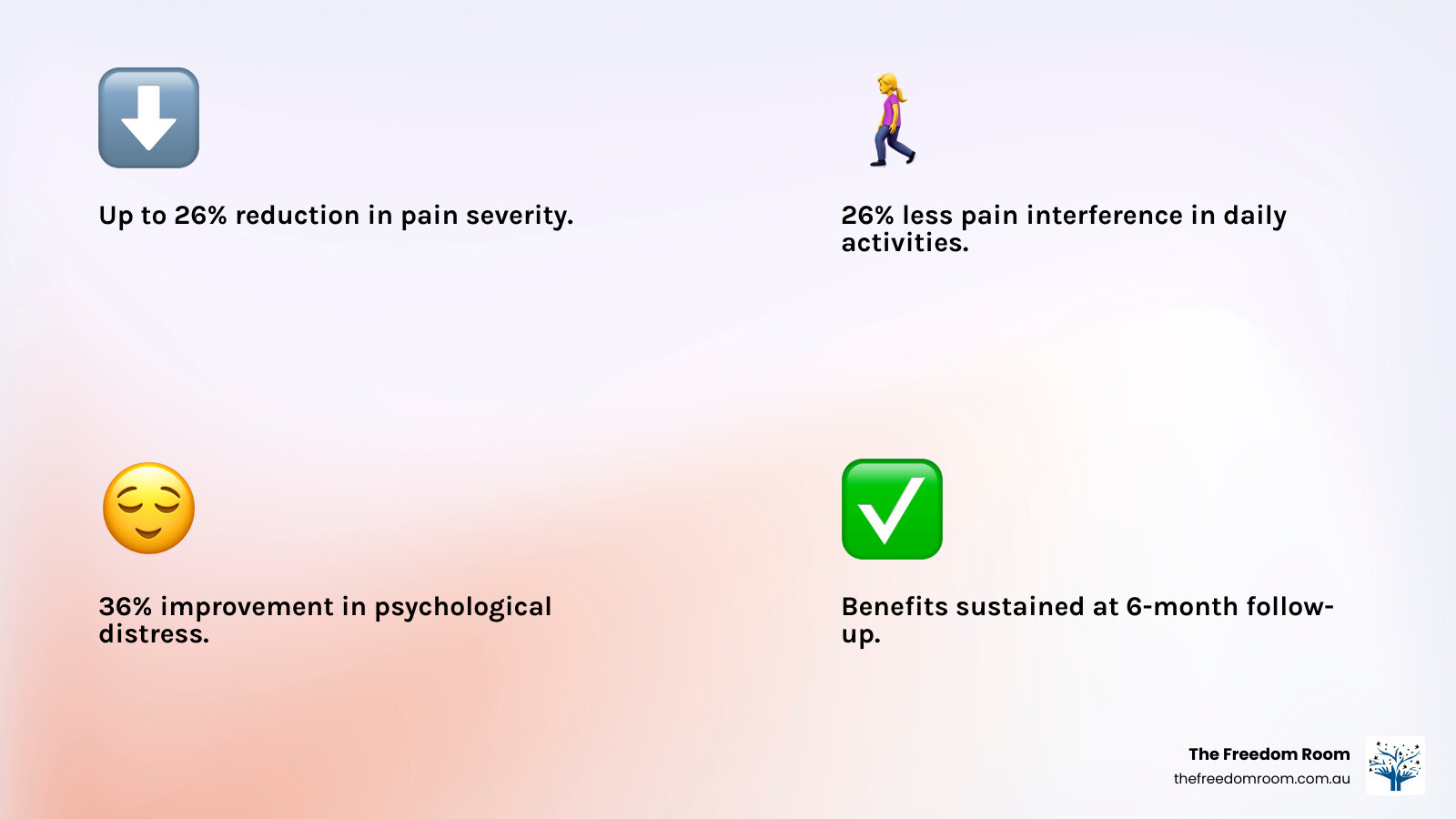
One significant study on a six-week online group EFT treatment for chronic pain reported a 21% reduction in pain severity and a 26% decrease in pain interference with daily life. The intervention also led to a 28% reduction in somatic symptoms, a 13.5% decrease in depression, and a 37.1% drop in anxiety, demonstrating EFT’s comprehensive benefits.
Functional magnetic resonance imaging (fMRI) studies provide objective neurological evidence of EFT’s effects. This research has shown that EFT can decrease connectivity between brain regions involved in pain modulation and perception. These findings suggest that EFT can alter how the brain processes pain signals, reconditioning the experience of discomfort.
Long-Term Efficacy and Accessibility
Further research reinforces these findings. A 2020 study of a six-week EFT program for chronic pain showed significant improvements in quality of life and reductions in pain severity. A notable number of participants no longer met the diagnostic criteria for conditions like somatic symptom disorder, depression, or anxiety after the treatment.
Importantly, studies demonstrate the sustained effects of EFT. Improvements in pain, quality of life, and psychological symptoms were often maintained at a six-month follow-up. This indicates that eft tapping for pain can provide lasting relief, making it a viable technique for long-term pain management. Preliminary results also suggest that self-paced online EFT can achieve outcomes comparable to facilitator-led sessions, increasing its accessibility.
Broader Therapeutic Applications of EFT

The benefits of eft tapping for pain extend to a wide spectrum of mental and emotional challenges due to its ability to reduce stress and regulate the nervous system.
EFT is recognized for its positive impact on:
- Anxiety Relief: Research shows EFT can significantly decrease anxiety levels by calming the brain’s alarm system.
- Depression Symptoms: Studies indicate EFT can reduce symptoms of depression, supporting improved mood and emotional balance.
- Post-Traumatic Stress Disorder (PTSD): EFT has shown significant results in helping individuals process trauma.
- Phobias: The technique can help reduce the intense anxiety associated with specific fears.
- Food Cravings: Studies suggest EFT can be a helpful tool in managing unwanted food cravings.
- Cortisol Level Decrease: EFT has been observed to cause a substantial decrease in cortisol, the body’s primary stress hormone.
These benefits underscore EFT’s versatility as a holistic therapeutic modality. By supporting overall mental and emotional health, it creates a more resilient foundation that can positively influence the experience of physical pain.
A Procedural Guide to Applying EFT Tapping for Pain
Learning eft tapping for pain provides a simple, portable, self-applied technique. Once the basic steps are understood, the technique can be used in various settings to manage discomfort. Before beginning, it is advisable to find a quiet space to focus without interruption. Adequate hydration may also support the process.
Step 1: Identifying and Rating the Pain
The process begins by focusing on the physical discomfort to identify its specific qualities, which improves the technique’s focus. The following aspects should be considered:
- Location: Where in the body is the pain felt?
- Sensation: What is the nature of the feeling (e.g., sharp, dull, burning, throbbing)?
- Intensity: The Subjective Units of Distress (SUDS) scale is used to rate the pain from 0 (no pain) to 10 (the worst imaginable pain). This number should be noted to track progress.
Step 2: Formulating the Setup Statement
The setup statement acknowledges the problem while affirming self-acceptance. The statement is repeated three times while continuously tapping the Karate Chop point (the fleshy side of the hand below the little finger).
The statement is structured as: “Even though I have [the specific pain description], I deeply and completely accept myself.”
For example, for sharp lower back pain, the statement would be: “Even though I have this sharp pain in my lower back, I deeply and completely accept myself.”
Step 3: The Tapping Sequence
Next, the sequence of nine main points is tapped while repeating a reminder phrase—a short version of the problem, such as “this sharp pain” or “this aching knee.” Each point should be tapped gently 5-7 times.
The 9 main tapping points are:
- Eyebrow: The inner corner, next to the bridge of the nose.
- Side of Eye: On the bone at the outer corner of the eye.
- Under Eye: On the bone directly under your pupil.
- Under Nose: In the groove between your nose and upper lip.
- Chin: In the crease between your lower lip and chin.
- Collarbone: In the hollow just below the centre of your collarbone.
- Under Arm: About four inches below your armpit, on your side.
- Top of Head: At the crown, in the centre of your head.
Deep breathing throughout the sequence can facilitate the mind-body connection.
Step 4: Re-assessment and Adjustment
After one round, a deep breath is taken to notice any changes. The SUDS score is then re-rated. If the intensity has decreased, tapping can be continued on the remaining discomfort with a phrase like “this remaining pain.”
The pain may sometimes shift location or change in quality; this is a normal part of the rebalancing process. If emotions such as frustration or sadness arise, a new setup statement can be created to address them directly (e.g., “Even though I feel frustrated by this pain, I deeply and completely accept myself”). Any emergent sensations or emotions should be approached with non-judgmental observation. It is important to acknowledge that even small shifts represent progress.
Key Considerations for Practice
Recommended Frequency of Practice
For optimal results with eft tapping for pain, consistency is essential. Daily practice, even for 5-10 minutes, facilitates the establishment of new neural pathways that support pain relief. Regular practice can shift the nervous system from a state of high alert to a more balanced state conducive to healing.
It is also beneficial to use EFT as a tool during acute pain flare-ups. Consistent application can reduce the frequency and intensity of pain episodes over time by building a new, healthier response to discomfort.
Addressing Limited or No Improvement
If immediate improvement is not observed with eft tapping for pain, patience and persistence are important, as chronic pain patterns develop over time. The following adjustments may be considered:
- Explore Emotional Contributors: Chronic pain is often linked to underlying emotions like frustration, fear, or anger. Tapping on these feelings directly may be beneficial.
- Increase Specificity: Instead of a general phrase like “this pain,” using highly specific language to describe the sensation, location, and quality of the discomfort can increase effectiveness.
- Consult a Practitioner: If self-guided practice does not yield results, a qualified EFT practitioner can assist in identifying deeper emotional blocks or trauma contributing to the pain. They provide a safe, guided environment to steer complex issues.
Integration with Conventional Medical Treatments
EFT is a complementary therapy that can be used effectively alongside conventional medical care. It serves as an additional component of an individual’s pain management plan and is not a replacement for professional medical advice.
Individuals are encouraged to inform their healthcare provider that they are using EFT as part of a proactive, holistic approach to their well-being. EFT is a safe, non-invasive technique with no known side effects or contraindications with medications.
Combining EFT with medical care allows for the emotional and energetic components of pain, which physical treatments may not target, to be addressed. This integrated approach can lead to more comprehensive and lasting relief.
Conclusion and Professional Guidance
EFT tapping for pain is an effective, evidence-based strategy for managing chronic discomfort. The technique targets the emotional factors that can underpin physical pain while calming the body’s stress response system.
Each individual’s healing process is unique. Consistency and a non-judgmental approach are crucial as an individual integrates EFT tapping for pain into a daily routine to lessen the impact of pain.
For individuals seeking professional guidance, The Freedom Room offers support from qualified practitioners. Our team recognizes the significant link between emotional well-being and physical health and is committed to helping clients find greater comfort. Exploring the emotional roots of a condition can allow the body to relax and engage its natural healing processes. EFT tapping for pain is a technique that, when paired with a holistic approach, can significantly alter the experience of pain.
To learn more about how EFT can be integrated into a pain management plan, contact our Queensland practitioners for a consultation.