

Why Affirmations for Sobriety Can Change Your Recovery Journey
The implementation of affirmations for sobriety represents a strategic approach to cognitive restructuring within the recovery process. These tools consist of concise, positive declarations that individuals repeat to themselves to challenge maladaptive thought patterns and reinforce a steadfast commitment to abstinence. Far from being mere wishful thinking, scientific research indicates that these practices can facilitate measurable changes in neural architecture.
Consider the following examples of affirmations designed to support the recovery process:
- I am stronger than the cravings I experience.
- I forgive myself for past errors and focus on my current progress.
- I am worthy of a healthy and fulfilling existence.
- Every day spent in sobriety is a significant achievement.
- I maintain absolute control over my personal choices.
- I trust my capacity to make decisions that support my health.
- My recovery is a priority that warrants my full dedication.
Recovery is a multifaceted and often challenging process. It is common for individuals to experience periods of self-doubt, shame, or pervasive negative self-talk. For those managing a physical alcohol dependence, the internal critic can become a significant obstacle to long-term success. This is precisely where the utility of affirmations becomes evident. These cognitive tools provide a structured methodology to interrupt the cycle of negative ruminations that frequently precede a relapse.
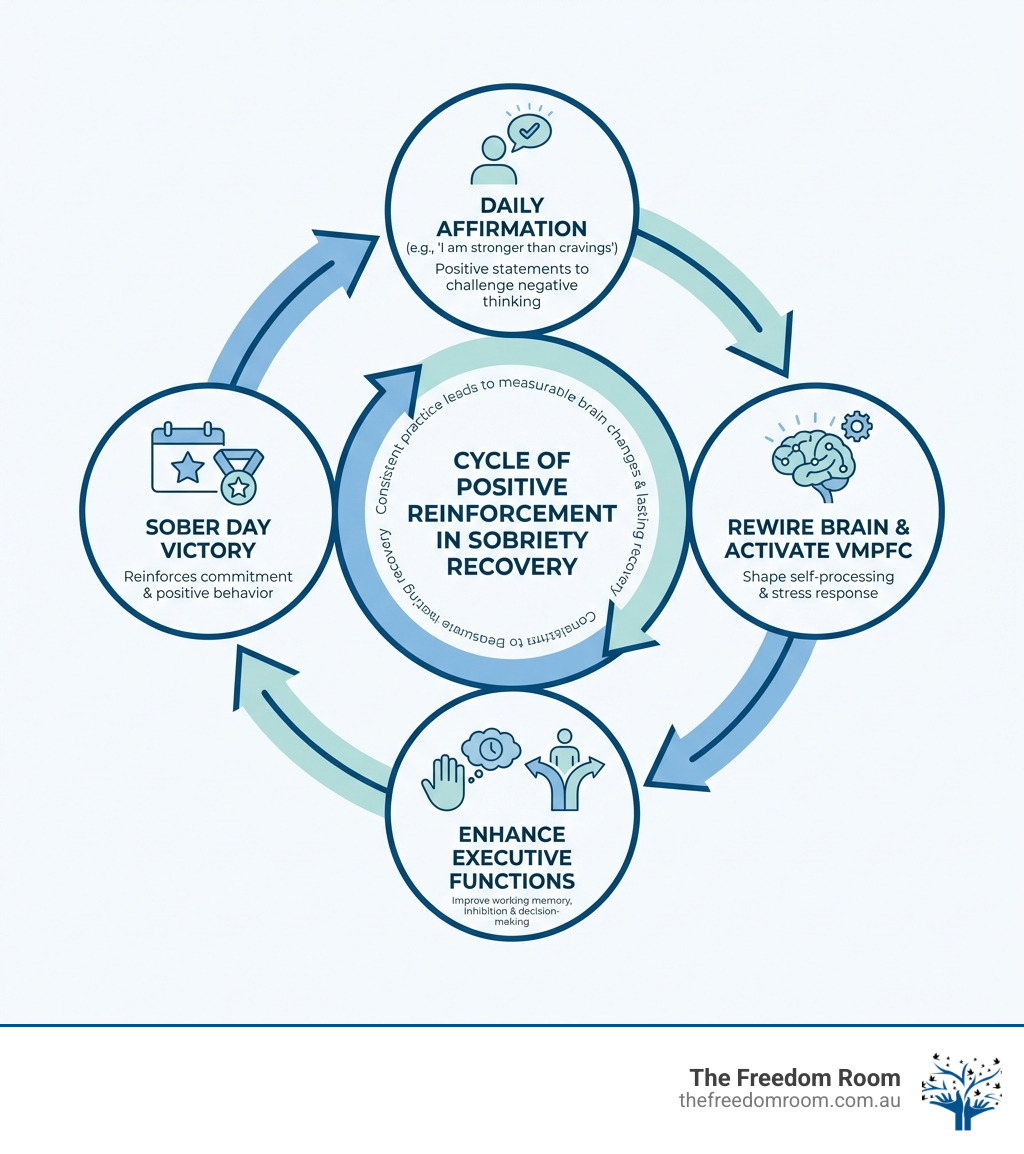
When practised with consistency, sobriety affirmations assist in rewiring the way the brain processes stress, self-perception, and behavioural change. Empirical studies demonstrate that self-affirmation activates the ventromedial prefrontal cortex, which is a neurological region associated with self-processing and positive behavioural modification. In professional terms, the language an individual uses to address themselves directly influences their cognitive, emotional, and behavioural outcomes.
In the Australian context, where social drinking is frequently integrated into the cultural fabric, maintaining a robust internal dialogue is essential for long-term health. This internal strength allows individuals to uphold personal boundaries in social environments and remain focused on their health objectives. This article provides forty affirmations categorised by the various stages of recovery, alongside formal guidance on their daily application.
The Science and Practical Value of Affirmations for Sobriety
The efficacy of affirmations for sobriety is substantiated by established psychological principles and contemporary neurological research. Scientific investigations indicate that self-affirmation tasks can enhance activity within specific neural pathways. MRI evidence suggests that when individuals engage in self-processing tasks, such as the repetition of affirmations, the ventromedial prefrontal cortex is activated. This specific area of the brain is vital for valuation and the perception of the self in relation to the external environment.
Beyond the improvement of mood, affirmations support cognitive functions that are critical in the recovery process, including sustained attention, working memory, and behavioural inhibition. These executive functions enable an individual to pause, evaluate potential consequences, and select a safer response when faced with urges or emotional distress. When utilised consistently, affirmations reinforce the behavioural changes addressed in structured programmes for alcohol addiction recovery.
In Australia, the prevalence of alcohol use and the subsequent need for treatment are documented by the Australian Institute of Health and Welfare (AIHW). According to AIHW data, alcohol remains the most frequent substance for which Australians seek professional intervention. Utilising evidence-informed tools like affirmations provides an additional layer of daily support alongside medical and psychological care. These tools are particularly effective for protecting an individual’s self-concept during vulnerable periods, such as the aftermath of a lapse, when heightened shame can increase the risk of further relapse. For more information on managing these conditions, individuals may consult resources such as Healthdirect Australia.
How Affirmations for Sobriety Support Brain and Stress Regulation
The human brain possesses the capacity for change through the principles of positive neuroplasticity. Through consistent repetition, new mental habits become more accessible during periods of high pressure. For an individual living with a physical alcohol dependence, this practice supports the transition from automatic, substance-seeking coping mechanisms to deliberate and healthy choices.
Many individuals also experience a negativity bias, which can amplify self-criticism and cause setbacks to appear permanent. Affirmations provide a structured framework to practise alternative and more balanced self-talk. Over time, this practice can reduce the intensity of shame-driven thinking and support persistence with clinical treatment and recovery routines. While affirmations do not constitute a standalone clinical intervention, they complement evidence-based therapies effectively. For those engaged in structured approaches such as EFT and CBT therapy, affirmations help translate the insights gained during clinical sessions into daily practical application.
Integrating Affirmations for Sobriety into Daily Life
Consistency is the primary driver of successful outcomes. A brief but regular daily routine is significantly more effective than the occasional use of affirmations during moments of crisis. To ensure the practice is both practical and sustainable, the following guidelines should be observed:
- Formulate statements in the present tense, utilising “I am” rather than “I will”.
- Select one to three specific affirmations and repeat them during the morning and evening for a minimum of two weeks.
- Implement digital reminders during predictable high-risk periods, such as the conclusion of the workday or prior to attending social events.
- Position written prompts in locations where critical decisions occur, such as near the refrigerator, within a wallet, or inside a vehicle.
- Pair the affirmation with a grounding physical action, such as a controlled breath, the consumption of water, or a brief walk.
If a specific affirmation feels unrealistic, the wording should be adjusted to reduce internal cognitive dissonance. For example, one might replace “I feel calm” with “I am learning to steady myself without the use of alcohol”. This adjustment ensures the message remains credible while continuing to support the desired behavioural change. Affirmations are most effective when they are integrated into a comprehensive recovery plan that includes medical support for withdrawal, professional counselling, and access to affordable addiction treatment services.
40 Powerful Affirmations for Every Stage of Recovery

The following affirmations have been developed to support individuals through various challenges. Whether an individual is in the initial stages of detoxification or has maintained sobriety for several years, these statements can reinforce their resolve.
Early Recovery and Building Foundation
- I am making the optimal choice for my future self today.
- My body is undergoing a healing process and becoming stronger each hour.
- I am capable of experiencing uncomfortable emotions without acting upon them.
- I prioritise my long-term health over temporary relief.
- I am worthy of the sustained effort required to maintain sobriety.
- My past experiences do not define my potential for a positive future.
- I am reclaiming my personal agency from the influence of alcohol.
- Focusing on one day at a time is a sufficient and productive approach.
- I am in the process of rebuilding trust in myself.
- My mental clarity is a valuable asset that I choose to preserve.
Managing Triggers and Cravings
- This urge is a temporary sensation that will peak and subsequently subside.
- I possess the necessary tools to navigate this moment in a safe manner.
- I am the primary authority over my responses to external stress.
- My internal peace is of greater importance than any alcoholic beverage.
- I am capable of enduring difficult circumstances and emerging with greater resilience.
- I am supported by a community, and I am not isolated in this journey.
- I am actively choosing to build a life that does not require escape.
- My commitment to my personal well-being remains unshakeable.
- I am navigating this moment with composure and deliberate breathing.
- Each instance of declining an urge is a proactive step toward a healthier life.
Long-Term Growth and Maintenance
- I take pride in the individual I am becoming through my sobriety.
- My recovery enables me to be fully present for my family and peers.
- I am constructing a life characterised by genuine joy and meaningful connection.
- I am grateful for the internal strength I have identified within myself.
- I am a resilient individual, and my persistence is a significant strength.
- I deserve to live a life that is free from the burdens of addiction.
- I am committed to a process of continuous growth and learning.
- My sobriety serves as the fundamental basis for all my professional and personal successes.
- I have achieved a state of peace regarding my personal journey.
- I am worthy of enduring happiness and psychological stability.
Resilience and Self-Forgiveness Affirmations
- I forgive myself for the actions I took while attempting to cope with distress.
- I am not defined by my errors; I am defined by the lessons I have acquired from them.
- I release the burden of past shame to accommodate the opportunities of the present.
- I am worthy of receiving love and respect, beginning with my own self-regard.
- I am healing my cognitive and emotional state with every sober breath.
- I am performing to the best of my ability, and that effort is sufficient.
- I am permitted to progress without the continued weight of historical guilt.
- I am a work in progress, and this developmental process is valuable.
- I maintain kindness toward myself during setbacks and acknowledge every small victory.
- I am sufficient exactly as I am in this moment.
Overcoming Shame Through Self-Compassion
A significant impediment to successful recovery is the presence of chronic shame and guilt. Research on self-processing indicates that when individuals value themselves, they are more likely to engage in health-promoting behaviours. Overcoming shame does not necessitate ignoring the past; rather, it involves acknowledging that an individual’s inherent worth is not dictated by their lowest moments.
In Australian communities, there is a significant emphasis placed on mutual support and looking out for one’s peers. This same level of compassion must be directed inward. Trauma-informed care highlights that many individuals have used alcohol as a coping mechanism for underlying psychological pain. Self-forgiveness affirmations help bridge the gap between emotional healing and sustained sobriety. By treating oneself with the same empathy one would offer a friend, an individual builds the resilience required to maintain their recovery path.
Creating Personalised Statements for Your Journey
While standardised lists of affirmations are beneficial, the most impactful statements are those that resonate with an individual’s specific life experiences. Visualisation and brain activation are most effective when the language feels authentic. If a statement causes internal resistance, it may be counterproductive. For instance, if the phrase “I love myself” feels unattainable, one might begin with “I am learning to accept my current circumstances.”
To develop personalised affirmations, individuals should consider their SMART goals, ensuring they are Specific, Measurable, Achievable, Realistic, and Timed. If a goal involves managing social anxiety without alcohol, a suitable affirmation might be: “I am capable of engaging with others using my authentic, sober voice.” This level of specificity provides a clear objective for the brain to focus on. Self-empowerment is further enhanced by identifying personal triggers and developing if-then affirmations. For example: “If I experience loneliness, then I will contact a supportive acquaintance because I am worthy of social connection.” This structure provides a clear cognitive roadmap during periods of vulnerability, replacing automatic urges with conscious, health-oriented actions.
Join Our Community of Support and Thrive in Your Recovery
At The Freedom Room Wellness and Recovery, the provided support is founded upon principles of compassion, professional accountability, and practical skill-building. The services offered are designed to complement evidence-informed clinical care and assist individuals in strengthening the daily foundations that protect their sobriety. This comprehensive approach ensures that the psychological and physical aspects of recovery are addressed simultaneously.
Support is accessible through tailored individual sessions and structured programmes that are matched to the specific needs, stage of recovery, and current stressors of the individual. This includes clinical strategies that address the management of cravings, emotional regulation, the establishment of healthy boundaries, and the reconstruction of daily routines following periods of heavy alcohol consumption. For those managing a physical alcohol dependence, these services provide a vital framework for long-term stability.
If you are seeking a definitive next step in your recovery journey, please explore Our Services to understand which support options may be appropriate for your unique situation. When you are prepared to discuss these options and formulate a plan for your future, please use the Contact Us page to connect with our professional team. We are committed to providing the necessary resources for your sustained health and well-being.
Frequently Asked Questions
How long does it take for affirmations to start working?
The duration required for affirmations to yield noticeable results varies among individuals; however, neurological changes typically begin to manifest after several weeks of consistent daily practice. Initially, an individual may observe subtle shifts in their mood or cognitive perspective. The comprehensive rewiring of neural pathways generally requires several months of regular repetition to become a permanent component of an individual’s cognitive framework.
What should I do if I do not believe the affirmations I am saying?
It is common to experience a sense of internal resistance or inauthenticity when commencing this practice. This reaction often stems from the inner critic attempting to maintain established cognitive patterns. If a statement feels unbelievable, it is recommended to modify the language to be more accessible. Instead of stating “I am completely happy”, one might use “I am open to identifying moments of joy today”. This approach reduces cognitive friction while maintaining a positive trajectory.
Can affirmations replace professional therapy or medical treatment?
Affirmations are intended to serve as a supplementary tool and cannot replace professional medical or psychological intervention. They are most effective when integrated with clinical services such as Cognitive Behavioural Therapy (CBT), medical detoxification, or formal support groups. They assist in reinforcing the work conducted during therapy but do not constitute a substitute for clinical care, particularly when managing a physical alcohol dependence, which may require medical supervision.
What is the most common mistake people make with affirmations?
The most frequent error is a lack of consistency in practice. Many individuals attempt the practice for a limited period and cease when immediate results are not observed. Similar to physical exercise, the benefits of affirmations are cumulative and require regular mental engagement to facilitate lasting progress in the recovery journey. Setting specific times for practice can help mitigate this issue.
How do I pair affirmations with other self-care activities?
Affirmations can be effectively paired with mindfulness, meditation, and physical exercise. An individual might repeat their chosen affirmations while walking, during a yoga session, or while practising deep breathing exercises. This multi-sensory approach assists in anchoring positive cognitions within both the mind and the body, thereby increasing the overall efficacy of the practice over time.