

Trauma Informed Therapy: 7 Powerful Benefits in 2025
Understanding Trauma-Informed Therapy: A Compassionate Approach to Healing
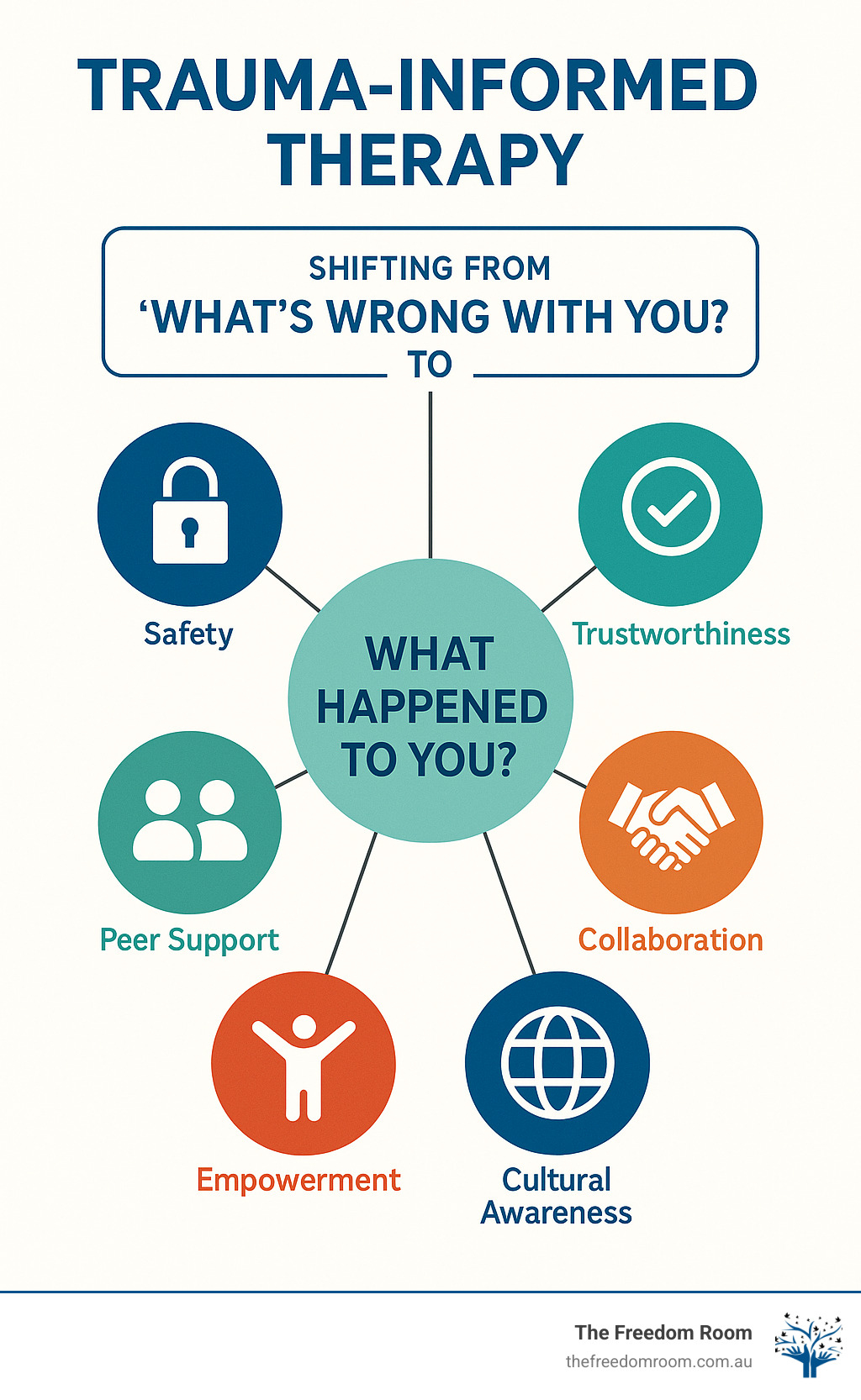
Trauma-informed therapy is a therapeutic approach that recognizes the widespread impact of trauma and understands potential paths for recovery. Rather than asking “What’s wrong with you?”, it shifts the question to “What happened to you?” This approach acknowledges that many behavioral health issues may be symptoms of underlying trauma.
Key Elements of Trauma-Informed Therapy:
- Safety – Creating physical and emotional safety for clients
- Trustworthiness – Building transparent relationships
- Choice – Empowering clients with options and control
- Collaboration – Working together as partners in healing
- Empowerment – Focusing on strengths and resilience
- Cultural awareness – Respecting diverse backgrounds and experiences
Trauma is remarkably common. According to research, approximately 61% of men and 51% of women in the United States report experiencing at least one trauma in their lifetime. More concerning is that over 46% of children have at least one Adverse Childhood Experience (ACE), which can significantly impact long-term health and behavior.
When trauma goes unaddressed, it often leads to a range of challenges including substance use disorders, mental health issues, and physical health problems. This connection between trauma and addiction is particularly strong – studies show that people seeking substance abuse treatment report significantly higher rates of traumatic experiences.
At The Freedom Room, we understand that many struggles with alcohol addiction have roots in unresolved trauma. Our approach incorporates trauma-informed principles to create a safe, supportive environment where healing can begin.
Trauma doesn’t just affect the mind – it lives in the body too. When we experience something overwhelming, our nervous system can become dysregulated, leaving us stuck in patterns of fight, flight, freeze, or fawn responses. Trauma-informed therapy helps address both the psychological and physiological aspects of trauma.
Why Trauma Matters: Definitions, Types & ACEs
When we talk about trauma, we’re describing more than just a difficult experience—we’re talking about events that overwhelm our ability to cope. The clinical definition from the DSM-5 describes trauma as exposure to actual or threatened death, serious injury, or sexual violence. But in our work at The Freedom Room, we understand that trauma’s reality is much broader.
Trauma-informed therapy recognizes that trauma isn’t just about what happened—it’s about how those experiences continue to affect us. As SAMHSA (the Substance Abuse and Mental Health Services Administration) explains, trauma results from “an event, series of events, or set of circumstances experienced by an individual as physically or emotionally harmful or life-threatening with lasting adverse effects on functioning and well-being.”
In our work supporting recovery, we see several types of trauma:
Acute trauma emerges from single incidents like accidents or assaults. Complex trauma develops through repeated exposure to traumatic situations, often involving relationships. When trauma occurs during childhood, we call it developmental trauma, which can disrupt healthy attachment patterns. Vicarious trauma affects those who witness or hear about others’ trauma—common among helpers and healthcare workers. And collective trauma impacts entire communities, such as during natural disasters or pandemics.
SAMHSA’s framework gives us a practical approach through the “4 R’s”: Realize trauma’s widespread impact, Recognize its signs and symptoms, Respond by integrating trauma knowledge into our practices, and Resist re-traumatization through sensitive approaches.
Understanding these definitions creates the foundation for effective healing work in trauma-informed therapy.
What Counts as Trauma?
One of the most important things to understand about trauma is that it’s subjective. What deeply traumatizes one person might not affect another in the same way. This individual nature of trauma is why trauma-informed therapy approaches each person’s story with such care and without judgment.
Our bodies respond to trauma in several recognizable ways. You might have heard of the “fight-flight-freeze” response, but there’s actually more to it:
Fight responses look like confrontation, anger, or aggression. Flight manifests as avoidance, withdrawal, or escape behaviors. Freeze appears as immobility, shutting down, or dissociation. And fawn responses involve people-pleasing, compliance, or abandoning personal boundaries to appease others.
Research has identified additional responses too, including fright (feeling terrified but unable to access other responses), flag (feeling faint or weak), and faint (passing out or losing consciousness).
It’s crucial we acknowledge forms of trauma that have historically been overlooked. Racial trauma stems from encounters with racial bias, discrimination, racism, and hate crimes. For many Black children and other minorities, racial trauma can be considered an Adverse Childhood Experience with lasting impacts on wellbeing.
Generational or historical trauma passes down from those who directly experienced traumatic events to subsequent generations. This transmission happens through parenting styles, storytelling, and even biological mechanisms—emerging research suggests trauma can affect gene expression across generations.
In our trauma-informed therapy work at The Freedom Room, we recognize all these forms of trauma as valid experiences that deserve compassionate support and healing.
How ACE Scores Shape Adult Health
The groundbreaking Adverse Childhood Experiences (ACE) Study changed how we understand the connection between childhood difficulties and adult health. This research, conducted by the CDC and Kaiser Permanente, revealed that early traumatic experiences don’t just affect us emotionally—they can literally shape our physical health decades later.
The study identified ten categories of adverse childhood experiences, ranging from various forms of abuse and neglect to household challenges like having a family member with mental illness or witnessing domestic violence. Each type of adversity counts as one point on the ACE score.
What researchers finded was remarkable: as a person’s ACE score increases, so does their risk for numerous health problems. This relationship is dose-dependent—meaning more ACEs lead to higher risks for everything from heart disease to substance use disorders.
The mechanism behind this connection is what scientists call “toxic stress.” When children face strong, frequent, or prolonged adversity without adequate adult support, their stress response systems remain activated for extended periods. This constant state of high alert disrupts brain development and affects other organ systems, leading to increased risks of:
Heart disease, cancer, and stroke become more likely as the body deals with chronic stress. Substance abuse and addiction often develop as ways to cope with unresolved trauma. Depression and anxiety rates climb significantly with higher ACE scores. Immune system functioning becomes compromised, and cognitive abilities affecting learning and memory can be impaired.
But there’s good news too. The ACE study highlighted the importance of resilience factors. Children who have at least one stable, caring adult in their lives show significantly better outcomes despite high ACE scores. Other protective factors include strong social connections, developed problem-solving skills, a sense of purpose or meaning, and a positive self-concept.
At The Freedom Room, we consider ACE scores not to label or judge, but to understand how early experiences might be influencing current challenges, particularly with addiction. This knowledge allows us to address root causes rather than just managing symptoms—a cornerstone of effective trauma-informed therapy.
Understanding the ACE research helps explain why so many people with addiction issues have trauma histories. By addressing both simultaneously, we create more effective, lasting paths to recovery.
Trauma Informed Therapy: Core Principles & Practices
When we talk about trauma-informed therapy, we’re describing an approach that goes beyond traditional treatment methods. It’s built on a foundation of understanding and compassion that acknowledges the widespread impact trauma has on people’s lives.
At the heart of this approach are six core principles established by SAMHSA that guide how we interact with clients and structure our practices:
Safety comes first – both physical and emotional. We create spaces where clients feel secure and protected, with comfortable furnishings, adequate privacy, and interactions that promote a sense of stability rather than uncertainty.
Trustworthiness and transparency form the backbone of the therapeutic relationship. We’re honest about what therapy involves, maintain appropriate boundaries, and communicate clearly about expectations. This transparency helps rebuild trust that may have been damaged by past traumatic experiences.
Peer support harnesses the incredible healing power of shared experiences. There’s something uniquely validating about connecting with someone who truly understands because they’ve walked a similar path. At The Freedom Room, our team members bring their own recovery journeys to their work, offering authentic understanding that textbook knowledge alone can’t provide.
Collaboration and mutuality recognize that healing happens in partnership, not through hierarchical relationships. We work alongside our clients rather than positioning ourselves as the experts with all the answers. This collaborative approach helps balance power differences that might otherwise trigger trauma responses.
Empowerment, voice, and choice are essential elements in helping trauma survivors reclaim their sense of agency. We actively look for opportunities to highlight strengths, offer meaningful choices in treatment, and ensure clients’ voices are heard and respected in every decision.
Cultural, historical, and gender considerations remind us to move beyond stereotypes and provide services that honor each person’s unique background and experiences. We recognize that cultural connections can be powerful sources of healing and resilience.
In practice, these principles shape everything from how we arrange our physical space to the language we use. You’ll notice our environment is designed to feel welcoming and calm. We use strengths-based language that emphasizes resilience rather than pathology. We offer choices whenever possible and explain the “why” behind therapeutic activities.
Perhaps most importantly, we view behaviors often labeled as “problematic” through a different lens. Instead of asking “What’s wrong with you?” we consider “What happened to you?” and “How did you learn to survive?” This perspective helps us understand that many behaviors developed as adaptations to trauma – they were solutions, not problems, in their original context.
A crucial aspect of trauma-informed therapy is preventing re-traumatization. We’re mindful of experiences that might mirror past traumas, such as power imbalances, lack of privacy, or certain sensory triggers like particular sounds or smells.
At The Freedom Room, we integrate these principles into all aspects of our work with clients recovering from alcohol addiction. Research shows that more than half of women seeking substance abuse treatment report experiencing at least one significant trauma in their lifetime. By creating an environment grounded in these principles, we establish the necessary foundation for healing to occur.
This approach doesn’t just make therapy more comfortable—it makes it more effective, particularly for those with complex trauma histories. When people feel safe, understood, and empowered, they can engage more fully in the recovery process.
Building a Therapeutic Alliance with Trauma Informed Therapy
The relationship between therapist and client forms the cornerstone of effective trauma-informed therapy. Research consistently shows that the quality of this therapeutic alliance is one of the strongest predictors of positive outcomes, regardless of the specific techniques used. For people with trauma histories, this relationship becomes even more vital.
Building a strong therapeutic alliance begins with informed consent and transparency. We believe clients deserve complete honesty about what therapy involves, potential risks and benefits, and what they can expect from the process. This ongoing communication includes regular check-ins about comfort levels, providing education about trauma and its effects, and answering questions completely and truthfully. This transparency helps counter the secrecy and confusion that often surrounds traumatic experiences.
Appropriate pacing is another crucial element in trauma work. Moving too quickly can overwhelm a client’s nervous system and actually hinder progress. We accept the principle that “slow is fast” in trauma therapy. This means establishing safety and stabilization before processing traumatic material, following the client’s lead regarding when to explore difficult topics, and being attentive to signs of overwhelm. We ensure each session ends with the client feeling grounded and present, not lost in traumatic memories.
Before delving into trauma material, we help clients develop grounding skills to manage distress and stay connected to the present moment. These might include specific breathing techniques that regulate the nervous system, sensory grounding exercises (like identifying what you can see, hear, or touch), gentle movement practices to release tension, and mindfulness skills to observe thoughts and feelings without being overwhelmed by them. These skills serve as anchors during the healing process.
Emphasizing client choice and control is particularly important in trauma-informed therapy because many traumatic experiences involve a profound loss of control. We intentionally counteract this by offering options whenever possible, respecting a client’s hesitation or refusal, collaboratively setting session agendas, and ensuring clients can pause difficult discussions when needed. This approach helps rebuild a sense of agency that trauma often strips away.
At The Freedom Room, our Addiction Recovery Counseling integrates these principles to create a safe container for healing. Our counsellors bring lived experience with recovery, offering authentic empathy and understanding to the therapeutic relationship. This can be particularly powerful for clients with trauma histories who may have felt misunderstood or judged in other settings.
We recognize that for many individuals struggling with alcohol addiction, the therapeutic relationship may be one of the first experiences of consistent safety and respect. By modeling these qualities, we not only facilitate healing but also provide a template for healthier relationships beyond the therapy room.
Trauma Informed Therapy Techniques in Action
Trauma-informed therapy isn’t a one-size-fits-all approach. Instead, it draws from various evidence-based techniques that can be custom to each person’s unique needs and preferences. At The Freedom Room, we integrate several approaches that have shown particular effectiveness in addressing trauma, especially when it co-occurs with substance use challenges.
Eye Movement Desensitization and Reprocessing (EMDR) offers a structured way to process traumatic memories through bilateral stimulation – typically eye movements, taps, or tones. What makes EMDR particularly valuable for many clients is that it doesn’t require detailed verbal recounting of traumatic experiences, which can sometimes be retraumatizing. Instead, it helps the brain process memories while maintaining a dual awareness of both the past and the safety of the present moment. Research shows EMDR can significantly reduce symptoms of PTSD, anxiety, and depression.
Trauma-Focused Cognitive Behavioral Therapy (TF-CBT) combines several therapeutic elements into a comprehensive approach. It typically includes education about trauma and its effects, relaxation and stress management skills, cognitive processing to identify and challenge unhelpful thoughts, and gradual exposure to trauma reminders in a safe context. This structured approach helps clients develop a coherent narrative about their experiences while building skills to manage distress.
Somatic Experiencing acknowledges that trauma isn’t just stored in our memories – it lives in our bodies too. This approach focuses on tracking bodily sensations and nervous system responses, gently pendulating between activation and resource states, and helping discharge trapped survival energy. Many clients find this body-centered approach particularly helpful when words feel inadequate to express their experiences.
Internal Family Systems (IFS) offers a compassionate framework that views the mind as naturally multiple, with different “parts” that can become extreme when carrying trauma. Rather than trying to eliminate protective parts (like the inner critic or the part that uses substances to cope), IFS helps clients understand these parts’ positive intentions and access their core Self that can heal and integrate these aspects. This approach fosters self-compassion and internal harmony.
Mindfulness-Based Approaches help clients develop awareness of present-moment experiences without judgment. These practices build the capacity to notice and name emotions, tolerate distress, reduce rumination about past trauma, and cultivate self-compassion. Even brief mindfulness practices can help regulate the nervous system and create a sense of spaciousness around difficult experiences.
Polyvagal-Informed Interventions draw on Dr. Stephen Porges’ groundbreaking work on the nervous system. These approaches help clients understand their three autonomic states (ventral vagal/safety, sympathetic/mobilization, dorsal vagal/shutdown), recognize personal triggers and responses, and develop skills to shift from dysregulation to regulation. By creating “glimmers” of safety to counteract trauma “triggers,” these interventions help rewire the nervous system toward greater resilience.
At The Freedom Room, we integrate these approaches within a harm-reduction lens, meeting clients wherever they are in their recovery journey without judgment. We recognize that trauma and addiction often feed into each other, creating a cycle that requires addressing both issues with compassion and skill.
Our team members bring their lived experience of recovery to the application of these techniques, offering authentic understanding that creates a powerful foundation for healing. This combination of evidence-based practices and genuine empathy supports clients in breaking free from both trauma and addiction, moving toward a life of greater choice, connection, and well-being.
From Clinic to Community: Implementing Trauma-Informed Care
When we talk about trauma-informed therapy, we’re not just referring to what happens in a one-on-one counselling session. True trauma-informed care reaches beyond individual therapy rooms to transform entire organisations and communities.
At The Freedom Room, we believe in creating a comprehensive environment where healing can flourish at every level. This means weaving trauma-informed principles into the very fabric of our organisation:
Our approach starts with cultivating an organisation-wide culture that genuinely accepts trauma-informed values. This means our leadership team actively champions these principles, incorporating them into our mission statements and strategic planning. We regularly pause to reflect on our practices, asking ourselves: “How might this policy or procedure impact someone with trauma history?”
The physical space where healing happens matters tremendously. We’ve thoughtfully designed our environment to promote safety and calm. When you walk into The Freedom Room, you’ll notice welcoming, comfortable waiting areas with good lighting that isn’t harsh or institutional. We’ve paid attention to clear signage so you always know where you are and where you’re going. We’ve created private spaces for confidential conversations and carefully considered noise levels and sensory elements that might be overwhelming for someone with trauma history.

Our team receives comprehensive training about trauma, its impacts, and recovery pathways. But we don’t stop at education – we provide ongoing supervision and consultation to address challenges that arise in this complex work. We recognise the reality of secondary traumatic stress and vicarious trauma that can affect helpers, and actively support our staff’s wellbeing through structured self-care practices.
When you first connect with us, you’ll experience our trauma-sensitive screening and assessment process. Rather than asking “what’s wrong with you,” we focus on understanding “what happened to you.” We clearly explain why we’re asking certain questions, always giving you the option to decline answering anything that feels uncomfortable. We look not just for challenges but for your inherent strengths and resilience factors.
Secondary trauma prevention is something we take seriously. Working with trauma survivors can take an emotional toll on professionals, so we maintain reasonable caseloads, create regular opportunities for processing difficult cases, and actively destigmatise help-seeking among our team. We acknowledge the emotional demands of this work and build in structures to support our staff’s wellbeing.
The research backs up what we’ve seen – organisations that implement trauma-informed therapy principles see remarkable benefits:
- Clients engage more deeply and stay in treatment longer
- Treatment outcomes improve significantly
- Staff report higher satisfaction and lower burnout rates
- Resources are used more efficiently
- The organisation’s reputation strengthens in the community
At The Freedom Room, our approach to alcohol recovery is fundamentally shaped by these trauma-informed principles. We understand that many people struggling with addiction have trauma histories, and creating a healing environment that addresses both individual and organisational factors is essential for lasting change.
Minimising Risks of Retraumatisation
One of the most important aspects of trauma-informed therapy is preventing retraumatisation – those moments when something in the treatment setting accidentally mirrors or echoes past traumatic experiences. Even well-intentioned practices can sometimes trigger distress for someone with trauma history.
We’ve learned that retraumatisation can happen in subtle ways: when someone feels powerless or without choices, experiences unexpected touch, faces rigid rules without clear explanations, or encounters dismissive responses. That’s why at The Freedom Room, we’ve developed specific approaches to minimise these risks.
Our intake process is designed with trauma sensitivity at its core. When you first come to us, you’ll notice we offer choices about where to sit and with whom to speak. We explain the purpose behind every question we ask, invite you to take breaks whenever needed, and focus on identifying your strengths alongside challenges. Even our paperwork is created to be clear and accessible.
We pay close attention to potential triggers and how to manage them effectively. Our staff is educated about common triggers and trauma responses, and we provide advance notice before potentially triggering discussions. We work with each person to develop individualised plans for managing triggers and teach practical grounding skills that can be used during moments of distress. Many clients find it helpful to create personal “emotional safety plans” they can use both in and outside our centre.
If crisis situations arise, we have thoughtful protocols in place. Our approach emphasises de-escalation techniques that avoid power struggles, and our staff is trained to recognise early signs of dysregulation. We’ve created quiet spaces where clients can self-regulate when needed, and we always prioritise collaborative problem-solving over punitive responses.
This careful attention to preventing retraumatisation is backed by research. A study published in the Journal of Traumatic Stress found that when people perceive coercion in treatment settings, they’re more likely to drop out and experience poorer outcomes – especially those with trauma histories.
At The Freedom Room, our team members bring particular insight to creating safe environments because of their own recovery journeys. They understand how certain approaches can feel controlling or shaming, and they’re committed to creating interactions that feel empowering instead. This lived experience adds an invaluable dimension to our trauma-informed therapy approach.
Culturally Safe, Inclusive Practice
Creating culturally safe spaces is an essential part of effective trauma-informed therapy. We recognise that trauma experiences and healing pathways are deeply influenced by cultural context, and that meaningful recovery must honour diverse backgrounds and perspectives.
At The Freedom Room, cultural safety begins with language sensitivity. We’re mindful of how we communicate, using language that respects diverse identities and experiences. We avoid jargon or terminology that might exclude, and we’re conscious that certain words carry different meanings across cultures. We regularly check understanding and invite feedback about our communication, providing translation services when needed.
We acknowledge the profound impact of historical and collective trauma. For Aboriginal and Torres Strait Islander communities, the ongoing effects of colonisation create unique challenges that require specific understanding. We recognise how historical events continue to affect communities today, and how patterns of trauma can be passed through generations. The reality of systemic racism, discrimination, and oppression as traumatic experiences shapes our approach, as does the awareness that past negative experiences with services may affect how people engage with us now.
Building meaningful community partnerships is central to our work. We actively cultivate relationships with diverse community organisations and consult with cultural advisors when appropriate. When clients express interest in incorporating traditional healing practices, we support this as part of their recovery journey. We value the expertise that community members bring and create pathways for feedback from diverse perspectives.
While cultural awareness is essential, we’re equally committed to seeing each person as an individual. We avoid making assumptions based on cultural background and instead explore each person’s unique cultural identity and values. We respect individual preferences regarding cultural practices, recognise diversity within cultural groups, and adapt our approaches to align with each person’s cultural values.
Our commitment to cultural safety extends to our team composition and development. We strive for a workforce that reflects community diversity and provide ongoing cultural competence training. We create spaces for staff to reflect on cultural biases, develop skills in cross-cultural communication, and value lived experience and cultural knowledge.
In alcohol addiction recovery, cultural safety takes on particular importance. Different cultures have varying relationships with alcohol, different help-seeking patterns, and diverse healing traditions. By honouring these differences, we create more effective and respectful recovery pathways for everyone who comes to us.
At The Freedom Room, we see cultural safety not as a destination we reach, but as an ongoing journey of learning and growth. We’re committed to continuous reflection and improvement in our ability to provide trauma-informed therapy that truly respects and includes everyone we serve.
Benefits & Challenges of a Trauma-Informed Approach
When we accept trauma-informed therapy in our practice, we witness profound changes that extend far beyond individual sessions. At The Freedom Room, we’ve seen how this approach creates ripples of positive change for our clients, our team, and our entire organization.
The benefits of implementing trauma-informed care are substantial and far-reaching. Perhaps most notably, clients engage more deeply with their recovery journey. They attend sessions more consistently, participate more actively, and develop greater trust in the therapeutic relationship. This trust creates a foundation where people feel safe enough to share important information about their experiences—often for the first time—without fear of judgment or dismissal.
This improved engagement naturally leads to better treatment outcomes. Our clients experience more significant reductions in symptoms across various mental health conditions and develop more sustainable recovery from alcohol use disorders. We watch as they build stronger coping skills and resilience, which translates to improved functioning and quality of life. Many find they need fewer crisis interventions as they develop healthier ways to manage distress.
The physical and mental health benefits are equally impressive. Trauma-informed therapy helps reduce symptoms of depression, anxiety, and PTSD while lowering risks of self-harm and suicidal behavior. We often hear clients describe improvements in their sleep patterns, energy levels, and overall physical wellbeing. Many find they’re better able to manage chronic health conditions and engage in consistent self-care practices—essential components of long-term recovery.
Our team members benefit too. They experience lower rates of burnout and compassion fatigue—significant concerns when working with trauma and addiction. Many report increased job satisfaction and a greater sense of effectiveness in their work. The meaningful connections they develop with clients align with their personal values and reinforce their commitment to this approach, despite its challenges.
At the organizational level, we’ve observed decreased use of restrictive interventions, fewer complaints and grievances, and more efficient use of our resources. Staff turnover has decreased, saving both financial resources and the invaluable experience and relationships that long-term team members bring. Perhaps most importantly, our reputation as a safe, compassionate space for recovery continues to grow.
Of course, implementing trauma-informed therapy isn’t without its challenges. Change can be difficult, especially in established systems. The time required for proper training and practice development can feel substantial, particularly when facing competing priorities and demands. Many organizations struggle with translating broad trauma-informed principles into specific, practical actions that staff can implement consistently.
Funding and resource constraints present another hurdle. The costs associated with training, consultation, and potential environmental modifications can strain budgets. The time needed to build authentic therapeutic relationships may not align with pressure for quick results. Additionally, supporting staff through the emotional demands of trauma work requires resources for supervision, consultation, and self-care practices.
Evaluation presents its own set of challenges. Some aspects of trauma-informed care—like creating a sense of safety or building trust—can be difficult to quantify. Finding appropriate outcome measures that capture the full impact of this approach takes thoughtful consideration. Meaningful change often requires time, which can conflict with expectations for immediate results.
At The Freedom Room, we believe wholeheartedly that the benefits of trauma-informed therapy far outweigh these challenges, particularly for individuals recovering from alcohol addiction. By addressing underlying trauma, we create more sustainable recovery pathways and help break cycles of using substances to self-medicate painful emotions and memories.
Our approach acknowledges these challenges while remaining committed to the trauma-informed principles that improve healing and recovery. Through ongoing learning, adaptation, and dedication to these practices, we continue developing our capacity to provide effective, compassionate care for everyone who walks through our doors.
Trauma Informed Care for Substance Use & Mental Health
The connection between trauma, substance use disorders, and mental health conditions isn’t just theoretical—it’s a reality we witness every day at The Freedom Room. Research consistently confirms what we see in practice: individuals struggling with alcohol and other substances report significantly higher rates of traumatic experiences compared to the general population.
Trauma-informed therapy offers a particularly valuable framework for addressing these interconnected challenges. Rather than viewing substance use as simply problematic behavior, we recognize it often begins as an attempt to manage overwhelming trauma symptoms. Many of our clients describe using alcohol to cope with intrusive memories, constant anxiety, emotional numbness, persistent sleep problems, or overwhelming emotions that feel impossible to bear without some form of relief.
This understanding shifts the entire conversation from “What’s wrong with you?” to “What happened to you?”—creating a foundation of compassion rather than judgment.
One of the most important insights from trauma-informed therapy is recognizing the self-perpetuating cycle that often develops between trauma and addiction. Traumatic experiences create distressing symptoms that feel unbearable. Substances temporarily relieve these symptoms, providing brief respite. However, substance use eventually creates additional problems and vulnerabilities, which may lead to further traumatic experiences. Without intervention, this cycle continues and intensifies, making recovery increasingly difficult.
At The Freedom Room, our approach to Stress and Addiction Recovery specifically addresses this cycle by working simultaneously on both trauma responses and addiction patterns. We help clients identify their personal trauma triggers that may lead to cravings, develop alternative coping strategies for managing trauma symptoms, and process traumatic memories to reduce their emotional intensity.
Building resilience and stress tolerance becomes a central focus of our work together. We create personalized safety plans that address both trauma responses and substance use urges, giving clients practical tools they can use in challenging moments.
What makes our approach particularly effective is that our team members bring their own lived experience of recovery to this work. They understand the complex relationship between trauma and substance use, offering insights that come only from having walked a similar path. This creates a unique therapeutic environment where clients feel truly understood—often for the first time.
In this safe, non-judgmental space, remarkable changes become possible. We’ve witnessed countless clients gain new understanding of their trauma responses, develop compassion for themselves where there was once only shame, and build the skills needed for sustainable recovery from both trauma and addiction.
Through this integrated approach, we help our clients break free from the burden of unresolved trauma and the constraints of addiction, creating space for them to build lives filled with meaning, connection, and purpose—perhaps for the first time.
Frequently Asked Questions about Trauma Informed Therapy
How does trauma informed therapy differ from traditional counselling?
Trauma-informed therapy differs from traditional counselling in several key ways:
Lens and Approach
- Traditional counselling may focus primarily on presenting symptoms or behaviors
- Trauma-informed therapy considers how past trauma might be influencing current challenges
- The question shifts from “What’s wrong with you?” to “What happened to you?”
Safety and Power Dynamics
- Trauma-informed therapy places particular emphasis on physical and emotional safety
- Power differences between therapist and client are acknowledged and minimized
- Client choice and control are prioritized throughout the therapeutic process
View of Symptoms
- Traditional approaches might view certain behaviors as pathological or problematic
- Trauma-informed therapy recognizes many symptoms as adaptations to trauma
- There’s greater emphasis on understanding the function and origin of behaviors
Pace and Process
- Trauma-informed therapy often moves more slowly, with careful attention to regulation
- Stabilization skills are taught before processing traumatic material
- The client’s window of tolerance guides the pace of the work
Scope of Consideration
- Traditional counselling might focus primarily on the individual
- Trauma-informed therapy considers social, cultural, and systemic factors
- There’s recognition of how environments and systems can perpetuate trauma
At The Freedom Room, we incorporate these trauma-informed differences into our approach to alcohol addiction treatment, recognizing that many of our clients have experienced trauma that influences their relationship with substances.
What signs suggest I might benefit from a trauma-informed approach?
You might benefit from trauma-informed therapy if you experience any of the following:
Emotional and Psychological Signs
- Persistent feelings of shame, guilt, or worthlessness
- Difficulty trusting others or feeling safe in relationships
- Emotional numbness or feeling disconnected from yourself
- Overwhelming emotions that seem disproportionate to current situations
- Persistent anxiety, depression, or irritability
- Intrusive thoughts or memories
Behavioral Patterns
- Using alcohol or other substances to cope with difficult feelings
- Engaging in self-destructive behaviors
- Difficulty setting or maintaining boundaries
- People-pleasing or conflict avoidance at your own expense
- Perfectionism or constant hypervigilance
- Cycles of relationship difficulties with similar patterns
Physical Symptoms
- Unexplained chronic pain or health issues
- Sleep disturbances or nightmares
- Startling easily or being jumpy
- Digestive problems without clear medical cause
- Tension or specific body areas that hold stress
- Fatigue or low energy despite adequate rest
Cognitive Signs
- Difficulty concentrating or making decisions
- Memory problems, particularly around stressful events
- Negative beliefs about yourself, others, or the world
- Black-and-white thinking
- Persistent self-criticism or harsh inner dialogue
You don’t need to have a clear memory of traumatic events to benefit from trauma-informed therapy. Sometimes the effects of trauma remain even when specific memories are not accessible.
At The Freedom Room, we approach all clients with trauma-informed sensitivity, recognizing that many individuals with alcohol use issues may have underlying trauma, whether they’re aware of it or not.
Can trauma informed therapy help without focusing on specific memories?
Yes, trauma-informed therapy can be extremely beneficial even without directly focusing on or processing specific traumatic memories. This is an important point because many people avoid therapy fearing they’ll be required to recount painful experiences in detail.
Trauma-informed therapy offers several approaches that don’t require detailed trauma narratives:
Present-Focused Skill Building
- Developing emotional regulation techniques
- Learning grounding and mindfulness practices
- Building healthy boundaries and communication skills
- Enhancing stress management and self-care
- Cultivating self-compassion and resilience
Somatic (Body-Based) Approaches
- Working with the nervous system to increase regulation
- Addressing physical tension patterns related to trauma
- Using movement, breath, and awareness to release stored stress
- Building connection with bodily sensations in a safe way
- Developing resources for managing physiological responses
Attachment and Relationship Work
- Exploring relationship patterns without needing to discuss their origins
- Creating corrective experiences in the therapeutic relationship
- Developing capacity for healthy connections
- Learning to recognize safety and danger cues in relationships
- Building trust gradually through consistent interactions
Strengths-Based Approaches
- Identifying and building upon existing resources and capabilities
- Reconnecting with values and meaningful activities
- Developing post-traumatic growth and meaning-making
- Focusing on preferred futures rather than past difficulties
- Celebrating progress and resilience
At The Freedom Room, we honor each client’s pace and preferences regarding trauma work. Our counsellors are skilled at creating safety and building resources that support healing, whether or not specific traumatic memories are ever discussed.
For many clients recovering from alcohol addiction, this present-focused, resource-building approach provides the stability and skills needed to maintain sobriety while gradually addressing the underlying issues that contributed to substance use.
Accept Your Recovery Path with Us by Your Side
At The Freedom Room, we understand that the journey to recovery is deeply personal. Our trauma-informed therapy approach recognises that many struggles with alcohol addiction have roots in past experiences that have shaped how you cope with life’s challenges.
What makes our approach unique is that our team members have walked this path themselves. Our counsellors, meeting facilitators, and workshop leaders are all in recovery, bringing authentic empathy and understanding to your journey. They know the complex relationship between trauma and addiction, and they can offer not just professional guidance but genuine connection based on shared experience.
Our services incorporate trauma-informed principles throughout:
- One-to-One Counselling that provides a safe space to explore your unique challenges and develop personalised strategies for recovery
- Group Recovery Meetings where you can connect with others who understand, reducing the isolation that often accompanies both trauma and addiction
- Family Sessions that help loved ones understand the impacts of trauma and addiction, creating a more supportive environment for healing
- Workshops that teach practical skills for managing emotions, building resilience, and creating a fulfilling life beyond alcohol
We believe in a holistic approach to recovery that addresses not just the alcohol use itself, but the underlying factors that contribute to it. Through our Holistic Addiction Recovery Services, we help you build a foundation for lasting wellbeing that encompasses mind, body, and spirit.
Recovery isn’t about returning to who you were before trauma or addiction—it’s about becoming who you were always meant to be. With trauma-informed support, you can transform past wounds into wisdom, developing deeper self-understanding, authentic connections, and a renewed sense of purpose.
Whether you’re taking your first steps toward recovery or seeking additional support on your journey, The Freedom Room offers a compassionate, trauma-informed space where healing can unfold at your own pace. We see not just your struggles but your strengths, not just your past but your potential.
Recovery is possible. Healing is possible. And you don’t have to do it alone.
Support & Resources
If you or someone you know is suffering from alcohol addiction, please seek professional help and support at:
Our Office: (07) 3325 1531
Mobile: 0400 236 743 (Rachel)
For help outside of these hours, you can also contact:
Emergency Help: Call 000
AA Helpline: 1300 222 222
Lifeline: 13 11 14
Al-Anon: www.al-anon.org.au