

Why Understanding Workplace Burnout Prevention Is Critical for Wellbeing
Workplace burnout prevention has become an urgent priority, as research reveals that a significant percentage of workers, between 50 and 75 percent, have experienced burnout. This occupational phenomenon, officially recognised by the World Health Organization, is defined as chronic workplace stress that has not been successfully managed.
Key Workplace Burnout Prevention Strategies
- Set clear boundaries between work and personal life
- Practice declining excessive demands
- Schedule regular breaks throughout the workday
- Disconnect from work-related technology after hours
- Build support networks with colleagues and friends
- Prioritise physical activity and adequate sleep
- Seek feedback and clarification on job expectations
Defining Burnout Beyond Simple Stress
Burnout is distinct from the temporary fatigue experienced after a demanding week. It is a profound state of physical and emotional exhaustion that results in cynicism towards one’s work and a significant decline in professional effectiveness. In contrast to temporary stress, burnout develops gradually and can have serious consequences for both an individual’s health and career.
The Health and Organisational Costs of Burnout
The consequences of burnout are significant. Research indicates that burnout increases an individual’s risk of heart disease by 40 percent, with the most severe cases facing a 79 percent higher risk. For organisations, burnout contributes to voluntary turnover expenses estimated at 15 to 20 percent of total payroll.
The Importance of a Proactive, Combined Approach
Burnout is largely preventable through the identification of warning signs and the implementation of proactive measures. The most effective approach involves a combination of individual strategies and supportive organisational practices, which together form a comprehensive defence against chronic stress.
Similar topic to workplace burnout prevention:
Decoding Burnout: Signs, Symptoms, and Core Causes
Effective workplace burnout prevention begins with a clear understanding of the condition. Burnout is a complex state that extends beyond the experience of a difficult day or a period of high workload.
The World Health Organization (WHO) has officially recognised burnout as an occupational phenomenon. This recognition is important because it validates the experience of many individuals. The WHO defines burnout as a psychological state that develops from chronic workplace stress that has not been successfully managed.

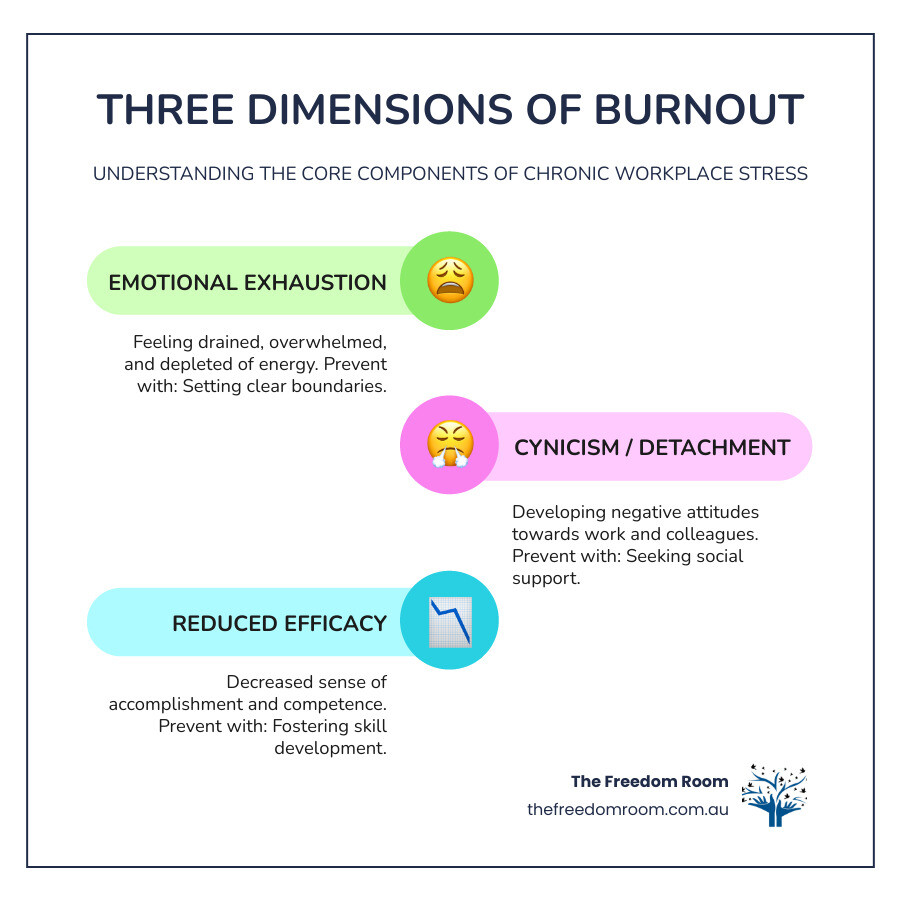
Burnout is not classified as a medical diagnosis. Instead, the WHO describes it as a syndrome with three distinct dimensions. These include feelings of energy depletion or exhaustion, increased mental distance from one’s job with feelings of negativism or cynicism, and reduced professional efficacy. The WHO’s statement on burnout provides comprehensive details about this classification.
Recognising the Key Symptoms of Burnout
Early identification of burnout is crucial for effective workplace burnout prevention. The symptoms often develop gradually, which can lead to them being dismissed as temporary stress.
Emotional and Physical Exhaustion
Emotional exhaustion is typically the initial symptom. It manifests as a persistent feeling of being drained, which is not alleviated by rest. This emotional depletion is often accompanied by physical fatigue that does not improve with sleep or time away from work.
Cynicism and Detachment
Cynicism and detachment commonly follow exhaustion. An individual may develop a negative perspective on their work, question its value, or feel disconnected from colleagues. This shift in attitude can be particularly distressing for those who were once passionate about their role.
Reduced Professional Efficacy
Reduced professional efficacy becomes apparent when an individual feels less capable or accomplished in their work. Tasks that were previously manageable may seem overwhelming. This can lead to self-doubt and a feeling of not making a meaningful contribution.
Other Warning Signs
Other warning signs include difficulty concentrating, where focus becomes elusive even for simple tasks. Sleep problems are also common, such as difficulty falling asleep, staying asleep, or waking up feeling unrefreshed. Some individuals experience a loss of identity, where work consumes their sense of self so completely that they struggle to define themselves outside of their professional role.
If these symptoms are accompanied by persistent stress or anxiety, exploring Stress and Anxiety Management Techniques can provide valuable support.
The Primary Causes of Workplace Burnout
Understanding the root causes of burnout is essential for prevention. These factors often interact and compound one another, creating conditions conducive to chronic stress.
Excessive Workload
A consistently excessive workload is a primary contributor to burnout. The risk increases significantly when working more than 50 hours per week and is even greater at 60 hours or more.
Lack of Control
A lack of control over one’s work environment, tasks, or schedule can create a sense of powerlessness. When an individual cannot influence decisions affecting their daily work, stress accumulates rapidly.
Insufficient Rewards
Insufficient rewards extend beyond financial compensation. A lack of recognition, limited opportunities for growth, and not feeling valued all diminish job satisfaction, leading to a decline in motivation and engagement.
Unfair Treatment
Unfair treatment in the workplace, such as favouritism, unclear policies, or inconsistent rule application, is a significant stressor. The perception of inequitable treatment can be particularly draining.
Breakdown of Community
A breakdown of community occurs when workplace relationships are poor. A lack of support from colleagues or managers, unresolved conflicts, or social isolation can make the work environment feel challenging and lonely.
Values Mismatch
A values mismatch occurs when an individual’s personal values conflict with organisational practices or expectations. This internal conflict creates ongoing stress as one navigates situations that do not align with their beliefs.
Unclear Job Expectations
Ambiguous job expectations leave individuals uncertain about what is required for success. Without clear guidelines, it is difficult to prioritise tasks or measure performance, which can lead to anxiety and overwork.
The Ripple Effect: Consequences of Unaddressed Burnout
When workplace burnout prevention is not prioritised, the consequences extend far beyond an individual’s immediate discomfort. The effects spread outward, impacting all aspects of personal wellbeing and organisational health.
The available data presents a serious overview of the situation. Organisations experience productivity losses, while individuals face significant health complications that can have long-term effects. Understanding these far-reaching impacts clarifies why prevention is an essential requirement.
The Toll on Individual Wellbeing
Chronic, unmanaged stress has a significant physiological impact. The physical health risks associated with burnout become increasingly serious as the condition progresses.
Cardiovascular Complications
Heart disease emerges as a primary concern. Research reveals that burnout increases an individual’s risk of developing coronary heart disease by 40 percent, while those experiencing severe burnout face a 79 percent higher risk. High blood pressure often develops alongside these cardiovascular issues, creating a dangerous cycle where stress compounds existing health problems.
Weakened Immune System
A weakened immune system becomes less capable of fighting off infections. This leaves an individual vulnerable to frequent illnesses that further deplete their energy reserves.
Mental Health Impact
The mental health impact can be equally severe. Anxiety and depression frequently develop as emotional exhaustion deepens, which can create overwhelming feelings of hopelessness and despair. Some individuals may turn to substance use as a coping mechanism to seek temporary relief from persistent emotional distress.
These issues are interconnected and can amplify one another, creating a complex network of health challenges. For those struggling with these feelings, exploring resources on Caring for Your Mental Health can provide valuable support and guidance.
The Impact on Organisational Health
Organisations incur substantial costs when burnout is not addressed.
Decreased Productivity
Lower productivity is an immediate consequence, as disengaged employees struggle to maintain previous performance levels. Tasks take longer to complete, creativity diminishes, and the quality of work often declines.
Increased Absenteeism
Higher absenteeism follows, with burnt-out staff taking more frequent sick days. This places additional strain on the remaining team members, who must cover extra responsibilities while potentially managing their own stress.
Higher Employee Turnover
Increased employee turnover is one of the most costly consequences. Organisations typically spend 15 to 20 percent of their total payroll budget on voluntary turnover costs, which include recruitment, training, and productivity loss during transition periods.
Elevated Safety Risks
Safety incidents become five times more likely when employees are exhausted and unable to maintain proper attention. This creates liability concerns in addition to the human cost of workplace injuries.
Negative Workplace Culture
Burnout can also foster a negative workplace culture that spreads throughout teams and departments. When cynicism and disengagement become normalised, they can affect previously healthy work environments, making recovery more difficult.
Financial Costs
The financial costs extend beyond direct expenses to include reduced innovation, damaged client relationships, and a decreased competitive advantage. These cumulative impacts can threaten an organisation’s long-term viability, making effective workplace burnout prevention a business imperative.
A Proactive Guide to Individual Workplace Burnout Prevention
Individuals can take proactive steps towards workplace burnout prevention rather than waiting for organisational change. While employers play a vital role, personal strategies can significantly build resilience against burnout before it reaches a critical stage.
This approach is analogous to maintaining physical health, where preventative care is prioritised. Taking steps to Take Care of Yourself forms the foundation of any effective prevention strategy.
Establishing Professional Boundaries
Learning to set and maintain healthy boundaries is a critical skill for managing one’s relationship with work. This practice is not about being uncooperative or uncommitted; it is about creating sustainable habits that protect energy and preserve long-term performance capacity.
Defining Work-Life Separation
Setting clear boundaries involves being intentional about when work starts and ends. In a constantly connected environment, this requires deliberate effort.
Why Saying No Matters
Every yes has a cost; saying no protects your focus and wellbeing. If you’re having trouble, try this script: “I can’t take this on right now. Here’s what I can do instead…” Offer a later date, smaller scope, or a referral.
Protecting Personal Time
Protecting personal time requires treating non-work hours as non-negotiable. This includes scheduling and taking regular breaks throughout the workday, rather than working through them. It also means disconnecting from work-related technology after hours to protect one’s mental peace.
Implementing Transition Rituals
Creating transition rituals between work and home can be an effective strategy. A short walk, a few minutes of deep breathing, or changing clothes can signal to the brain that the workday is over. For more comprehensive strategies, explore Work-Life Balance and Burnout Prevention.
Building Personal Resilience Against Burnout
Resilience is not an inherent trait but a skill that can be developed, similar to building physical strength through exercise. The objective is not to become immune to stress, but to recover from it more quickly and effectively.
Mindfulness Practices
Practising mindfulness is a powerful tool for managing stress. By bringing non-judgmental awareness to the present moment, an individual can create distance from overwhelming thoughts or feelings, reducing their impact.
Prioritising Sleep
Prioritising sleep is essential. Contrary to the common misconception that adults need less sleep, most still require 7–9 hours of quality rest. Keep consistent sleep and wake times, regularity matters as much as duration to stabilise mood, focus, and energy.
Regular Physical Activity
Engaging in regular physical activity does not require intense workouts. A 20-minute walk can significantly reduce stress hormones and improve mood. Consistency is more important than intensity.
Nurturing Hobbies Outside of Work
Pursuing hobbies outside of work provides balance and perspective, reinforcing that one’s identity is more than a job title. These activities are an investment in overall wellbeing.
Seeking Social Support
Seeking social support from friends, family, or colleagues creates essential connections that can buffer against stress. Isolation often amplifies the effects of workplace pressure.
Therapeutic Support for Resilience
Beyond these foundational strategies, specific therapeutic approaches can provide additional support. Emotional Freedom Techniques (EFT), or tapping, involves gently stimulating acupressure points while focusing on distressing thoughts or emotions. This process sends calming signals to the amygdala, which helps to disrupt the stress response and foster emotional resilience.
Cognitive Behavioural Therapy (CBT) helps individuals identify and challenge unhelpful thinking patterns that contribute to stress and burnout. By learning to reframe negative thoughts and develop healthier coping mechanisms, one can regain a sense of control and efficacy. These approaches provide practical tools to manage the emotional and psychological aspects of chronic stress, offering additional layers of protection in a workplace burnout prevention toolkit.
For those interested in exploring comprehensive Self-Care Activities, it is important to remember that small, consistent actions often create the most significant long-term changes.
Creating a Burnout-Resistant Workplace Culture
Effective workplace burnout prevention cannot be achieved by individuals alone. It requires a genuine commitment from organisations and leaders to create environments where employees can thrive.
A burnout-resistant workplace culture is built on the principle of shared responsibility. All members of an organisation have a role, from senior leadership to new team members. When leadership actively promotes psychological safety and creates supportive environments, it empowers everyone to prioritise wellbeing without fear of judgment or negative career consequences.

The Manager’s Role in Effective Workplace Burnout Prevention
Research indicates that managers account for up to 70 percent of the variance in employee engagement, highlighting their significant influence on an employee’s daily experience.
Promoting Autonomy
Effective managers understand that promoting autonomy is crucial. When employees feel they have control over how they approach their work, their risk of burnout decreases. This involves providing freedom to manage tasks and schedules within reasonable boundaries.
Ensuring Reasonable Workloads
Managing workloads is one of the most direct ways managers can prevent burnout. This requires transparent conversations about capacity, declining unrealistic demands, and redistributing work when an employee is overwhelmed.
Providing Regular Feedback and Recognition
Regular feedback is highly important. When employees understand their performance and feel valued for their contributions, they are more resilient to stress. This involves providing meaningful recognition and constructive guidance.
Offering Proactive Support
Managers should offer support and resources proactively. This may include providing access to wellbeing programs, flexible work arrangements, or being available for support when an employee is struggling. Leading with empathy involves recognising individual challenges and responding with understanding.
It is noteworthy that managers themselves often report higher stress levels, worse work-life balance, and more signs of burnout than their team members. This underscores the need for support systems that benefit all levels of an organisation.
Organisational Strategies for a Supportive Environment
Beyond the manager-employee relationship, organisations must implement systems that actively protect employee wellbeing. Investing in such programs is essential for sustainable business success.
Manager Training and Development
Training managers on how to spot early warning signs of burnout, conduct conversations about workload, and provide empathetic support is a high-impact strategy for shifting the entire workplace culture.
Fostering a Culture of Respect and Psychological Safety
Fostering a culture of respect involves creating an environment where people feel psychologically safe to speak up, make mistakes, and ask for help. Research shows that employees who feel they are treated unfairly at work are significantly more likely to experience burnout.
Addressing High-Risk Professions
Certain industries and roles require targeted attention. In healthcare, for example, a high percentage of nurses experience burnout, with a notable portion of nurses under 25 reporting these symptoms. This can stem from moral injury, where professionals are unable to provide the standard of care they deem necessary due to systemic limitations like understaffing or resource constraints.
Recognising high-risk professions means understanding that certain roles carry inherent emotional demands and systemic pressures. These fields require additional support, such as improved staffing ratios, access to mental health resources, or structural changes that address the root causes of stress.
Developing Psychological Flexibility can be particularly valuable in demanding roles, helping individuals adapt to challenging situations while maintaining their wellbeing.
The objective is not to eliminate all workplace stress, which is neither possible nor desirable. The goal is to create environments where stress is manageable, support is readily available, and employees are valued as individuals.
Conclusion: A Proactive and Integrated Approach to Burnout Prevention
The path to effective workplace burnout prevention involves creating sustainable practices that honour both professional commitments and personal wellbeing. This requires a thoughtful blend of individual awareness and organisational support.
Summary of Key Prevention Pillars
The strategies discussed are most effective when approached as interconnected elements. Establishing professional boundaries provides a foundation, while building personal resilience through mindfulness, adequate sleep, and meaningful connections creates the strength needed for long-term sustainability. These individual efforts are amplified by supportive workplace cultures and empathetic leadership.
The Importance of Proactive Prevention
The consequences of ignoring burnout extend far beyond temporary fatigue, affecting physical health, relationships, and professional effectiveness. However, burnout is largely preventable when warning signs are recognised and addressed proactively.
The Role of Professional Guidance
Managing chronic stress requires ongoing attention and often benefits from professional guidance. When workplace pressures feel overwhelming, or when persistent signs of emotional exhaustion and cynicism are present, seeking support can provide valuable tools for recovery and prevention.
Therapeutic Modalities for Recovery and Resilience
Emotional regulation is particularly crucial during challenging periods. Techniques such as Emotional Freedom Techniques (EFT) offer a gentle yet effective method for processing stress. EFT works by sending calming signals to the amygdala through light tapping on specific points while focusing on distressing thoughts, which helps to regulate the stress response.
Cognitive Behavioural Therapy (CBT) is another powerful approach that helps individuals identify and challenge unhelpful thinking patterns contributing to chronic stress. By learning to reframe negative thoughts and develop healthier coping mechanisms, one can regain a sense of control and professional efficacy.
At The Freedom Room, we understand that building resilience against burnout often requires personalised support. Our therapeutic approaches, including EFT and CBT Therapy, are designed to help clients develop practical tools for managing workplace stress and building emotional resilience.
If you are experiencing signs of burnout or wish to strengthen your prevention strategies, professional support can provide the guidance and tools needed for lasting change. Seeking assistance is an act of self-care and a proactive step towards wellbeing.
Frequently Asked Questions about Workplace Burnout
What is the official definition of workplace burnout?
The World Health Organization (WHO) provides a clear framework for understanding burnout. It is defined as an occupational phenomenon resulting from chronic workplace stress that has not been successfully managed. This term is not merely a buzzword; it is a recognised condition with three distinct characteristics.
Effective workplace burnout prevention is enhanced by understanding these three core dimensions. The first is feelings of energy depletion or exhaustion, where an individual feels completely drained despite adequate rest. The second involves increased mental distance from one’s job, often manifesting as negativism or cynicism towards work responsibilities and colleagues. The third dimension is reduced professional efficacy, where an individual questions their abilities and feels less accomplished in their role.
This official recognition by the WHO validates the experiences of many Australian workers and emphasises that burnout is a serious occupational health concern, not a personal failing.
Is burnout the same as stress?
While stress and burnout are closely related, they represent different experiences. Understanding this distinction is crucial for effective workplace burnout prevention.
Stress typically involves over-engagement, where an individual feels a sense of urgency, hyperactivity, and constant pressure. This state is often characterised by an experience of ‘too much,’ such as too many demands or too much pressure.
In contrast, burnout is characterised by disengagement, helplessness, and profound emotional exhaustion. Rather than feeling overwhelmed by ‘too much,’ burnout often feels like ‘not enough,’ such as not enough energy, motivation, or sense of purpose.
With stress, an individual may still feel that the situation can be resolved through increased effort. With burnout, that sense of hope has often been replaced by cynicism and a belief that one’s actions will not make a meaningful difference.
Can you recover from burnout while staying in the same job?
Yes, recovery from burnout without changing jobs is possible, but it requires a commitment to making meaningful changes in one’s approach to work and self-care. Many individuals successfully navigate this process while remaining in their roles.
Individual strategies form the foundation of recovery. These include setting firm boundaries between work and personal time, improving self-care practices, and developing better stress management techniques. Regular application of approaches like mindfulness, physical activity, and ensuring adequate sleep can significantly support the recovery process.
Organisational changes are often equally important. This might involve having transparent conversations with a manager about workload adjustments, seeking clearer job expectations, or exploring flexible work arrangements. Small shifts in responsibilities or working conditions can make a substantial difference.
Professional support can be invaluable during this process. Therapeutic approaches such as Cognitive Behavioural Therapy (CBT) and Emotional Freedom Techniques (EFT) can help individuals develop new coping strategies, process workplace stress more effectively, and build emotional resilience. These tools provide practical ways to manage the mental and emotional aspects of recovery while implementing other changes.
The key to recovery is recognising that it typically requires a multi-faceted approach rather than a single solution.