

The Importance of Relapse Prevention in Recovery
Strategies to prevent relapse are an essential component of recovery from alcohol or other drug dependence. Key approaches involve identifying personal triggers, creating a prevention plan, building coping skills, and maintaining supportive relationships. Understanding the stages of relapse and implementing proactive measures can reduce the risk of recurrence and support sustainable recovery.
Key strategies include:
- Recognising warning signs such as isolation or increased stress
- Developing coping mechanisms such as mindfulness and exercise
- Building a support network of peers, counsellors, and loved ones
- Creating an emergency contact list for high-risk situations
- Practising self-care for physical and emotional wellbeing
Relapse can be a common aspect of the recovery process. Evidence from the Australian Institute of Health and Welfare (AIHW) indicates that concerns related to alcohol and other drugs are chronic health conditions for many people, often involving periods of improvement and setback. Understanding this pattern can help to reduce associated shame.
Relapse is not a moral failing but a reflection of the chronic nature of substance dependence. Viewing a lapse as an opportunity for learning, rather than as a failure, can support continued progress. Recovery is a long-term process focused on progress rather than perfection.
This guide outlines practical strategies to prevent relapse, focusing on identifying triggers, building coping skills, and strengthening support systems.
Core Strategies to Prevent Relapse
Identifying Triggers and Recognising the Stages of Relapse

Relapse is typically a gradual process with identifiable stages. Understanding these stages and their associated triggers is crucial for early intervention and effective relapse prevention. Triggers are internal or external cues that may precipitate a return to substance use.
Internal triggers originate from an individual’s thoughts, feelings, and physical sensations. These can include:
- Stress and anxiety: High levels of stress related to work, family, study, or finances
- Negative emotions: Feelings such as sadness, anger, loneliness, or boredom
- Low self-esteem or irritability: These states can erode resolve and increase vulnerability
- Physical sensations: Symptoms such as insomnia, fatigue, or low mood after stopping use
External triggers are environmental cues that remind an individual of past substance use. Examples include:
- People and places: Encountering old friends who use or visiting places associated with past use
- Social pressure: Situations where substances are available, such as parties or gatherings
- Paraphernalia and cues: Seeing alcohol advertisements or smelling alcohol
The HALT acronym (Hungry, Angry, Lonely, and Tired) is a useful tool for identifying immediate internal states that can increase vulnerability and reduce the capacity to cope with stress and cravings.
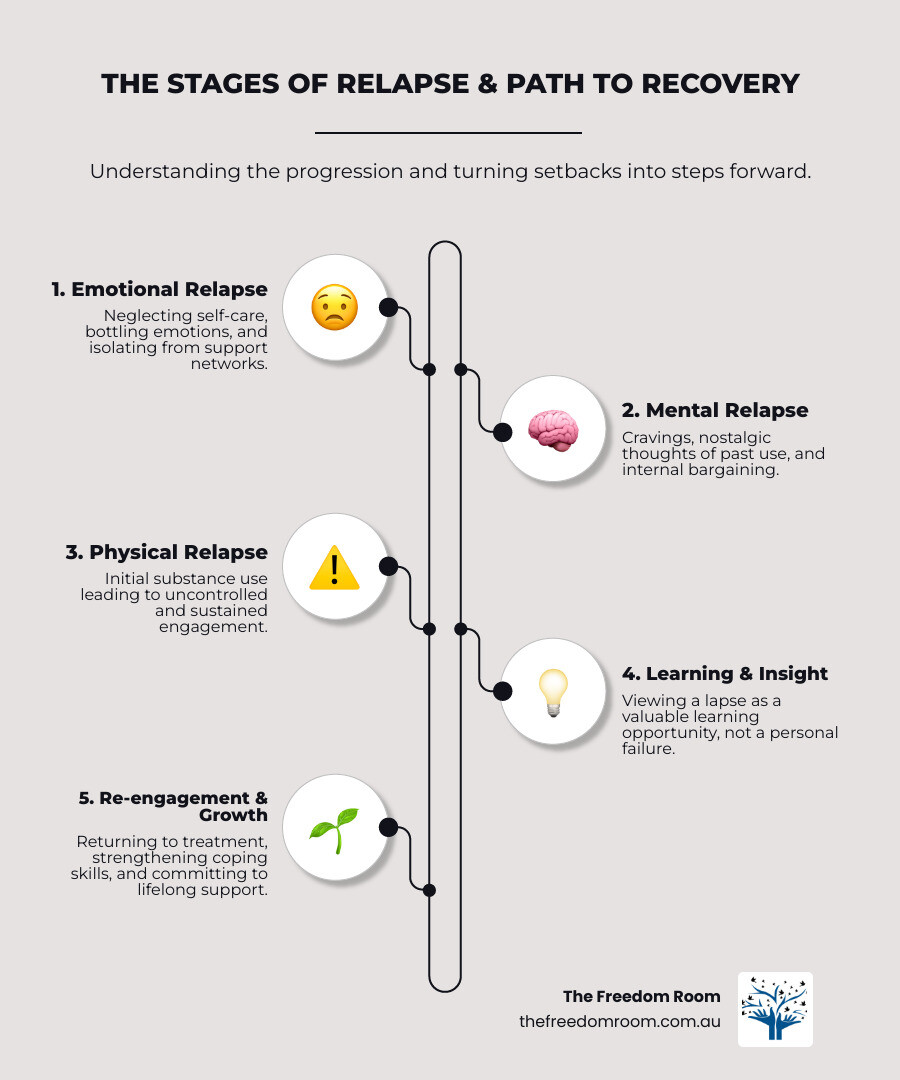
The relapse process typically unfolds in three stages:
- Emotional relapse: This stage begins before any thought of use and is marked by poor self-care, emotional suppression, isolation, and neglecting healthy routines.
- Mental relapse: An internal struggle begins, involving thoughts about using, romanticising past use, and experiencing intense cravings. An individual might begin to bargain with themselves or rationalise the idea of a single use.
- Physical relapse: This is the actual resumption of substance use. It often begins with a single lapse that can escalate into a full relapse and a return to previous patterns of use.
A lapse is a single instance of use, while a relapse is a more sustained return to old patterns. Responding to a lapse as a signal to review strategies can help prevent a full relapse.
Developing a Personalised Relapse Prevention Plan
A personalised relapse prevention plan is a highly effective strategy. It functions as a roadmap for recovery, tailored to an individual’s specific triggers, strengths, and support systems, providing guidance during challenging situations. The plan should be treated as a living document, subject to review and updates as the individual progresses in their recovery.
Key components for a comprehensive relapse prevention plan include:
- Identify high-risk situations: List specific internal and external triggers that apply to the individual
- Develop coping strategies: For each trigger, outline a healthy coping mechanism to be used
- Establish a support network: Create an emergency contact list of trusted people and services
- Set realistic goals: Break down recovery goals into small, achievable steps
- Plan for high-risk situations: Develop exit strategies or ways to navigate events where substances may be present
- Practise self-care: Include daily routines such as healthy eating, movement, and good-quality sleep
- Review and adjust: Regularly review and adjust the plan with a support person or health professional
- Learn from lapses: Use any lapse as information to adapt the plan and strengthen the approach
A clear, written plan facilitates prompt action during periods of vulnerability. By addressing potential obstacles in advance, individuals can build a stronger defence against relapse and support long-term sobriety.
Building Coping Skills and Healthy Self-Care Routines
Effective coping skills and healthy self-care routines are core strategies to prevent relapse. They equip individuals with the capacity to manage stress, emotions, and cravings without returning to substance use.
Mindfulness and meditation can be helpful coping mechanisms. Mindfulness involves focusing on the present moment without judgment, which can allow an individual to observe cravings as temporary experiences that will pass. Techniques such as urge surfing involve observing a craving without acting on it, allowing it to crest and subside naturally. Slow breathing exercises, such as breathing in for a count of four and out for a count of four, can calm the nervous system.
Physical activity is another important aspect of self-care, as it supports mood and reduces stress. Maintaining a healthy diet and a consistent sleep schedule also plays a crucial role. Poor nutrition and inadequate sleep can exacerbate negative emotions and increase susceptibility to the triggers identified by the HALT acronym.
Engaging in hobbies, creative activities, and journaling can provide structure and a sense of purpose. Managing stress through time management, declining extra commitments, and setting boundaries is also important. When an urge arises, visualising the potential negative consequences of using can reinforce one’s commitment to sobriety.
Key self-care practices to integrate into a routine include:
- Mindfulness or meditation: Practise regularly to increase self-awareness and manage cravings
- Regular physical activity: Choose enjoyable activities, such as walking, swimming, or gentle stretching
- Balanced nutrition: Aim for regular meals and a variety of nourishing foods
- Adequate sleep: Aim for consistent bed and wake times wherever possible
- Journaling: Write down thoughts and feelings to process emotions and track patterns
- Hobbies and interests: Set aside time for activities that bring a sense of satisfaction
- Stress reduction: Use techniques such as progressive muscle relaxation or spending time outdoors
- Urge surfing: When a craving arises, notice it, name it, and allow it to rise and fall without acting on it
Over time, consistent use of these skills and routines can strengthen resilience and support lasting recovery.
Strengthening Support Systems for Ongoing Recovery
A strong support system is a critical component in preventing relapse. Recovery is often more sustainable when supported by a network of professional services, peer groups, and supportive family and friends.
Professional support, such as counselling and psychological therapy, provides structure and guidance. At The Freedom Room, the team offers compassionate, cost-effective treatment for alcohol dependence through personalised sessions and workshops. Therapeutic support can help address the underlying causes of dependence and build healthy coping strategies. Family counselling can also assist in improving communication and creating a more supportive home environment.
Outpatient alcohol and other drug treatment programs in Queensland and across Australia offer ongoing support while individuals continue with daily responsibilities. Services such as those available in Strathpine, QLD, allow people to live at home while attending regular therapy and support groups. This structure helps individuals practise new skills in real-world situations.
Peer support groups such as Alcoholics Anonymous (AA), Narcotics Anonymous (NA), and SMART Recovery provide connection and shared understanding. Many groups operate across Queensland, including in regional areas. Being part of a peer community can reduce isolation and support accountability. A sponsor or peer mentor can offer one-to-one guidance.
Supportive family members and friends can provide encouragement and practical help. It is important to engage with people who respect recovery goals and to establish clear boundaries with individuals who may pose a risk to one’s recovery.
Ways to strengthen a support system include:
- Engage in professional therapy: Seek individual, group, or family counselling
- Attend outpatient programs: Explore flexible treatment options in the local area
- Join peer support groups: Attend regular meetings such as AA, NA, or SMART Recovery
- Build sober connections: Spend time with others who are committed to recovery
- Involve supportive loved ones: Inform trusted people about recovery goals and how they can help
- Create an emergency contact list: Include people and services to contact during periods of vulnerability
Sustaining Long-Term Recovery
Implementing effective strategies to prevent relapse enables individuals to navigate the challenges of recovery with greater confidence. Understanding relapse as a process rather than a single event allows for the recognition of early warning signs and a proactive response. Identifying triggers, developing a personalised plan, building coping skills, and strengthening a support network are all practical steps that support long-term change.
Recovery is an ongoing process that often involves learning, adjustment, and perseverance. Setbacks should be viewed as learning opportunities that provide information for future strategies, rather than as failures. Small, consistent actions, including attending appointments, applying coping skills, and seeking support, contribute to meaningful long-term progress.
At The Freedom Room, the team combines professional training with lived experience of alcohol dependence and recovery. The service is committed to providing authentic, empathetic, and professional support tailored to each individual’s circumstances. The focus is on equipping individuals with practical tools and strategies to build a fulfilling life in recovery.
Individuals do not have to navigate this process alone. Support is available for people at all stages of recovery, from initial consideration of change to the maintenance of long-term progress.