

Understanding the Journey to Sobriety
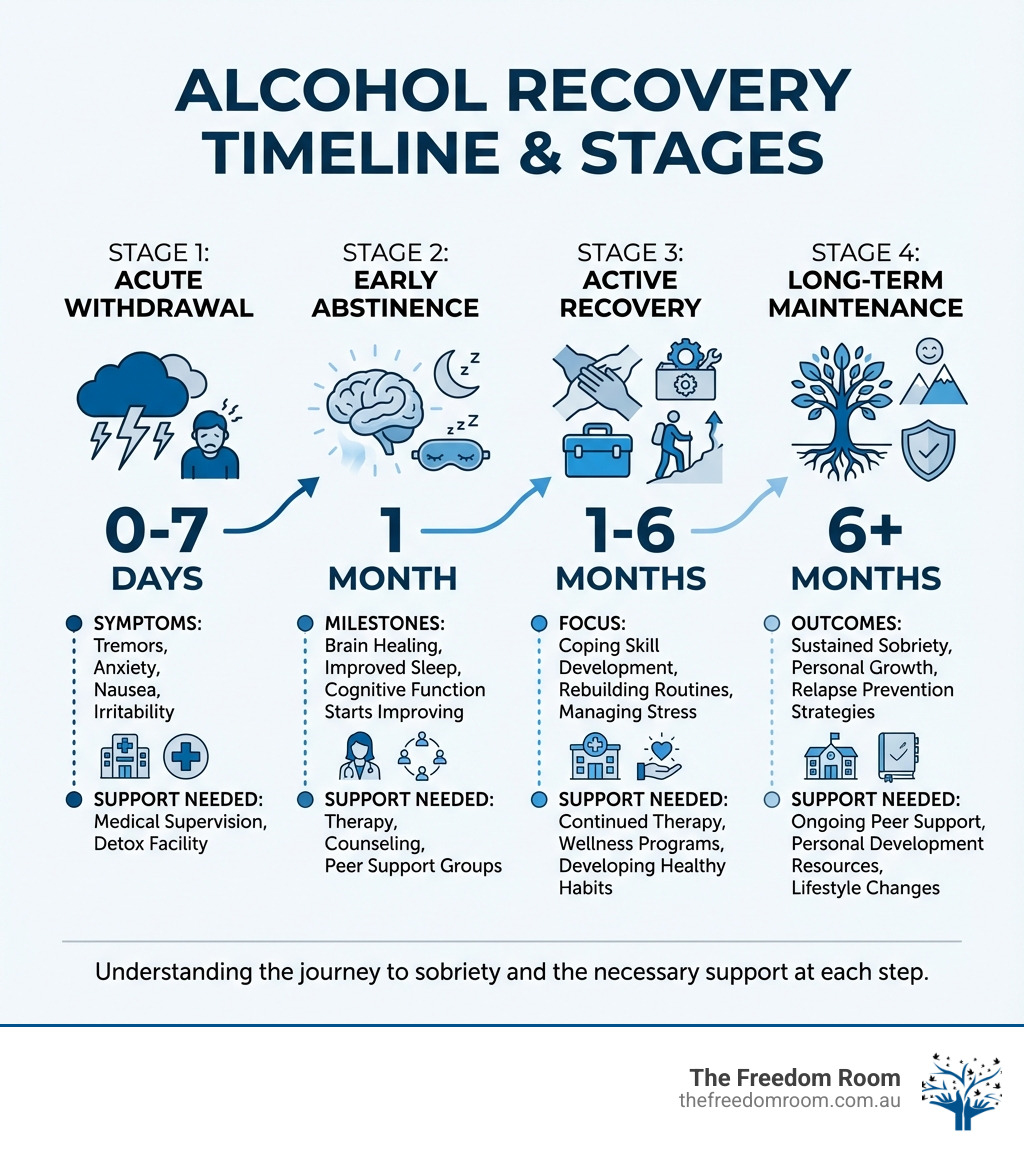
The “getting sober from alcohol timeline” varies for each person, but understanding the general stages can help you prepare for what lies ahead. Most people experience acute withdrawal within the first week, followed by early healing in the first month, active recovery from 1-6 months, and long-term maintenance beyond six months.
The key stages of alcohol recovery include:
- First 6-72 hours – Acute withdrawal symptoms begin, including tremors, anxiety, and nausea
- First week – Physical symptoms peak, requiring medical supervision for safety
- First month – Post-acute withdrawal continues while cognitive function starts improving
- 1-6 months – Focus shifts to developing healthy coping mechanisms and rebuilding routines
- 6+ months – Long-term recovery maintenance, personal growth, and sustained sobriety
Recovery from alcohol dependence is not a single event. It is a journey that unfolds over time, with distinct physical and psychological changes occurring at different stages.
Your experience will be unique to you. Factors like how long you have been drinking, how much you consume, your overall health, and the support you receive all influence your personal timeline. Some people face more challenging withdrawal symptoms, while others steer early recovery with fewer physical complications.
Both physical dependence and psychological dependence play significant roles in this journey. Your body must adjust to functioning without alcohol, while your mind learns new ways to cope with stress, anxiety, and daily life.
The journey is not one you need to walk alone. Professional support, peer connections, and compassionate care make the path safer and more manageable. Acknowledging that you may need help is not a weakness. It is a courageous first step toward lasting change.
If you are questioning whether your drinking has become problematic, resources like Do I Have a Problem with Alcohol can provide clarity.
The Getting Sober from Alcohol Timeline: Key Stages and Milestones
Understanding the various phases involved in getting sober from alcohol timeline can help you set realistic expectations and prepare for the challenges and triumphs ahead. We have outlined these stages to provide a comprehensive guide to what you can anticipate on your path to recovery.

The First Week: Your Getting Sober from Alcohol Timeline Begins
The initial phase of recovery, spanning the first 6 to 72 hours after your last drink, is often the most physically intense. This period is characterised by acute withdrawal symptoms as your body attempts to rebalance itself without alcohol. Alcohol acts as a central nervous system depressant. Over time, your brain adapts by altering its neurotransmitter balance, specifically affecting gamma-aminobutyric acid (GABA), which calms the nervous system, and glutamate, an excitatory neurotransmitter. When alcohol is suddenly removed, this delicate balance is disrupted, leading to an overstimulated nervous system. This neurotransmitter imbalance is the primary cause of withdrawal symptoms.
Common physical effects during this stage include:
- Shaking or tremors, particularly in the hands
- Excessive sweating
- Nausea and vomiting
- Headaches
- Increased heart rate and blood pressure
- Insomnia and restless sleep
- Gastrointestinal disturbances
Psychologically, you may experience heightened anxiety, irritability, mood swings, and difficulty concentrating. In severe cases, symptoms can escalate to hallucinations, confusion, and disorientation.
A critical concern during this period is the risk of Delirium Tremens (DTs), a severe form of alcohol withdrawal that can emerge between 48 and 72 hours after your last drink. DTs present with intense confusion, agitation, paranoia, and potentially fatal symptoms such as seizures. The mortality rate for untreated DTs can range from 1% to 4%, underscoring the vital need for medical intervention. Seizure risk is highest between 24 and 48 hours after cessation.
Given these serious risks, medical supervision is paramount during the first week of withdrawal, especially for individuals with a history of heavy or prolonged alcohol use. Up to 80% of those with an alcohol use disorder may experience withdrawal symptoms to some degree. A medically supervised detox ensures your safety, manages discomfort, and allows healthcare professionals to intervene rapidly if severe complications arise. This support is crucial for a safe and effective start to your recovery. You can find more detailed information on the medical aspects of withdrawal in Scientific research on alcohol withdrawal syndrome and explore options for a Safe Alcohol Detox.
The First Month: Early Abstinence and Healing
As you move past the acute withdrawal phase, typically after the first week, you enter a period of early abstinence and healing, often spanning weeks 2 to 4. While the most dangerous physical symptoms may have subsided, this stage presents its own set of challenges, predominantly related to Post-Acute Withdrawal Syndrome (PAWS).
PAWS is a collection of psychological and emotional symptoms that can persist or develop after the initial acute withdrawal, lasting for weeks, months, or even, in some cases, years. These symptoms can include:
- Persistent anxiety and depression
- Mood swings and irritability
- Fatigue and low energy
- Sleep disturbances, despite initial improvements
- Difficulty concentrating or “brain fog”
- Intense cravings for alcohol
Managing PAWS is critical during this period to prevent relapse, as the discomfort can be a strong trigger. You can learn More about long-term withdrawal to better understand this phase.
Despite the challenges, the first month also brings significant positive changes. Your brain begins to heal from alcohol’s effects, leading to notable cognitive improvements. Memory, concentration, and decision-making abilities, which may have been impaired by prolonged alcohol use, start to sharpen. You might find that the “fog” that alcohol created begins to lift, leading to clearer thinking.
Physically, your body continues its recovery journey. Many individuals report better sleep quality and feel more rested as their natural sleep cycles begin to restore themselves. Alcohol is a diuretic, causing dehydration, so improved hydration in sobriety can lead to a noticeable difference in overall well-being.
Here is a list of early health improvements you might experience after quitting alcohol:
- Improved Sleep: Alcohol disrupts your natural sleep cycle, but in sobriety, you will likely achieve more restorative, deeper sleep.
- Better Hydration: As your body rehydrates, you may notice improvements in energy levels and overall physical comfort.
- Clearer Skin and Healthier Hair: The dehydrating effect of alcohol significantly impacts skin and hair quality. With better hydration and overall health, your skin may appear fuller and healthier, and your hair may become more supple.
- Improved Gut Health: Alcohol can inflame the stomach lining. By the second week of abstinence, your gut begins to heal, reducing issues like heartburn, bloating, and indigestion.
- Initial Weight Loss: Alcohol contains “empty calories.” By eliminating these, you may experience a reduction in calorie intake, potentially leading to weight loss.
- Financial Savings: Reducing or eliminating alcohol purchases frees up a significant amount of money, which can be a powerful motivator.
- Reduced Blood Pressure: For those with alcohol-induced hypertension, blood pressure can start to normalise within weeks of abstinence, lowering the risk of heart disease.
- Liver Function Improvement: While severe scarring might remain, inflammation in the liver caused by alcohol will subside, and its function will begin to improve.

1-6 Months: Key Milestones in the Getting Sober from Alcohol Timeline
As you progress into the 1 to 6-month mark of your getting sober from alcohol timeline, you enter a crucial phase of early to mid-recovery. During this period, the focus shifts from immediate withdrawal management to developing robust strategies for sustained sobriety. Many of the physical symptoms of PAWS may start to lessen, but psychological and emotional challenges can still emerge, requiring consistent effort and support.
This stage is primarily about cultivating healthy coping mechanisms. You will learn to identify and manage triggers that previously led to alcohol use. This involves understanding your personal vulnerabilities, such as stress, certain social situations, or emotional states, and developing alternative, constructive responses. Emotional regulation becomes a key skill, allowing you to process feelings like anger, sadness, or anxiety without resorting to alcohol.
The role of Therapy for Alcoholism is incredibly significant here. Cognitive Behavioural Therapy (CBT), for instance, can help you identify and challenge negative thought patterns that contribute to cravings or relapse risk. Acceptance and Commitment Therapy (ACT) can support you in embracing difficult thoughts and feelings while committing to values-driven actions in recovery. These therapeutic approaches provide tools and strategies for navigating the complexities of sobriety.
Peer support also becomes increasingly vital. Connecting with others who share similar experiences can provide invaluable encouragement, understanding, and a sense of community. This mutual support helps reduce feelings of isolation and reinforces your commitment to an alcohol-free life.
Rebuilding routines and establishing a stable, healthy lifestyle are also central to this phase. This might include:
- Developing a consistent sleep schedule.
- Engaging in regular physical activity.
- Adopting a balanced and nutritious diet.
- Pursuing new hobbies and interests that do not involve alcohol.
- Learning to say no to alcohol in social settings and forming new, sober friendships.
Navigating social situations without alcohol can be challenging, but with practice and preparation, it becomes easier. We often encourage our clients to have a plan for social events, which might include bringing non-alcoholic drinks or having an exit strategy. This period is about actively constructing a new life where alcohol no longer holds a central role.
6 Months and Beyond: Embracing Long-Term Recovery
Reaching the 6-month mark and moving beyond signifies a significant achievement in your getting sober from alcohol timeline. This is the stage of advanced recovery, where the foundation laid in earlier months is strengthened, and the focus shifts to sustaining sobriety for the long term. While cravings and challenges may still arise occasionally, they typically become less intense and more manageable.
This phase is characterised by profound personal growth. Many individuals find they have more mental clarity and emotional stability, allowing them to engage more fully with life. You might find new aspects of your personality, pursue educational or career goals, or develop deeper, more authentic relationships.
Rebuilding relationships that may have been strained by alcohol use is a key part of this stage. With continued sobriety, trust can be re-established, and you can connect with loved ones in healthier ways. This often involves open communication, setting boundaries, and demonstrating consistent commitment to your recovery.
Celebrating milestones, whether it is 6 months, a year, or longer, provides important reinforcement and acknowledges the hard work and dedication involved. These celebrations serve as reminders of how far you have come and the immense benefits of an alcohol-free life.
Effective Relapse Prevention Plan Guide becomes an integral part of daily life. This involves continuously assessing triggers, strengthening coping strategies, and maintaining a strong support network. Studies show that people in late-stage recovery may still experience complex emotional states that could lead to relapse, so ongoing vigilance and self-care are crucial. Long-term sobriety is significantly improved by engaging in comprehensive aftercare programmes, which may include therapy, 12-step programmes, and wellness activities. These programmes improve relationships, life skills, and mental health, contributing to robust recovery.
The long-term health benefits of quitting alcohol are extensive and continue to accumulate over time. For example, improved liver health can be observed, as alcohol can damage the liver, leading to conditions such as fatty liver disease and cirrhosis. Quitting helps improve liver function. Better heart health is also a significant benefit, as excessive alcohol consumption is linked to an increased risk of heart disease, high blood pressure, and stroke. Abstinence can lower these risks and improve overall cardiovascular health. Furthermore, improved mental well-being is a common outcome, as alcohol can negatively impact mental health, contributing to depression and anxiety. Quitting can lead to improved mood and reduced anxiety. Finally, a stronger immune system and better sleep quality are also enduring advantages.
We offer a Long Term Alcohol Recovery Complete Guide to help you steer this ongoing journey.
Take the First Step Toward a Fulfilling, Alcohol-Free Life
Recovery is not a destination but an ongoing journey of self-findy, healing, and growth. Each step on your getting sober from alcohol timeline is a testament to your resilience and commitment to a healthier, more fulfilling life. At The Freedom Room, we believe in the power of empowerment through sobriety, guiding individuals to reclaim their lives and build a future free from alcohol dependence.
Our approach is deeply rooted in the value of lived experience. Our team members, many of whom are in recovery themselves, offer authentic support and empathy. We understand the unique challenges and triumphs you face because we have walked a similar path. This shared experience fosters a compassionate and non-judgemental environment where you can feel truly understood and supported.
We are here to provide evidence-informed guidance combined with practical strategies custom to your individual needs. Whether you are navigating the intense initial withdrawal, managing the lingering effects of PAWS, or building a sustainable long-term recovery, we stand by your side. We encourage progress over perfection, celebrating every milestone and offering unwavering support through any setbacks.
If you are ready to start on this transformative journey, or if you simply need someone to talk to, we invite you to reach out. Find the strength within you and accept the possibility of a life free from alcohol.
Explore our compassionate alcohol and drug abuse treatment programmes and take the first step toward a brighter future.