

What Support for Binge Drinking Looks Like
Support for binge drinking involves a combination of self-help strategies, professional treatment, and community resources designed to help individuals reduce or stop harmful drinking patterns. Whether you are seeking help for yourself or a loved one, understanding your options is the first step toward change.
In Australia, binge drinking is a common concern. Data from the Australian Institute of Health and Welfare and the Australian Bureau of Statistics show that a substantial proportion of adults exceed the national guidelines, particularly on weekends and during social events. This pattern may feel manageable at first but can gradually affect health, relationships, work, and emotional wellbeing.
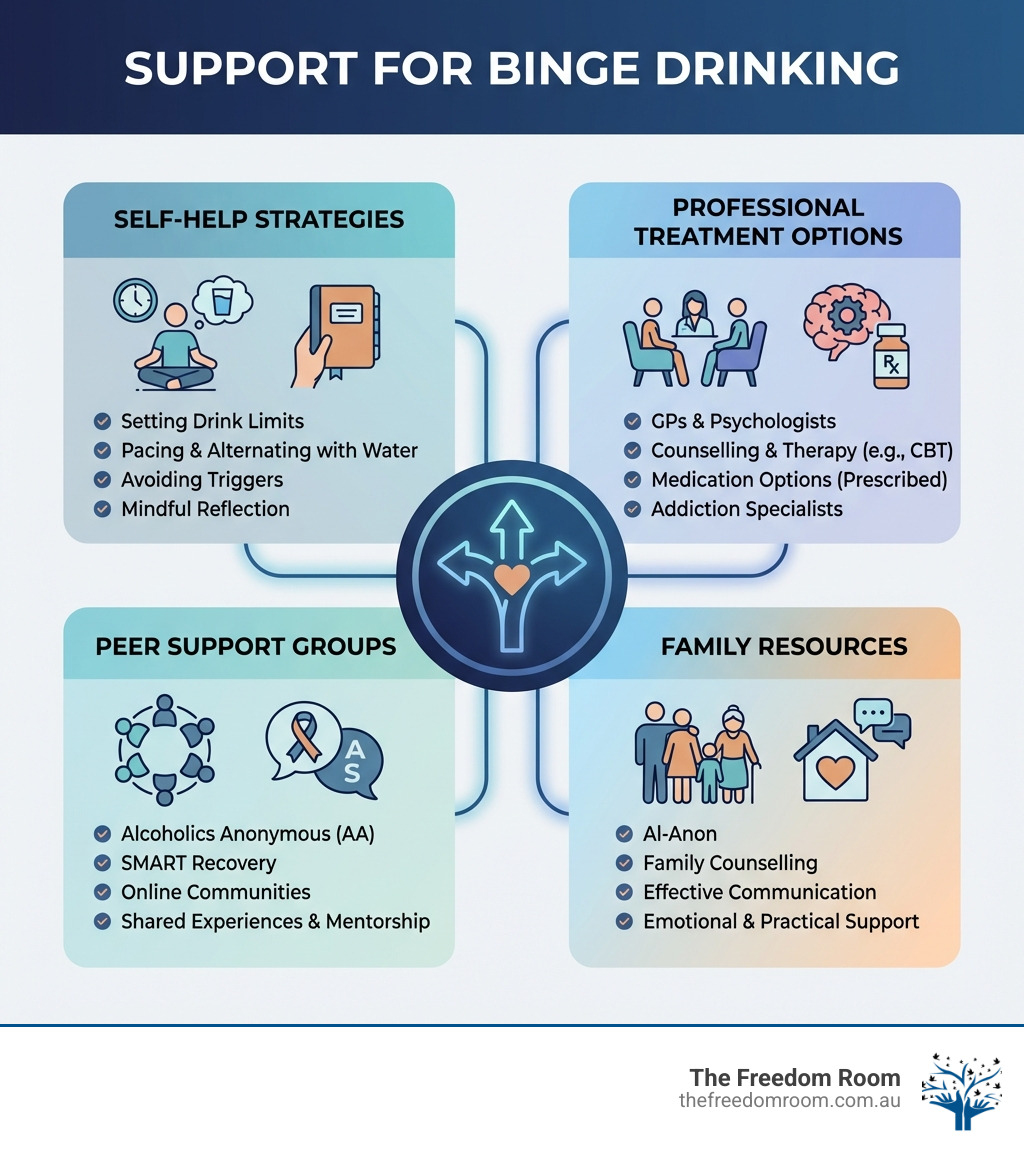
Quick overview of available support in Australia:
- Self-help strategies such as setting drink limits, pacing drinks, alternating with water, and avoiding known triggers
- Professional support from GPs, counsellors, psychologists, and evidence-based therapies such as CBT
- Peer support groups including Alcoholics Anonymous (AA), SMART Recovery, and moderated online communities
- National and state-based helplines such as the National Alcohol and Other Drug Hotline (1800 250 015), which operates 24 hours a day
- Family support resources such as Al-Anon, Family Drug Support, and counselling for family members
- Medication options including naltrexone and acamprosate, prescribed and monitored by a doctor
Binge drinking is defined by the National Health and Medical Research Council (NHMRC) as consuming more than four standard drinks in one session for healthy adults. This is the level at which the immediate risk of injury and harm increases.
The evidence indicates that change is possible at any stage. Many people who seek support for binge drinking experience significant improvement in their health and quality of life. Accessible, non-judgemental support is crucial so that people feel safe to ask for help early.
Related content about support for binge drinking:
Understanding Binge Drinking and Its Impact
Binge drinking is a prevalent issue across Australia with significant health implications. Understanding its definition and consequences is a critical step toward addressing it.
Defining Binge Drinking and Recognising the Signs
In Australia, the National Health and Medical Research Council (NHMRC) advises that healthy adults should consume no more than four standard drinks on any single occasion to reduce the immediate risk of injury. Exceeding this amount is often considered binge drinking.
A standard drink contains 10 grams of pure alcohol, which is about 285 ml of full-strength beer or 100 ml of wine. While not everyone who binge drinks develops physical dependence on alcohol, the risk increases as episodes become more frequent. Recognising the signs early can help you seek timely support for binge drinking.
Common behavioural indicators include:
- Feeling guilty or ashamed after drinking
- Experiencing memory blackouts or patchy recall
- Consistently drinking more than you intended to
- Having difficulty stopping once you have started
- Noticing a negative impact on your mental health
- Neglecting responsibilities because of drinking or hangovers
If you notice several of these signs, it may be helpful to speak with your GP, a psychologist, or another health professional. You can read more about patterns of alcohol use in Australia on the AIHW alcohol statistics page.
The Immediate and Long-Term Consequences
The consequences of binge drinking can be immediate or accumulate over time. Even occasional heavy sessions can cause harm.
Immediate and long-term risks include:
- Accidents and injury: Impaired judgement and coordination increase the risk of falls, road accidents, and involvement in violence or unsafe situations.
- Alcohol poisoning: Consuming large amounts of alcohol quickly can lead to a medical emergency with confusion, vomiting, seizures, slow breathing, or loss of consciousness.
- Cardiovascular problems: Binge drinking can trigger irregular heartbeats and, over time, contribute to high blood pressure and weakening of the heart muscle.
- Liver disease: Repeated binge drinking can lead to fatty liver, alcoholic hepatitis, and cirrhosis.
- Mental health conditions: Alcohol is a depressant and can cause or worsen depression, anxiety, and other mental health conditions. This can create a cycle where alcohol is used to manage distress, which then increases over time.
- Brain changes: Frequent bingeing can alter brain structure and function, particularly in young adults, leading to difficulties with memory, attention, and decision-making.
- Increased cancer risk: Regular alcohol use is linked to a higher risk of cancers of the mouth, throat, breast, liver, and bowel. Guidance on this risk is available through Cancer Council Australia.
- Pregnancy-related harms: The NHMRC advises that women who are pregnant, planning a pregnancy, or breastfeeding should not drink alcohol because it may cause irreversible harm to the baby.
Understanding these risks is not about blame. It is about providing clear information so that you can make informed choices and seek help if your drinking is starting to feel out of control.
Practical Strategies and Support for Binge Drinking
Addressing binge drinking involves a multi-faceted approach that combines personal strategies with professional and community-based support. It is about building a healthier relationship with alcohol and finding safer ways to cope with stress, grief, or difficult emotions.

Self-Help Strategies to Reduce or Stop Binge Drinking
Evidence-informed, practical strategies can support you to reduce harm and begin to change your drinking patterns. Small, consistent steps often lead to meaningful progress over time.
Helpful approaches include:
- Modify your drinking habits: Set a clear drink limit before you start and stick to it. Pace yourself by sipping slowly and alternating each alcoholic drink with water or a non-alcoholic option. Eating before and during drinking can slow alcohol absorption.
- Plan ahead: Decide how you will get home, what time you will leave, and how much you plan to drink. Let a trusted friend know your plan so they can support you.
- Identify and manage triggers: Notice the situations, people, times of day, or feelings that lead you to binge drink. Consider alternatives such as exercise, creative activities, connecting with supportive friends, or mindfulness practices.
- Manage social situations: Practise saying no to another drink in a calm and firm way. Having a non-alcoholic drink in your hand can reduce pressure. Spend more time with people who respect your limits.
- Track your drinking: Keeping a simple diary or using an alcohol tracking app can help you see patterns and celebrate reductions.
If you would like structured support to explore these strategies in more depth, you can read more about our therapy services, which include approaches such as Emotionally Focused Therapy (EFT) and Cognitive Behavioural Therapy (CBT).
Accessing Professional Support for Binge Drinking
Self-help can be an important starting point, but professional guidance is often necessary for sustainable change. Seeking help is a sign of insight and strength, not failure.
Your GP is an excellent first point of contact. They can:
- Assess your drinking patterns using validated screening tools
- Provide confidential advice and brief interventions
- Check for any physical health concerns related to alcohol
- Refer you to local alcohol and other drug services or psychologists
- Discuss medications such as naltrexone or acamprosate that may help reduce cravings
Evidence-based treatments are effective and can be tailored to your needs. These often include:
- Behavioural therapies: Cognitive Behavioural Therapy helps you identify and change unhelpful thinking patterns and behaviours related to drinking. Other approaches include motivational interviewing, relapse prevention strategies, and family-based therapies.
- Mutual-support groups: Organisations such as Alcoholics Anonymous (AA) and SMART Recovery offer peer support, practical tools, and a sense of community. Many meetings are available in person and online.
- Specialist services: State and territory alcohol and other drug services can provide counselling, day programs, withdrawal support, and links to residential treatment when required. Information about publicly funded services is available through the Australian Government alcohol and other drug treatment services portal.
The Freedom Room provides confidential, trauma-informed counselling and psychotherapy to individuals concerned about their alcohol use. To discuss options or make an enquiry, you can visit our Contact page.
How to Provide Family Support for Binge Drinking
When a family member or close friend is struggling with binge drinking, it can be distressing and exhausting. Support from loved ones can be a powerful motivator for change, but it is also important to protect your own wellbeing.

Ways to support a loved one include:
- Choose the right time to talk: Speak when the person is sober and relatively calm. Use clear, respectful language and focus on specific behaviours rather than labels.
- Use compassionate language: Express concern using “I” statements, such as “I feel worried when you drink heavily” or “I have noticed you seem more down after big nights”. Avoid shouting, blaming, or making threats in the heat of the moment.
- Set healthy boundaries: Protect your own mental health by being clear about what you can and cannot do. This may mean not lending money for alcohol, not making excuses at work for them, and leaving situations that feel unsafe.
- Encourage professional help: Suggest they speak to a GP, counsellor, or psychologist. Offer to help with practical steps, such as booking an appointment, attending with them, or researching services together.
- Look after yourself: Supporting someone with binge drinking can take a toll. Prioritise sleep, nutrition, exercise, and your own social connections.
Family and friends can also benefit from their own support. Organisations such as Al-Anon Family Groups and Family Drug Support offer information, helplines, and groups for people affected by another person’s drinking. These services can provide education about substance use, communication strategies, and emotional support.
Ready for Change? Let’s Build a Stronger, Alcohol-Free Future Together
Choosing to address binge drinking is a significant and courageous step. It reflects insight, self-awareness, and a desire for a healthier, more stable future. Recovery is not always a straight line, but with the right support, it is achievable for many people.
Reducing or stopping binge drinking can lead to improvements in physical health, mental health, relationships, work or study performance, and overall quality of life. Even gradual reductions in the frequency or intensity of heavy drinking episodes can reduce harm and create space for further change.
At The Freedom Room, we provide a safe, non-judgemental environment for people who want to understand and transform their relationship with alcohol. Our team brings clinical training together with lived experience of recovery, which allows for compassionate, practical guidance grounded in real-world understanding.
If you are in Strathpine, QLD, or surrounding areas and are ready to explore support for binge drinking, we are available to help you plan your next steps. You can read more about our services or reach out directly through our Contact page to arrange an appointment or ask a question.
You do not need to wait until things feel completely unmanageable before seeking help. Many people find that early support prevents problems from becoming more severe and makes change more achievable. Whatever your starting point, progress is possible.
If you feel ready, we invite you to connect with us so we can work together to create a safer, more fulfilling, alcohol-free life.
Discover the Support You Need for a Lasting, Successful Recovery
Reaching out can feel daunting, particularly if you have tried to change your drinking in the past. You are not alone in this experience, and you do not have to navigate it by yourself.
We are committed to offering structured, evidence-informed, and compassionate support tailored to your circumstances. To begin, you can:
- Visit our Our Services page to learn how we work with binge drinking and related concerns
- Explore our resources on alcohol and grief and addiction and grief to deepen your understanding
- Contact us to arrange an initial consultation or ask any questions about therapy options
Find your strength, begin your journey, and allow yourself the support you deserve. Together, we can focus on small, practical steps that move you toward a life less dominated by alcohol and more aligned with your values and goals.