
Why Understanding How to Get Into a Sober Living Home Matters for Your Recovery
How to get into a sober living home is a question many Australians ask when they’re ready to transition from intensive treatment back to everyday life. The process is more straightforward than you might think, and understanding it can reduce anxiety and help you feel prepared for this important next step.
Quick Answer: The Essential Steps
- Complete primary treatment or detox: Most homes require you to be substance-free before admission.
- Research and contact homes: Find options through treatment providers, online directories, or referrals.
- Submit an application: Provide basic information about your recovery history and goals.
- Attend an interview: Meet with staff to discuss your needs and assess fit.
- Provide documentation: Share proof of identity, sobriety, and relevant referrals.
- Sign a residency agreement: Commit to house rules and payment terms.
- Move in and engage: Participate fully in the supportive community.
Why This Step Matters
For many people in recovery, returning home immediately after rehabilitation feels overwhelming. Your old environment might still contain triggers, unsupportive relationships, or reminders of past substance use. Australian research highlights that individuals who engage with post-treatment support like sober living homes often experience improved long-term abstinence rates.
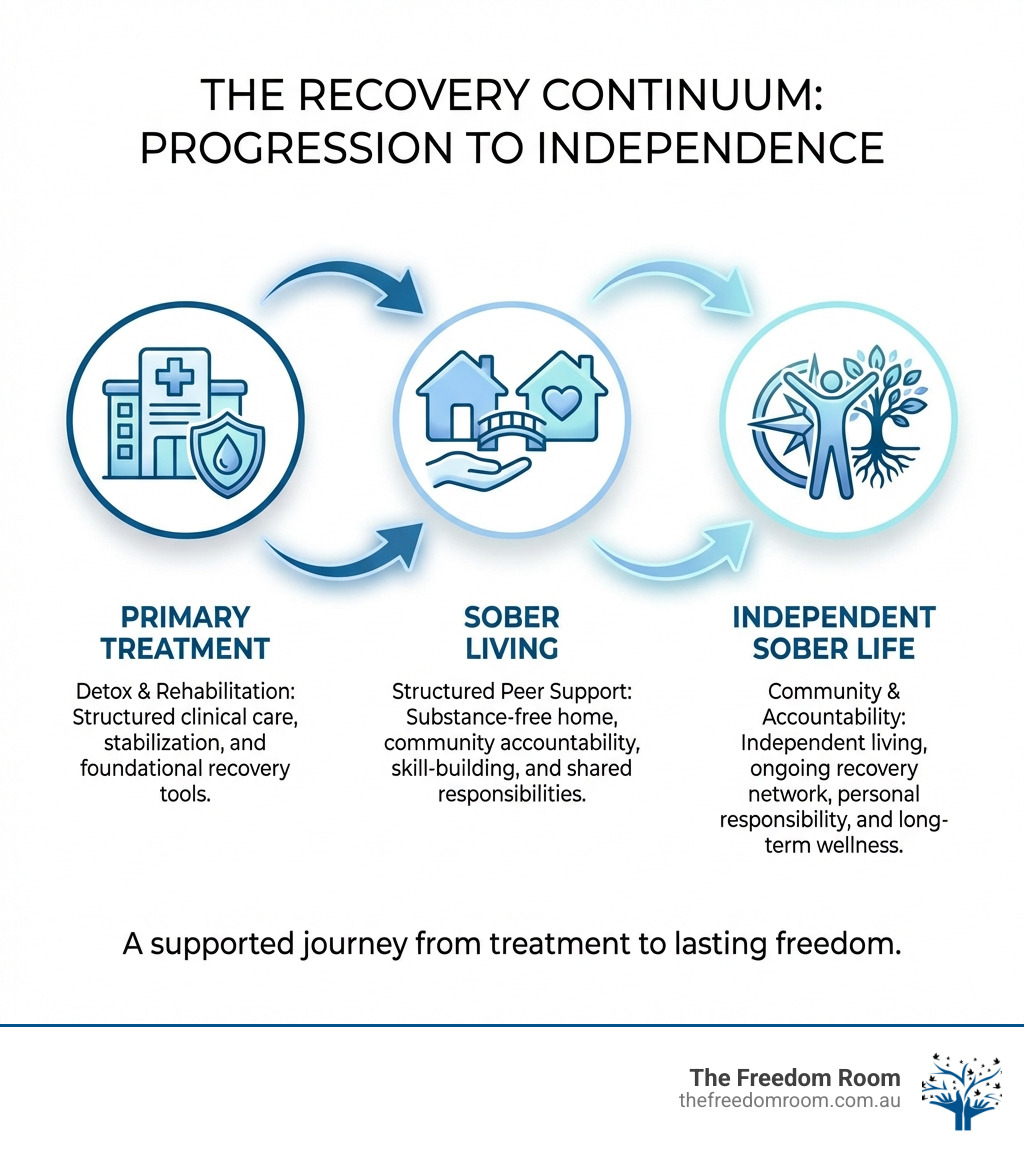
Sober living homes bridge the gap between the structured support of inpatient treatment and the independence of everyday life. They provide a safe, substance-free environment where you can practice new coping skills, build healthy routines, and connect with peers who understand your journey.
What Makes Sober Living Different
Unlike halfway houses, which often serve people transitioning from incarceration, sober living homes focus specifically on recovery from alcohol and drug dependence. They’re typically privately run, with flexible lengths of stay based on individual needs rather than court mandates.
The environment is peer-supported rather than clinically intensive. You’ll live with others in recovery, share household responsibilities, and participate in regular house meetings. Most residents work or study while living there, gradually rebuilding their independence within a supportive framework.
This guide explains the admission process, what to expect, and how to find the right home for your long-term recovery from dependence. Whether you’re completing treatment or seeking additional support to maintain sobriety, understanding these steps empowers you to make informed decisions about your recovery path.
Simple guide to how to get into a sober living home terms:
Your Step-by-Step Guide on How to Get Into a Sober Living Home
This section provides a comprehensive walkthrough of the entire process, from understanding the concept to moving in and thriving. It is designed to empower you with the knowledge needed to make an informed decision and find a supportive environment that fosters lasting sobriety.
Understanding Sober Living: What It Is and Who It’s For
A sober living home is a structured, substance-free residential environment designed to support individuals in their journey of recovery from alcohol and drug dependence. It serves as a crucial bridge between primary treatment, such as inpatient rehabilitation or detox, and the return to fully independent living. Our goal is to provide a safe space where you can solidify your recovery skills and build a robust foundation for long-term sobriety.
Unlike some other transitional housing options, sober living homes are primarily focused on sustained abstinence and personal growth within a peer-supported community. While halfway houses might cater to individuals transitioning from the justice system, sober living environments are typically chosen voluntarily by those committed to their recovery.
Who typically lives in a sober living home? Residents are often individuals who have completed a detox or primary treatment program and are seeking continued support. This includes:
- Those transitioning from inpatient rehabilitation need a stable, substance-free environment.
- Individuals seeking to avoid triggers present in their previous living situations.
- Anyone looking to build life skills, accountability, and a sober social network.
General eligibility requirements usually include a commitment to maintaining sobriety, a willingness to adhere to house rules, and the ability to contribute financially towards rent and expenses. Most homes require you to be abstinent from all substances before admission, often necessitating the completion of a detox or residential treatment program first. This ensures a safe environment for all residents and aligns with the shared goal of sustained recovery. Understanding these foundational aspects is a key step in your guide to recovery from dependence.
The Application and Intake Process for Sober Living
Once you understand the fundamentals of sober living, the next step is navigating the application and intake process. This journey typically begins with finding potential homes that align with your needs and preferences. You might start by:
- Consulting your current treatment provider or counsellor for referrals.
- Searching online directories for sober living options in Strathpine, QLD, or nearby areas.
- Asking trusted friends or family members for recommendations.

After identifying a few suitable options, the initial enquiry usually involves a phone call or email. This is your opportunity to ask preliminary questions about the home’s philosophy, rules, and availability. We encourage you to be open and honest about your recovery journey during this stage; transparency helps ensure the best possible fit.
Should the initial conversation go well, you will typically be invited to submit a formal application. This document gathers essential information about your personal background, recovery history, and recovery goals. Following a review of your application, an interview process will often take place. This allows the house manager or staff to assess your motivation, readiness for sober living, and compatibility with the existing residents and house culture. It is also an excellent chance for you to ask more in-depth questions and get a feel for the environment.
Upon acceptance, you will be required to sign a residency agreement. This legally binding document outlines the house rules, expectations, and financial commitments. To complete your admission, you will typically need to prepare several documents, such as:
- Proof of identity (e.g., an Australian driver’s licence or passport).
- A referral letter or discharge summary from your treatment provider or counsellor.
- Evidence of recent sobriety, which might include drug test results or a statement from your current program.
- Contact information for a sponsor, emergency contact, or next of kin.
Finding and Choosing a Reputable Sober Living Home
Choosing the right sober living home is a critical decision that can significantly impact your recovery journey. It is essential to exercise due diligence and carefully evaluate each option. We recommend looking beyond superficial appearances and delving into the operational aspects of the home.
When assessing potential sober living homes, be aware of certain ‘red flags’ that might indicate a less reputable or supportive environment. These could include:
- Vague or inconsistent house rules that lack clarity.
- Facilities that appear rundown, unsafe, or poorly maintained.
- A noticeable lack of staff oversight or resident accountability.
- Homes that do not conduct proper admissions interviews or screenings.
Conversely, ‘green flags’ point towards a reputable and supportive sober living environment. We believe these are vital for a successful transition:
- Clear, consistent, and well-communicated house rules.
- A clean, organised, and well-maintained property.
- The presence of trained staff or a supportive house manager.
- A positive peer culture where residents genuinely support each other’s sobriety.
- Regular drug and alcohol screenings to ensure a substance-free environment.
To ensure you are choosing a high-quality home, it is beneficial to check for adherence to national quality standards. In Australia, the National Quality Framework for Drug and Alcohol Treatment Services provides guidelines for service providers. While sober living homes are not typically licensed in the same way as clinical treatment facilities, many reputable homes voluntarily align with these principles, or those of recovery residence associations, to ensure a safe and effective environment. Always ask about the home’s affiliations or standards they follow. This careful selection process is integral to choosing the right route and support for alcohol recovery.
Life Inside: What to Expect from Rules, Costs, and Daily Structure
Life inside a sober living home is designed to be supportive and structured, balancing personal freedom with accountability. We aim to create an environment where you can rebuild your life skills and thrive in sobriety. You can expect a routine that incorporates:
- Structured routines: Many homes encourage consistent daily schedules, including wake-up times and participation in household activities.
- House meetings: Regular meetings provide a forum for residents to discuss house issues, resolve conflicts, and offer mutual support.
- Shared chores: Contributing to household maintenance fosters a sense of responsibility and community.
- Personal accountability: You will be expected to take ownership of your recovery and actions.
Common house rules are fundamental to maintaining a safe and sober environment. These typically include:
- Strict curfews to ensure residents are present and safe.
- Clear visitor policies often restrict visitors to specific hours and require them to be substance-free.
- Mandatory attendance at external recovery meetings, such as 12-step programmes, or internal house meetings.
- Regular, often random, drug and alcohol screenings to uphold abstinence.
Regarding costs and payment, sober living homes typically operate on a monthly fee basis, similar to renting a modest room or a shared house. While we cannot provide specific pricing, these costs vary depending on the home’s location (like Strathpine, QLD), amenities, and level of support. Generally, residents are responsible for their monthly rent, which often includes utilities and basic furnishings. This model encourages financial responsibility and self-sufficiency, key aspects of sustained recovery. For information on managing these aspects, you might explore resources on affordable treatment services for dependence.
The length of stay in a sober living home is flexible and customised to individual recovery needs. While many homes suggest a minimum stay of 90 days to establish new habits, the average residency can range from six to twelve months or even longer. This extended period allows for gradual reintegration into society, enabling you to secure employment, pursue education, and build a strong, sober support network at your own pace.
Navigating Challenges and Maximising the Benefits of Sober Living
Navigating your recovery journey within a sober living home offers numerous benefits, but it also requires a commitment to embracing structure and addressing challenges constructively. We believe that by understanding and leveraging these aspects, you can maximise your chances of lasting sobriety.
Key benefits of living in a sober living home include:
- Peer support network: Living with others who share similar experiences fosters a powerful sense of community and mutual understanding.
- Reduced risk of relapse: The substance-free environment and accountability measures significantly lower the likelihood of returning to substance use.
- Developing life skills: You will gain practical skills in managing finances, maintaining a household, and navigating social situations soberly.
- Building a sober social circle: Forming healthy relationships with like-minded individuals is crucial for long-term recovery.
Should a resident experience a relapse, reputable sober living homes handle the situation with care and accountability, aiming for supportive intervention rather than punishment. The policy often involves a discussion with staff, immediate drug testing, and a plan for reconnection with treatment or a higher level of care if needed. The focus is always on guiding the individual back towards stability and continued recovery. This supportive approach is vital for staying sober after rehab.
It is important to dispel common myths surrounding sober living homes:
- Myth: Sober living homes are unregulated and unsafe.
- Fact: While not always government-licensed as clinical facilities, reputable homes adhere to internal standards, often aligning with national frameworks like the National Quality Framework for Drug and Alcohol Treatment Services, and focus on providing a structured, safe environment.
- Myth: Residents have no freedom and are constantly monitored.
- Fact: Residents typically work, study, or volunteer, and have personal freedom within the established house rules. The structure is designed to support, not restrict, responsible living.
Find the Support You Need for a Lasting, Successful Recovery
Sober living homes offer a vital, structured environment to solidify the skills learned in treatment and build a strong foundation for a substance-free life. By understanding the process, asking the right questions, and choosing a home that aligns with your recovery goals, you are taking a powerful step toward lasting wellness. The Freedom Room champions a compassionate, supportive approach to recovery, recognising that a safe community is essential for healing. If you are exploring your treatment options for dependence, we are here to help guide you. We understand the unique challenges of recovery and offer personalised support designed to empower you.
Ready for change? Let’s build a stronger, alcohol-free future together. Learn more about our services and reach out via our contact page to see how we can support your journey to lasting sobriety.