

Understanding the Complex Relationship Between Loss and Substance Use

Complicated grief and alcohol are deeply interconnected, often trapping individuals in a cycle of unresolved pain and escalating substance use. When grief becomes prolonged and overwhelming, many turn to alcohol to cope, creating a dangerous pattern that prevents healing and intensifies suffering.
Key facts about complicated grief and alcohol:
- Complicated grief affects 7-10% of bereaved individuals, compared to 2-3% of the general population.
- Men are twice as likely to develop an alcohol use disorder within two years of a significant loss.
- 34.2% of people with substance use disorders experience symptoms of complicated grief.
- Alcohol use disorder and complicated grief commonly co-occur, with each condition worsening the other.
- People with both complicated grief and major depressive disorder are more likely to meet criteria for alcohol dependence.
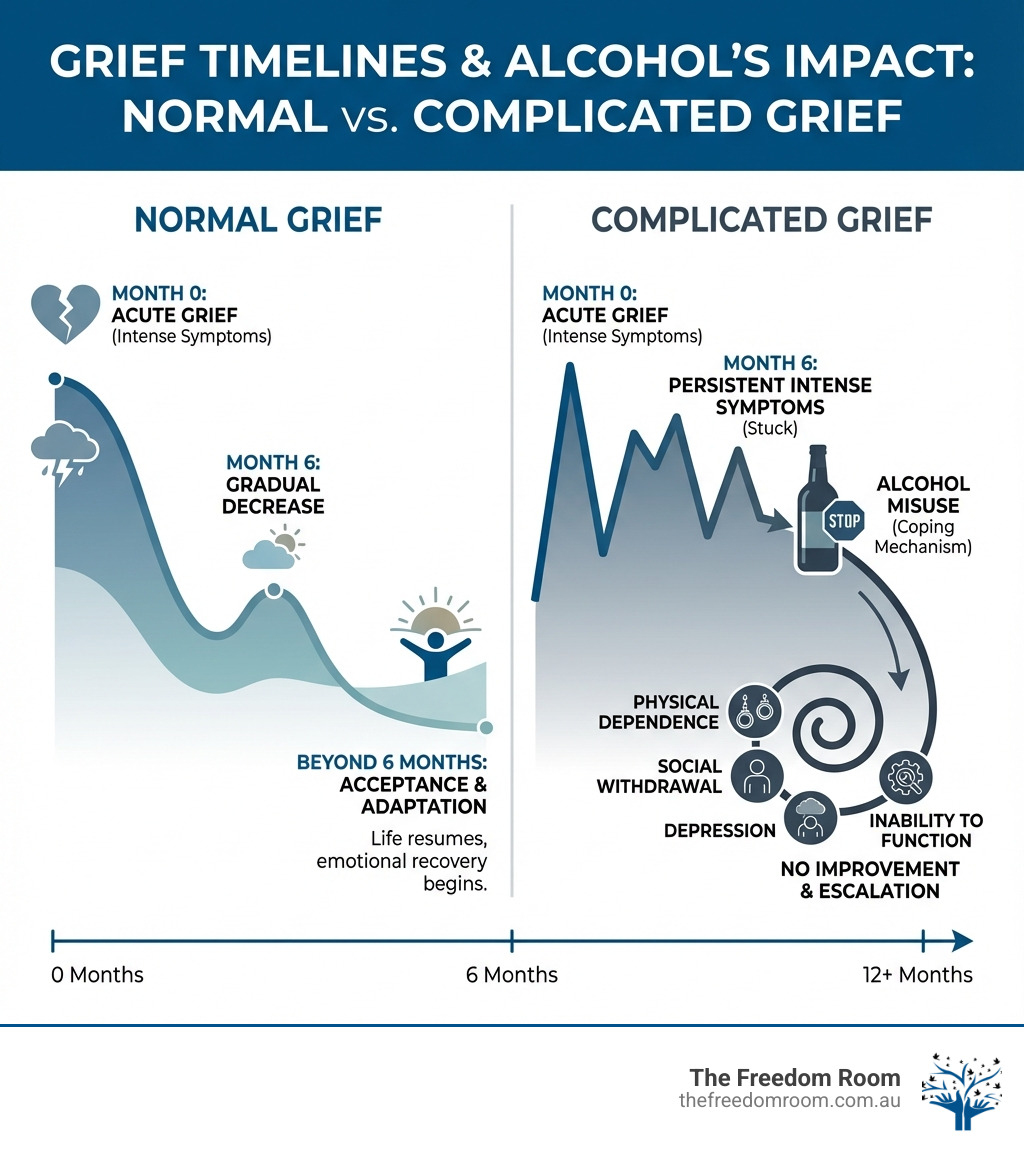
Grief is a natural response to loss. Most people experience an acute phase of grief that typically begins to ease within a year as they gradually accept the reality of their loss and find ways to move forward.
For some, however, the grieving process becomes stuck. This condition, known as complicated grief or Prolonged Grief Disorder, involves intense grief symptoms that persist long after most people adapt. The pain remains debilitating, making it difficult to imagine a future without the deceased.
Alcohol often enters this picture as a form of self-medication. Its temporary relief can seem like a lifeline, but as a depressant, it ultimately increases negative emotions and prevents the emotional processing necessary for healing. This creates a vicious cycle where unresolved grief fuels alcohol use, which in turn prevents grief from being resolved.
The combined effects can be devastating, leading to depression, anxiety, and deteriorating health. Understanding the relationship between complicated grief and alcohol is the first step towards breaking free, as recovery is possible when both conditions are recognised and treated together.
Quick complicated grief and alcohol terms:
The Intricate Link: Complicated Grief and Alcohol
Losing a loved one is profoundly painful. While most people steer the grieving process over time, for some, grief becomes a persistent, overwhelming force known as complicated grief, which can tragically intersect with alcohol use.
Defining Complicated Grief and Its Symptoms
Normal grief involves intense sorrow that gradually lessens, allowing for adaptation and renewed engagement with life. In contrast, complicated grief, or Prolonged Grief Disorder (PGD), is a condition where the adaptation process stalls. The acute symptoms of grief persist indefinitely, often beyond 12 months, causing functional impairment.
The diagnostic criteria for complicated grief centre specifically around the loss and are distinct from depression or PTSD, though they can co-occur.
Key symptoms of complicated grief include:
- Persistent and intense yearning for the deceased.
- Frequent, preoccupying thoughts or images of the loved one.
- A profound sense of disbelief or difficulty accepting the death.
- Emotional numbness or feeling stunned by the loss.
- Intense loneliness and estrangement from others.
- Avoidance of reminders of the deceased, or an extreme focus on them.
- A diminished sense of self or identity disruption.
- Feelings of bitterness or confusion about the grief.
- Difficulty imagining a future without the deceased.
- Significant problems with daily routines, work, and social activities.
Complicated grief affects 2% to 3% of the population worldwide and 7% to 10% of bereaved people, highlighting the need for specialised support.
The Vicious Cycle of Complicated Grief and Alcohol

Struggling with the relentless pain of complicated grief, many seek immediate relief through alcohol. This self-medication offers a temporary escape from distressing emotions by numbing the pain associated with loss.
However, this avoidance coping creates a vicious cycle. While alcohol provides fleeting comfort, it disrupts the natural grieving process. As a depressant, it can intensify negative emotions like sadness and despair in the long term. Instead of helping to process grief, alcohol prevents the emotional expression essential for healing.
The combination of unresolved grief and alcohol use can freeze a person’s emotional life, contributing to physical dependence on alcohol. As tolerance increases, so does consumption, deepening the cycle where alcohol use and unresolved grief fuel each other.
The link is well-documented: men are twice as likely to develop an alcohol use disorder two years after a significant loss. Complicated grief can predict increases in alcohol dependence, underscoring the challenging, bidirectional nature of this relationship.
The Combined Psychological and Physical Consequences
The co-occurrence of complicated grief and alcohol use disorder often leads to a dual diagnosis, where a mental health condition and substance use issue worsen each other. The consequences of this dual burden can be devastating.
Psychologically, individuals may experience:
- Major depressive disorder.
- Increased anxiety, panic attacks, or PTSD.
- Significant social withdrawal and loneliness.
- Overwhelming self-criticism and guilt.
- A heightened risk of suicidality and self-destructive behaviour.
Statistics show that individuals with both complicated grief and major depressive disorder are more likely to meet the criteria for alcohol dependence. The emotional expression and social withdrawal seen in complicated grief are often maladaptive coping strategies intensified by alcohol.
Physically, the long-term misuse of alcohol and stress of grief take a heavy toll, leading to:
- Severe sleep disturbances, like insomnia.
- Compromised immune function.
- Increased risk of heart disease, cancers, and high blood pressure.
- Reduced cognitive function, affecting memory and decision-making.
Without proper intervention, individuals face chronic mental health issues, entrenched alcohol use disorder, and a diminished quality of life. Treatment must address both conditions concurrently.
Risk Factors for Developing Complicated Grief and Alcohol Use Disorder

Understanding the risk factors for both complicated grief and alcohol use disorder is crucial for early intervention.
Key risk factors include:
- Pre-existing conditions: A history of mental health issues like depression or anxiety, or a pre-existing substance use disorder.
- History of trauma: Exposure to trauma increases vulnerability and can lead to maladaptive coping mechanisms involving alcohol.
- Nature of the loss: Sudden or violent deaths, the loss of a child, or multiple losses in a short period carry a higher risk.
- Maladaptive coping styles: Strategies like excessive wishful thinking, social withdrawal, and self-criticism are strongly linked to complicated grief and can make alcohol a detrimental coping tool.
Statistics highlight the overlap: 34.2% of individuals with substance use disorders experience complicated grief. Among those with alcohol dependence, this figure is approximately 30%, showing the critical need for integrated treatment.
Effective Treatment for Co-occurring Conditions
Addressing complicated grief and alcohol use disorder requires an integrated approach that treats both issues simultaneously. This is the best practice for a dual diagnosis.
Key components of effective treatment include:
- Complicated Grief Therapy (CGT): A specialised psychotherapy that helps individuals resolve grief complications and restore adaptation to the loss by reducing avoidance and re-engaging with life.
- Evidence-based therapies for Alcohol Use Disorder (AUD): Established treatments like Cognitive Behavioural Therapy (CBT) and Motivational Interviewing help change unhelpful thinking patterns and strengthen motivation for change.
- Role of peer support: Support groups provide a safe space to share stories, reduce isolation, and learn from others. At The Freedom Room, our team’s lived experience offers authentic empathy, a powerful component of healing.
- Healthy coping mechanisms: Developing adaptive strategies is fundamental for recovery. We encourage skills like mindfulness, exercise, creative expression, and connecting with supportive networks.
Find the Support You Need for a Lasting, Successful Recovery
Healing from grief is not merely an option; it is an essential component of a successful, lasting recovery from alcohol dependence. When complicated grief and alcohol dependence co-occur, the path to wellness can seem daunting, but it is a journey that does not have to be walked alone. There is profound hope for a better future, one where you can process your loss, manage your emotions effectively, and live free from the grip of alcohol.
At The Freedom Room, we understand the intricate connections between unresolved grief and alcohol use. Our team offers compassionate support, drawing on lived experience to provide authentic empathy and guidance. We believe in personalised sessions, workshops, and therapy designed to address both your grief and your journey to recovery. We are here to walk alongside you, offering the tools and encouragement needed to steer this complex terrain.
Taking the first step towards seeking professional help is a courageous act. It signifies a commitment to yourself, your well-being, and your future. If you are struggling with complicated grief and finding yourself turning to alcohol, please know that specialised support is available. We are dedicated to helping you heal, grow, and build a fulfilling life in recovery.
For more information about our personalised support and how we can help you, please visit our services page: More info about our personalised support.