

When Loss Meets Dependence: Understanding the Path Forward
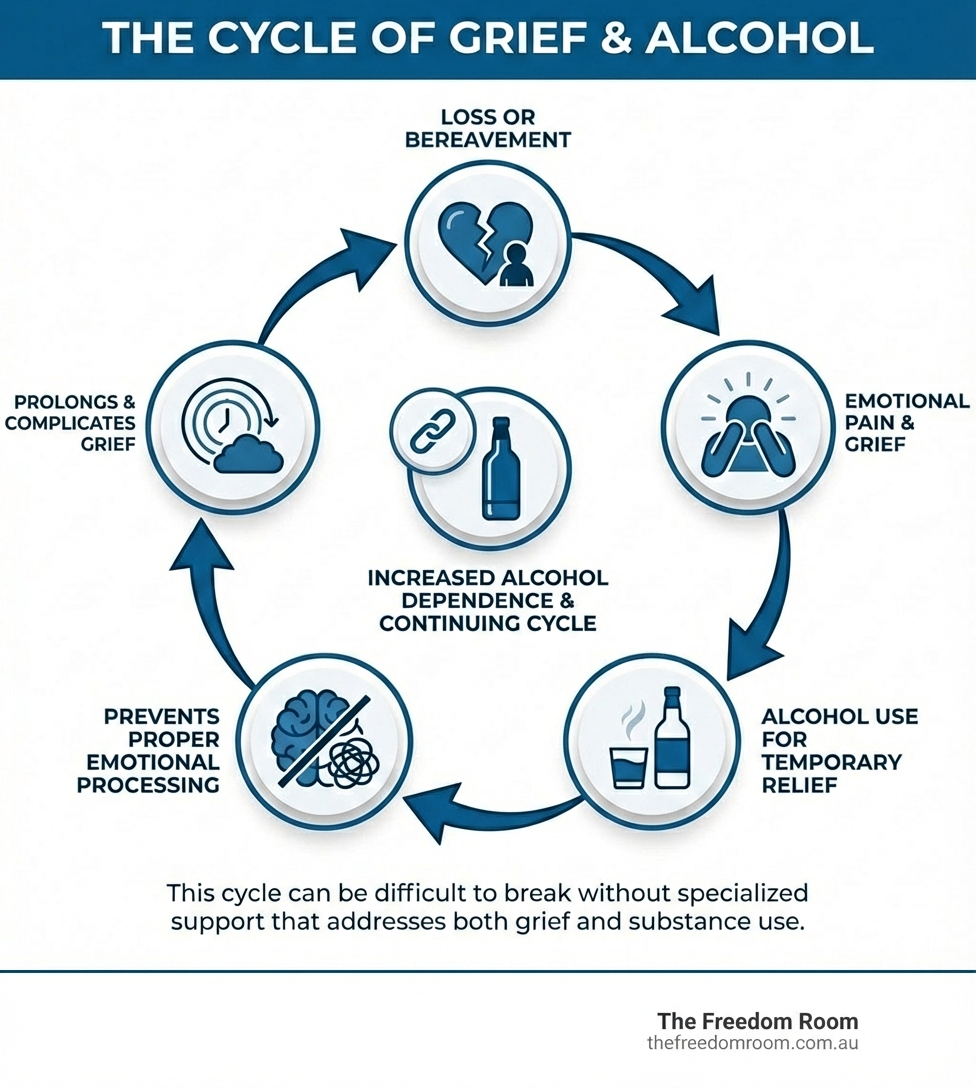
Grief and alcohol counselling addresses the challenging cycle where profound loss and alcohol dependence intersect. Grief can lead to drinking, while alcohol use prevents the healthy processing of that grief, making it feel impossible to break free.
If you are struggling with both, know that recovery is possible with the right support.
- Integrated treatment is key: Addressing grief and alcohol use simultaneously leads to better outcomes.
- The link is significant: People experiencing major loss have a 2.3 times higher risk of developing problematic substance use.
- Specialised care works: Research shows integrated treatment can result in 60% fewer cravings and 45% lower depression rates.
Loss comes in many forms, from the death of a loved one to the end of a relationship. Using alcohol to cope with this pain only delays healing. As a depressant, alcohol slows your central nervous system, making it harder to process emotions and prolonging your grief. This guide explains this connection, helps you recognise warning signs, and outlines how integrated counselling can help.
Handy grief and alcohol counseling terms:
The Connection Between Grief and Alcohol Use
Grief is a natural response to loss, but coping with its overwhelming pain can be difficult. For some, alcohol becomes a way to manage sorrow, but this can create further problems. Understanding this relationship is the first step toward finding effective grief and alcohol counselling.
Why People Use Alcohol to Cope with Grief
In the face of profound loss, it is natural to seek relief. Alcohol can seem like a quick way to numb emotional pain and find a temporary escape from difficult feelings. As a depressant, it slows brain activity, which can briefly reduce anxiety and sadness.
Social rituals around loss, such as toasts at funerals, can also normalise increased drinking during a vulnerable time. What starts as a way to ‘take the edge off’ can become a habit, leading to dependence and hindering the brain’s ability to process emotions.
How Alcohol Complicates the Grieving Process
While alcohol may offer temporary comfort, it ultimately prolongs and complicates grieving. Numbing pain with alcohol prevents genuine healing, causing suppressed emotions to resurface later with greater intensity. This can lead to complicated grief, a condition where grief remains debilitating over time.
Alcohol’s depressant effect stops the brain from processing emotions, trapping you in a cycle of unresolved grief and alcohol use. This not only stalls emotional recovery but also poses serious physical and mental health risks, including liver damage and increased depression and anxiety. You can find more information from the Australian Centre for Grief and Bereavement or learn more about our grief resources.

Recognising Warning Signs and Triggers
It is crucial to identify when alcohol use is becoming a problem. Be mindful of your consumption and look for the following signs.
Warning signs include:
- Drinking more often or in larger amounts.
- Drinking alone to avoid painful feelings.
- Neglecting responsibilities at work or home.
- Experiencing relationship strain due to alcohol use.
Common triggers for drinking during grief are:
- Anniversaries, birthdays, and holidays.
- Seeing old photos or belongings of a loved one.
- Feelings of loneliness and isolation.
- Social events where alcohol is served.
Recognising these signs and triggers is the first step toward making a change.
Finding Support Through Grief and Alcohol Counselling
Addressing grief and alcohol dependence at the same time requires a compassionate, integrated approach. Lasting healing comes from understanding how these two challenges are intertwined.
What is Integrated Grief and Alcohol Counselling?
Integrated grief and alcohol counselling, also known as dual diagnosis treatment, addresses your grief and alcohol use disorder together. Instead of treating them as separate issues, this holistic approach recognises their deep connection. It helps to address the root causes of both challenges, fostering healing on multiple levels.
Research shows this approach is highly effective, with participants in specialised treatment experiencing 60% fewer cravings and 45% lower depression than those in standard addiction treatment alone. By addressing both issues, we help you build healthier coping mechanisms for the long term. You can learn more about our therapy services and our integrated methods.
Therapeutic Approaches in Grief and Alcohol Counselling
Effective counselling uses several therapeutic approaches to help you process loss, understand your relationship with alcohol, and build resilience.
- Cognitive Behavioural Therapy (CBT): Helps you challenge negative thoughts about your loss and develop healthy coping strategies. For alcohol use, CBT is used to identify triggers and create relapse prevention plans.
- Complicated Grief Therapy (CGT): A specialised therapy for those with prolonged grief. It helps you reprocess loss-related events and gradually face bereavement cues you may be avoiding.
- Individual and Group Support: One-on-one counselling offers a private space to explore your experiences, while group therapy provides a sense of community and shared understanding, reducing feelings of isolation.
- Building Resilience: A core part of counselling is learning practical tools to manage difficult emotions without alcohol, such as stress management and emotional regulation skills.
While there is no medication for grief, a doctor may prescribe medication for co-occurring conditions like depression or anxiety. This should always be discussed with a medical professional.
Strategies for Managing Sobriety While Grieving
Maintaining sobriety while grieving requires commitment, self-compassion, and healthy coping strategies. We can empower you with the tools and support to manage this delicate balance.
Healthy coping strategies include:
- Regular physical activity: Exercise is a powerful mood booster. A gentle walk can help clear your head and release endorphins.
- Mindfulness and meditation: These practices help you observe emotions without judgment. Grounding skills like deep breathing can calm intense feelings.
- Journaling: Writing down your thoughts and feelings can be cathartic and provide clarity.
- Reconnecting with hobbies: Refinding old interests or trying new ones can provide purpose and a healthy distraction.
- Building a support network: Connect with trusted friends, family, or support groups. You do not have to go through this alone.
- Establishing self-care routines: Prioritise rest, a balanced diet, and time for relaxation. Be kind to yourself.
- Expressing your feelings: Allow yourself to feel anger, sadness, or confusion. Talking to someone or using creative outlets can help.
- Seeking professional support: A therapist specialising in substance use and grief can provide expert guidance and a safe space to heal.
Planning for difficult days like anniversaries and holidays is also helpful. A plan, such as a quiet reflection or time with loved ones, can help you steer these moments without alcohol. For additional support, you can find resources at Griefline Australia.
Take the First Step Toward a Fulfilling, Alcohol-Free Life
Navigating grief alongside alcohol dependence is challenging, but you don’t have to do it alone. At The Freedom Room, we believe in your capacity for healing and lasting recovery. We understand the impact of loss and the unique challenges of using alcohol to cope.
Our compassionate and cost-effective programs in Strathpine, QLD, offer personalised sessions and therapy integrating strategies for both grief processing and sobriety. Many of our team members are in recovery themselves, providing authentic support and empathy for your journey.
We are here to help you break the cycle of grief and alcohol use. Professional support will equip you with healthy coping skills and new ways to honour your loss without compromising your well-being. Your path to healing starts now. We invite you to reach out and see how our integrated grief and alcohol counseling can help you build a stronger, alcohol-free future.
Contact us to start your journey.