

A Proven Path to Recovery
How to work the 12 steps of AA is a common question for those new to Alcoholics Anonymous. The process involves a sequence of spiritual and practical principles, usually undertaken with a sponsor and the support of the fellowship.
Core Process for Working the 12 Steps:
- Admit powerlessness over alcohol and acknowledge an unmanageable life (Step 1)
- Find hope in a Higher Power of your understanding (Step 2)
- Decide to turn your will and life over to that power (Step 3)
- Complete a fearless moral inventory of yourself (Step 4)
- Share that inventory with your Higher Power, yourself, and another person (Step 5)
- Become ready to have character defects removed (Step 6)
- Ask humbly for shortcomings to be removed (Step 7)
- List all persons harmed and become willing to make amends (Step 8)
- Make direct amends where possible, except when doing so would cause harm (Step 9)
- Continue daily inventory and promptly admit wrongs (Step 10)
- Practice prayer and meditation to improve conscious contact with your Higher Power (Step 11)
- Carry the message to others and practice these principles in all areas of life (Step 12)
Since its inception in 1939, the 12-Step model has become one of the most effective methods for recovery from alcohol dependence. Research shows that manualised AA and Twelve-Step Facilitation are often more effective than other treatments, like cognitive behavioural therapy, for increasing abstinence.
The steps are not abstract theories but a practical guide based on lived experience. They focus on principles like honesty, hope, self-examination, making amends, and helping others. This guide breaks down each step into actionable parts, offering a clear path forward for anyone starting or returning to AA.
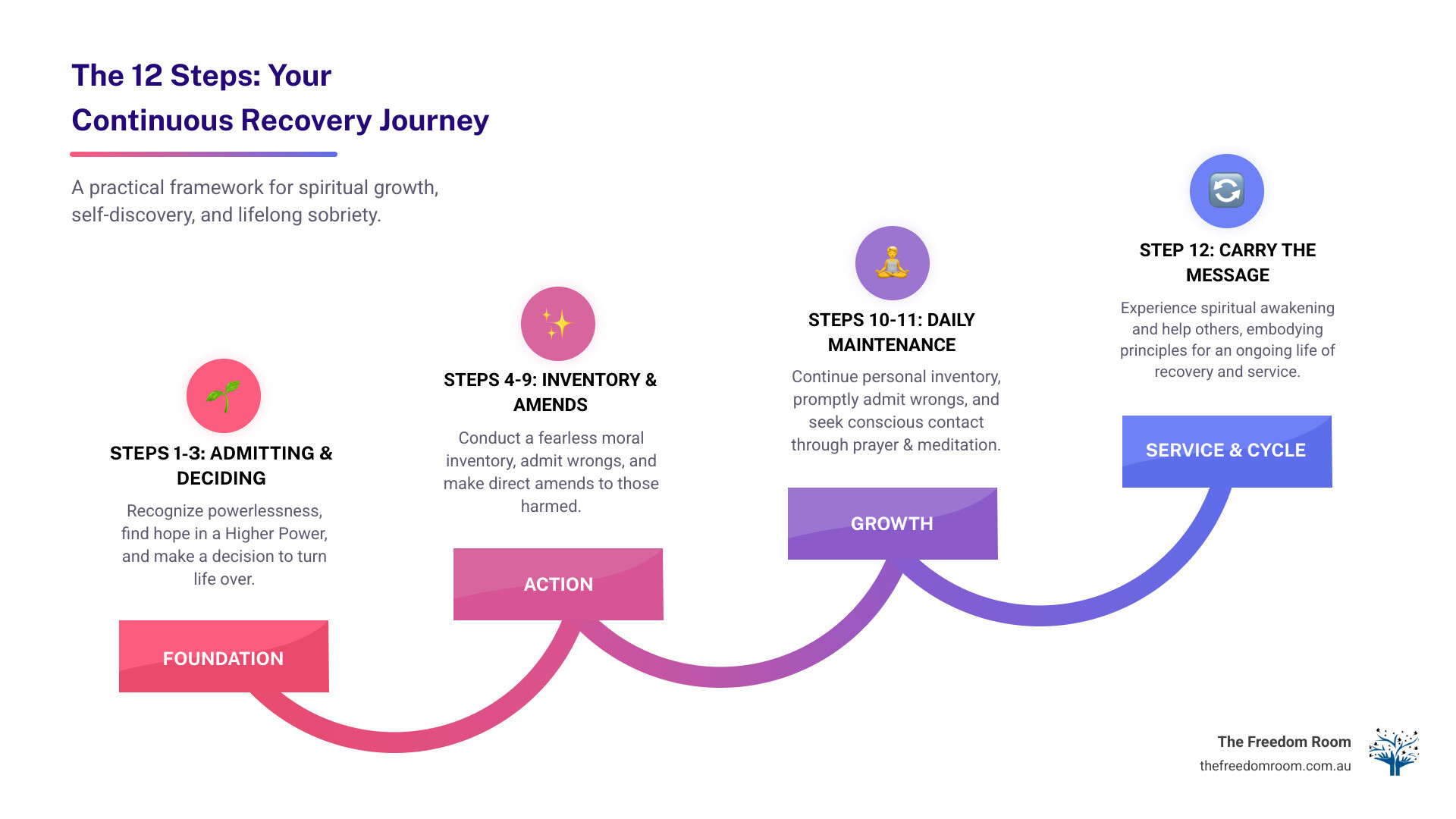
How to Work the 12 Steps of AA: A Practical Framework
Working the 12 Steps of Alcoholics Anonymous is a structured pathway toward a stable, sober life. It involves self-reflection, spiritual growth as you understand it, and consistent connection with a recovery community in Australia.
The 12-Step approach is widely used in Australian services that support recovery from alcohol use. Reports from the Australian Institute of Health and Welfare show that alcohol remains one of the most commonly treated substances in alcohol and other drug services, and mutual‑help programs such as AA are frequently used alongside formal treatment.
The Foundational Steps (1–3): Admitting Defeat and Finding Hope
The initial steps involve acknowledging the problem with alcohol and becoming open to a solution. They establish the base for the rest of the recovery work.
Step 1: Honesty
“We admitted we were powerless over alcohol, and that our lives had become unmanageable.”
This step is about clear, unfiltered honesty. It involves accepting that attempts to control alcohol use have not worked and that life has become unmanageable as a result.
How to Work It:
- Write down specific examples of how alcohol has affected your health, work, relationships, and safety.
- Consider feedback from family, friends, or health professionals who have expressed concern.
- Use a journal to track patterns, blackouts, or risky behaviours related to drinking.
The aim is to see reality more clearly rather than to criticise yourself.
Step 2: Faith
“Came to believe that a Power greater than ourselves could restore us to sanity.”
Step 2 introduces the possibility of hope. A “Higher Power” can be understood in many ways, such as the AA group, a sense of community, nature, or a personal spiritual belief. The essential point is to recognise that help can come from beyond personal willpower.
How to Work It:
- Attend AA meetings in your local area and listen to people who have stopped drinking.
- Notice how others describe their Higher Power in ways that work for them.
- Reflect on moments in your life when support, luck, or guidance seemed to come from outside yourself.
The step is about becoming willing to believe that change is possible.
Step 3: Surrender
“Made a decision to turn our will and our lives over to the care of God as we understood Him.”
Step 3 involves a decision to place your recovery in the care of your chosen Higher Power. It is a choice to stop relying only on self-will and to follow a structured program of action.
How to Work It:
- Speak with a sponsor (an experienced AA member) about how they worked Step 3.
- Use a simple daily practice, such as a short prayer or statement of intent, to hand your day over to your Higher Power.
- Commit to following AA suggestions, including regular meetings and ongoing step work, even when you feel resistant.
Support from peer-based programs and structured services, such as Peer Support Recovery, can make this process more manageable.
The Action Steps (4–9): Cleaning House and Making Amends
Once the foundation is in place, the focus shifts to action. These steps involve detailed self-examination and taking responsibility for past behaviour.
Step 4: Soul‑searching
“Made a searching and fearless moral inventory of ourselves.”
Step 4 is a written review of your past attitudes, resentments, fears, and harms caused to others. The purpose is to identify patterns that kept alcohol use and emotional turmoil in place.
How to Work It:
- With guidance from a sponsor, list resentments, fears, and relationships where harm occurred.
- For each situation, identify your part, such as dishonesty, selfishness, or avoidance.
- Keep the focus on patterns rather than single events.
This is not about perfection but about gaining insight into how old behaviours developed.
Step 5: Integrity
“Admitted to God, to ourselves, and to another human being the exact nature of our wrongs.”
Sharing your inventory with another person can reduce shame and secrecy. It also allows you to see your story through another, more balanced, perspective.
How to Work It:
- Arrange a private time with your sponsor or another trusted person.
- Read your Step 4 inventory aloud, including the parts you feel most reluctant to share.
- Discuss what you notice about your patterns and any new insights that arise.
This step often brings a sense of relief and a clearer understanding of areas that need change.
Step 6: Acceptance
“Were entirely ready to have God remove all these defects of character.”
After seeing patterns more clearly, Step 6 is about readiness to let go of harmful ways of thinking and acting. It acknowledges that change is necessary and possible.
How to Work It:
- Review your Step 4 and Step 5 work, highlighting specific traits that cause harm.
- Consider how each trait has affected your wellbeing, relationships, and recovery.
- Discuss with your sponsor what becoming “ready” means in practical terms, such as being willing to act differently in daily life.
The focus is on willingness, not instant transformation.
Step 7: Humility
“Humbly asked Him to remove our shortcomings.”
Step 7 is a simple but significant act of asking for help to change. It acknowledges that personal effort is important, but external support is also required.
How to Work It:
- Use a short, sincere prayer or period of meditation to ask your Higher Power for help.
- Notice opportunities during the day to act differently, such as pausing before reacting in anger.
- Continue to discuss your progress with your sponsor or a trusted peer.
Humility in this context means accepting that you are learning and do not have to have all the answers.
Step 8: Willingness
“Made a list of all persons we had harmed, and became willing to make amends to them all.”
Step 8 moves attention toward relationships. It involves writing down the names of people you have harmed, directly or indirectly, because of your alcohol use or related behaviours.
How to Work It:
- Create a list that includes family members, partners, friends, colleagues, and others affected.
- Note the type of harm caused, such as emotional distress, financial harm, or broken trust.
- Discuss with your sponsor where your willingness is strong and where you feel resistant.
The goal is to prepare for amends, not to rush into contact before you and others are ready.
Step 9: Forgiveness and Repair
“Made direct amends to such people wherever possible, except when to do so would injure them or others.”
Step 9 is the practical process of making amends. It can support healing for others and help you move forward without being held back by unresolved guilt.
How to Work It:
- Work closely with your sponsor to plan each amendment, including what you will say and whether it is safe and appropriate to make contact.
- Focus on taking responsibility for your actions rather than justifying or blaming.
- In some cases, indirect or living amends are more suitable, such as changing your behaviour when direct contact would cause further harm.
Professional support, such as Addiction Recovery Counselling, can be helpful when amends involve complex family dynamics, past trauma, or legal issues.
The Growth Steps (10–12): Daily Maintenance for Lifelong Sobriety
The final steps support long-term recovery. They encourage ongoing self-awareness, spiritual growth as you understand it, and service to others.
Step 10: Maintenance
“Continued to take personal inventory and when we were wrong promptly admitted it.”
Step 10 is a daily practice of checking in with your behaviour and emotional state. It aims to prevent old patterns from building up again.
How to Work It:
- At the end of each day, briefly review your actions and reactions.
- Notice where you were honest, kind, and responsible, as well as where you fell short.
- When you recognise that you were wrong, acknowledge it promptly and, where appropriate, apologise or correct the mistake.
This step supports emotional stability and reduces the risk of relapse.
Step 11: Making Contact
“Sought through prayer and meditation to improve our conscious contact with God as we understood Him, praying only for knowledge of His will for us and the power to carry that out.”
Step 11 deepens your spiritual or reflective practice. It encourages you to seek guidance rather than trying to control outcomes.
How to Work It:
- Develop a simple daily routine that might include prayer, meditation, quiet reflection, or mindful breathing.
- Use this time to focus on guidance, strength, and acceptance, rather than specific requests.
- Explore different approaches to meditation or contemplation until you find what fits your beliefs and lifestyle.
Regular practice can support emotional balance and help you respond more calmly to stress.
Step 12: Service
“Having had a spiritual awakening as the result of these Steps, we tried to carry this message to alcoholics, and to practice these principles in all our affairs.”
Step 12 focuses on sharing what you have learned and applying these principles in everyday life. Service to others can strengthen your own recovery.
How to Work It:
- Attend AA meetings regularly and share your experience, strength, and hope when appropriate.
- Take on service roles within a group, such as greeting, chairing meetings, or helping with setup.
- When you have sustained recovery and guidance from your own sponsor, consider sponsoring a newcomer.
Practising the steps in work, family life, and community involvement helps create a consistent, values-based way of living.
Integrating AA with Australian Services and Supports
Working the 12 Steps is often most effective when combined with professional support. In Australia, many people use AA alongside counselling, medical care, and community services.
The Australian Government Department of Health and Aged Care provides information about alcohol-related harms and available supports. Data from the Australian Bureau of Statistics shows that harmful alcohol use remains common, which highlights the importance of comprehensive support.
When integrating AA with other supports, it can help to:
- Speak with your GP about any physical or mental health concerns related to alcohol use.
- Consider structured programs or counselling that complement your step work.
- Use peer-based groups, such as Alcohol Addiction Support Groups, to stay connected with others in recovery.
Services like Twelve-Step Facilitation Therapy are designed to align closely with AA principles and can help address underlying issues such as trauma, anxiety, or depression.
If you would like support tailored to your circumstances, you can learn more about Our Services or reach out directly through our Contact Us page.
Discover the Support You Need for a Lasting, Successful Recovery
The journey to reduce or stop your use of alcohol can be complex and emotionally demanding. Learning how to work the 12 steps of AA offers a structured approach that addresses both behaviour and deeper emotional patterns.
The 12 Steps provide more than a way to stop drinking. They set out a framework for self-honesty, personal responsibility, and ongoing growth. They also emphasise connection with others, which can reduce the isolation that often accompanies alcohol dependence.
At The Freedom Room, the focus is on practical, evidence-informed support that works alongside your involvement in AA or other mutual‑help groups. Many of our practitioners bring lived experience of recovery and use that understanding to offer clear, compassionate guidance.
Our approach includes:
- Personalised counselling and coaching that align with the 12-Step framework.
- Workshops and resources that help you apply the steps in daily life.
- A focus on progress rather than perfection, recognising that recovery is an ongoing process.
If you are considering AA for the first time, returning after a break, or wanting to strengthen your current recovery, additional support can make a meaningful difference. You can explore how we work with the 12-Step model on our page about The Twelve Steps or learn more about Our Services.
When you are ready to take the next step, you are welcome to reach out through our Contact Us page so we can discuss options that suit your needs and circumstances.