

You Can Get Sober Without AA: Here’s How
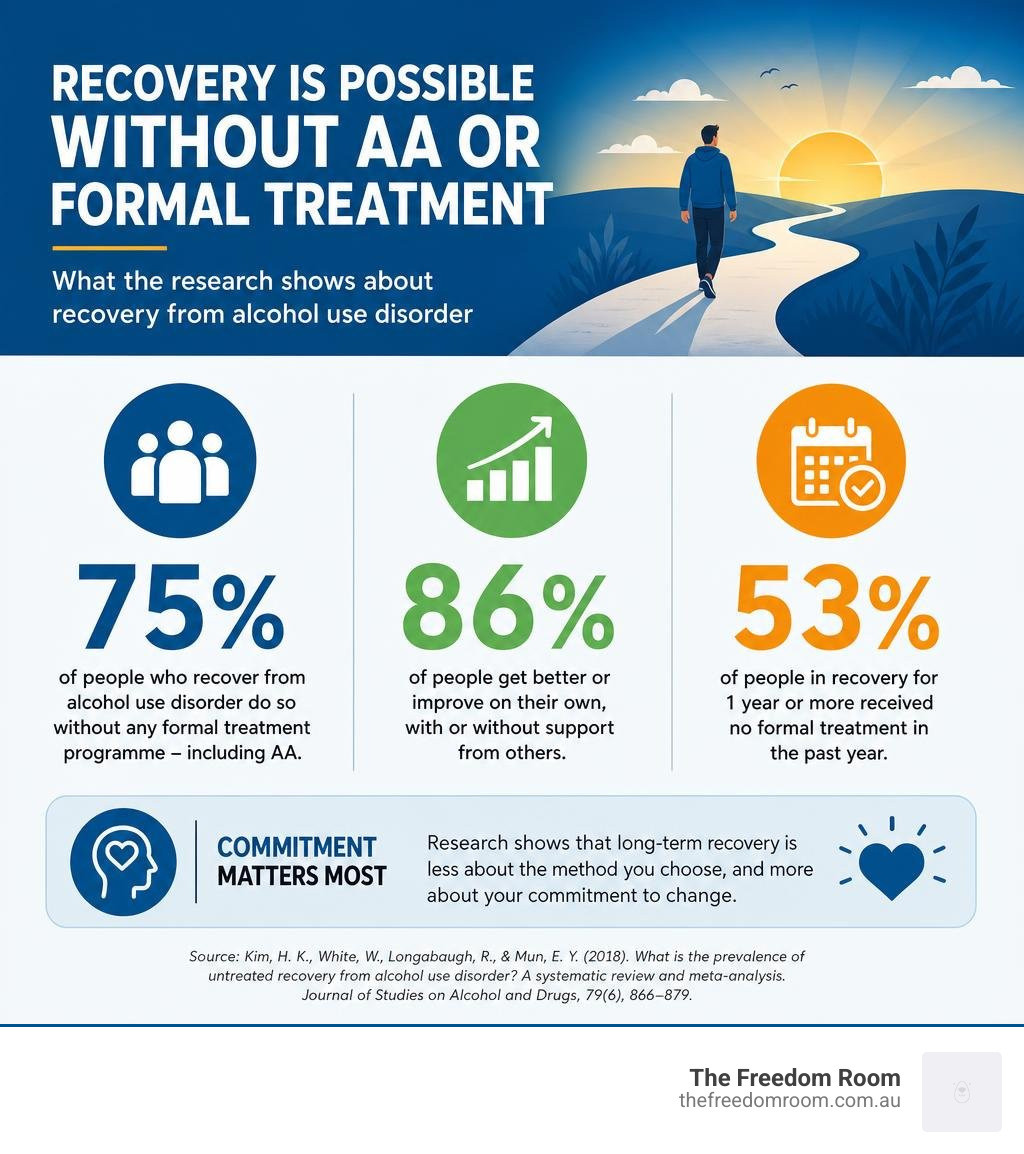
Learning how to get sober without AA is entirely possible, and modern clinical research backs this up strongly. In fact, approximately 75% of people who successfully recover from alcohol use disorder do so without any formal treatment programme at all, including Alcoholics Anonymous. This statistic highlights that recovery is not a one-size-fits-all process, and there are numerous pathways to achieving long-term health and sobriety.
The clinical landscape in Australia has shifted significantly towards personalised, evidence-based interventions. The National Health and Medical Research Council (NHMRC) emphasises that successful recovery relies on addressing the unique psychological, social, and physiological factors of each individual. Consequently, relying on a single methodology is no longer considered the gold standard of care.
If AA has not worked for you in the past, or simply does not feel like the right fit for your personal values, here are the most effective evidence-based alternatives:
- Join a secular support group: SMART Recovery, LifeRing, or Women for Sobriety offer evidence-based, non-spiritual peer support.
- Explore medication-assisted treatment: TGA-approved medicines like naltrexone and acamprosate can significantly reduce cravings and support brain chemistry.
- Work with a professional therapist: Cognitive Behavioural Therapy (CBT) is highly effective for addressing the root causes of problematic drinking.
- Build daily recovery habits: Regular physical exercise, quality sleep, balanced nutrition, and mindfulness practices all support lasting sobriety.
- Create personal accountability: Recovery apps, trusted friends, or an online community can replace the structure of regular meetings.
- Get medical guidance first: If you experience physical dependence on alcohol, speak with a doctor before stopping, as withdrawal can be serious.
AA has helped millions of people since its founding in 1935. However, its spiritual framework, emphasis on powerlessness, and group meeting format do not resonate with everyone. For many people, particularly those who prefer a science-based, secular, or self-empowered approach, other pathways work just as well, if not better.
A 2018 study published in the Journal of Substance Abuse Treatment found no significant difference in effectiveness between SMART Recovery, LifeRing, and 12-step programmes when participants were equally committed to their recovery goals. The specific method you choose matters far less than the commitment and consistency you bring to your daily recovery.
This comprehensive guide walks you through every evidence-based option available to you in Australia, so you can choose the path that fits your values, your lifestyle, and your long-term goals.
How to Get Sober Without AA: Evidence-Based Pathways
When exploring options outside of the traditional 12-step framework, it is reassuring to know that modern recovery is heavily grounded in science. According to the latest Australian alcohol consumption data, alcohol remains one of the most widely used substances in Australia, leading many people to seek alternative treatment pathways. Fortunately, the landscape of recovery has evolved significantly over the past decade, offering diverse options that do not rely on spiritual concepts or group confessionals.
Understanding Your Options Outside the 12-Step Model
The traditional 12-step model requires participants to admit they are powerless over alcohol and to surrender their will to a higher power. For many Australians, this spiritual framework presents a major barrier to entry. Some people prefer to approach recovery from a position of self-efficacy and personal empowerment rather than powerlessness. This shift is supported by contemporary psychological theories, such as Bandura’s self-efficacy theory, which posits that an individual’s belief in their capability to execute behaviours necessary to produce specific performance attainments is critical to achieving long-term behavioural change.
Choosing a secular alternative allows you to take active control of your recovery journey. By utilising our comprehensive Non-12-Step Recovery Guide, you can explore structured, practical pathways that focus on cognitive restructuring and behavioural change. To understand the full scope of clinical and community support systems available nationwide, you can also consult the official guide on Understanding Alcohol Support Options in Australia.
Secular Support Groups and How to Get Sober Without AA
For those who still desire the community aspect of recovery without the religious undertones, secular peer support networks are an excellent solution. These groups focus on self-empowering mutual aid, teaching practical tools to manage cravings and build a balanced lifestyle.
- SMART Recovery: This programme uses Cognitive Behavioural Therapy (CBT) and Motivational Interviewing to help participants build motivation, cope with urges, manage thoughts, and achieve lifestyle balance. The SMART Recovery framework is built around a structured four-point programme that empowers individuals to take charge of their own recovery.
- LifeRing Secular Recovery: A network that focuses on the “3 Ss” (Sobriety, Secularity, and Self-Help), encouraging individuals to design their own personal recovery plans. It operates on the premise that the key to recovery lies within the individual, rather than an external power.
- Women for Sobriety: Established specifically to address the unique emotional and psychological needs of women in recovery, utilising thirteen positive affirmation statements that encourage spiritual and emotional growth without religious dogma.
Finding the right community is highly personal, much like finding the right therapist. You can read more about selecting the perfect environment in our guide on Alcoholics Anonymous and Beyond: Choosing the Right Support Group for You. For additional localised resources and community-based programmes, the Alcohol and Drug Foundation: Finding Support database is a highly valuable tool.
Medical and Therapeutic Strategies on How to Get Sober Without AA
One of the greatest benefits of choosing a non-12-step path is the integration of modern medical science. Pharmacotherapy can be an incredibly effective tool when combined with professional counselling. Medications like naltrexone can block the rewarding effects of alcohol, while acamprosate helps stabilise brain chemistry after quitting. These TGA-approved medications target the neurochemical pathways associated with craving and reward, providing a physiological buffer that supports psychological interventions.
Additionally, working one-on-one with a qualified therapist allows you to address the underlying reasons behind your drinking, such as unresolved trauma, anxiety, or depression. Engaging in evidence-based therapies provides you with tailored coping mechanisms that a peer-led group simply cannot offer. Cognitive Behavioural Therapy (CBT) and Acceptance and Commitment Therapy (ACT) are particularly effective in helping individuals identify cognitive distortions and develop healthier emotional regulation strategies. To learn more about how we structure these clinical and holistic programmes, you can explore our detailed breakdown of Non-12-Step Recovery.
Practical Self-Directed Strategies for Daily Recovery
Staying sober in the long term requires replacing old habits with healthy, constructive routines. When you no longer spend your evenings drinking, you will find yourself with an abundance of time and energy that must be channelled productively.
We recommend focusing on physical health as a foundational pillar of your new life. Regular exercise releases natural endorphins that help reduce stress and curb cravings, while proper nutrition and strict sleep hygiene repair the physical damage caused by long-term alcohol consumption. Practising mindfulness, such as meditation or deep breathing exercises, can also help you navigate emotional triggers without turning to a bottle. For practical advice on implementing these habits at home, read our guide on Self-Help Alcohol Recovery.
Safe Withdrawal and When to Seek Medical Supervision
If you have developed a severe physical dependence on alcohol, stopping suddenly can be highly dangerous. Alcohol withdrawal symptoms can range from mild tremors and anxiety to severe, life-threatening complications such as seizures or delirium tremens.
Before making any sudden changes, it is vital to undergo a proper medical assessment. A general practitioner can help you determine whether you require a medically supervised detox programme or if a gradual tapering plan is safe for your level of consumption. Medical professionals often utilise standardised assessment tools, such as the Clinical Institute Withdrawal Assessment for Alcohol (CIWA-Ar), to monitor symptoms and administer appropriate supportive medications. You can assess your suitability for independent recovery by reading Can You Get Sober Without Rehab? Your Guide to Independent Recovery.
Building a Supportive and Accountable Ecosystem

Quitting alcohol independently does not mean you have to go through the process in complete isolation. Building a robust support network of trusted friends, family members, or professional mentors is crucial for maintaining long-term accountability.
You can also leverage modern technology to keep yourself on track. Digital tools, such as sobriety tracking apps, recovery podcasts, and online forums, can provide daily motivation and connection. Establishing clear boundaries with old drinking associates and creating a safe, alcohol-free home environment are also essential steps in protecting your sobriety. For more strategies on constructing a resilient daily routine, check out our resource on How to Get Sober Without Going to Rehab.
Ready for Change? Building a Stronger, Alcohol-Free Future Together
At The Freedom Room Wellness and Recovery, we understand that there is no single path to sobriety. Our compassionate, cost-effective alcohol treatment programmes are fully tailored to meet your unique personal goals, values, and lifestyle. Because our team consists of professionals who are in recovery themselves, we bring genuine empathy, lived experience, and authentic support to every session.
If you are ready to take control of your life without the rigid structures of traditional 12-step programmes, we are here to support you. You can visit our clinic located at 9a/521 Beams Rd, Carseldine QLD 4034, or contact us online to begin your personalised recovery journey.
To get started today, we recommend taking these immediate steps:
- Explore our evidence-based treatment options by visiting Our Services.
- Reach out to our understanding team for a confidential assessment through our Contact Us page.
- Begin tracking your daily triggers using a recovery journal or mobile app.
- Schedule an appointment with your general practitioner to discuss safe detoxification options.
Frequently Asked Questions (FAQ)
Is it really possible to stay sober without attending AA?
Yes, it is entirely possible. Clinical research and global health statistics show that the majority of people who successfully overcome problematic drinking do so without participating in 12-step programmes, relying instead on professional therapy, medical support, secular groups, or self-directed strategies.
What is the main difference between SMART Recovery and AA?
While AA is a peer-led, spiritually-focused programme that emphasises powerlessness over addiction, SMART Recovery is a secular, science-based programme. SMART Recovery focuses on self-empowerment, utilising cognitive behavioural tools to help participants actively manage their own behaviours and thoughts.
Can medication help me quit drinking without going to meetings?
Yes, medication-assisted treatment can be highly effective. TGA-approved medications such as naltrexone and acamprosate work to reduce cravings and normalise brain chemistry, though they are most successful when combined with professional therapy or counselling.
How do I know if it is safe for me to detox from alcohol at home?
If you drink heavily on a daily basis or have a history of severe withdrawal symptoms, you should never attempt to quit cold turkey at home without medical supervision. Always consult a healthcare professional to determine the safest detoxification pathway for your specific situation.