

alcohol dependency help: 10 Powerful Ways for Lasting Recovery 2025
Finding Your Way Through Alcohol Dependency
Alcohol dependency help is available through multiple pathways including medical detox, therapy, support groups, and medication. If you’re struggling with alcohol dependency, you can:
- Call a helpline: National Alcohol and Drug Hotline (1800 250 015) or Drinkline (0300 123 1110)
- See your GP: For assessment, referral to specialists, and possible medication options
- Join a support group: AA (1300 222 222) or SMART Recovery for peer support
- Consider therapy: CBT and counselling can address underlying causes
- Explore treatment centres: Options range from outpatient programs to residential rehabilitation
Realising you have a problem with alcohol is the first big step to getting help. Many people struggle with controlling their drinking – more than 14 million adults have alcohol use disorder, and many feel trapped in a cycle that seems impossible to break. But recovery is possible, even if the road seems long and challenging.
When you’re looking for alcohol dependency help, it can be difficult to know where to start. The good news is that today there are more choices than the two options (AA or rehab) that most people think of. Modern treatment combines evidence-based approaches including therapy, medication, peer support, and lifestyle changes.
Recovery is usually a gradual process, not an overnight change. You don’t have to wait until you hit rock bottom to make a change. Whether you’re seeking help for yourself or a loved one, understanding the available options is crucial for finding the right support.
I’m Rachel Acres, founder of The Freedom Room, and my journey into providing alcohol dependency help began through my own battle with addiction and the challenges I faced accessing affordable, effective treatment.
Alcohol Dependency Help: Recognising the Problem
Recognising you have a problem with alcohol can be challenging. Many people normalise their drinking patterns or justify them as “just social drinking” or “unwinding after work.” However, there’s a significant difference between occasional drinking and alcohol dependency.
What Is Alcohol Dependency (AUD)?
Alcohol Use Disorder (AUD) is a medical condition characterised by an impaired ability to stop or control alcohol use despite adverse social, occupational, or health consequences. It encompasses the conditions previously known as alcohol abuse, alcohol dependence, and alcoholism.
Key characteristics include:
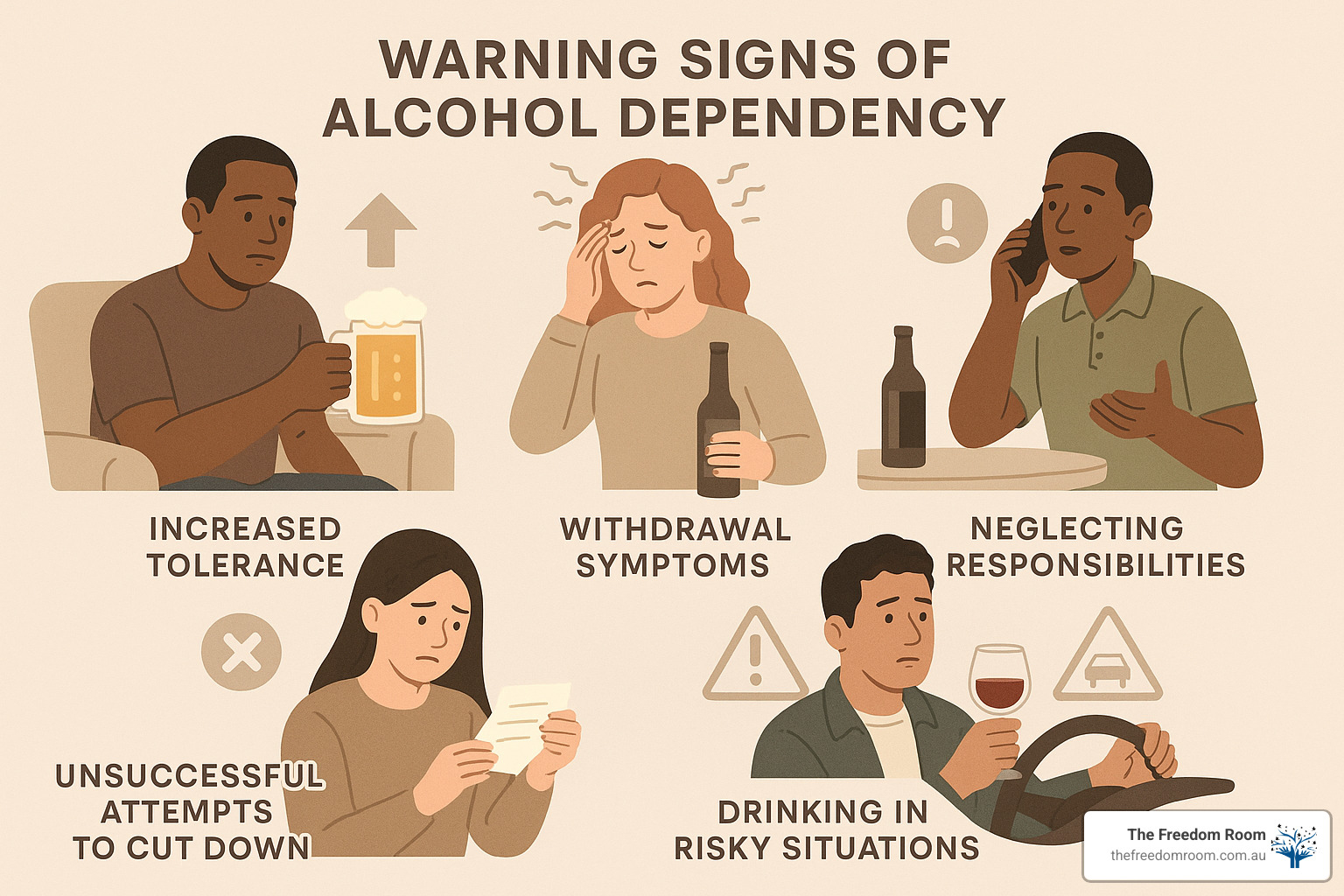
- Tolerance: Needing to drink more to achieve the same effect
- Loss of control: Being unable to limit how much you drink
- Withdrawal symptoms: Experiencing nausea, sweating, shakiness, and anxiety when not drinking
- Continued use despite problems: Drinking even though it’s causing physical, social, or interpersonal problems
- Failed attempts to quit: Making multiple unsuccessful efforts to cut down or stop drinking
According to diagnostic criteria, AUD ranges from mild to severe, based on the number of symptoms present. Even mild AUD can escalate and lead to serious problems, so early intervention is important.
Alcohol Dependency Help for Spotting Early Warning Signs
Early warning signs of alcohol dependency often appear before a full-blown disorder develops. Recognising these signs can lead to earlier intervention and better outcomes. Common warning signs include:
- Blackouts or memory lapses: Forgetting what happened while drinking
- Drinking to feel normal: Using alcohol to avoid withdrawal symptoms
- Morning drinking: Needing alcohol first thing in the morning
- Drinking alone: Consuming alcohol by yourself or in secret
- Mood swings: Experiencing irritability, anxiety, or depression when not drinking
- Neglecting responsibilities: Missing work, school, or family obligations due to drinking
- Relationship problems: Experiencing conflicts with family, friends, or colleagues about your drinking
- Changes in social activities: Giving up activities you used to enjoy in favour of drinking
- Preoccupation with alcohol: Thinking about when you can drink next
- Drinking in dangerous situations: Driving while intoxicated or mixing alcohol with medications
If you identify with several of these signs, it may be time to seek alcohol dependency help. Acknowledging the problem is a sign of strength, not weakness.
Health Risks of Untreated Dependency
Untreated alcohol dependency can lead to severe health complications and, in some cases, early death. According to research, people with alcohol use disorder are three to four times more likely to die prematurely than those without the condition.
Physical health risks include:
- Liver disease: Alcoholic hepatitis, fatty liver, fibrosis, and cirrhosis
- Cardiovascular problems: High blood pressure, irregular heartbeat, and increased risk of stroke
- Digestive issues: Pancreatitis, gastritis, and ulcers
- Neurological complications: Brain damage, neuropathy, and Wernicke-Korsakoff syndrome
- Weakened immune system: Increased vulnerability to diseases like pneumonia and tuberculosis
- Cancer: Higher risk of mouth, throat, esophagus, liver, and breast cancer
Mental health impacts include:
- Depression and anxiety disorders
- Increased risk of suicide
- Cognitive impairment and memory problems
- Sleep disorders
Social consequences can be equally devastating:
- Breakdown of relationships
- Job loss and financial problems
- Legal issues, including drink-driving offences
- Social isolation
Alcohol misuse is the third leading cause of preventable death in many countries, after tobacco use and being overweight. The good news is that with appropriate alcohol dependency help, many of these risks can be reduced or even reversed.
Getting a Diagnosis & Understanding Withdrawal
Taking that brave step towards a professional diagnosis is crucial when addressing alcohol dependency. I’ve seen how this moment of truth can be both terrifying and liberating for people beginning their recovery journey. Healthcare professionals use standardised assessment tools to determine if you’re experiencing alcohol use disorder and how severe it might be.
Your GP is often the best first point of contact. During a consultation, they’ll typically:
- Ask about your drinking patterns and history
- Use screening tools like the AUDIT (Alcohol Use Disorders Identification Test)
- Conduct a physical examination to check for signs of alcohol-related health issues
- Order laboratory tests to assess liver function and other health markers
These assessments aren’t about judgment – they’re about understanding your unique situation and finding the right alcohol dependency help for your needs. Research from the National Institute on Alcohol Abuse and Alcoholism shows that proper clinical assessment leads to more effective treatment outcomes.
Alcohol Dependency Help During Withdrawal: What to Expect
When someone who’s been drinking heavily suddenly stops or cuts down significantly, the body rebels – this is withdrawal. Having supported many people through this challenging phase, I can tell you that while it’s tough, understanding what’s happening makes it more manageable.
Withdrawal typically follows a timeline that your body sets:
Within 6-12 hours after your last drink, you might notice mild symptoms like anxiety, nausea, and trouble sleeping. As you reach the 12-24 hour mark, these may intensify to include tremors and growing anxiety.
The 24-48 hour period is when things can become more serious for some people, with potential hallucinations and seizures. Most symptoms peak between 48-72 hours, when you’re likely feeling your worst.
Beyond 72 hours is when a small percentage of people might develop delirium tremens (DTs) – a medical emergency characterised by severe confusion, agitation, fever, and hallucinations. This is why medical supervision is so important.
By days 5-7, physical symptoms typically begin improving for most people, though psychological symptoms like anxiety and sleep disturbances might linger for weeks.
It’s worth noting that this timeline varies from person to person. Your experience will depend on factors like how much and how long you’ve been drinking, previous withdrawal experiences, and your overall health.
Managing Withdrawal Safely
I cannot emphasise this enough – alcohol withdrawal can be dangerous and even life-threatening. Medical supervision isn’t just recommended; it’s often essential, especially if you’ve been drinking heavily for years, have gone through withdrawal before, or have other health conditions.
Safe withdrawal management typically involves medications like benzodiazepines to reduce symptoms and prevent seizures. Medical professionals will also focus on proper hydration, nutritional support (particularly thiamine to prevent serious complications), and regular monitoring of your vital signs.
Depending on your situation, detox can happen in different settings:
For mild to moderate dependency with good support at home, outpatient detox might be appropriate. More severe cases or those with previous withdrawal complications often require inpatient or residential settings. If you’re at high risk for severe withdrawal or have significant medical issues, hospital detox provides the highest level of care.
At The Freedom Room, we understand this process intimately – many of our team have been through it themselves. We can provide guidance on alcohol dependence detox and connect you with appropriate medical resources to ensure your safety.
Detox is just the beginning of your journey. While it clears alcohol from your system, recovery involves addressing the underlying issues that led to dependency in the first place. That’s where the real healing begins – and we’ll be with you every step of the way.
Evidence-Based Treatment Options
Once safely through withdrawal, various evidence-based treatments can help maintain sobriety and address the underlying issues contributing to alcohol dependency. Research shows that combining multiple approaches often yields the best results.

Therapy & Counselling Approaches
Therapy isn’t just about talking—it’s about changing how you think, feel, and behave around alcohol. At The Freedom Room, we’ve seen remarkable changes when people engage with the right therapeutic approach.
Cognitive-Behavioural Therapy (CBT) helps you identify those sneaky thought patterns that lead to reaching for a drink. Think of it as detective work for your mind—uncovering unhelpful beliefs and replacing them with healthier alternatives. Many of our clients find CBT particularly helpful for developing practical strategies to handle triggers and cravings in real-world situations.
Acceptance and Commitment Therapy (ACT) takes a different approach. Rather than fighting uncomfortable thoughts and feelings, ACT teaches you to make room for them without letting them control your actions. It’s about saying, “Yes, I’m having a craving right now, AND I can still choose not to drink.” This approach helps you clarify what truly matters to you and take steps toward those values, even when it’s difficult.
We also offer Motivational Improvement Therapy (MET) for those feeling uncertain about change. MET helps strengthen your internal motivation rather than imposing external pressure—because lasting change comes from within.
Family therapy acknowledges that alcohol dependency doesn’t happen in isolation. Your drinking affects your loved ones, and sometimes family dynamics can unintentionally support drinking behaviours. Our Family Sessions create a safe space where everyone can gain understanding and start healing together.
There’s something uniquely powerful about group therapy too. Hearing someone else describe exactly what you’ve been experiencing can be incredibly validating. Our clients often say things like, “I thought I was the only one who felt that way” during group sessions. These shared experiences build connection and hope.
For those interested in a structured approach to recovery, our Twelve-Step Facilitation (TSF) introduces the principles of programs like AA, but with flexibility. We understand the traditional approach doesn’t work for everyone, so we offer secular options that remove references to a higher power while maintaining the proven structure.
Learn more about our personalised counselling approaches on our Addiction Counselling page.
Medication-Assisted Treatment
Medication can be a powerful ally in recovery, helping to manage cravings and create space for other healing work to happen. Modern medications for alcohol dependency help work in different ways, and finding the right one often makes a significant difference.
Naltrexone works by blocking the pleasurable feelings alcohol typically produces. Many of our clients describe it as “taking the shine off drinking.” When alcohol no longer delivers the expected reward, the cycle of craving and consumption becomes easier to break. For those who struggle with daily medication, the monthly injectable form (Vivitrol) offers convenience and consistent coverage.
Acamprosate helps restore balance to brain chemistry disrupted by long-term drinking. It’s particularly effective for managing the anxiety and sleep problems that often emerge in early recovery. One client described it as “quieting the noise in my head that made me want to drink.”
Disulfiram takes a different approach entirely. Rather than reducing cravings, it creates unpleasant physical reactions if you drink—essentially making alcohol consumption uncomfortable. It works as a deterrent for those who benefit from a strong external boundary.
These medications aren’t magic pills—they work best when combined with counselling and support. Regular check-ups are important too, especially to monitor liver health. For more detailed information about medication options, the research on medicines to treat AUD provides evidence-based insights.
Support Groups & Peer Networks
There’s something uniquely powerful about connecting with others who truly understand your struggle because they’ve lived it themselves. Peer support creates a sense of belonging that’s often missing when you’re trapped in addiction.
Alcoholics Anonymous (AA) has helped millions worldwide with its structured 12-step approach and widely available meetings. The power of AA lies in its community—there’s almost always a meeting available when you need support, whether at 8pm on a Tuesday or 7am on Christmas morning.
For those seeking an alternative approach, SMART Recovery offers a science-based program focused on self-empowerment rather than surrender to a higher power. Its cognitive-behavioural foundation appeals to many who prefer a more secular, skills-based approach.
Women for Sobriety addresses the unique challenges women face in recovery, from societal expectations to past trauma. Their nurturing, positive approach helps women build self-value and emotional growth alongside sobriety.
Online forums and communities provide support at your fingertips. These virtual connections can be lifelines, especially for those in remote areas or with mobility challenges that make in-person meetings difficult.
At The Freedom Room, we believe in the power of lived experience—it’s why our entire team consists of people in recovery themselves. We’ve sat where you’re sitting now, faced the same fears, and found a way through. Our Group Recovery Meetings, held three times weekly, offer ongoing connection and support as you steer your recovery journey.
For more information about finding the right support group for your needs, visit our Alcohol Addiction Support Groups page.
Levels of Care & Modern Alternatives
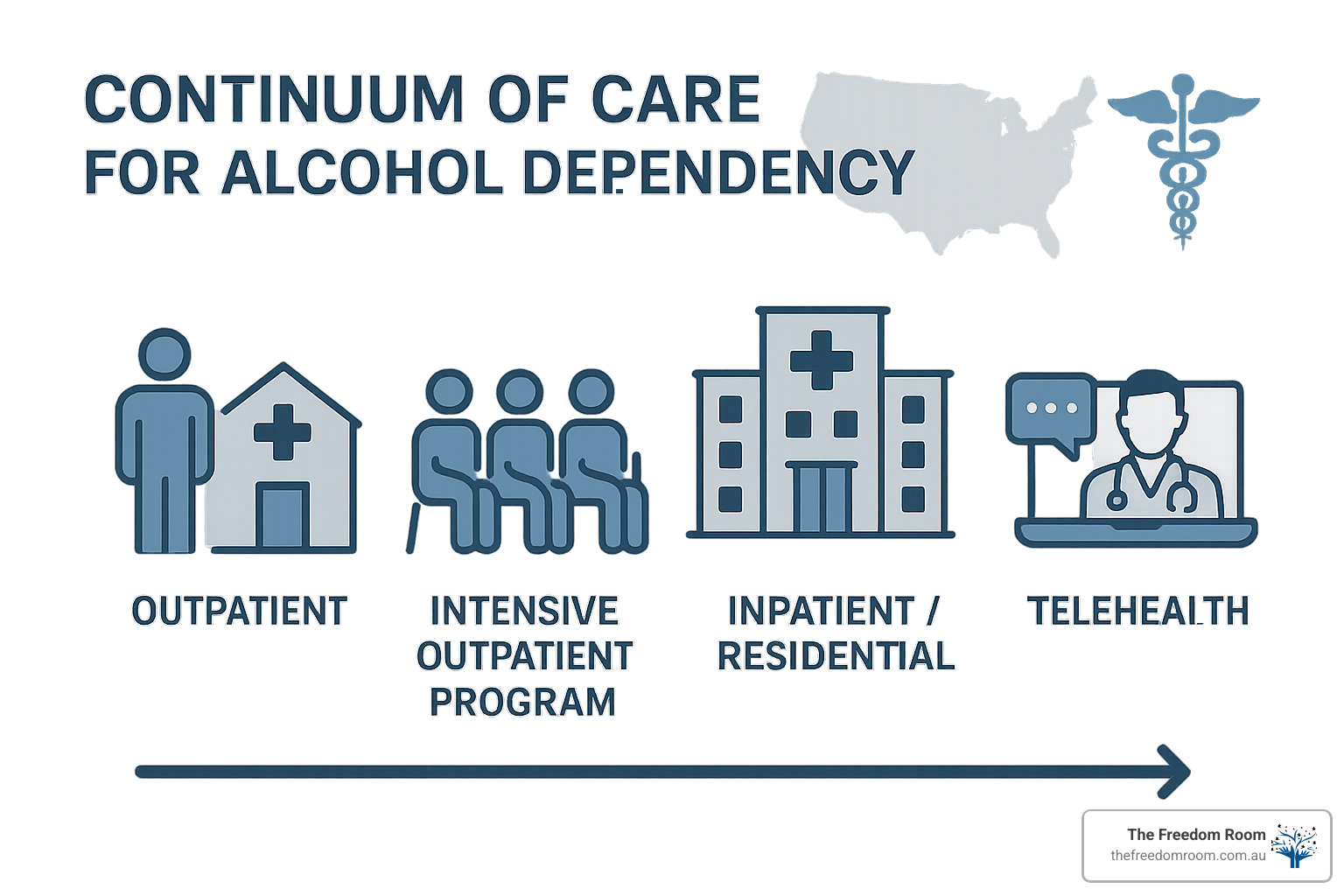
The American Society of Addiction Medicine (ASAM) defines different levels of care for alcohol treatment, ranging from outpatient services to intensive inpatient programs. Additionally, modern alternatives like telehealth and eHealth are expanding access to alcohol dependency help.
Choosing the Right Level of Alcohol Dependency Help
Finding the right treatment intensity isn’t just about ticking boxes – it’s about matching care to your unique situation. When we sit with clients at The Freedom Room, we look at the whole picture: how severe your relationship with alcohol has become, what treatments you’ve tried before, and what kind of support system you have waiting at home.
Outpatient services might be perfect if you’re in the early stages of dependency and have a stable home environment. You’ll attend scheduled sessions but continue living your normal life – maintaining work commitments and family responsibilities while getting the help you need.
For those needing more structure without full-time care, Intensive Outpatient Programs (IOPs) offer a middle ground. You’ll typically spend 9-19 hours weekly in treatment, balancing recovery work with your everyday life. Many of our clients find this balance helps them apply new skills in real-time.
When more comprehensive care is needed but you still want to sleep in your own bed, Partial Hospitalization Programs (PHPs) provide intensive daytime treatment (20+ hours weekly) with evenings at home. It’s like having a full-time recovery job during the day.
Residential treatment becomes important when you need round-the-clock support. These programs provide 24-hour structured care in a non-hospital setting, typically lasting 30-90 days. They create a healing bubble away from triggers and temptations, which can be crucial for breaking entrenched patterns.
For those with serious medical concerns or at risk of severe withdrawal, intensive inpatient services offer hospital-based care with constant medical supervision. Safety comes first, especially when detoxing from heavy, long-term alcohol use.
Many people move between different levels as they progress in recovery. What matters is finding the right fit for where you are right now. For more detailed information about treatment options, visit our Alcohol Addiction Treatment Centers page.
Telehealth, Apps & eHealth Tools
The digital revolution has brought recovery support right to our fingertips, making alcohol dependency help more accessible than ever before. For busy parents, professionals with packed schedules, or those in remote areas, these tools can be game-changers.
Video therapy sessions have become increasingly popular, especially since the pandemic showed us just how effective they can be. At The Freedom Room, we’ve seen clients build meaningful therapeutic relationships through screens, sometimes feeling even more comfortable opening up from the safety of their own homes.
The world of recovery apps has exploded with options to track your sobriety days, monitor triggers, guide you through mindfulness exercises, or connect you with peers who understand exactly what you’re going through. Many of our clients use these digital tools as daily companions between formal sessions.
Research-backed digital CBT programs offer structured interventions that you can work through at your own pace. These aren’t just watered-down versions of in-person therapy – studies show they can be genuinely effective for many people.
For those who value privacy or are just beginning to explore their relationship with alcohol, online assessment tools provide a judgment-free way to evaluate drinking patterns and connect with appropriate resources.
When in-person meetings aren’t possible, virtual support groups keep the community connection alive. Whether it’s AA, SMART Recovery, or other programs, the shared wisdom and understanding of peers remains just as powerful online.
These digital options aren’t meant to replace human connection entirely, but they can beautifully supplement other care or provide support during transitions between more intensive treatments.
DIY Custom Care Team
Recovery isn’t one-size-fits-all, which is why many people find success by building their own personalised support network – a team of professionals and peers who match their specific needs and preferences.
Your GP or primary care provider forms the foundation, monitoring your overall health, prescribing medications when needed, and coordinating with specialists. They can be especially helpful in managing any physical health issues that arise during recovery.
An addiction specialist brings focused expertise to your team. Whether it’s a psychiatrist, psychologist, or counsellor with specialised training, they understand the complexities of alcohol dependency in ways general practitioners might not.
Many people in recovery benefit from working with a therapist who can address co-occurring conditions like anxiety, depression, or trauma – issues that often intertwine with alcohol use. At The Freedom Room, we see how untreated mental health challenges can complicate recovery, which is why we incorporate both CBT and ACT approaches.
Support groups provide the irreplaceable wisdom of lived experience. Whether you connect with traditional 12-step programs, SMART Recovery, or other peer support networks, finding a community that resonates with your values makes a tremendous difference.
Don’t overlook the value of wellness professionals in your recovery. Nutritionists can help repair the physical damage of alcohol dependency, while yoga instructors or fitness trainers can introduce healthy ways to manage stress and reconnect with your body.
Some people also benefit from working with a recovery coach who provides practical guidance and accountability as you steer daily life without alcohol. They can help bridge the gap between formal treatment and independent living.
At The Freedom Room, we understand how overwhelming these options can seem. Our team – all in recovery themselves – can help you steer these choices and build a support system custom to your unique journey. We’ve walked this path ourselves and know that recovery isn’t just about stopping drinking – it’s about creating a life where drinking no longer feels necessary.
Staying Sober & Preventing Relapse
Achieving sobriety is a tremendous accomplishment, but maintaining it requires ongoing effort and support. The journey doesn’t end when you put down the drink—in many ways, that’s just the beginning of a richer, more fulfilling chapter in your life.
Family, Friends & Alcohol Dependency Help in Recovery
The people around you can make all the difference in your recovery journey. Your loved ones aren’t just bystanders—they’re active participants in your healing process.
Open communication creates the foundation for healthy relationships in recovery. Having honest conversations about your needs, boundaries, and expectations helps everyone understand their role in supporting your sobriety. At The Freedom Room, our Couples and Family Sessions provide a safe space for these crucial conversations, guided by counsellors who understand the complexities of addiction firsthand.
Setting clear boundaries protects both you and your loved ones. These might include requesting alcohol-free gatherings, avoiding certain triggering environments, or establishing consequences for behaviours that threaten your recovery. Healthy boundaries aren’t walls—they’re bridges to better relationships.
Don’t underestimate the power of celebrating milestones. Whether you’ve been sober for a day, a week, or a year, acknowledging these achievements reinforces your progress and builds momentum. These celebrations remind you and your loved ones of how far you’ve come and strengthen your resolve to continue.
Family education about addiction as a chronic health condition rather than a moral failing can transform how your loved ones support you. When they understand that recovery is a journey with ups and downs, they can offer more compassionate, effective support. Our family sessions help loved ones develop this understanding in a warm, non-judgmental environment.
We also emphasise self-care for supporters. Supporting someone in recovery can be emotionally demanding, and your loved ones need support too. We often recommend resources like Al-Anon for family members to maintain their own wellbeing while supporting yours.
For more guidance on supporting someone with alcohol dependency, visit our page on How to Counsel Someone with Alcohol Addiction.
Handling Setbacks and Relapse
Let’s talk about something that happens to many people in recovery: setbacks. Between 40-60% of people in treatment will experience a relapse at some point. This isn’t a statistic to discourage you—it’s a reminder that if it happens, you’re not alone, and it doesn’t mean failure.
Understanding the difference between a lapse and a relapse can be empowering. A lapse is a brief return to drinking that doesn’t change your overall commitment to recovery. A relapse is a more sustained return to previous drinking patterns. Recognising this distinction can prevent a momentary slip from becoming something more serious.
If you experience a lapse, taking swift action is crucial. Reach out immediately to your support system, counsellor, or sponsor. Remove alcohol from your environment and remind yourself that one slip doesn’t erase your progress or define your future.
A setback often signals that your current approach might need adjustment. This could mean increasing therapy sessions, trying a different support group, or considering medication options you hadn’t explored before. At The Freedom Room, we help you use these experiences as valuable information to strengthen your recovery plan.
Perhaps most importantly, practice self-compassion. The shame that often follows a setback can actually increase the risk of continued drinking. Instead, approach yourself with the same kindness you would offer a friend—acknowledge what happened, learn from it, and recommit to your recovery with renewed insight.
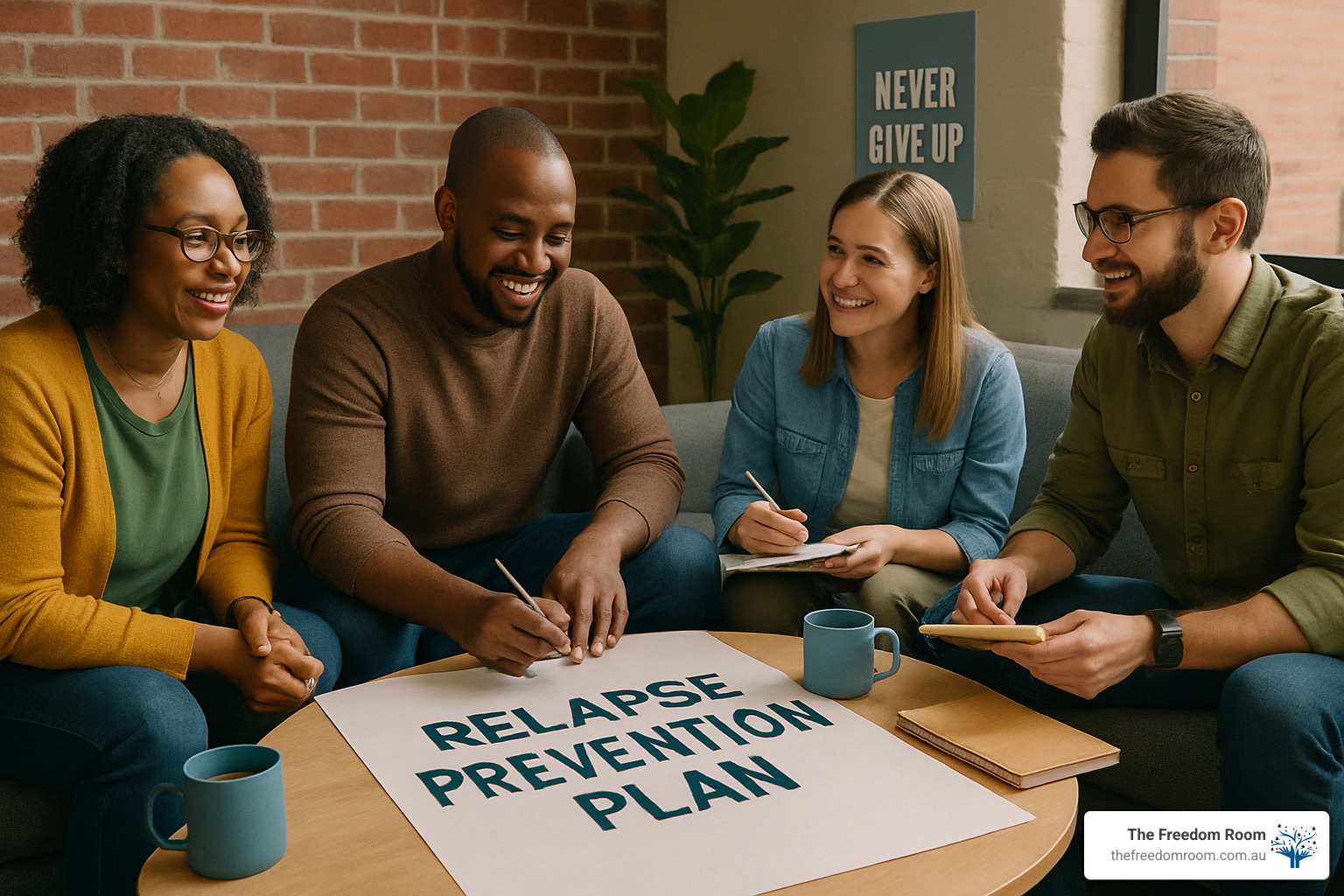
Our relapse prevention program at The Freedom Room helps you develop personalised strategies to identify triggers, manage cravings, and build resilience. We understand that recovery isn’t a straight line—it’s a winding path that sometimes doubles back before moving forward again.
Complementary Supports
Beyond traditional treatment approaches, many people find additional practices that support their recovery journey by reducing stress, improving overall wellbeing, and providing healthy coping mechanisms.
Mindfulness and meditation practices can be powerful tools in recovery. They help you observe cravings without automatically acting on them, reduce stress that might trigger drinking, and increase awareness of thoughts and emotions. Even just five minutes of daily meditation can make a difference in how you respond to challenging situations.
Yoga combines physical movement with mindfulness, creating a dual benefit for people in recovery. Many find that yoga reduces anxiety and depression while improving physical health. The focus on breath and presence can be particularly helpful when cravings arise.
Regular exercise does more than improve your physical health—it actually helps restore normal brain chemistry that’s been altered by alcohol use. The natural endorphin release can improve mood and reduce cravings, making it easier to maintain sobriety.
Paying attention to nutrition supports physical recovery from the nutritional deficiencies often associated with alcohol dependency. A balanced diet rich in proteins, complex carbohydrates, and essential vitamins can help heal your body and stabilise your mood.
Creative therapies like art, music, or writing provide emotional outlets and new forms of self-expression. Many people find artistic talents they never knew they had once they’re sober, finding joy and purpose in creative pursuits.
Some people also find that acupuncture helps reduce cravings and anxiety during recovery. While research is ongoing, many report beneficial effects from this traditional practice.
At The Freedom Room, we encourage a holistic approach to recovery that addresses your physical, emotional, and spiritual wellbeing. While these complementary approaches shouldn’t replace evidence-based treatments like therapy and support groups, they can significantly improve your overall recovery experience and provide additional tools for managing stress and cravings.
Alcohol dependency help comes in many forms, and the most effective recovery plans often combine multiple approaches custom to your unique needs and preferences.
How to Find Alcohol Dependency Help Now
Using Local & National Resources
Australia and the UK offer a wealth of pathways for those seeking alcohol dependency help. National helplines remain an invaluable first step when you’re unsure where to begin. In Australia, you can reach out to the National Alcohol and Other Drug Hotline (search “AOD Hotline Australia”), which operates 24/7. In the UK, Drinkline provides confidential guidance during extended weekday and weekend hours. A quick online search will give you the most up-to-date contact details.
Your GP is another trusted starting point. They can provide an initial assessment of your drinking patterns, offer brief interventions for mild concerns, refer you to specialists for more intensive support, and sometimes prescribe medications to help manage withdrawal symptoms or reduce cravings.
Community alcohol services, typically funded by state or territory governments in Australia, offer free or low-cost counselling and treatment programmes. These local services often have shorter waiting lists than private facilities and understand the specific needs of your community.
For those who prefer to explore options independently, online assessment tools like the NIAAA Alcohol Treatment Navigator can help you evaluate treatment choices based on quality indicators and evidence-based practices.
Many communities also offer culturally specific support services. For Aboriginal and Torres Strait Islander peoples, LGBTQ+ individuals, and various cultural communities, these specialised services provide care that is sensitive to unique experiences and needs.
Here in Strathpine QLD, The Freedom Room offers personalised support with a team who truly understands the recovery journey firsthand. We can help you steer local resources and create a recovery plan custom to your circumstances and goals.
Building Your Personal Support Map
Creating a comprehensive network of support significantly improves your chances of successful recovery. Think of it as building your personal recovery team—people and resources you can turn to for different needs at different times.
Professional support forms the foundation of this network. This includes healthcare providers like your GP, psychiatrist, or psychologist, along with counsellors or therapists who specialise in addiction. Having contact information for your treatment programme readily available ensures you can reach out when challenges arise.
Peer support offers something professionals alone cannot—the understanding that comes from shared experience. Support group contacts, sober friends, and recovery mentors or sponsors can provide practical advice and inspiration drawn from their own journeys.
Having emergency resources at your fingertips is crucial for moments of crisis. Programme emergency numbers, your local emergency department, and after-hours mental health services should all be saved in your phone. Knowing exactly who to call in a moment of overwhelming craving or emotional distress can make all the difference.
Daily support helps maintain your recovery between formal treatment sessions. Identify family members or friends who understand and respect your recovery goals. Consider joining online communities or forums where you can connect with others 24/7. Recovery apps and digital tools can also provide in-the-moment guidance for managing cravings or tracking your progress.
Don’t overlook practical support needs. Arrange transportation to appointments or meetings if driving is challenging. Consider childcare options during treatment sessions. If your situation involves financial or legal complications, connect with services that can assist in these areas.
At The Freedom Room, we help you develop this comprehensive support map and connect you with appropriate resources. We understand that recovery extends far beyond formal treatment sessions, and we’re committed to helping you build a sustainable network that supports your long-term wellbeing.
For more information about support services, visit our Alcohol Addiction Support Services page.
Frequently Asked Questions about Alcohol Dependency Help
How long does treatment usually take?
One of the most common questions people ask when seeking alcohol dependency help is about the timeline for recovery. The truth is, there’s no one-size-fits-all answer. Your journey will be as unique as you are.
Generally speaking, detoxification typically takes about 3-7 days under medical supervision. This initial phase addresses the physical dependence on alcohol, but it’s just the beginning of the healing process.
From there, treatment programs vary widely in duration. Residential programs usually range from 30-90 days, while outpatient programs might continue for 3-12 months, with decreasing frequency of sessions as you progress. Many people find that some form of ongoing support—whether through regular support group meetings or occasional check-ins with counsellors—becomes a valuable part of their lives for years to come.
At The Freedom Room, we understand that recovery isn’t a race with a finish line. It’s more like learning a new way of living. We work alongside you to develop a personalised plan that evolves as your needs change, offering both intensive initial support and long-term maintenance programs to help you sustain your recovery journey.
Can I ever drink socially again?
This question sits heavy on the hearts of many people seeking alcohol dependency help. While some recovery programs insist on lifetime abstinence for everyone, the reality is more nuanced.
The answer depends on several factors, including the severity of your alcohol use disorder, your personal drinking history, any co-occurring mental health conditions, genetic factors, and the strength of your support system.
For many people with moderate to severe alcohol dependency, abstinence provides the clearest and safest path forward. This is particularly true if you’ve experienced significant health problems related to alcohol, have a family history of addiction, or have tried to moderate your drinking in the past without success.
Some individuals with mild alcohol use disorder who achieve stable recovery may eventually return to moderate drinking under careful guidance. However, this typically requires a period of complete abstinence first, along with developing new coping skills and an honest self-assessment of your relationship with alcohol.
At The Freedom Room, we meet you where you are. We offer both abstinence-based programs and harm reduction approaches for those who aren’t ready to stop drinking completely. What matters most is reducing harm and improving your wellbeing, whatever path that takes.
What if my loved one refuses help?
Watching someone you care about struggle with alcohol dependency while refusing help can be heartbreaking. You might feel helpless, frustrated, or even angry—all completely normal reactions.
First, try expressing your concerns without judgment. Choose a calm moment (when they’re not drinking) and share your observations using “I” statements: “I worry when you don’t come home until morning” rather than “You’re drinking too much.”
Educating yourself about alcohol dependency can help you respond with empathy rather than frustration. Understanding that addiction affects the brain can help you separate the person you love from their behaviours.
Setting clear boundaries is crucial for both of you. Decide what behaviours you will and won’t accept, communicate these calmly, and be consistent with consequences. This might mean refusing to cover for them at work or declining to spend time with them when they’re drinking.
Avoid enabling by not shielding them from the natural consequences of their drinking. Sometimes experiencing these consequences becomes the motivation for seeking help.
For persistent situations, a structured intervention with the help of a professional might break through denial. But remember that you cannot force someone to get help—motivation for change must ultimately come from within.
While waiting for your loved one to be ready, focus on your own wellbeing by joining support groups like Al-Anon. These groups can provide valuable guidance and remind you that you’re not alone.
For more detailed guidance on helping a loved one, our page on How to Counsel Someone with Alcohol Addiction offers practical strategies and support.
Ready for Change? Let’s Build a Stronger, Alcohol-Free Future Together
At The Freedom Room, we understand that seeking alcohol dependency help is a courageous step. Our approach is built on compassion, lived experience, and evidence-based practices that address the whole person—not just the addiction.
What makes our approach different is our team. As individuals in recovery ourselves, we bring genuine understanding and empathy to your journey. We’ve been where you are, faced similar challenges, and found pathways to lasting recovery. This shared experience creates an authentic connection that can make all the difference in your recovery journey.
Our services include:
- One-to-One Counselling: Personalised guidance from counsellors who understand the recovery journey firsthand
- Family and Couples Sessions: Supporting loved ones in understanding addiction and developing healthy communication
- Group Recovery Meetings: Building community and shared wisdom through regular gatherings
- Evidence-Based Therapies: Including CBT, ACT, and Twelve-Step Facilitation
- Conflict Resolution: Learning to steer disagreements without turning to alcohol
- Relapse Prevention: Developing personalised strategies to maintain sobriety
- Pre and Post-Rehabilitation Support: Guidance before entering rehab and continued support after discharge
We recognise that recovery isn’t just about stopping drinking—it’s about building a fulfilling life where alcohol is no longer needed. Our workshops and counselling address underlying issues like stress, anxiety, and depression that often contribute to alcohol dependency.
Recovery is a journey, not a destination. There may be challenges along the way, but with the right support, you can build a stronger, alcohol-free future. Whether you’re taking your first steps toward sobriety or looking to strengthen your recovery, The Freedom Room is here to walk alongside you.
Reach out today to learn more about how we can support your recovery journey. Our dedicated team is ready to help you take that first step toward a healthier, more fulfilling life free from alcohol dependency.
For more information about alcohol use disorder and our approach to treatment, visit our page About Alcohol Use Disorder.
Support & Resources
Reaching out for help is a sign of strength, not weakness. If you or someone you care about is struggling with alcohol addiction, please know that compassionate, understanding support is just a phone call away.
The Freedom Room team is ready to walk alongside you on your recovery journey. We’re here because we’ve been there ourselves, and we understand the courage it takes to make that first call. You can reach us directly at:
Our Office: (07) 3325 1531
Mobile: 0400 236 743 (Rachel)
Sometimes, you might need immediate support outside our regular hours. In those moments, please don’t hesitate to contact these valuable resources:
Emergency Help: Call 000 if you or someone else is in immediate danger
AA Helpline: 1300 222 222 for 24/7 peer support from those who understand
Lifeline: 13 11 14 for crisis support and suicide prevention
Al-Anon: www.al-anon.org.au for family members affected by someone else’s drinking
Alcohol dependency help comes in many forms, and finding the right support can make all the difference in your recovery journey. Whether you’re taking your first steps toward sobriety or supporting someone who is, you don’t have to face this challenge alone.
The path to recovery may not always be straight or easy, but with the right support network, each step forward becomes more manageable.
At The Freedom Room, we believe in your capacity for change and growth, and we’re honoured to be part of your journey toward a healthier, more fulfilling life free from alcohol dependency.