

Alcohol Support Services: 10 Powerful Ways to Confidently Recover 2025
Why Finding the Right Alcohol Support Matters More Than Ever
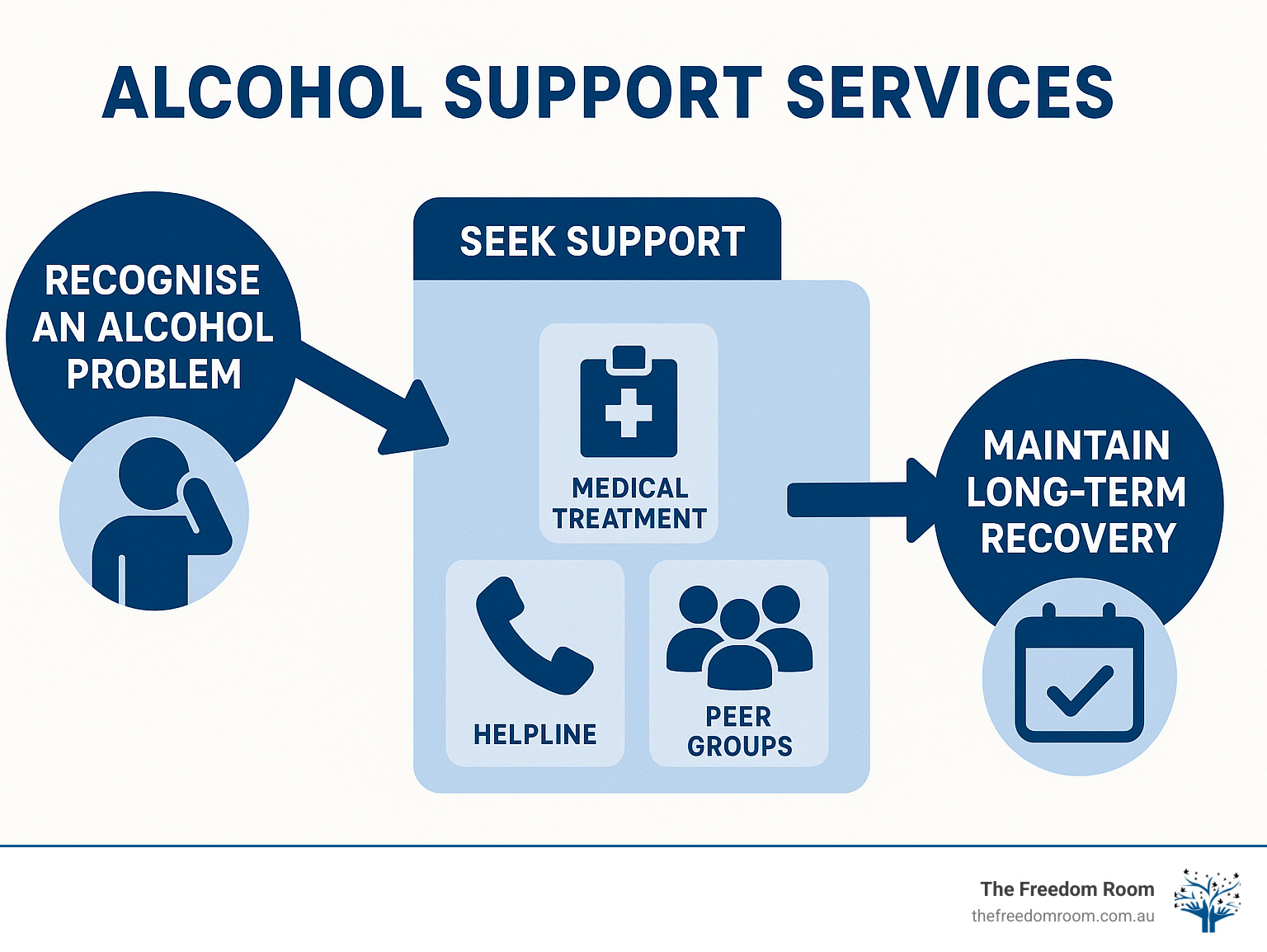
Alcohol support services bring together professional treatment and peer-led connection so people can move from harmful drinking to healthier, alcohol-free lives. Options range from a brief phone chat to residential rehabilitation and long-term after-care.
Key types of support:
- Immediate help: 24/7 helplines and crisis counselling
- Professional treatment: GP- or specialist-led detox, counselling, CBT, ACT
- Peer support groups: AA, SMART Recovery and other mutual-aid meetings
- Specialised services: culturally safe or age-specific programmes
- Family support: guidance for loved ones affected by someone else’s drinking
- Harm reduction: safer-drinking information and overdose-response training
Roughly one in four Australian adults drinks at risky levels, and about one in ten children lives in a home affected by problematic drinking. The encouraging news? Evidence shows treatment works. Even brief interventions can reduce harm, and comprehensive care dramatically improves long-term recovery rates.
If stigma, anxiety or simply “not knowing where to start” has kept you silent, this guide offers clear, actionable steps. Whether your first move is a confidential phone call, a talk with your GP or dropping into a local meeting, help is ready when you are.
Recognising When Alcohol Use Becomes a Problem
Wondering if your drinking has crossed the line from social enjoyment into something more concerning? You’re not alone in asking this question. Many people struggle to understand when their relationship with alcohol has shifted from casual use to a pattern that needs attention.
Alcohol use disorder isn’t just about drinking every day or hitting “rock bottom.” It exists on a spectrum, ranging from mild to moderate to severe, based on how many symptoms you’re experiencing. The key is recognising these signs early, when alcohol support services can be most effective in helping you regain control.
Physical and Behavioural Red Flags
Your body often sends the first signals that alcohol use is becoming problematic. Tolerance is one of the earliest red flags – you might notice you need two or three drinks to feel the same relaxation you used to get from one. This happens because your body adapts to regular alcohol exposure, requiring more to achieve the same effect.
Withdrawal symptoms are another clear warning sign that shouldn’t be ignored. These don’t always look like what you see in movies. Often, they’re subtle – waking up anxious or sweaty, feeling shaky until you have a drink, or needing alcohol to “steady your nerves” in the morning. If you find yourself drinking to feel normal rather than to feel good, this suggests physical dependence has developed.
Blackouts – those frightening gaps in memory while drinking – indicate your brain is being overwhelmed by alcohol. During blackouts, you might appear conscious and even hold conversations, but your brain isn’t forming new memories. This is dangerous territory, both for your safety and your long-term brain health.
Risk-taking behaviours often escalate alongside problematic drinking. You might find yourself driving after drinking, engaging in unsafe sexual practices, or making decisions you’d never consider when sober. If you’re regularly waking up wondering “What did I do last night?” or feeling embarrassed about your behaviour while drinking, these are important signals to pay attention to.
Emotional and Social Clues
The emotional impact of alcohol problems can be just as telling as physical symptoms. Many people develop a pattern of drinking to cope with stress, anxiety, or depression. While alcohol might provide temporary relief, it actually worsens these conditions over time, creating a cycle that’s hard to break.
Relationship strain is often one of the most painful aspects of alcohol problems. Friends and family members frequently notice changes before the person drinking does. If loved ones have expressed concern about your drinking, or if alcohol is causing arguments or tension in your relationships, these concerns deserve serious consideration.
Your work or study performance might start to suffer in ways that weren’t obvious at first. Missing deadlines, calling in sick more often, or finding it hard to concentrate during the day can all be signs that alcohol is affecting your daily functioning. Some people notice they’re planning their day around when they can drink, or thinking about alcohol during work hours.
Social isolation can creep in gradually. You might start declining invitations to events where alcohol won’t be available, or preferring to drink alone rather than engage in activities you once enjoyed. When alcohol becomes more important than the people and activities that used to bring you joy, it’s time to seek support.
When to Seek Professional Screening
If several of these warning signs feel familiar, it’s time to consider professional assessment. Your GP is often the best starting point – they can provide honest, accurate information about your drinking patterns and connect you with appropriate support services. Many people find this conversation less intimidating than they expected.
Healthcare providers often use brief screening tools that explore your drinking frequency, quantity, and any related problems. These assessments help determine the severity of alcohol use disorder using established criteria. Professional screening looks at factors like drinking more than intended, unsuccessful attempts to cut down, spending significant time obtaining or recovering from alcohol, and experiencing cravings.
The assessment also considers whether alcohol use has led to relationship problems, work difficulties, or risky situations. It examines tolerance and withdrawal symptoms, as well as whether you’ve given up important activities because of drinking.
Having two to three symptoms typically indicates mild alcohol use disorder, four to five suggests moderate severity, and six or more symptoms point to severe alcohol use disorder. However, even mild symptoms warrant attention and support. The earlier you seek help, the more options you have available.
Seeking professional screening isn’t about labelling yourself or admitting failure. It’s about getting clear, evidence-based information to help you make informed decisions about your health and wellbeing. Scientific research on screening shows that early intervention can prevent more serious problems from developing.
Alcohol Support Services: What’s Available and How to Access Help

When you decide to seek help, you’ll find more options than you might expect. The key is matching the service to your level of need and preferred way of engaging.
24/7 helplines provide confidential guidance and can direct you to local resources. Walk-in clinics remove waiting lists, and online platforms now deliver video counselling, self-assessment tools and education wherever you live. People whose bodies have become dependent on alcohol may need supervised withdrawal management, from home-based nurse check-ins to brief residential stays.
Accessing Alcohol Support Services in Your Area
Most Australians can self-refer. Use the 8-1-1 nurse line, call 211 or explore More info about Alcohol Addiction Support Services for local directories, waiting-times and costs. Community health centres and your GP remain excellent entry points and can coordinate care if other health concerns are present.
Specialised Programmes
- Youth services use age-appropriate strategies.
- Indigenous-specific programmes such as the Hope for Wellness Help Line blend cultural practice with clinical care.
- LGBTQ+, women-only and older-adult groups offer safe, affirming spaces.
Costs and Insurance
Crisis lines and most community counselling are publicly funded. Private insurance may cover inpatient or outpatient treatment; check limits before you start. Many providers offer sliding-scale fees so money is never a barrier to care.
Treatment Pathways and Peer Support Options
Recovery is rarely linear, so the most effective alcohol support services offer several evidence-based pathways you can mix and match.
Medical Detox and Withdrawal Safety
Suddenly stopping heavy, long-term drinking can be dangerous. A planned detox overseen by a GP or specialist nurse reduces discomfort and the risk of seizures or delirium tremens. Mild cases may be managed at home; severe cases sometimes need a short inpatient stay. Short-term medicines such as benzodiazepines keep withdrawal safe, while vitamins prevent alcohol-related deficiencies.
Evidence-Based Therapies and Medications
Modern programmes pair counselling with medication when appropriate:
- Cognitive Behavioural Therapy (CBT) targets the thoughts triggering drinking.
- Acceptance and Commitment Therapy (ACT) builds mindfulness and values-based action.
- Motivational interviewing boosts readiness to change.
- Naltrexone, acamprosate or, less often, disulfiram reduce cravings or make drinking unrewarding.
Peer-Led Groups and Professional Care
Peer support adds vital connection. Choose what fits you best:
- Alcoholics Anonymous (12-step, spiritual but flexible)
- SMART Recovery (secular, skills-based)
- Women for Sobriety, Dual Recovery Anonymous and other niche groups
Research shows outcomes improve when peer support and professional treatment work together.
Combining Services for Best Outcomes
Integrated care means your GP, counsellor, family and peers all pull in the same direction. A written relapse-prevention plan, regular follow-up and family education make slipping back less likely. For custom guidance, More info about Addiction Counselling explains how The Freedom Room weaves these elements into personalised care.
Choosing the Right Alcohol Support Services for You
Selecting the right mix of help takes honest self-assessment and a clear view of your goals.
Comparing Programme Philosophies and Formats
- Abstinence vs. moderation: complete abstinence is safest for most people with dependence, but controlled-drinking plans can be a stepping-stone for milder cases.
- Spiritual vs. secular: 12-step programmes include spiritual elements, while services like SMART Recovery take a purely secular approach.
- Group vs. one-to-one: groups offer shared experience; individual sessions let you dig deeper. Many people use both.
Questions to Ask Before Enrolling
- Which therapies do you use and what evidence supports them?
- How do you measure progress and handle relapse?
- What qualifications and lived-experience do staff have?
- What does a typical week of treatment look like?
Building a Personalised Recovery Toolkit
Layer multiple supports:
- Daily self-care: exercise, sleep, nutrition, meditation
- People: trusted friends, recovery peers, counsellors
- Tech: apps that track mood or connect you to help after hours
- Plans: strategies for parties, work stress or difficult emotions
Staying on Track: Withdrawal Safety, Medications, and Relapse Prevention
Early sobriety is only the beginning. Ongoing support turns first steps into lifelong change.
Medication Management and Follow-Up
Take prescribed medicines as directed and attend regular GP reviews. Most side-effects ease quickly; never stop tablets abruptly without medical advice.
Relapse Prevention Strategies
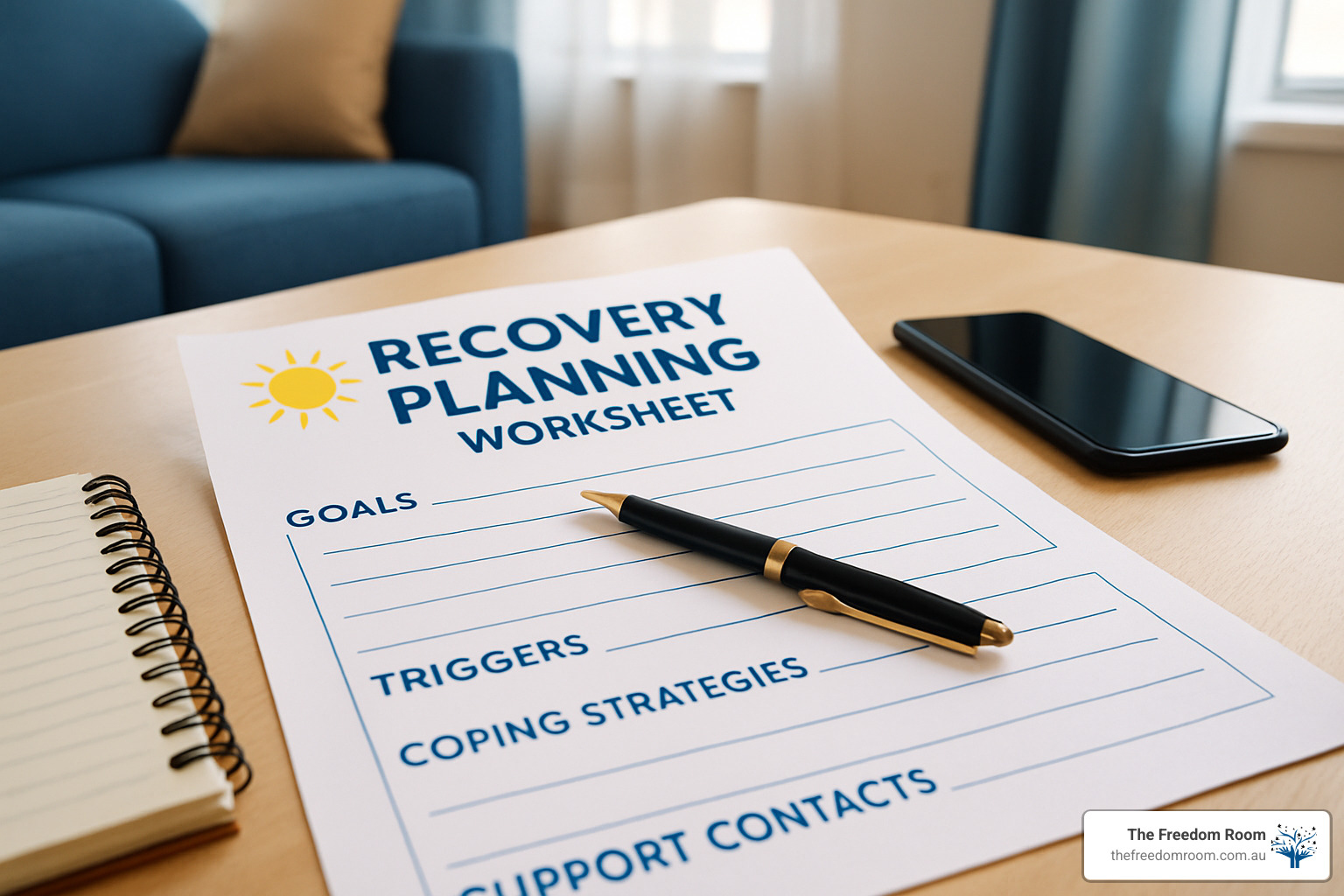
Triggers fade but rarely vanish. Identify high-risk people, places and feelings, and rehearse alternatives: call a peer, walk the dog, use breathing exercises or mindfulness. If a slip occurs, reach out quickly and analyse what happened rather than falling into all-or-nothing thinking. More info about Post-Rehabilitation Support explains how The Freedom Room keeps you connected after formal treatment ends.
Harm Reduction and Emergency Resources
- Know the signs of alcohol poisoning: confusion, vomiting, slow breathing. Call 000 if in doubt.
- Keep naloxone handy if opioids are also in the picture; it is free at many chemists.
- Good Samaritan laws protect people who call for help. Details: Scientific research on overdose protection.
Frequently Asked Questions about Alcohol Support Services
Is it safe to stop drinking suddenly?
This is one of the most important questions people ask when considering recovery, and the answer depends entirely on your drinking patterns and overall health. Stopping alcohol suddenly after heavy, prolonged use can be genuinely dangerous – and in some cases, life-threatening.
If you’ve been drinking heavily for weeks or months, your body has likely adapted to having alcohol in your system. When you suddenly remove it, your nervous system can go into overdrive, creating withdrawal symptoms that range from uncomfortable to medically serious.
Mild withdrawal symptoms like anxiety, sweating, tremors, and nausea can often be managed safely at home with proper medical guidance. However, severe withdrawal symptoms require immediate medical attention. These include hallucinations, severe tremors that interfere with basic functions, seizures, or delirium tremens (DTs) – a condition involving confusion, high fever, and potentially fatal complications.
The key is getting professional assessment before you stop drinking. A healthcare provider can evaluate your individual risk factors to recommend the safest approach. Medical detoxification programmes provide supervised support during withdrawal, using medications when necessary to prevent dangerous complications.
Never attempt to stop drinking “cold turkey” without medical consultation if you’ve been drinking heavily. It’s simply not worth the risk when safe, supportive options are available.
How effective are recovery support groups?
The good news is that recovery support groups can be highly effective – but their success depends on finding the right fit for your personality, beliefs, and circumstances.
Research consistently shows strong correlations between participation in support groups and reduced drinking. A significant 2013 study found that having a sponsor in Alcoholics Anonymous contributes meaningfully to long-term abstinence, highlighting how personal mentorship relationships can make a real difference in recovery outcomes.
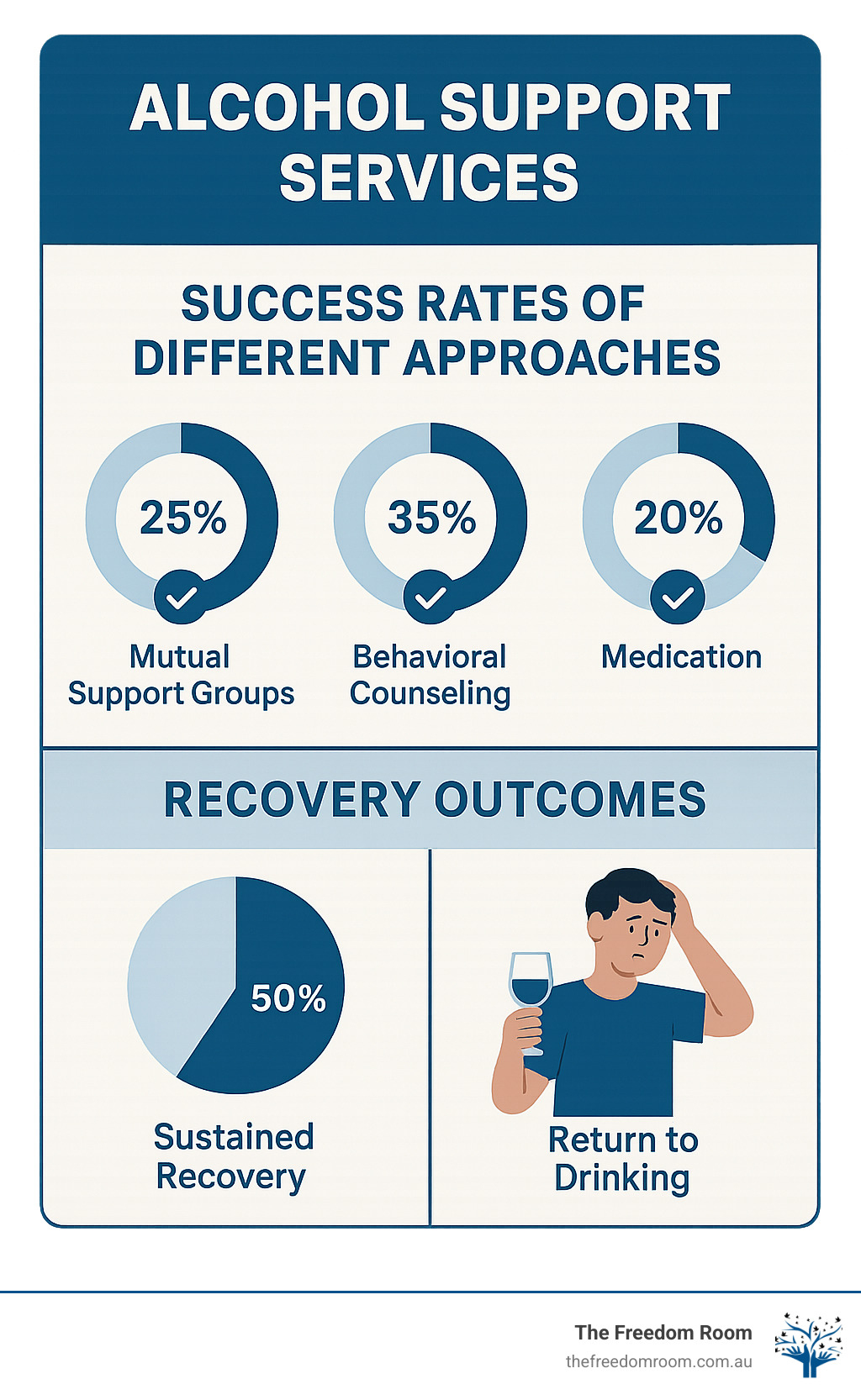
What’s particularly encouraging is that different approaches work for different people. A 2018 longitudinal study demonstrated that SMART Recovery, LifeRing, and Women for Sobriety are as effective as traditional 12-step groups for people with alcohol use disorder. This means you have genuine options to find an approach that resonates with your personal style and beliefs.
The effectiveness of support groups improves dramatically when combined with professional treatment. People who participate in both peer support and receive professional counselling or medical treatment often achieve better outcomes than those relying on only one type of support.
What should I do if a loved one refuses help?
This situation is heartbreaking and incredibly common. Watching someone you care about struggle with drinking while refusing help can feel like being trapped in a nightmare where you’re powerless to act.
Start by educating yourself about alcohol use disorder as a medical condition rather than a character flaw or moral failing. Understanding that addiction involves real changes in brain chemistry can help you respond with compassion rather than frustration or judgement – even when their behaviour is difficult to accept.
Setting clear, healthy boundaries is crucial for both your wellbeing and theirs. This might mean refusing to provide money that could be used for alcohol, not making excuses for their behaviour to employers or friends, or not allowing drinking in your home. Boundaries aren’t punishment – they’re protection against enabling the problem to continue.
Consider attending Al-Anon or other support groups specifically designed for families and friends of people with alcohol problems. These groups provide practical strategies for coping with the unique stress of loving someone with addiction while maintaining your own mental health and wellbeing.
You cannot force someone to recover – and trying to do so often pushes them further away. However, you can model healthy behaviour, maintain your own wellbeing, and position yourself to provide meaningful support when they’re ready to accept it.
Ready for Change? Let’s Build a Stronger, Alcohol-Free Future Together
At The Freedom Room Wellness and Recovery, we understand that seeking help for alcohol problems takes tremendous courage. Our approach to alcohol support services is built on compassion, evidence-based treatment, and the understanding that comes from lived experience.
What sets us apart is our team of counsellors, meeting facilitators, and workshop leaders who are all in recovery themselves. When you sit across from one of our team members, you’re talking to someone who truly understands the challenges, victories, and setbacks you face. We’re not just professionals – we’re friends on your journey to sobriety.
Our comprehensive approach combines personalised one-on-one sessions, dynamic workshops, group recovery meetings, and family involvement sessions. We offer evidence-based therapies including Cognitive Behavioural Therapy (CBT) and Acceptance and Commitment Therapy (ACT), alongside practical support like conflict resolution and relapse prevention planning.
We recognise that life doesn’t stop when you get clean and sober. That’s why our counselling and workshops also address how to deal with stress, anxiety, and depression – feelings often associated with addiction. Our mission is to support you through tough times without having to reach for a drink.
Our services include:
- One-to-one counselling with understanding counsellors who provide guidance, compassion, and practical steps to overcome alcohol dependence
- Couples and family sessions to work through recovery issues with your loved ones in a safe, caring environment
- Group recovery meetings held three times weekly, including both face-to-face and online options exclusively for our clients
- Twelve Step Facilitation with both traditional and secular options, custom to your beliefs and preferences
- Pre and post-rehabilitation support to help you choose the right facility and maintain your recovery after treatment
- Workshops focusing on self-compassion, mindfulness, positivity, and gratitude
Located in Strathpine QLD, our space is discreet and welcoming, with facilities that accommodate families should you need to bring children along. We believe that recovery isn’t a solo mission – it’s a collective effort fueled by shared stories and unwavering camaraderie.
For comprehensive information about our approach to supporting your recovery journey, visit our More info about Alcohol Recovery Coach & Addiction Counselling page.
Alcoholism is a chronic condition that requires ongoing attention, much like diabetes or heart disease. If you stop treating it, relapse becomes more likely. That’s why we focus on building long-term support networks and teaching practical skills for maintaining sobriety in daily life.
Whether you’re ready to stop drinking completely, need help reducing your alcohol use, or want support for a loved one, we’re here to help. Our team understands your struggle because we’ve walked the same path. Together, we’ll steer the twists and turns, celebrate progress, and build resilience for lasting recovery.
Support & Resources
Getting help for alcohol problems is one of the most important decisions you can make, and knowing where to turn can make all the difference in your recovery journey. Whether you’re reaching out for yourself or someone you care about, alcohol support services are available around the clock to provide the guidance and assistance you need.
The Freedom Room is here to support you through every step of your recovery. Our team of counsellors who understand your struggle are ready to listen, guide, and walk alongside you on your path to sobriety. We know how difficult it can be to make that first call, but remember – reaching out for help is a sign of strength, not weakness.
You can contact us directly at (07) 3325 1531 during business hours, or reach Rachel on her mobile at 0400 236 743 for more immediate support. Our team understands that motivation for change can come at any time, and we’re committed to being accessible when you’re ready to take that crucial first step.
When immediate help is needed outside our operating hours, several essential services are available to ensure you’re never without support. If you’re experiencing a medical emergency or feel unsafe, don’t hesitate to call 000 for immediate emergency assistance. This is particularly important if you’re experiencing severe withdrawal symptoms or having thoughts of self-harm.
The AA Helpline at 1300 222 222 provides 24/7 support from people who understand addiction through their own lived experience. Whether you’re curious about Alcoholics Anonymous meetings, need someone to talk to during a difficult moment, or want information about local support groups, this helpline offers compassionate guidance at any hour.
Lifeline (13 11 14) is Australia’s national crisis support service, available 24 hours a day when you need someone to listen. Their trained counsellors provide emotional support and can help you work through immediate challenges or connect you with appropriate local services.
For families and friends affected by someone else’s drinking, Al-Anon offers specialised support through their website at www.al-anon.org.au. These services recognise that alcohol problems affect entire families, and they provide valuable guidance for loved ones who are trying to cope with the impact of someone else’s drinking while maintaining their own wellbeing.
Seeking help is the first step toward building the alcohol-free future you deserve. You don’t have to face this challenge alone – support is available, understanding is waiting, and recovery is possible.