

The Importance of Craving Management Techniques in Alcohol Addiction Recovery
Craving management techniques are practical strategies designed to assist individuals in resisting urges to consume alcohol and maintaining recovery. Although cravings can be intense, effective tools enable their management without relapse.
Quick Guide to Managing Cravings:
- Trigger Identification – Recognising the situations, emotions, or individuals that precipitate urges to drink.
- The 4 Ds Method – Applying the principles of Delay, Deep Breathing, Distraction, and Decision-making.
- Urge Surfing – A mindfulness practice of observing cravings as transient sensations without acting upon them.
- Healthy Habit Formation – Establishing routines of exercise, balanced nutrition, and adequate sleep to reduce craving intensity.
- Support Networks – Engaging with friends, support groups, or professional counsellors when cravings occur.
Cravings are not a reflection of willpower but are a physiological and psychological response to the brain’s adaptation to alcohol. As a recognised medical symptom of addiction recovery, understanding their nature can reduce stigma and facilitate an effective response.
Most cravings are time-limited, generally lasting between 7 and 20 minutes. Despite their intensity, they are transient, which underscores the importance of having management strategies prepared.
This article provides evidence-based techniques for managing cravings, intended to support individuals in achieving and sustaining abstinence from alcohol.
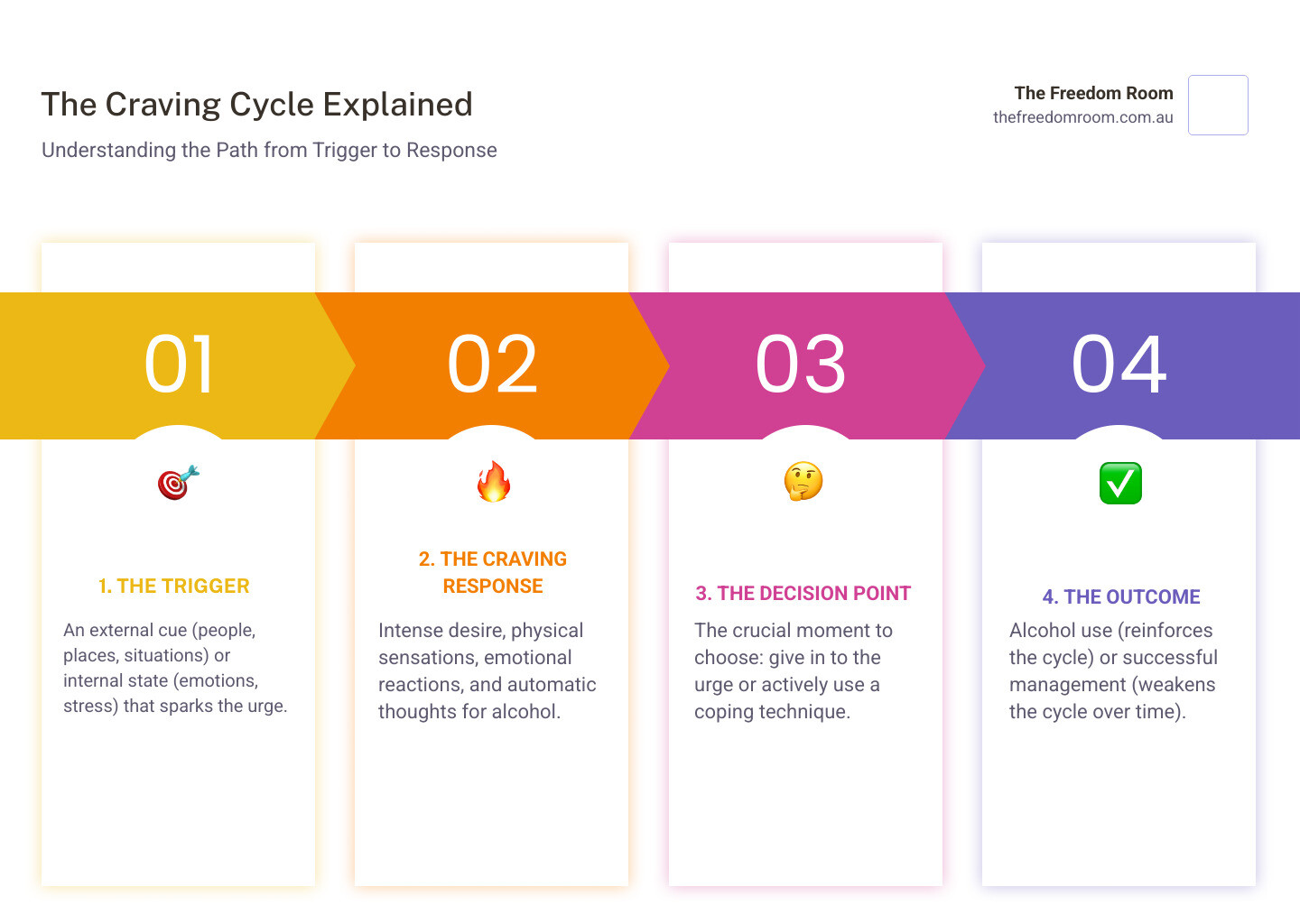
Understanding the Nature of Cravings in Addiction Recovery
A comprehensive understanding of cravings can reduce stigma and enable an effective response during recovery. A craving is an intense urge for alcohol involving both physiological and psychological components. Scientific research confirms craving is a central feature of addiction, establishing it as a recognised medical symptom rather than a personal failing.
Addiction is a chronic illness, and cravings may persist long after alcohol consumption has ceased. Alcohol alters the brain’s reward system by increasing dopamine levels, which creates powerful neural pathways associating alcohol with pleasure. The brain adapts to the presence of alcohol, resulting in a neurotransmitter imbalance. Cravings are compelling because the brain signals a perceived need for alcohol to restore this equilibrium.
An understanding of these physiological and psychological factors is crucial for managing a medical condition that requires strategic tools beyond willpower alone.
What Causes Cravings for Alcohol?
Cravings are precipitated by specific internal and external cues. The identification of these cues is the first step toward effective management.
- Conditioned Cues: The brain forms associations between drinking and certain people, places, objects, or times of day, which can trigger an intense urge.
- Brain Adaptation: Following the cessation of drinking, an imbalance in neurotransmitters creates a persistent urge as the brain attempts to restore its perceived state of normalcy.
- Stress and Emotions: Stress hormones can activate reward centres in the brain. Difficult emotions such as anxiety, anger, or sadness can also trigger a learned response to drink. Further information on this connection is available at stress and alcohol addiction.
- Physical Dependence on Alcohol: Withdrawal symptoms can intensify cravings as the body seeks relief from physical discomfort.
- Hunger: Studies show the hunger hormone ghrelin can stimulate alcohol cravings, highlighting the importance of balanced nutrition.
Why Managing Cravings is Crucial for Sobriety
Effective craving management is foundational to achieving long-term sobriety. It is a key component of relapse prevention, as uncontrolled cravings are a primary predictor of a return to alcohol use. Comprehensive strategies are detailed in relapse prevention strategies.
Each successfully managed craving reinforces self-efficacy and personal control, thereby strengthening an individual’s commitment to recovery. This process transforms recovery from a temporary effort into a sustainable lifestyle.
The application of effective strategies also reduces the stress and anxiety associated with managing urges, which contributes to improved mental health and protects long-term wellbeing. Each managed craving represents progress toward sustained recovery.
Proven Craving Management Techniques for Lasting Sobriety

Recovery necessitates the use of practical tools when cravings occur. These craving management techniques serve as a structured approach to maintaining sobriety. It is important to note that progress is more significant than perfection; each managed craving contributes to increased resilience and self-efficacy.
Identifying and Navigating Your Triggers
Understanding the factors that precipitate cravings is essential for navigating challenging situations. Triggers can be external, originating from the environment, or internal, arising from an individual’s thoughts and physical state.
- External Triggers: These include individuals associated with past drinking, specific locations such as pubs, social situations like parties, or objects like alcohol advertisements.
- Internal Triggers: These include emotions such as stress, anxiety, sadness, or boredom. Physical sensations like hunger, fatigue, or withdrawal symptoms can also reduce an individual’s capacity to resist cravings.
The HALT acronym (Hungry, Angry, Lonely, Tired) is a useful tool for self-assessment when a craving occurs. Addressing these fundamental needs can often diminish the intensity of the urge.

Once triggers are identified, strategies can be developed to avoid them where possible, plan for unavoidable situations, and implement healthy coping mechanisms. Further information on this topic is available at healthy coping mechanisms.
In-the-Moment Craving Management Techniques: The 4 Ds and Urge Surfing
Immediate, actionable strategies are required when a craving emerges. The 4 Ds and urge surfing are two effective techniques for these critical moments.
The 4 Ds technique provides a clear framework:
- Delay: Commit to a waiting period of 10 to 15 minutes, as most cravings subside within this timeframe.
- Deep Breathing: Engage in slow, deep breathing to calm the nervous system. Guidance on this practice can be found at breathing exercises for addiction.
- Distract: Shift focus to an engaging activity, such as walking, listening to music, or contacting a support person.
- Decide: Following the subsidence of the urge, reaffirm the commitment to recovery and acknowledge the successful management of the craving.
Urge surfing is a mindfulness-based technique that involves observing a craving without acting on it. Rather than resisting the urge, the practice encourages noticing the physical sensations, describing them non-judgmentally, and allowing the craving to pass like a wave. Each application of this technique can weaken the power of subsequent urges. Additional insights are available at Mindfulness for addiction recovery.
Building Resilience Through Lifestyle and Support
Beyond immediate strategies, a resilient lifestyle reduces the frequency and intensity of cravings over time.

- Physical Health: Regular physical activity can improve mood and reduce stress. A balanced diet and proper hydration help to stabilise energy levels, which can prevent fluctuations that may trigger cravings.
- Mindfulness and Goals: Relaxation practices assist in emotional regulation, while clear, meaningful goals provide a sense of purpose and shift focus toward constructive achievements.
- Support Systems: A robust support system is invaluable. This may involve connecting with supportive friends, family, or peer groups such as Alcoholics Anonymous or SMART Recovery. More information can be found at alcohol addiction support groups.

While self-help strategies are beneficial, professional guidance is often essential. Cognitive Behavioural Therapy (CBT) is a highly effective modality for modifying thought patterns related to urges. A therapist can provide personalised strategies and support. Further details are available at CBT for addiction.
It is advisable to seek professional help if cravings become unmanageable or if relapse occurs. The integration of these comprehensive techniques can build the resilience required for long-term sobriety. Information on maintaining recovery is available at long-term addiction recovery.
Sustaining an Alcohol-Free Life
This article has explored a range of craving management techniques, from the scientific basis of cravings to practical strategies such as the 4 Ds and urge surfing. The development of a resilient lifestyle and a robust support system are also critical components for strengthening recovery.
Cravings are a normal and transient aspect of the recovery process and do not indicate a lack of willpower. Each successfully managed craving is a significant step that reinforces neural pathways associated with abstinence, builds self-efficacy, and demonstrates the capacity for alternative choices.
The focus of recovery should be on consistent progress rather than perfection. Continued forward momentum involves applying effective techniques and seeking support when necessary.
At The Freedom Room, we offer professional, personalised support through individual sessions and workshops designed to equip individuals with practical skills for sustained recovery. Accessing the appropriate support is a critical factor in managing cravings effectively.
Our workshops provide an opportunity to strengthen recovery skills and connect with a supportive community. For more information, please contact us.
An alcohol-free future is an achievable goal. Each successfully managed craving is a progressive step toward a healthier and more fulfilling life.