

Daily Recovery Affirmations: 30 Powerful Ways to Beat Addiction
Why Daily Recovery Affirmations Transform Your Mind and Recovery
Daily recovery affirmations are powerful, present-tense statements that help rewire negative thought patterns and strengthen your commitment to sobriety. These simple yet effective mantras work by activating specific brain regions associated with self-processing and positive thinking, making them essential tools for anyone overcoming alcohol addiction.
Quick Daily Recovery Affirmations to Start With:
• “I am stronger than my cravings”
• “Each sober day builds my confidence”
• “I deserve a healthy, fulfilling life”
• “My recovery journey makes me resilient”
• “I choose healing over numbing”
Have you ever stopped to think about your self-talk during your recovery journey? Research shows that MRI studies reveal something remarkable: self-affirmation activates the ventromedial prefrontal cortex, the brain region responsible for self-processing and positive thinking.
The science is clear. A 2016 study found that practising self-affirmation improved participants’ working memory and inhibition—two crucial executive functions that help you resist cravings and make healthier choices. Another 2015 meta-analysis finded that positive affirmations helped people accept health-related information and improve their future behaviour.
But here’s what makes daily recovery affirmations different from general positive thinking: they’re specifically designed to address the unique challenges of alcohol addiction. Whether you’re dealing with self-stigma, doubt, or the daily struggle to stay motivated, these mantras act as mental reset buttons that counter negative thoughts before they spiral.
As one recovery expert noted: “Staying motivated during addiction recovery can be challenging, especially when faced with obstacles and setbacks. That’s why it’s important to cultivate a positive and uplifting mindset.”
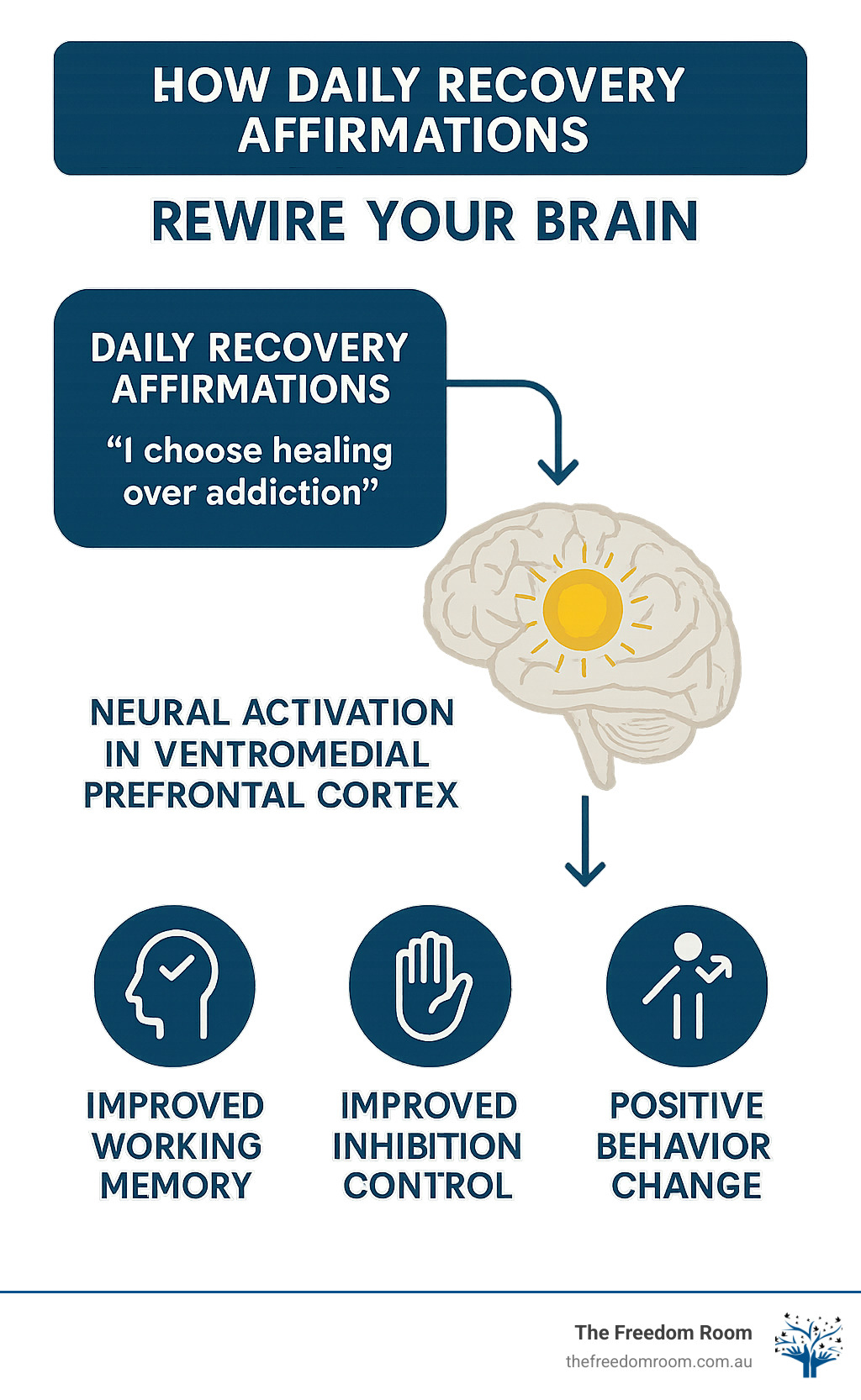
How Daily Recovery Affirmations Rewire Your Brain
Your brain is far more adaptable than you might think. The magic of daily recovery affirmations lies in something called neuroplasticity—your brain’s remarkable ability to form new neural pathways throughout your entire life. Every time you repeat a positive statement about your recovery, you’re literally reshaping how your brain processes information and responds to triggers.
Think of addiction as creating well-worn paths in your brain, like a river carving deeper channels over time. The good news? Daily recovery affirmations act like gentle redirectors, helping you create new, healthier pathways. With consistent practice, these positive routes gradually become your brain’s preferred highways.
Scientific research on neural pathways demonstrates that self-affirmation practice can actually rewire neurological pathways to change how your brain interprets the environment around you. This isn’t just wishful thinking or feel-good psychology—it’s measurable brain science that you can harness for your recovery.
The process works through your brain’s self-processing cortex, which becomes more active when you engage with positive statements about yourself. This increased activity strengthens your executive function—the mental skills that help you resist cravings and make healthier choices. Even better, regular affirmation practice provides stress buffering, helping you cope with challenging situations without reaching for alcohol.
Why “Daily Recovery Affirmations” Activate Your Brain’s Reward Circuit
Here’s where the science gets really exciting. The ventromedial prefrontal cortex—a fancy name for the brain region responsible for self-processing and positive thinking—lights up when you practice affirmations. This activation triggers the release of dopamine, your brain’s natural reward chemical, and helps with positive valuation of your recovery journey.
This is absolutely crucial for recovery because addiction hijacks your brain’s reward system. When you were drinking, alcohol provided artificial dopamine hits that your brain began to crave. Daily recovery affirmations help restore balance by giving your brain positive experiences to focus on instead of craving substances.
You’re essentially training your reward circuit to find satisfaction in sobriety rather than alcohol. Each time you repeat “I am worthy of recovery” or “I choose healing over numbing,” you’re reinforcing these new neural pathways and making them stronger.
The Science Behind Positive Self-Talk
A fascinating study revealed that self-affirmation improved participants’ working memory and inhibition control—exactly the executive functions you need to resist cravings and make healthier choices in recovery. Scientific research on executive function shows that these cognitive skills are often impaired in addiction but can be strengthened through consistent affirmation practice.
This research explains why CBT integration often incorporates affirmations as a core component. Cognitive behavioural therapy recognises that changing your thoughts is the first step to changing your behaviours and emotions.
At The Freedom Room, we’ve witnessed how combining CBT techniques with daily recovery affirmations creates a powerful foundation for lasting sobriety. Our team understands this integration deeply because we’ve walked this path ourselves—we know how positive self-talk can transform not just your thinking, but your entire relationship with recovery.
30 Powerful Daily Recovery Affirmations to Say & Believe
When you’re navigating the ups and downs of recovery, having a toolkit of daily recovery affirmations can make all the difference. These thirty carefully crafted statements address the core emotional and psychological challenges that come with overcoming alcohol addiction. Each one is designed to strengthen a different aspect of your recovery journey.
Building self-worth and identity forms the foundation of lasting sobriety. When you tell yourself “I am worthy of love, respect, and a fulfilling life,” you’re challenging the shame that addiction often brings. Similarly, reminding yourself that “my past does not define my future” helps break free from guilt cycles that can trigger relapse. The affirmation “I am not my addiction—I am a person in recovery” is particularly powerful because it separates your identity from your struggles.
Your sense of personal value grows stronger when you regularly affirm “I deserve happiness and peace” and “I am proud of my courage to change.” These statements counter the self-criticism that many people in recovery face daily.
Strength and resilience need constant nurturing during recovery. The affirmation “I am stronger than my cravings” becomes a mental anchor during difficult moments. When challenges arise, “each challenge makes me more resilient” reframes setbacks as growth opportunities rather than failures.
The belief that “I have the power to choose my responses” reinforces your sense of control, whilst “I am capable of overcoming any obstacle” builds confidence for future challenges. Perhaps most importantly, “my recovery journey makes me stronger every day” acknowledges that healing is an ongoing process.
Present-moment awareness is crucial for preventing relapse. Daily recovery affirmations like “I am in control of my choices today” keep you grounded in what you can actually influence. When overwhelm strikes, “this moment is all I need to focus on” brings you back to manageable reality.
The choice-focused affirmations “I choose healing over numbing” and “today, I choose sobriety” reinforce your agency in recovery. Meanwhile, “I am present and aware of my needs” encourages the self-awareness that’s essential for long-term sobriety.
Self-forgiveness and healing often prove to be the most challenging aspects of recovery. The affirmation “I forgive myself for past mistakes” directly addresses the guilt that can sabotage progress. “I am healing from the inside out” reminds you that recovery happens on multiple levels—physical, emotional, and spiritual.
When shame resurfaces, “I release guilt and accept growth” offers a path forward. The practice of “I treat myself with compassion” counters the harsh inner critic that many people develop during active addiction. Finally, “my mistakes are lessons, not failures” transforms regret into wisdom.
Gratitude and joy might feel foreign at first, but they’re essential for sustainable recovery. “I am grateful for my sober mind” celebrates the clarity that sobriety brings. The affirmation “joy flows naturally through my life” reminds you that happiness doesn’t require substances.
Finding beauty in ordinary moments becomes easier when you practice “I find beauty in simple, sober moments.” The statement “my life is rich with meaningful connections” emphasises relationships over substances, whilst “I celebrate every day of sobriety” turns each day into an achievement worth acknowledging.
Boundaries and support complete the foundation of strong recovery. “I set healthy boundaries with confidence” addresses the people-pleasing that often accompanies addiction. The affirmation “I surround myself with supportive people” reminds you to choose your company wisely.
Recovery doesn’t mean going it alone. “I ask for help when I need it” challenges the isolation that addiction creates. At The Freedom Room, we’ve seen how powerful it becomes when people accept “I am part of a recovery community.” Finally, “I give and receive love freely” opens your heart to the connections that make sobriety worthwhile.
These daily recovery affirmations work best when you choose the ones that resonate most deeply with your current challenges. Some days you might need strength affirmations, other days you might need forgiveness. Trust your instincts about which ones your heart needs to hear.
Crafting Personalised Mantras for Your Sobriety Journey
While our list of 30 affirmations provides a solid foundation, the most transformative daily recovery affirmations are often the ones you create yourself. Think of it this way: a perfectly custom suit fits better than one off the rack, and the same principle applies to your recovery mantras.
Personalised affirmations work because they speak directly to your specific struggles, triggers, and dreams. When you craft affirmations that address your unique challenges—whether that’s social anxiety, guilt about the past, or fear of relapse—they resonate on a deeper emotional level and become more powerful tools for change.
Start with honest self-assessment. Take a quiet moment to reflect on what negative thoughts visit you most often. What situations make you feel vulnerable? What aspects of recovery feel overwhelming? These answers become your roadmap for creating targeted affirmations.
For instance, if you find yourself thinking “I’m boring without alcohol,” you might craft: “I am naturally interesting and engaging in my authentic self.” If workplace stress triggers cravings, try: “I handle work challenges with clarity and confidence.”
The key is authenticity. Your affirmations should feel true to your voice and values, not like something you copied from a motivational poster. More info about Gratitude can help you understand how appreciation-based affirmations can strengthen your recovery foundation.
Consider your goals and values too. What kind of person do you want to become in recovery? What matters most to you? If family relationships are important, you might create: “I am rebuilding trust with my loved ones through my actions.” If creativity drives you: “Sobriety open ups my natural creativity and passion.”
How to Create “Daily Recovery Affirmations” That Stick
Creating affirmations that actually work requires flipping your harshest inner critic into your most supportive cheerleader. The secret lies in changing those persistent negative thoughts into empowering I-statements that feel both realistic and inspiring.
Start by identifying your mental bullies—those recurring negative beliefs that undermine your confidence. Common ones include “I’m weak for struggling with addiction” or “I’ve hurt too many people to deserve forgiveness.” Write these down, even though it might feel uncomfortable.
Next, find the opposite truth. For “I’m weak,” the truth might be “I’m incredibly strong for choosing recovery every day.” For “I don’t deserve forgiveness,” try “I am worthy of compassion and second chances.” This isn’t about denying reality—it’s about choosing a healthier perspective.
Use present-tense, first-person language that makes your brain believe the statement is happening now. Instead of “I will be confident,” say “I am growing more confident each day.” This subtle shift tells your subconscious that change is already underway.
Keep it realistic yet inspiring. Your affirmations should stretch you toward growth without feeling like fantasy. “I am perfect” might feel fake, but “I am perfectly imperfect and worthy of love” feels achievable and true.
Add emotional resonance by including words that genuinely move you. If “peace” speaks to your heart, incorporate it: “I choose peace over chaos in my daily decisions.” If “courage” inspires you: “I face each challenge with growing courage and wisdom.”
At The Freedom Room, our team helps clients craft these personalised affirmations because we understand that recovery isn’t one-size-fits-all. Having walked this path ourselves, we know the difference between affirmations that feel authentic versus those that feel forced. We’ve learned which words carry real power and which ones just sound nice on paper.
Building a Daily Affirmation Routine that Works
The difference between knowing about daily recovery affirmations and actually using them lies in creating a routine that feels natural rather than forced. Think of it like learning to brush your teeth—at first it requires conscious effort, but eventually it becomes second nature.
The secret is something called habit stacking. Instead of trying to remember affirmations out of nowhere, you attach them to things you already do every day. This makes them feel like a natural extension of your existing routine rather than another task on your to-do list.
Morning rituals offer the perfect opportunity to start your day with positivity. Whether you recite three affirmations whilst still in bed, repeat them during your morning coffee, or say them whilst getting dressed, these early moments set the tone before life’s stresses kick in. Your mind is fresh, and you’re essentially programming your brain for success before the day begins.
Transition moments throughout your day provide natural anchors for affirmations. Try repeating them whilst waiting for the kettle to boil, before starting your car, or during those few seconds whilst your computer loads. These micro-moments add up to significant positive reinforcement over time.
Many people find that evening reflection creates a beautiful bookend to their day. Writing affirmations in a journal before bed helps process the day’s events through a lens of growth and self-compassion. The Healing Power of Journalling explains how the physical act of handwriting creates deeper neural pathways, making positive messages more likely to stick in your subconscious.
At The Freedom Room, we’ve seen remarkable results when clients combine affirmations with meditation and breathwork. This triple approach—positive words, mindful breathing, and present-moment awareness—creates a powerful foundation that supports both emotional and physical recovery. Our team understands this integration because we’ve experienced how these practices work together.
Pairing Affirmations with Self-Care
Here’s where daily recovery affirmations become truly transformative: when you pair them with activities that demonstrate self-care, you’re sending a double message to your brain that you’re worthy of love and attention. This combination directly addresses the self-worth issues that often fuel addiction in the first place.
Mindfulness walks create a perfect marriage between movement and positive thinking. As you repeat affirmations silently whilst walking in nature, the combination of fresh air, gentle exercise, and encouraging self-talk creates a natural mood boost. Your body releases endorphins whilst your mind absorbs positive messages—it’s like giving yourself a double dose of healing.
Exercise sessions amplify the power of affirmations because you’re literally building strength whilst telling yourself you’re strong. When you repeat “I am getting stronger every day” during a workout, the message resonates on both physical and emotional levels. The synchronicity between words and actions makes the affirmation feel authentic rather than wishful thinking.
Even nutritious meals become opportunities for positive reinforcement. Before eating, try affirming your commitment to nourishing your body: “I choose foods that support my recovery and wellbeing.” This simple practice transforms eating from a mindless activity into a conscious act of self-care.
Some of our clients swear by combining affirmations with cold showers—it might sound unusual, but there’s wisdom behind it. The brief discomfort of cold water builds mental resilience whilst the affirmations reinforce your inner strength. You’re proving to yourself that you can handle challenges whilst simultaneously programming positive beliefs.
Emotional Sobriety explores how these integrated practices support not just physical sobriety but emotional healing—a crucial component that many people overlook in early recovery. When you consistently pair affirmations with self-care, you’re building a lifestyle that naturally supports your sobriety rather than fighting against it.
Troubleshooting & Staying Motivated When Affirmations Feel Flat
Let’s be honest: there will be days when daily recovery affirmations feel forced, silly, or downright ineffective. If you’re experiencing this, take a deep breath—you’re not doing anything wrong. This resistance is completely normal and doesn’t mean affirmations don’t work. In fact, it often means they’re challenging deeply held negative beliefs that have been with you for years.
Imposter syndrome is one of the biggest problems people face. You might catch yourself thinking, “I don’t really believe this about myself” or “This feels fake.” Here’s the thing: affirmations aren’t about immediate belief—they’re about planting seeds of possibility. Even if you lack motivation, repeated affirmations can eventually shape your beliefs and actions. Think of it like learning a new language; at first, the words feel foreign and awkward, but with practice, they become natural.
Boredom often creeps in when you’ve been using the same affirmations for weeks or months. Your brain craves novelty, so it’s perfectly normal for familiar mantras to lose their punch. This is actually a sign that you’re ready to grow. Try rotating your affirmations, creating new ones that address your current challenges, or experimenting with different delivery methods—speaking them aloud during your morning walk, writing them in colourful ink, or even singing them in the shower.
Resistance might be the trickiest challenge because your brain can actively rebel against positive self-talk, especially if you’ve practised self-criticism for years. Your inner voice might scoff at affirmations or flood you with contradictory thoughts. This resistance actually indicates that affirmations are working to challenge old patterns. It’s like your brain’s security system trying to maintain the status quo, even when that status quo isn’t serving you.
The key is consistency without perfection. Even on days when affirmations feel flat, the act of saying them maintains the neural pathway you’re building. Think of it like going to the gym—some workouts feel amazing and energising, others feel like a slog, but both contribute to your overall fitness. The same principle applies to your mental and emotional wellbeing.
At The Freedom Room, our team understands these challenges intimately because we’ve experienced them ourselves. Having walked this path, we know that motivation naturally ebbs and flows during recovery. That’s why we encourage clients to view affirmations as a practice rather than a performance. Some days you’ll feel every word deeply; other days you’ll simply be going through the motions—and both are valuable.
Incremental tracking can help you stay motivated during flat periods. Keep a simple record of your affirmation practice, noting not just when you do it but how you feel before and after. You might be surprised to find that even “flat” affirmation sessions create subtle positive shifts in your mood or mindset.
Support groups and accountability buddies can provide crucial encouragement when your personal motivation wanes. More info about Accountability can help you understand how sharing your affirmation practice with trusted friends or recovery community members can maintain momentum during difficult periods. Sometimes hearing others share their affirmation experiences can reignite your own enthusiasm.
How to Track Progress with “Daily Recovery Affirmations”
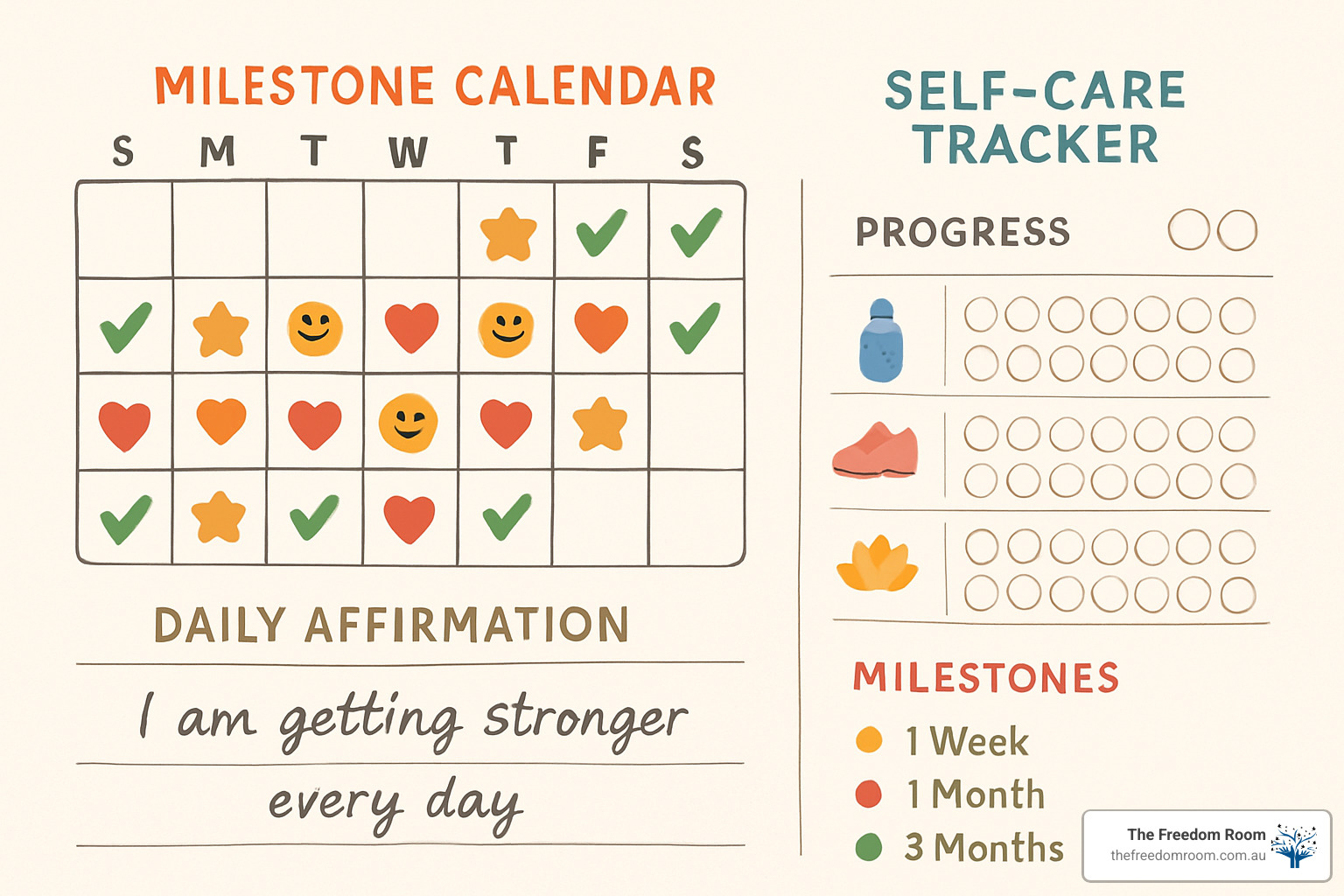
Tracking your progress with daily recovery affirmations serves two crucial purposes: it helps maintain motivation during challenging periods and provides concrete evidence of their effectiveness over time. The beauty of tracking lies not in creating another task to stress about, but in finding patterns and celebrating small victories you might otherwise miss.
Mood logs offer one of the simplest yet most revealing tracking methods. Rate your daily mood on a scale of 1-10 both before and after your affirmation practice. Don’t overthink it—just go with your gut feeling. Over time, you’ll likely notice improved baseline moods and better recovery from low points. Many people are surprised to find that even when affirmations feel ineffective, the numbers tell a different story.
Milestone charts create powerful visual representations of your sobriety journey alongside your affirmation practice. Mark each day you complete your affirmations with a small symbol or colour on a calendar. Many clients find that consistent affirmation use correlates with longer periods of sustained sobriety. There’s something deeply satisfying about seeing those unbroken chains of commitment stretching across weeks and months.
Voice memos transform your affirmations into a personal support system available 24/7. Record yourself saying your most powerful affirmations when you’re feeling strong and confident. During challenging moments—when cravings hit or self-doubt creeps in—replay these recordings. Hearing your own voice speaking words of strength and encouragement can be remarkably grounding and reassuring.
Weekly reflection helps you identify which affirmations resonate most deeply and deserve more focus. Every Sunday, spend a few minutes writing about which mantras felt most powerful during the week and why. Notice if certain affirmations work better during specific situations or emotional states. This reflection helps you refine your practice and create a personalised toolkit of the most effective affirmations for your unique journey.
At The Freedom Room, we help clients develop tracking systems that feel supportive rather than burdensome. Our team understands that recovery requires both structure and flexibility. We’ve learned through our own experiences that the best tracking methods are the ones you’ll actually use consistently, not the most elaborate or sophisticated systems. Sometimes a simple notebook works better than a fancy app, and that’s perfectly fine.
Tracking isn’t about judging yourself or creating pressure to perform. It’s about gathering gentle evidence of your growth and commitment. Even tracking your struggles—noting when affirmations feel difficult or resistance is high—provides valuable information about your patterns and triggers. This awareness becomes a powerful tool for navigating future challenges with greater skill and self-compassion.
Frequently Asked Questions about Daily Recovery Affirmations
Do affirmations really help prevent relapse?
Daily recovery affirmations can absolutely be a powerful tool in preventing relapse, though they work best when woven into a comprehensive recovery plan rather than standing alone. The research is encouraging—studies show that self-affirmation can sharpen your problem-solving skills even when you’re under stress, which is exactly what you need when facing those unexpected triggers or overwhelming cravings.
Think of affirmations as one strong thread in your recovery safety net. At The Freedom Room, we’ve seen how daily recovery affirmations complement other evidence-based treatments like CBT and ACT. Our team, who’ve all walked this recovery path themselves, understand that affirmations aren’t magic words—they’re tools that help rewire your thinking patterns over time.
The beauty lies in how affirmations strengthen your mental resilience. When you consistently tell yourself “I am stronger than my cravings” or “I choose healing over numbing,” you’re building mental muscle memory that kicks in during challenging moments. It’s like having a supportive voice in your head that counters the addiction’s lies.
How many affirmations should I use each day?
Here’s what we’ve learned from both research and real-world experience: quality beats quantity every single time. You’re far better off choosing 2-3 affirmations that genuinely resonate with your heart and repeating them consistently than rushing through a dozen that feel empty or forced.
Start with just one affirmation that speaks directly to your biggest challenge right now. Maybe it’s “I am worthy of love and recovery” if you struggle with self-worth, or “I handle stress without numbing myself” if triggers are your main concern. Live with that one affirmation for a week—say it during your morning coffee, repeat it when stress hits, write it in your journal before bed.
As this practice becomes as natural as brushing your teeth, you can gradually add others. Most of our clients at The Freedom Room settle into a rhythm of 3-5 core affirmations that they rotate based on what they need each day. Some days you might need strength affirmations, other days you might crave self-forgiveness mantras.
The goal isn’t to collect affirmations like trading cards—it’s to let a few powerful statements become part of your inner dialogue.
Can friends and family share affirmations to support me?
Absolutely, and this can be one of the most beautiful aspects of recovery! When your loved ones understand and participate in your daily recovery affirmations practice, it creates a web of support that extends far beyond your individual efforts.
Your family and friends can become affirmation allies in so many meaningful ways. They might send you encouraging text messages with your favourite affirmations during tough days, or practice affirmations together during family meetings or quiet moments. Instead of offering criticism or worry-filled comments, they can learn to offer affirmation-based support that builds you up rather than tears you down.
We’ve seen partners who celebrate milestones with affirmation-focused acknowledgments—like “I’m so proud of how you choose healing every day” instead of just “Good job staying sober.” These words carry deeper meaning because they reflect the internal work you’re doing.
The key is helping your loved ones understand that affirmations should feel supportive and genuine, never preachy or forced. At The Freedom Room, our team knows how important authentic support feels because we’ve been where you are. We help families learn the difference between helpful encouragement and well-meaning but unhelpful pressure.
When your support network speaks the same language of hope and strength that you’re cultivating internally, recovery becomes a shared journey rather than a lonely struggle.
Ready for Change? Let’s Build a Stronger, Alcohol-Free Future Together
Daily recovery affirmations are powerful tools, but they’re most effective when integrated into a comprehensive, personalised recovery plan. At The Freedom Room Wellness and Recovery, we understand that lasting sobriety requires more than positive thinking—it demands authentic support, evidence-based treatment, and a community that truly understands your journey.
What sets us apart is simple: our team has been where you are. Our counsellors, meeting facilitators, and workshop leaders are all in recovery themselves. This lived experience brings authenticity, empathy, and unwavering support to your journey. We’re not just professionals—we’re friends who understand the daily challenges and victories of recovery.
Our approach combines daily recovery affirmations with proven therapies like CBT and ACT, personalised one-on-one sessions, dynamic workshops, and group recovery meetings. We recognise that life doesn’t stop when you get clean and sober, which is why we also address stress, anxiety, and depression—feelings often associated with addiction.
Whether you’re taking your first steps toward sobriety, returning from rehabilitation, or looking to strengthen your existing recovery, we’re here to support you. Our services include everything from pre-rehabilitation guidance to long-term relapse prevention strategies. More info about relapse prevention strategies can help you understand how we integrate affirmations into comprehensive recovery planning.
Recovery isn’t a solo mission—it’s a collective effort fueled by shared stories and unwavering camaraderie. Together, we’ll steer the twists and turns, celebrate progress, and build the resilience you need for lasting, joyful sobriety.
Your journey to an alcohol-free life starts with a single step, and daily recovery affirmations can be the foundation that supports every step that follows. You deserve a life of freedom, fulfilment, and authentic happiness—and we’re here to help you claim it.
Support & Resources
Recovery from alcohol addiction is a journey that requires ongoing support, and daily recovery affirmations work best when you have professional guidance and community backing. At The Freedom Room, we believe that asking for help is a sign of strength, not weakness—and we’re here whenever you need us.
Getting professional support is crucial for lasting recovery. Whether you’re just beginning to consider sobriety, struggling with cravings, or looking to strengthen your existing recovery foundation, our team understands exactly what you’re going through. Having walked this path ourselves, we bring both professional expertise and lived experience to every conversation.
If you or someone you know is suffering from alcohol addiction, please reach out to us for compassionate, personalised support:
Our Office: (07) 3325 1531
Mobile: 0400 236 743 (Rachel)
Sometimes recovery challenges arise outside of regular hours, and that’s completely normal. Cravings don’t follow a 9-to-5 schedule, and neither should your access to help. For support outside of our regular hours, you can also contact these trusted resources:
Emergency Help: Call 000
AA Helpline: 1300 222 222
Lifeline: 13 11 14
Al-Anon: www.al-anon.org.au
Combining daily recovery affirmations with professional support creates the strongest foundation for lasting sobriety. Your affirmations remind you of your strength and commitment, while professional guidance helps you steer the practical challenges of recovery.
You don’t have to face this journey alone. Whether you need someone to listen, help developing personalised affirmations, or comprehensive recovery planning, we’re here to support you every step of the way. Recovery is possible, and you deserve all the help and encouragement available to make it happen.