

Why Emotional Support for Families Forms the Bedrock of Mental Health
Emotional support for families creates the foundation upon which healthy development, resilience, and lifelong wellbeing are built. When families provide consistent emotional validation, open communication, and unconditional acceptance, they become powerful protective factors against mental health challenges, including addiction and depression.
Key elements of effective family emotional support include:
- Emotional safety – Creating a space where feelings can be expressed without fear of judgment or rejection
- Active listening – Truly hearing and validating each family member’s experiences and emotions
- Empathy and validation – Acknowledging that all emotions are valid, even when behaviours need addressing
- Consistent availability – Being emotionally present and responsive during both everyday moments and crises
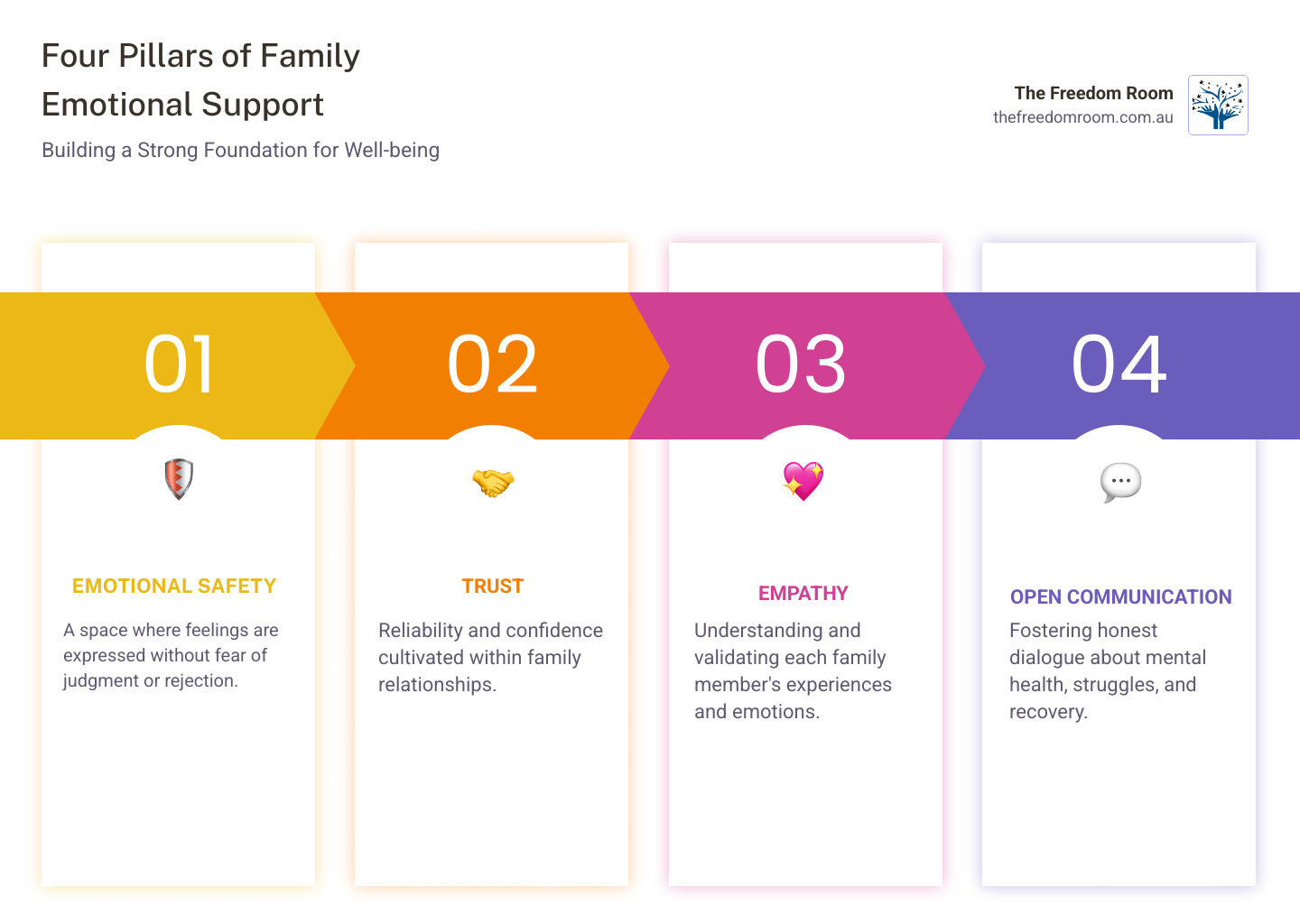
- Open communication – Fostering honest dialogue about mental health, struggles, and recovery without shame
Research consistently demonstrates that families who actively provide emotional support see significantly better outcomes when members face challenges like addiction or mental health issues. One study found that people who selected family members as support “teammates” during cognitive behavioural therapy had markedly better results than those who went through treatment alone.
The ripple effects extend far beyond individual healing. Children who grow up in emotionally supportive homes develop stronger coping mechanisms, healthier relationships, and greater resilience when facing life’s inevitable difficulties. Adults in recovery find their journey more sustainable when surrounded by understanding family members who know how to offer appropriate support.
Developing Essential Support Skills
However, many families struggle to know how to provide this crucial support, especially when dealing with complex issues like addiction, trauma, or mental health challenges. Fortunately, emotional support skills can be learned and strengthened at any stage of family life.
Emotional support for families basics:
Understanding the Foundations of Emotional Support in a Family
The family serves as our first classroom for emotional learning, and emotional support for families is not merely beneficial but is essential for healthy development. It can be conceptualised as the invisible foundation upon which all other aspects of family life are built.
The Core Components of a Supportive Family Unit
Creating a truly supportive family environment requires several key elements working together harmoniously. These components form the bedrock of emotional wellbeing within the home.
Emotional safety means creating a space where family members can express genuine feelings without fear of ridicule or punishment, allowing for vulnerability and connection.
Trust is built on consistency. It’s the security of knowing your family will act in your best interests, which allows everyone to take emotional risks and grow.
Empathy involves genuinely trying to understand each other’s feelings and experiences. This deepens connections, not by requiring agreement, but by showing you care enough to listen.
Validation is the act of acknowledging someone’s feelings as real and important, even if you don’t fully understand them. It communicates that their emotional experience matters.
Acceptance means embracing each family member’s unique qualities and imperfections. This fosters a powerful sense of belonging.
Consistency in providing emotional support, especially during challenges, builds confidence and security for all family members.
A nurturing environment is one where the overall atmosphere is warm and emotional needs are met with genuine care.
How Emotional Support for Families Shapes Development
The impact of robust emotional support for families on child development cannot be overstated. From the earliest days, these family relationships literally shape developing brains and lay crucial groundwork for future mental health.
Self-esteem flourishes when children receive consistent emotional support and validation. They learn that their feelings matter and develop an internal sense of worth that carries them through life’s challenges.
Emotional regulation develops naturally in supportive environments. Children observe how parents handle stress and big feelings, learning healthy coping mechanisms rather than being taught to suppress or ignore their emotions.
Social skills first develop within the family unit. Children learn empathy, communication, and cooperation through daily family interactions. These skills become the foundation for all future relationships.
Secure attachment forms when children experience consistent, responsive emotional support. This creates a template for healthy relationships throughout life, teaching them that others can be trusted for comfort and security.
The mental health foundation established in supportive families acts as a powerful protective factor. Research from sources like the Australian Institute of Family Studies shows that family support significantly improves mental health treatment outcomes, as individuals with family involvement in their therapy often achieve better results.
Children are remarkably perceptive about their own emotional experiences, even from very young ages. When families acknowledge these emotions—even those that seem minor to adults—children feel genuinely seen and understood. This validation prevents the emotional suppression that often leads to larger outbursts later.
Building Family Resilience Through Connection
Strong family connections serve as powerful buffers against life’s inevitable challenges. When families prioritise emotional connection, they build collective resilience that benefits every member.
Coping mechanisms develop naturally within supportive families. Children and adults alike learn healthy ways to manage stress and setbacks by observing and practising together. These skills become invaluable tools for navigating future difficulties.
Stress navigation becomes more manageable when families share the load. Having a safe space to express concerns and receive understanding significantly reduces the impact of external pressures on individual wellbeing.
Overcoming adversity happens more effectively when families pool their emotional, practical, and psychological resources. Whether facing illness, financial hardship, or other challenges, connected families help members feel less isolated and more capable.
Adapting to change flows more smoothly when families provide emotional stability during transitions. This consistent support helps members adjust to new circumstances whilst maintaining their sense of security and belonging.
Strengthening bonds occurs naturally when families work through difficulties together with mutual support and understanding. These shared experiences of overcoming challenges create lasting unity and shared purpose.
Grief and loss support is vital during profound losses. Family members grieve differently and require specific validation and understanding to process their loss. Providing custom emotional support helps each person heal within the safety of the family connection, acknowledging that siblings and grandparents may have unique grieving experiences.
Practical Ways to Build an Emotionally Supportive Home
The creation of a home where every family member feels emotionally safe and valued requires deliberate action. It necessitates intentional effort and the consistent application of proven strategies that foster connection, understanding, and genuine support among all family members.
The journey towards building emotional support for families begins with small, meaningful changes in how we communicate, spend time together, and process difficult emotions. These practical approaches can transform any household into a sanctuary of emotional wellbeing.
Effective Communication and Validation Strategies
The way families communicate with each other forms the foundation of all emotional support. When family members feel truly heard and understood, they develop the confidence to share their authentic selves, knowing they’ll be met with compassion rather than judgement.

Active listening creates deep connection. This involves eliminating distractions and giving your full attention to understand what is being shared. Instead of planning a reply, focus on listening. Sometimes, non-verbal cues like a gentle touch offer the most powerful support.
Using “I” statements shifts the focus from blame to personal feeling. For example, saying “I feel unheard” instead of “You never listen” encourages dialogue rather than defensiveness.
Non-judgemental communication means recognising all emotions as valid, even if you don’t understand them. Instead of dismissing feelings as an overreaction, acknowledge the person’s experience by saying, “I can see this is bothering you.”
Validating feelings means acknowledging an emotional experience as real and understandable, without necessarily agreeing with the behaviour. Validating a teenager’s disappointment is more helpful than dismissing it.
Clear expression of needs helps prevent misunderstandings. Encourage family members to state their needs directly to ensure they get the right kind of support, whether it’s advice, space, or just a listening ear.
Modelling healthy emotional expression as adults teaches children that having big feelings is normal and manageable. When you share your own feelings in a healthy, age-appropriate way, you show children how to name and process their own difficult emotions.
These communication skills align perfectly with principles of emotional support in addiction recovery, where honest, compassionate dialogue becomes essential for healing and growth.
Creating Rituals for Connection
Family rituals create predictable moments of togetherness that strengthen bonds and build lasting memories. These rituals do not need to be elaborate; the most meaningful are often simple, provided they are practiced consistently with genuine presence and attention.
- Dedicated quality time forms the cornerstone of family connection. This might be a weekly family dinner or a regular weekend walk, with the key being focused attention, free from digital distractions.
- Regular family meetings provide a safe forum for everyone to voice concerns, celebrate successes, and work through challenges together, ensuring every family member feels heard.
- Shared activities build positive associations and strengthen emotional bonds. Cooking, gardening, or having movie nights create a bank of happy memories to draw upon during difficult times.
- Digital detox periods, such as phone-free meal times, encourage face-to-face interaction and help family members stay emotionally present for each other.
- Celebrating individual achievements reinforces that each family member’s successes matter to everyone, whether it’s a school concert, a work promotion, or overcoming a personal challenge.
- Supporting personal interests demonstrates genuine care for what makes each family member unique and shows that individual passions are valued within the family unit.
Understanding Emotional Freedom Techniques (EFT) for Families
Emotional Freedom Techniques, commonly known as “tapping,” offers families a practical tool for managing stress and processing difficult emotions together. This evidence-based approach helps calm the nervous system and can be particularly valuable for emotional support for families facing challenging circumstances.
What EFT Involves
EFT, or ‘tapping’, involves gently tapping on acupressure points while focusing on a distressing emotion. This helps the body process stored emotional energy, rather than suppressing it. The technique sends calming signals to the amygdala, the brain’s alarm system, which can become overactive and trigger the ‘fight, flight, or freeze’ response to everyday stressors.
How EFT Helps Families
Learning EFT together gives families a shared tool for managing stress. It helps calm the nervous system, making it easier to process difficult emotions like anxiety or anger. This fosters better emotional regulation for everyone.
As a tool for self-regulation, EFT is simple enough for children to use when they feel overwhelmed, giving them a sense of control. Regular practice can reduce the intensity of emotional reactions, creating space for more thoughtful responses and mutual support during challenging times.
Navigating Challenges and a Lack of Emotional Support for Families
Families inevitably face periods of difficulty, and even the most well-intentioned may struggle to provide the emotional support for families that all members require. When stress builds up, communication breaks down, or complex challenges like addiction enter the picture, recognising what’s happening becomes the first step towards healing.
Understanding these difficulties does not mean accepting them as permanent. Rather, it opens the door to positive change and healthier family dynamics.
Recognising the Signs of an Unsupportive Environment
Sometimes families drift into patterns that leave everyone feeling disconnected and misunderstood. These patterns often develop gradually, making them harder to spot until they become deeply entrenched.
- Emotional withdrawal – Family members avoid meaningful conversations and hide their true feelings.
- Constant conflict – Arguments are frequent, underlying issues are never resolved, and everyone feels tense.
- Criticism and invalidation – Empathy is replaced with criticism or dismissal of feelings, leaving people feeling unheard.
- Blame – Instead of collaborating on solutions, members blame each other, which creates shame and defensiveness.
- Lack of empathy – Family members struggle to understand each other’s perspectives, leading to feelings of isolation.
The consequences of these patterns extend far beyond temporary discomfort. Children growing up in such environments often carry anxiety, depression, and difficulty trusting others into their adult relationships. The ripple effects can last for generations if left unaddressed.
How to Provide Emotional Support for Families Facing Addiction
When addiction is introduced into a family unit, its dynamics are significantly altered. The associated stress can be overwhelming, and determining how to provide help without exacerbating the situation becomes highly challenging. Emotional support for families dealing with addiction requires a delicate balance of compassion, boundaries, and practical wisdom.
Reducing stigma starts with open, honest conversations about addiction as a health condition rather than a moral failing. When families understand that addiction often stems from attempts to manage underlying pain, grief, anxiety, or trauma, compassion becomes possible. This shift in perspective creates space for healing rather than shame.
Healthy boundaries protect everyone’s wellbeing whilst still showing love and support. These might include not providing money that could enable drinking, refusing to cover up consequences, or setting limits on behaviour within the home. Boundaries should not be viewed as barriers but as necessary guidelines that promote the health of relationships.
Encouraging professional help requires patience and timing. Gently suggesting counselling or recovery programmes, offering to help research options, or even attending initial appointments together can make professional support feel less daunting. The decision to seek help ultimately belongs to the person struggling.
Avoiding enabling behaviours means distinguishing between helping and rescuing. Whilst support is crucial, consistently preventing someone from experiencing the natural consequences of their actions can inadvertently perpetuate the addiction. This distinction isn’t always clear, but professional guidance can help families steer these complex waters.
Self-care for supporters is not a selfish act; it is an essential practice. Supporting someone through addiction is emotionally and physically exhausting. Seeking your own support through counselling, support groups, or trusted friends helps you maintain the strength needed for the long journey ahead.
The path to recovery is often non-linear. Lapses and relapses affect approximately 40-60% of people in treatment, making patience and understanding vital components of family support. These setbacks are not failures but learning opportunities that can strengthen recovery when met with continued love and encouragement.
For families navigating these challenges, specialised support is available through alcohol family support and family alcohol counselling services designed specifically for Australian families.
The Role of Professional Help in Restoring Connection
Sometimes families need outside help to break through entrenched patterns and rebuild their connections. Engaging in professional intervention is not an admission of failure but a proactive step towards healing that can transform family dynamics in profound ways.
Family counselling provides a neutral, safe space where everyone can express themselves without fear of judgment or immediate reaction. Therapists skilled in family dynamics help members learn to truly hear each other, often for the first time in years.
Improving communication happens gradually as families practice new ways of speaking and listening. Learning active listening techniques, expressing needs clearly, and validating each other’s experiences creates the foundation for genuine understanding. These skills extend far beyond therapy sessions, improving daily interactions.
Resolving conflict becomes possible when underlying issues are identified and addressed. Rather than repeatedly arguing about surface problems, families learn to recognise and discuss the deeper concerns driving their disagreements. This approach leads to lasting solutions rather than temporary truces.
Healing trauma often requires professional guidance, particularly when past wounds affect current relationships. Many families carry unresolved pain that manifests as dysfunction across generations. Professional support helps process these experiences safely, breaking negative cycles that might otherwise continue.
Learning new dynamics involves recognising unhelpful patterns and replacing them with healthier interactions. Families might find that old roles no longer serve them, or that certain communication styles create distance rather than connection. Therapists guide this transition with patience and expertise.
Professional family support is highly effective, with most participants reporting significant improvements in their emotional health and relationships. Additionally, peer support can offer unique validation and encouragement that complements professional guidance.
The Long-Term Benefits of Strong Family Bonds
When families invest in building strong emotional connections, the benefits extend far beyond the immediate household. These positive effects ripple outward, creating healthier individuals who contribute to stronger communities across Australia.
Fostering Individual Well-being into Adulthood
The emotional support for families experienced during childhood creates a foundation that supports wellbeing throughout life. Adults who grew up in nurturing family environments carry these benefits with them, shaping how they steer relationships, work, and personal challenges.
- Healthier relationships – They learn essential communication and conflict-resolution skills that lead to stronger partnerships, friendships, and professional relationships.
- Greater life satisfaction – The inner security from a supportive childhood leads to greater resilience, confidence, and overall life satisfaction.
- Improved emotional intelligence – They develop high emotional intelligence, allowing them to manage their own emotions and respond empathetically to others, which is valuable in all life areas.
- Increased confidence – Growing up with encouragement builds confidence to pursue goals and overcome challenges, based on an internalised sense of capability.
- Lower risk of mental health issues – They develop healthy coping mechanisms and a willingness to seek help, which acts as a lifelong protective factor against mental health issues.
Research consistently shows that children from supportive family environments handle social stressors more effectively and interact more positively with peers and authority figures. They carry this social competence into their adult relationships and professional lives.
The Societal Impact of Supportive Families
Strong family bonds do not just benefit individual family members—they create positive changes that strengthen entire communities. When families provide consistent emotional support for families, they are contributing to a healthier society for all Australians.
Building a compassionate society happens when emotionally secure individuals engage positively with their communities. They volunteer, support neighbours, and extend the compassion they learned at home to others, strengthening the social fabric.
Promoting generational wellbeing develops as the cycle continues. Adults from supportive homes are more likely to create the same environment for their own children, establishing a positive pattern that benefits Australian society for generations.
Breaking negative cycles becomes possible when families address emotional support gaps. By learning healthier communication patterns and seeking professional help when needed, families can interrupt cycles of dysfunction that might otherwise continue for generations. This healing work benefits not just the immediate family but future generations and the wider community.
The investment in family emotional support creates a ripple effect that strengthens Australian communities from the ground up. When families thrive emotionally, they contribute to schools, workplaces, and neighbourhoods that are more compassionate, resilient, and supportive for everyone.
Conclusion: Fostering a Future of Familial Support and Recovery
Building emotional support for families is a continuous process that requires patience, commitment, and, at times, professional guidance. This article has explored how the foundations of trust, empathy, and open communication contribute to creating homes where every family member can thrive.
Progress begins with the recognition that emotional support is not about achieving perfection, but about consistent presence, non-judgemental listening, and the creation of space for authentic connection. By adopting these principles, families can develop the resilience required to steer life’s inevitable challenges collectively.
The Role of Professional Guidance
At times, despite concerted efforts, families encounter obstacles that require additional expertise. Complex issues like addiction, trauma, or entrenched communication patterns can feel overwhelming to address alone. This is where professional guidance becomes invaluable.
Seeking professional help is not an indication of failure but a proactive step towards healing and growth. At The Freedom Room, we understand the unique challenges that Australian families face when dealing with addiction and its ripple effects. Our team provides compassionate, informed support, drawing upon professional knowledge and lived experience with recovery to address the pain and potential for change.
The Ripple Effect of Change
When one family commits to building stronger emotional support, the benefits extend far beyond their own walls. Children who grow up in these nurturing environments carry these skills into their relationships, workplaces, and communities. They become the adults who know how to listen, validate, and support others through difficult times.
This creates a positive cycle that strengthens our entire community. Each family that prioritises emotional wellbeing contributes to a more compassionate, understanding society where mental health challenges are met with support rather than stigma.
A Pathway to Healing
For families struggling with addiction, communication breakdowns, or a desire to strengthen emotional connections, professional help is available. Recovery and healing are attainable, and it is not a journey that must be undertaken in isolation.
The Freedom Room offers specialised addiction counselling services designed to support both individuals and families. Our approach recognises that addiction affects the entire family system, and true healing often requires addressing these interconnected relationships.
Whether an individual is taking the first step towards recovery or a family is seeking to rebuild trust and communication, we are here to provide support. Together, we can create the emotionally supportive home environment where every family member has the opportunity to heal, grow, and thrive in their alcohol-free future.