

The Role of Empathy in Therapeutic Healing
Empathy-based therapy is a therapeutic modality for mental health that prioritises understanding, compassion, and emotional safety over confrontational techniques and self-criticism. In contrast to traditional methods that may inadvertently reinforce harsh self-judgement, this approach posits that lasting healing occurs when individuals feel genuinely seen, understood, and accepted.
Defining Empathy-Based Therapy
This therapeutic approach is characterised by its emphasis on understanding and compassion. Its primary functions include:
- Focusing on the creation of emotional safety rather than directly challenging thoughts.
- Assisting individuals in transitioning from self-criticism to self-compassion.
- Demonstrating particular effectiveness for conditions involving shame, trauma, and addiction recovery.
Core Principles of the Approach
The foundational tenets of empathy-based therapy include:
- Welcoming the entirety of an individual’s experience without judgement.
- Understanding that self-criticism often develops as a protective mechanism.
- Building inner strength through kindness, as opposed to harsh confrontation.
- Recognising that healing occurs within relationships built on safety and trust.
The Importance of Therapist Empathy
Research consistently shows that therapist empathy is one of the strongest predictors of successful therapy outcomes across all treatment approaches. For example, when an individual struggling with alcohol addiction feels genuinely understood rather than judged, their nervous system can regulate sufficiently to allow for meaningful change.
This approach is particularly powerful for those caught in cycles of shame and self-attack. Instead of attempting to force change through willpower and criticism, empathy-based therapy helps individuals develop the internal warmth and safety required for sustainable recovery.
The most well-researched form of this approach is Compassion-Focused Therapy (CFT), developed by British psychologist Paul Gilbert. Studies show CFT effectively reduces depression, anxiety, and self-criticism while building resilience and emotional regulation skills.
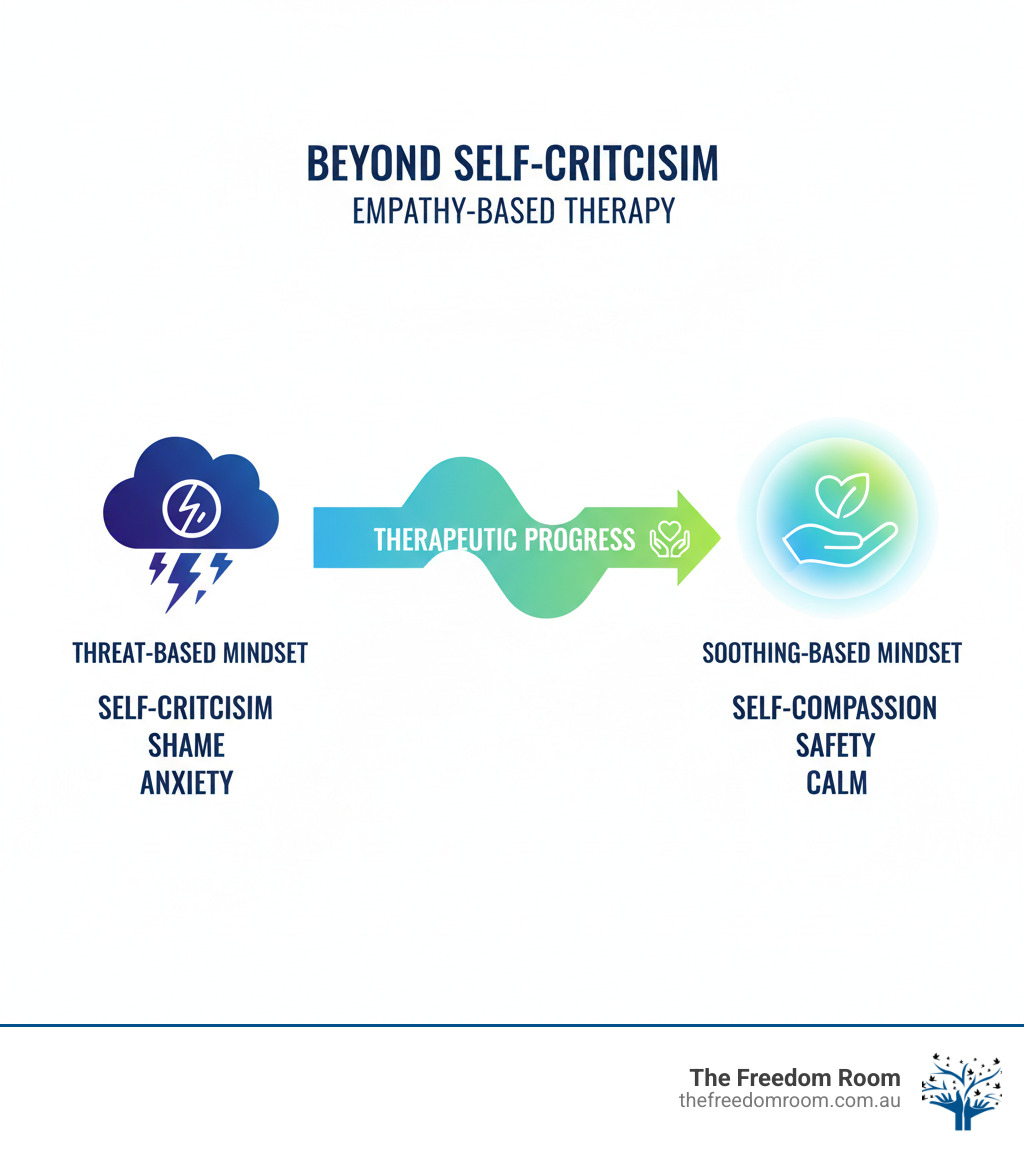
Conceptualising Empathy-Based Therapy
For individuals experiencing significant distress and high levels of self-criticism, some traditional therapeutic approaches may not provide the necessary foundation for healing. Empathy-based therapy presents an alternative that prioritises understanding and emotional safety over confrontation and harsh self-examination.
Unlike conventional methods that might focus primarily on changing behaviours or challenging thoughts, this approach recognises that lasting change is facilitated when individuals feel truly seen and understood. For many people struggling with addiction, shame, or chronic self-criticism, directives to simply “think differently” can be ineffective when a persistent inner critic is dominant.
The Development of Compassion-Focused Therapy (CFT)
Compassion-Focused Therapy (CFT), developed by British psychologist Paul Gilbert, exemplifies this gentler path. Gilbert recognised that traditional cognitive behavioural therapy, while helpful for many, has significant limitations when working with people who experience high self-criticism and shame-proneness. When an individual’s internal world feels hostile and threatening, logic alone is often insufficient to create the safety needed for genuine change.
This realisation led to a new approach, one that acknowledges our evolutionary wiring for threat detection while teaching methods to activate the innate capacity for self-soothing and compassion.
What is Empathy-Based Therapy?
Empathy-based therapy is not a single technique but rather an umbrella term for therapeutic approaches that place genuine understanding at their core.
A Therapeutic Stance
At its core definition, it represents a therapeutic stance that creates a space where an individual’s unique experience is not only acknowledged but also valued. This approach focuses on welcoming individuality and understanding emotional pain from the client’s perspective, without judgement or pressure for immediate change.
Empowerment Through Compassion
Rather than viewing symptoms as problems to be fixed, empathy-based approaches see them as understandable responses to life’s challenges, responses that were logical given the individual’s experiences. The emphasis is on empowerment through compassion rather than criticism. When a person feels safe and understood, their nervous system naturally begins to regulate, creating the conditions where genuine healing can occur. This is particularly powerful for those whose struggles stem from feeling fundamentally flawed or unworthy.
How CFT Embodies This Approach
CFT represents a specific form of empathy-based therapy, developed specifically for chronic self-criticism and shame. Gilbert designed this approach after recognising that many clients could intellectually understand their problems but still felt trapped by overwhelming emotions and self-attack.
An Integrative Psychological Framework
CFT achieves its effectiveness by integrating different psychologies into a cohesive framework. It draws from evolutionary psychology to help individuals understand why their brains are wired for threat detection, incorporates Buddhist principles of compassion and mindfulness, and utilises insights from neuropsychology to explain how emotional responses can be rewired.
This integration helps people understand that their struggles are not personal failings but natural responses to how human brains have evolved. When someone battling alcohol addiction learns that their self-criticism developed as a protective mechanism rather than a character flaw, it opens the door to treating themselves with the same kindness they might show a friend facing similar challenges.

The efficacy of this approach lies in its recognition that healing happens in relationship, both with others and, crucially, with oneself. By learning to extend the same empathy inward that is naturally felt for others, an individual can begin to create the internal conditions necessary for sustainable recovery and genuine wellbeing.
The Scientific Foundations of Empathy-Based Therapy
The scientific principles underpinning empathy-based therapy suggest that the harsh inner critic many individuals experience is not a personal failing. Instead, it is often an evolutionary survival mechanism.
Human brains are products of millions of years of evolution, designed primarily for survival. These ancient systems constantly scan for threats, ready to activate protective responses. This evolutionary legacy means individuals can become their own harshest critics, using self-attack as a misguided attempt to remain safe from perceived dangers.
Empathy-based therapy, particularly Compassion-Focused Therapy (CFT), provides valuable psychoeducation to help individuals understand that self-criticism is often an overactive threat response. This response once served to protect ancestors in genuinely dangerous environments. Learning about these underlying mechanisms allows for a new approach to internal struggles, one based on understanding rather than self-blame.
The Three Systems of Emotion Regulation
A central concept in CFT involves understanding three distinct emotion regulation systems that have evolved within all humans. These can be conceptualised as different operating modes of the brain, each serving an important purpose.
The Threat and Self-Protection System
This system governs emotions such as anxiety, anger, and disgust. When activated, it triggers fight, flight, or freeze responses, helping an individual detect and respond to danger. While essential for survival, an overactive threat system can lead to chronic stress, fear, and self-criticism, as the mind interprets internal thoughts or external situations as dangerous.
The Drive and Resource-Seeking System
This system motivates an individual towards goals, achievements, and rewards. It is associated with emotions like excitement, joy, and vitality, promoting the search for resources essential for wellbeing and growth. When this system becomes imbalanced, it may result in relentless striving, burnout, or, conversely, a complete lack of motivation.
The Soothing and Contentment System
This system connects an individual to feelings of safety, warmth, connection, and calm. It is activated through caring relationships, kindness, and self-compassion, helping a person rest, recover, and feel secure. For many people with mental health challenges, particularly those with histories of trauma or neglect, this system often remains under-stimulated, leading to constant unease.
Empathy-based therapy works to bring these three systems into a healthy balance. For those caught in cycles of shame and self-criticism, the soothing system typically requires strengthening. CFT specifically targets this, aiming to replace feelings of hostility and insecurity with compassion and understanding.
The Role of Attachment and Early Experiences
Early life experiences profoundly shape how these emotion regulation systems develop. Children who experience abuse, neglect, or inconsistent warmth from caregivers often develop internal working models where the world feels hostile and their own worth becomes questionable.
Developmental psychology shows that when caregivers cannot provide a safe and soothing environment, children may grow up feeling that both their internal and external worlds are perpetually threatening. This can lead to a hyperfocus on potential threats while neglecting the crucial need for self-soothing.
Empathy-based therapy addresses these deep-seated patterns by providing what is known as a corrective emotional experience. Through consistent warmth, understanding, and non-judgement from a skilled therapist, an individual can gradually reprogram these internal responses and build a more secure sense of self.
The Proven Effectiveness of Empathy-Based Therapy
Research consistently demonstrates the effectiveness of empathy-based therapy across numerous mental health conditions. CFT shows particular promise for mood disorders, especially among people with high self-criticism.
A comprehensive 2015 literature review examining 14 different studies highlighted promising therapeutic benefits of CFT, particularly for treating mood disorders. The evidence indicates CFT is both safe and clinically effective, often proving superior to standard treatment approaches in specific populations.
Studies have found CFT beneficial for depression symptoms, anxiety disorders, eating disorders, and even complex conditions like psychosis. Research has also explored its effectiveness for people with acquired brain injuries, showing significant improvements in both anxiety and depressive symptoms.
For those struggling with addiction, the combination of reduced self-criticism and increased self-compassion creates fertile ground for sustainable recovery. Further information on the integration of these approaches is available through our addiction counselling services.

Key Techniques and Therapeutic Interventions
The practical application of empathy-based therapy involves specific techniques designed to translate theoretical knowledge into tangible experience. These interventions aim to cultivate self-compassion and emotional resilience by providing structured methods for developing a more compassionate internal dialogue.
These techniques are highly accessible, requiring a willingness to approach oneself with curiosity and kindness. Each intervention works by gently shifting the nervous system from a threat-based mode into a calmer, more receptive state where healing can occur.
Compassionate Mind Training (CMT)
Compassionate Mind Training is a foundational component of CFT and central to developing genuine self-compassion. The process involves cultivating specific qualities that naturally arise when an individual feels safe and supported.
Cultivating Core Qualities
The training focuses on developing wisdom, which helps individuals understand the origins of their struggles without self-blame. Recognising that difficulties often stem from evolutionary wiring or early experiences can foster greater self-understanding. Strength provides the courage to face difficult emotions rather than avoiding them, while warmth creates the emotional safety needed for genuine healing.
The Role of Non-Judgement and Mindfulness
Perhaps most importantly, CMT teaches non-judgement, the ability to observe one’s experiences without immediate categorisation as good or bad. This quality can transform an individual’s relationship with their thoughts and feelings, creating space for change. Mindfulness exercises are a central part of this training, helping to develop a gentle, accepting awareness of one’s inner experience. Studies consistently show that engaging with these practices leads to significant reductions in self-criticism and shame while building self-compassion and overall wellbeing.
Core Techniques of Empathy-Based Therapy
The practical tools within empathy-based therapy work by creating new neural pathways associated with safety and kindness.
Compassionate Imagery
This technique involves creating a mental image of a wise, strong, and warm figure who offers unconditional support. This “compassionate other” becomes an internal resource that can be accessed during difficult moments, providing a soothing presence.
Compassionate Letter Writing
This process involves articulating self-kindness in one’s own words. Writing to oneself from the perspective of a compassionate self helps challenge harsh inner dialogue and creates a tangible reminder of inherent worth.
Soothing Rhythm Breathing
This technique offers a physiological pathway to calm. Gentle, slow breathing activates the parasympathetic nervous system, which is responsible for rest and restoration. This simple technique can create profound shifts in emotional state, demonstrating the connection between body and mind.
Developing the Compassionate Self
This practice involves embodying compassionate qualities through posture, facial expressions, and tone of voice. This helps activate neural pathways associated with compassion, making kindness feel more natural and authentic over time. Additional self-compassion practices and resources can be explored through organisations such as the Center for Mindful Self-Compassion.
Aligning with Other Gentle Modalities
Empathy-based therapy integrates well with other gentle approaches that share its commitment to emotional safety and healing. At The Freedom Room, combining compassionate approaches with Emotional Freedom Techniques (EFT) has shown powerful results for individuals in recovery.
Emotional Freedom Techniques (EFT)
EFT, sometimes called “tapping,” works by processing the energy of long-held emotions. The process involves gentle tapping on specific points on the face and upper body while acknowledging difficult feelings, which helps move an individual from a state of being overwhelmed to experiencing greater calm.
This gentle tapping sends calming signals to the amygdala, the brain’s alarm system, which helps reduce stress hormones like adrenaline and cortisol, allowing the nervous system to return to balance. Over time, regular EFT practice can retrain the stress response, fostering greater emotional resilience.
Empathic Cognitive Behavioural Therapy (CBT)
When Cognitive Behavioural Therapy (CBT) is delivered with an empathic stance, it becomes another powerful ally. Rather than using confrontational approaches, empathic CBT helps individuals recognise unhelpful thinking patterns with kindness and understanding. This may involve developing problem-solving skills, gently facing fears, and learning relaxation techniques within a supportive, non-judgemental framework.
Beneficiary Populations and Applications

A key strength of empathy-based therapy is its broad applicability. Rather than focusing solely on specific diagnoses, this approach addresses the underlying emotional patterns that contribute to distress across a wide range of life experiences. For those struggling with deeply rooted shame or navigating everyday challenges, this compassionate framework offers a structured path for change.
Addressing Self-Criticism and Shame
For individuals caught in cycles of harsh self-judgement, empathy-based therapy can offer profound relief. Many people carry a relentless inner critic that conveys messages of inadequacy, creating a constant sense of not being good enough. This internal voice often drives perfectionism, where anything less than flawless is perceived as failure.
The therapy is particularly effective for those who struggle with persistent shame, a deep-seated feeling that something is fundamentally wrong with them as a person. Unlike guilt, which focuses on actions, shame attacks an individual’s core sense of self. This can manifest as chronic feelings of worthlessness or an inability to extend basic kindness to oneself.
For individuals experiencing these patterns, empathy-based therapy provides a pathway from self-attack to self-acceptance. It helps regulate overwhelming emotions and creates an internal sense of safety that may have been absent since childhood. The approach teaches how to replace harsh internal dialogue with understanding and compassion, fundamentally changing one’s relationship with oneself.
Managing Mental Health Conditions
Empathy-based therapy has demonstrated effectiveness across a wide range of mental health challenges. For those experiencing depression and anxiety, particularly when self-criticism plays a significant role, this approach offers tools to break free from negative thought spirals while building emotional resilience.
The therapy is valuable for mood disorders and personality disorders, where intense emotional states can feel overwhelming. By fostering self-compassion and emotional regulation skills, individuals learn to manage their inner world with greater stability and understanding.
For trauma and PTSD, the emphasis on safety and non-judgement creates a secure environment for healing. This aligns with trauma-informed care principles, allowing for processing without re-traumatisation. The approach recognises that healing is facilitated when individuals feel safe, both internally and externally.
Those struggling with eating disorders and body image issues may find relief through developing a kinder relationship with their bodies. The therapy addresses the shame and self-criticism that frequently fuel these conditions, replacing harsh judgement with understanding and acceptance.
For addiction, The Freedom Room’s approach is informed by professional expertise in empathy-based therapy, addressing the underlying emotional pain and shame that often drive addictive behaviours and fostering self-compassion as a foundation for lasting recovery. For those seeking support with alcohol addiction, further information is available on our Therapy for Alcoholism services.
Navigating Life’s Challenges
Beyond clinical conditions, empathy-based therapy provides valuable skills for everyday life.
Stress Management
Stress management becomes more achievable as individuals learn to activate the body’s natural soothing system, reducing both physical and emotional responses to pressure.
Relationship Difficulties
Interpersonal relationships often improve as individuals develop greater compassion for both themselves and others. Increased self-kindness can naturally extend to others, improving communication and deepening connections.
Emotional Regulation
The approach provides gentle yet effective tools for processing intense emotions like anger and moving through grief with self-kindness. Individuals learn to hold these natural human experiences with compassion, allowing them to be processed effectively.
Resilience Building
Perhaps most importantly, empathy-based therapy builds genuine resilience by creating an internal sense of safety and support. This involves cultivating an inner warmth that helps individuals navigate life’s inevitable challenges with greater ease and wisdom.
Securing Appropriate Therapeutic Support in Australia
Initiating empathy-based therapy and identifying a suitable practitioner are critical steps in the therapeutic process. The quality of the therapeutic relationship significantly influences outcomes, making it essential to select a practitioner who is skilled in the empathetic approach and can establish a safe and connected therapeutic environment.
In Australia, there is growing recognition of compassion-focused approaches, with an increasing number of therapists training in these methods. However, not all practitioners are equally skilled in this specialised area, so investing time to find an appropriate fit is a worthwhile component of the recovery process.
What to Look for in a Therapist
When searching for an empathy-based therapy practitioner, several key factors can help ensure the most effective support is received.
- Qualifications in psychology or counselling form the foundation. The therapist should be a registered mental health professional with appropriate accreditation through bodies like the Australian Health Practitioner Regulation Agency (AHPRA).
- Specialised training in CFT or other empathy-based approaches is equally important. It is beneficial to look for practitioners who have completed formal training programmes and received supervised experience, ensuring they understand both the theory and application.
- Experience with shame and trauma is particularly valuable, as these issues often lie at the heart of struggles with alcohol addiction and self-criticism. A therapist with experience in these areas will be better equipped to navigate complex emotions.
- A compassionate and non-judgemental presence is crucial. The therapist’s personal qualities are highly significant in empathy-based work. During initial consultations, an assessment of the therapist’s capacity for genuine warmth and understanding is recommended.
The therapeutic alliance, the sense of connection and trust between client and therapist, is fundamental to successful outcomes. Scheduling initial consultations with potential therapists allows for an assessment of this connection, which is as important as their credentials.
Potential Challenges and How to Navigate Them
Commencing empathy-based therapy can sometimes feel counterintuitive, particularly after years of self-criticism. Many people encounter unexpected obstacles as they begin developing self-compassion.
Fear of Compassion
This is a common experience. Some may worry that self-kindness will lead to weakness or complacency, having been taught that self-criticism is necessary for motivation. Others might fear a loss of control if they cease being harsh with themselves.
Difficulty Receiving Kindness
This can be equally challenging. After years of internal criticism, genuine warmth, whether from a therapist or directed inward, might feel foreign or uncomfortable. This can lead to rejecting compliments or struggling to believe positive feedback.
Feelings of Unworthiness
This often runs deep, particularly for those struggling with addiction. The shame associated with alcohol problems can create a powerful belief that one does not merit understanding or support, making it difficult to engage with therapeutic interventions.
A skilled practitioner will anticipate these challenges and help the client work through them with patience and understanding. They normalise these responses, explaining that resistance to self-compassion is common and does not indicate weakness or failure.
Patience with the process is essential. Healing does not follow a linear path, and developing genuine self-compassion takes time. The therapist’s role includes helping to maintain realistic expectations while celebrating small steps forward, embodying the principle that progress matters more than perfection. The journey requires consistent effort and gentle persistence, but with the right support, what initially feels uncomfortable can become a source of strength.
A Compassionate Path to Recovery

The Shift Towards Self-Compassion
The transition from harsh self-criticism to gentle self-compassion represents one of the most profound shifts an individual can make. Through empathy-based therapy, many have found a pathway that moves beyond willpower and shame-based approaches, creating lasting change through understanding and kindness.
This therapeutic journey is not about achieving perfection or adhering to a rigid timeline. It is about recognising that struggles with alcohol often stem from deeper emotional patterns that warrant compassion, not judgement. When it is understood that self-criticism developed as a form of protection rather than a personal failing, healing can be approached with appropriate gentleness.
Application in Addiction Recovery
Empathy-based therapy offers a unique opportunity to break free from the cycle of shame that often keeps people trapped in addictive behaviours. Instead of fighting against oneself, this approach involves working with the natural capacity for healing and growth. It acknowledges that lasting recovery happens not through force, but through creating internal conditions of safety and warmth where real change can flourish.
The evidence consistently shows that when people feel genuinely seen and supported, their nervous systems can regulate sufficiently to allow for meaningful change. This principle is the foundation of effective, compassionate care.
Seeking Professional Support
At The Freedom Room, our work is informed by professional training in compassionate approaches and a deep understanding of the recovery process. This creates an environment of genuine empathy, not judgement, for every person who seeks our support. We recognise that taking control of recovery means having support that meets each person exactly where they are.
We provide professional, empathetic support for individuals in Brisbane and throughout Queensland, helping them navigate the journey towards an alcohol-free life. An individual’s story and desire for change deserve to be met with professional warmth that recognises their inherent worth. Those ready to explore how this compassionate approach can support their recovery are encouraged to seek a professional consultation.