

Group Therapy Addiction Recovery: 7 Powerful Benefits in 2025
Why Group Therapy Creates Lasting Change in Recovery
Group therapy addiction recovery offers a proven path to sobriety through shared experiences and mutual support. Here’s what makes it so effective:
• Reduces isolation – You’re not alone in your struggles
• Provides accountability – Peers help keep you on track
• Builds practical skills – Learn coping strategies from others
• Offers hope – See real examples of successful recovery
• Creates lasting connections – Develop a sober support network
• Costs less than individual therapy – More affordable treatment option
Recovery from alcohol addiction can feel overwhelming when you’re facing it alone. The shame, isolation, and fear that come with addiction often keep people trapped in destructive patterns. But research shows that 93% of addiction treatment facilities offer group counselling because it works.
Group therapy harnesses the natural human need for connection and belonging. When you sit in a circle with others who understand your struggles, something powerful happens. The walls of shame start to crumble. You realise you’re not broken or weak – you’re human, dealing with a complex condition that affects millions of people.
People are often wary of group therapy at first, but many are pleasantly surprised by how much they end up liking it and gaining from it. The fear of sharing personal struggles with strangers quickly transforms into relief when you find others have walked the same difficult path.
Studies reveal that group therapy is as effective as individual therapy for treating substance use disorders. In fact, research on 50 studies found that cognitive behavioural therapy groups significantly reduce substance use compared to standard treatment. For those with opioid addiction, adding group therapy to medication-assisted treatment improves outcomes and helps people stay in treatment longer.
I’m Rachel Acres, founder of The Freedom Room, and I’ve witnessed how group therapy addiction recovery transforms lives through my nine years of sobriety and professional addiction counselling work. My personal journey through addiction and recovery, combined with my qualifications in addiction counselling and CBT, has shown me that healing happens best in community.
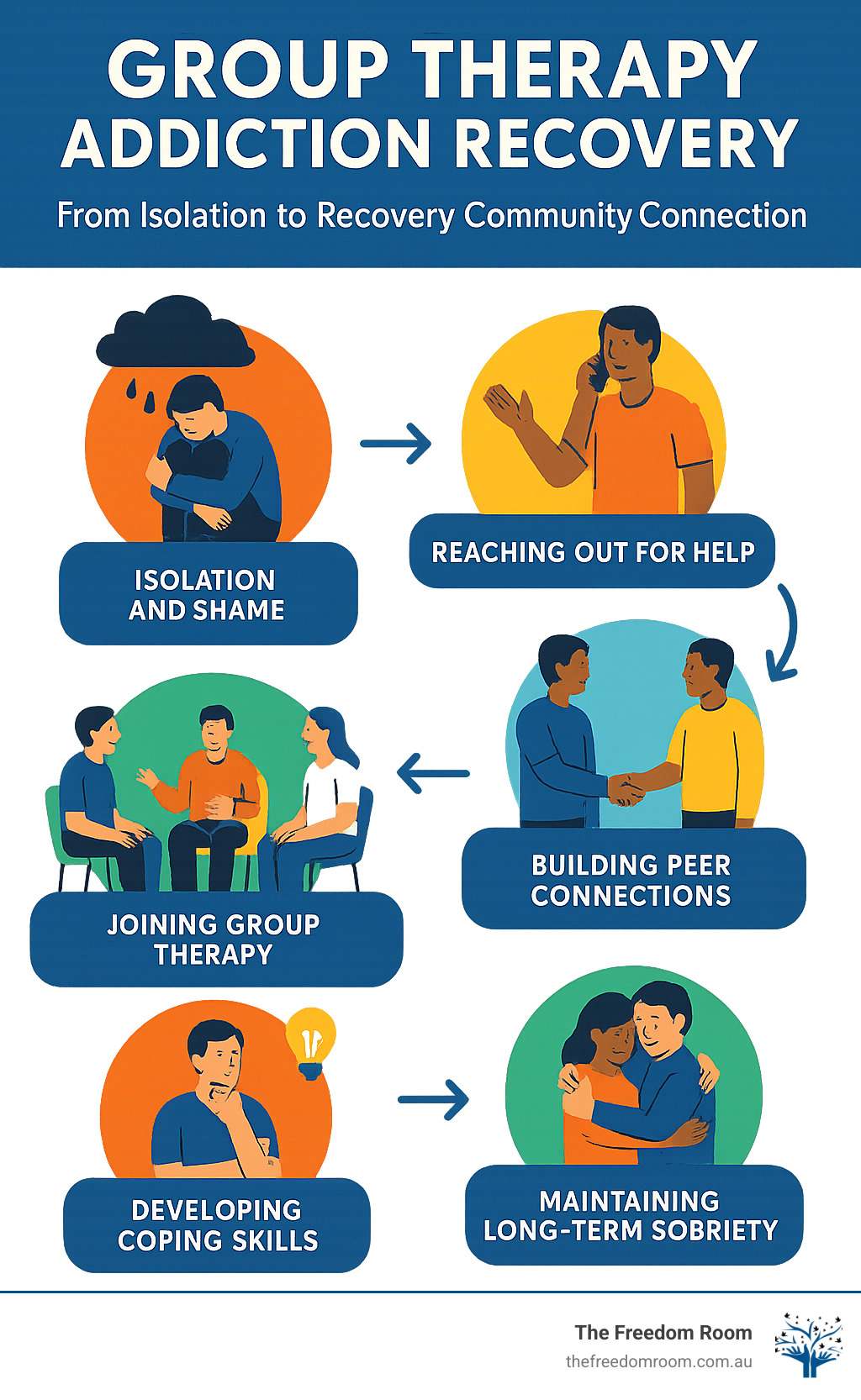
What Is Group Therapy in Addiction Recovery?
Group therapy addiction recovery brings together people facing similar struggles in a structured, therapeutic environment. Unlike casual support groups you might find in community centres, these sessions are led by trained facilitators who guide the group through evidence-based approaches designed to create lasting change.
Picture this: you’re sitting in a circle with 6-12 other people who truly understand what you’re going through. There’s no judgement here, just shared experience and genuine support. The group becomes your safe laboratory where you can practice new ways of thinking, receive honest feedback, and witness real recovery in action.
What makes group therapy so powerful lies in its therapeutic factors. There’s universality – that profound relief when you realise you’re not the only one who’s struggled with these issues. There’s hope instillation – seeing someone six months into recovery gives you a glimpse of what’s possible. And there’s cohesion – developing meaningful connections with people who become part of your recovery family.
The psychoeducation component teaches you about addiction as a disease, helping you understand the science behind what you’ve been experiencing. When addiction has isolated you from healthy relationships and left you feeling like an outsider, the group becomes your first step back into authentic human connection.
Primary goals of group therapy addiction recovery
The heart of group therapy addiction recovery focuses on building a rock-solid foundation for lasting sobriety. While abstinence from alcohol remains the primary target, groups work towards creating a complete lifestyle change that supports your new sober life.
Skill-building forms the backbone of every session. You’ll learn practical coping strategies for managing cravings when they hit, dealing with stress without reaching for a drink, and navigating social situations where alcohol is present. These aren’t theoretical concepts discussed in textbooks – they’re real-world tools you can use the moment you walk out the door.
Emotional regulation becomes a crucial focus area because let’s face it – many of us used alcohol to numb difficult feelings or cope with anxiety and depression. In group therapy, you’ll develop healthier ways to process emotions and respond to life’s inevitable challenges without needing to escape into a bottle.
Core differences from one-to-one counselling
While individual therapy provides that personalised attention we all crave, group therapy offers unique advantages that beautifully complement one-on-one work. The cost-effectiveness is undeniable – one skilled facilitator can help multiple people simultaneously, making quality treatment more accessible to everyone who needs it.
Here’s something interesting: peer insight often proves more powerful than therapist feedback alone. When someone who’s walked your exact path shares their experience, it carries a weight that professional advice sometimes can’t match. You might politely nod when a counsellor suggests a coping strategy, but when a fellow group member offers the same guidance based on their lived experience, you’re more likely to actually try it.
The facilitator role differs significantly from individual therapy too. Rather than being the sole source of wisdom in the room, they guide discussions and ensure everyone feels safe while allowing the group’s collective experience to drive the healing process. This approach recognises something beautiful: those in recovery often become each other’s best teachers and strongest supporters.
The therapist bandwidth is used more efficiently, allowing skilled professionals to help more people while creating space for peer learning that individual sessions simply can’t replicate.
How Group Therapy Addiction Recovery Differs from Individual Therapy
When you step into a group therapy session, you’re entering a completely different healing environment than one-on-one counselling. The most striking difference is the power of role modelling that happens naturally. You’ll watch someone with six months of sobriety steer a challenging situation with grace, or see a newcomer take their first brave step towards honesty. These moments teach you more about recovery than any textbook ever could.
The feedback loops in group settings are remarkable. Instead of hearing one perspective from your therapist, you receive insights from multiple people who’ve walked similar paths. When five different group members gently challenge your thinking or offer alternative solutions, it’s much harder to dismiss their collective wisdom. This diversity of viewpoints helps break through the denial and distorted thinking that often fuel addiction.
Confidentiality norms work differently in groups, requiring a deeper level of trust and commitment. While your individual therapist is bound by professional ethics, group members choose to protect each other’s stories. This mutual agreement creates a sacred space where vulnerability feels safer because everyone has skin in the game.
The facilitator’s role shifts dramatically too. Rather than being the sole source of guidance, they become more like a conductor, orchestrating the group’s collective healing power. They ensure safety and keep discussions on track, but much of the therapeutic work happens between group members themselves.
Scientific research on group therapy effectiveness backs up what many of us see in practice – that group therapy addiction recovery can be equally or even more effective than individual therapy for substance use disorders. The research particularly highlights groups’ success in reducing cocaine use and keeping people engaged in treatment longer.
Advantages unique to groups
The magic of shared stories cannot be replicated in individual sessions. When someone describes the exact shame spiral you experienced last week, or the way anxiety grips their chest before social events, something profound happens. The isolation that addiction creates starts to dissolve. You realise your darkest moments aren’t unique failures – they’re part of a shared human experience.
Accountability takes on new dimensions when peers are involved. It’s surprisingly easy to bend the truth with a therapist or even lie to yourself, but group members develop an almost supernatural ability to spot denial. They’ll call you out with love, but they’ll definitely call you out. There’s something about knowing you’ll face the group next week that keeps you honest with yourself.
Vicarious learning accelerates your progress in ways that surprise most people. You don’t need to make every mistake yourself when you can learn from others’ experiences. Watching someone work through a relapse teaches you warning signs to watch for. Celebrating someone’s milestone shows you what’s possible. The group becomes your personal recovery classroom.
When individual sessions may be preferred
Trauma safety requires careful consideration before joining a group. If you’ve experienced severe trauma, particularly involving other people, group dynamics might feel overwhelming at first. Some trauma responses can be triggered by hearing others’ stories or feeling exposed in a group setting. Individual work often helps build the foundation of safety needed before group participation feels manageable.
Acute crisis situations demand immediate, focused attention that groups can’t always provide. If you’re experiencing suicidal thoughts, severe depression, or going through withdrawal, you need the undivided attention that individual sessions offer. Groups work best when you’re stable enough to focus on others’ needs as well as your own.
Privacy concerns keep some people away from groups initially, and that’s completely understandable. Despite confidentiality agreements, some individuals feel more comfortable exploring sensitive topics privately first. There’s no shame in needing that extra layer of privacy, especially when dealing with family issues or professional concerns related to your drinking.
At The Freedom Room, we understand that everyone’s path looks different. Sometimes individual work prepares you for group participation, and sometimes groups help you process what comes up in private sessions. The key is finding what works for your unique situation and recovery needs.
Evidence-Based Models & Meeting Formats
Group therapy addiction recovery encompasses various evidence-based approaches, each with specific strengths for different aspects of recovery. Cognitive Behavioural Therapy groups focus on identifying and changing thought patterns that lead to drinking. These structured sessions teach practical skills for managing triggers and developing healthier responses to stress.
Twelve-Step facilitation groups introduce participants to the principles and practices of programs like Alcoholics Anonymous. At The Freedom Room, we offer both traditional and secular versions, ensuring everyone can benefit regardless of their spiritual beliefs.
Contingency management groups use positive reinforcement to encourage sobriety. Members earn rewards for meeting treatment goals, creating immediate incentives for positive behaviour change.
Dialectical Behaviour Therapy skills groups teach emotional regulation, distress tolerance, and interpersonal effectiveness – crucial abilities for maintaining sobriety when life becomes challenging.
Psychoeducational groups provide essential information about addiction, recovery, and mental health. Understanding the science behind addiction helps reduce shame and empowers informed decision-making.
Process groups focus on exploring relationships and emotional patterns. These sessions help identify how past experiences contribute to current struggles and develop healthier ways of relating to others.
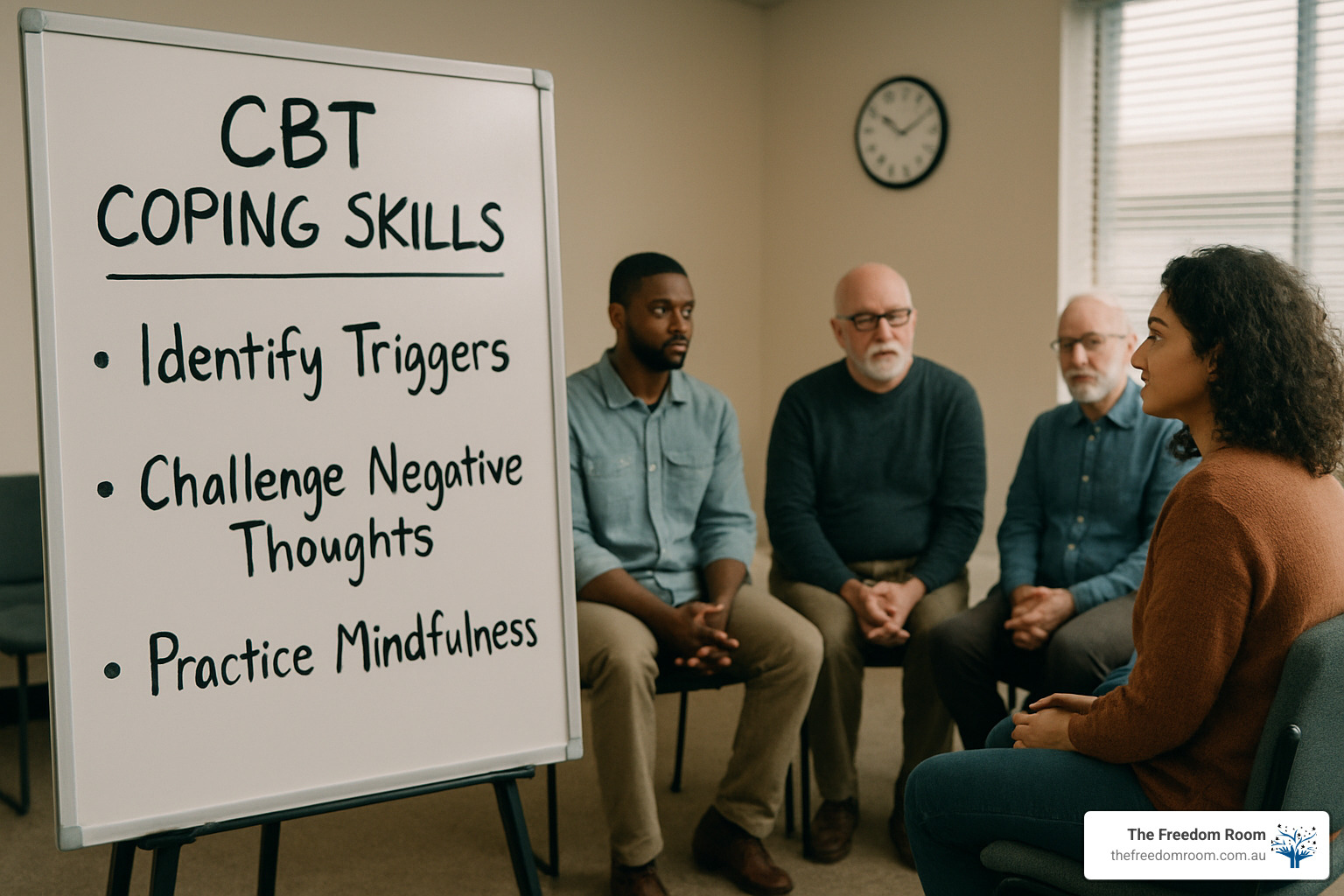
Popular structures for group therapy addiction recovery
Open groups welcome new members at any time, providing flexibility for people entering treatment at different stages. These groups offer ongoing support but may lack the cohesion that develops in closed groups.
Closed groups maintain consistent membership throughout the treatment period, typically lasting 8-16 weeks. This structure allows deeper relationships to form and creates a sense of shared journey among members.
Rolling admission groups start new cohorts regularly, combining the benefits of both open and closed formats. Members can join at scheduled intervals and progress through structured curricula together.
Time-limited cohorts follow specific treatment protocols over predetermined periods. These intensive formats work well for people who can commit to regular attendance and want structured, goal-oriented treatment.
Integrating medication-assisted treatment with groups
For people with opioid use disorder, combining medication-assisted treatment with group therapy produces superior outcomes compared to medication alone. The research shows improved treatment retention, better medication adherence, and higher rates of sustained abstinence.
This integration addresses both the physical and psychological aspects of addiction. While medications like methadone or Suboxone manage withdrawal symptoms and cravings, group therapy provides the emotional support and skill-building necessary for long-term recovery.
The synergy between MAT and group therapy also helps people develop a comprehensive recovery plan that extends beyond medication management to include lifestyle changes, relationship building, and personal growth.
Key Benefits: Why Groups Work
The magic of group therapy addiction recovery happens when you realise you’re not the only one who’s ever hidden empty bottles or made promises you couldn’t keep. That moment of recognition – seeing your own struggles reflected in someone else’s story – breaks through the walls that addiction builds around us.
When you’ve been drinking alone and carrying shame in silence, walking into a group room can feel terrifying. But something remarkable happens when you sit in that circle of chairs. The reduced isolation isn’t just about being around other people – it’s about being around people who truly understand what you’re going through.
Stigma relief flows naturally through shared experiences. You might arrive believing you’re weak or broken, but hearing a successful business owner describe the same midnight drinking patterns you know so well shifts everything. Suddenly, addiction isn’t a character flaw – it’s a condition that affects all kinds of people.
The empathy that develops works both ways. As you receive understanding and compassion from group members, you begin extending that same kindness to yourself. This self-compassion becomes one of your strongest tools for recovery, especially when that critical inner voice tries to convince you that one drink won’t hurt.
Hope installation might sound clinical, but it’s actually quite beautiful. When Sarah celebrates six months sober and you’re struggling with six days, her success becomes proof that recovery is possible. When Mark shares how he steerd his first alcohol-free wedding, you gain confidence for your own social challenges ahead.
Research backs up what we see in our groups every day. Studies show that group therapy addiction recovery creates measurable improvements in treatment retention and long-term sobriety rates. The combination of peer support, skill-building, and accountability produces outcomes that often surpass individual therapy alone.
Self-efficacy – your belief in your own ability to succeed – grows stronger in group settings. Watching others overcome obstacles similar to yours builds confidence in your own capabilities. When James shares how he handled work stress without drinking, you start believing you can do the same.
The cost savings make treatment more accessible without sacrificing quality. One skilled facilitator can guide multiple people through evidence-based interventions, making professional support available to more families struggling with addiction. At The Freedom Room, our group meetings provide intensive support while remaining affordable for ongoing recovery.
Treatment retention improves significantly when people feel connected to their recovery community. It’s harder to skip sessions when you know your group members are counting on you. This accountability extends beyond the meeting room, creating motivation for continued sobriety throughout the week.
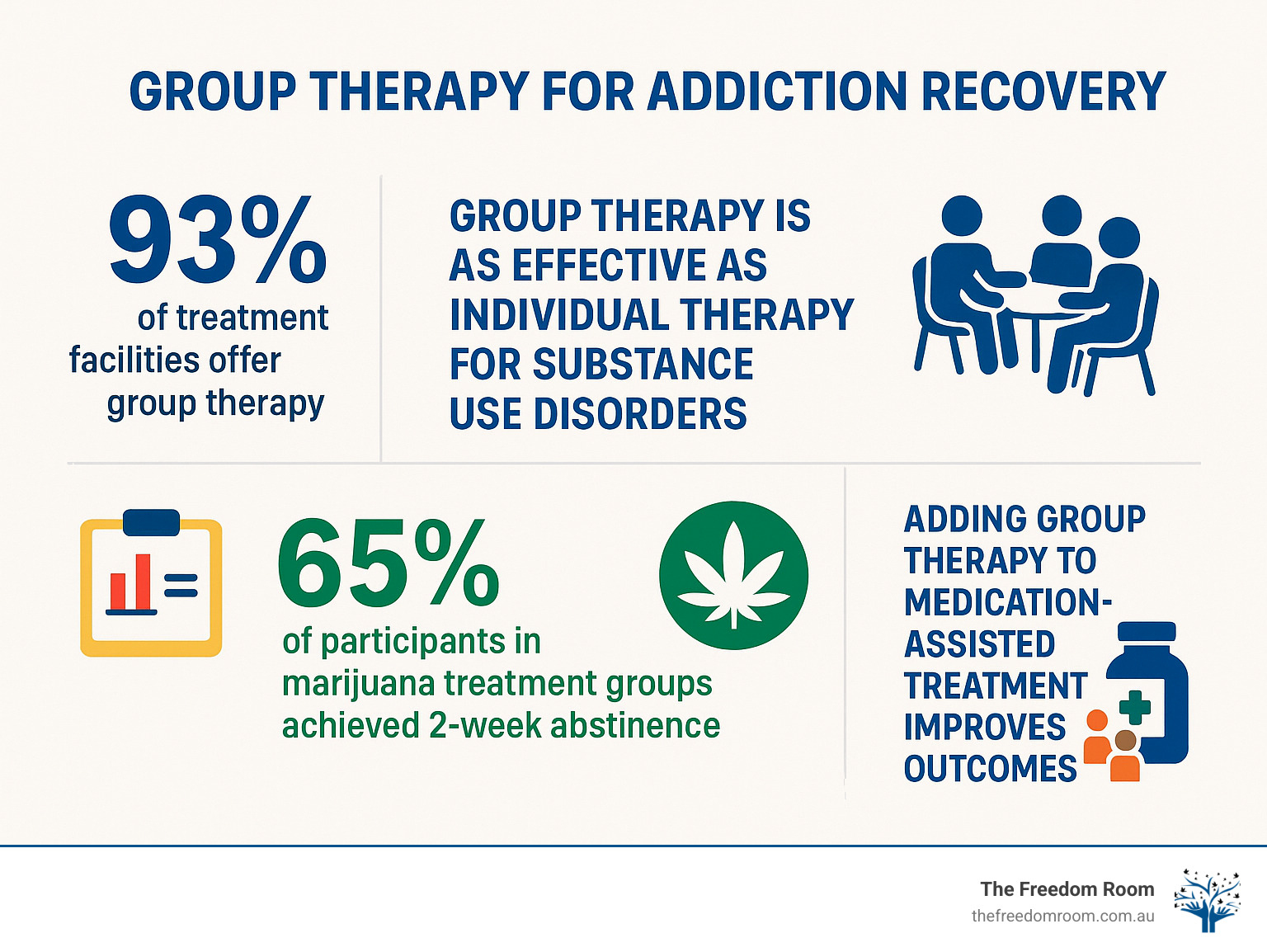
Peer support & accountability in action
The sober networks that develop through group participation become lifelines during challenging moments. These aren’t just meeting acquaintances – they’re people who understand why you can’t simply “have just one drink” and why certain situations feel impossible to steer.
Sponsorship relationships often emerge naturally as group members at different stages connect. When someone with two years of sobriety offers guidance to a newcomer, both people benefit. The sponsor strengthens their own recovery by helping others, while the newcomer receives wisdom from someone who’s successfully walked the path ahead.
Behaviour contracts might develop informally as group members commit to specific goals together. Perhaps three members agree to call each other before drinking, or the group decides to attend a sober social event together. These agreements create external motivation when willpower alone feels insufficient.
The accountability runs deeper than simple check-ins. Group members develop an intuitive ability to recognise when someone is struggling, even when they haven’t explicitly shared concerns. This early warning system often prevents relapses before they happen.
Skills and topics typically covered
Group therapy addiction recovery sessions focus on practical tools you can use immediately when facing real-world challenges. Craving management techniques become second nature through repeated practice and peer feedback. You might learn breathing exercises from your facilitator, but hearing how another member used them during a difficult work meeting makes the technique feel more achievable.
Communication skills receive significant attention because addiction often damages our most important relationships. Through role-playing and group discussions, you’ll practice expressing needs clearly, setting boundaries kindly, and resolving conflicts without reaching for alcohol as an escape.
Mindfulness and stress management become daily practices rather than abstract concepts. When the group practices guided meditation together, you experience how these techniques can calm racing thoughts and reduce anxiety. The shared experience makes it easier to continue these practices at home.
Goal setting takes on new dimensions with group support. Whether you’re working towards thirty days sober or planning a career change, having peers who understand your journey provides both encouragement and accountability for achieving your aims.
Sessions naturally cover the challenges that every person in recovery faces: identifying personal triggers that lead to drinking, developing healthy coping strategies for stress and emotions, building and maintaining relationships damaged by addiction, and managing difficult feelings without numbing them with alcohol.
Groups also address creating meaning and purpose in sobriety, preventing relapse through practical planning, addressing shame that keeps people trapped in cycles of drinking, and navigating social situations where alcohol is present. These topics emerge organically as group members share their experiences and support each other through common challenges.
Limitations, Risks & Suitability
While group therapy addiction recovery transforms countless lives, it’s important to understand that this approach isn’t the perfect fit for everyone. Being honest about limitations helps ensure you get the right treatment at the right time.
Contra-indications exist for certain mental health conditions. If you’re experiencing active psychosis or have severe personality disorders that make group interaction difficult, individual therapy might be a better starting point. Some people struggle to maintain confidentiality due to cognitive impairments or other challenges, which can compromise the safety that groups require.
Personality clashes happen in any group setting, and therapy groups are no exception. You might find yourself frustrated by someone who dominates every conversation, or you might clash with a member whose recovery approach differs dramatically from yours. These dynamics aren’t necessarily deal-breakers – skilled facilitators can often work through conflicts – but sometimes a different group or individual sessions work better.
The confidentiality risk increases naturally when more people are involved. While breaches are rare and everyone signs agreements to protect shared information, you’re trusting multiple people rather than just one therapist. Most people find this risk manageable, but if you’re dealing with particularly sensitive issues, you might prefer starting with individual sessions.
Your readiness stage significantly affects how much you’ll benefit from group participation. If you’re still questioning whether alcohol is really a problem, you might feel defensive when other members challenge your thinking. That’s completely normal, but it can make group participation feel uncomfortable rather than helpful.
Tailoring groups for dual diagnosis
Mental health conditions alongside addiction require thoughtful adaptation of group approaches. Depression and anxiety commonly accompany alcohol dependence, and effective groups address both conditions together rather than treating them separately.
PTSD and trauma need particular sensitivity in group environments. At The Freedom Room, we understand that certain discussions or exercises might trigger traumatic memories. Our trauma-informed approach ensures that group activities focus on safety and grounding rather than potentially re-traumatising experiences.
Seeking Safety groups specifically target the intersection of trauma and substance use. These specialised sessions teach practical skills for managing both conditions simultaneously, focusing on creating stability rather than processing traumatic events in detail.
Red flags and troubleshooting
Dominant members can frustrate everyone when they monopolise discussion time week after week. Good facilitators learn to redirect these conversations skillfully, ensuring quieter members get opportunities to contribute. Sometimes a gentle private conversation with the dominant member helps them become more aware of group dynamics.
Relapse contagion occasionally occurs when one member’s return to drinking triggers urges or actual relapses in others. While this sounds scary, it’s actually quite manageable with proper facilitation. These situations often become powerful learning opportunities about triggers, vulnerability, and the importance of individual responsibility in recovery.
Drop-outs are common, especially in early recovery when motivation fluctuates daily. Groups work to re-engage missing members through phone calls or individual check-ins, while respecting each person’s right to make their own treatment decisions. Sometimes people need to step away temporarily and return when they’re more ready.
Getting Started: What to Expect & How to Prepare
Starting your group therapy addiction recovery journey might feel daunting, but knowing what to expect can ease those first-day nerves. The process begins with a thoughtful screening to ensure you’re matched with the right group for your needs and recovery stage.
During this initial assessment, we’ll explore your current relationship with alcohol, any mental health considerations, and your readiness to engage with others in a therapeutic setting. This isn’t about judging where you are – it’s about finding the perfect fit so you can get the most from your group experience.
Ground rules form the foundation of every successful group. These aren’t restrictive policies but protective boundaries that create safety for everyone. You’ll learn about confidentiality expectations, attendance guidelines, and how to communicate respectfully even when discussions become challenging.
Understanding attendance etiquette becomes particularly important in group settings. Unlike individual therapy where rescheduling affects only you and your counsellor, your presence matters to fellow group members. When you’re absent, it impacts the group’s momentum and the relationships you’re building.
Commitment to authentic engagement requires honest reflection about your readiness to be vulnerable. Group therapy works best when members are willing to share genuinely and receive feedback from peers who understand their struggles.
The beauty of group work lies in this mutual exchange – you’ll find yourself both receiving support and naturally offering encouragement to others, often finding that helping fellow members strengthens your own recovery.
First session checklist for group therapy addiction recovery
Your first session begins with a warm orientation that introduces you to how group therapy addiction recovery works in practice. You’ll learn about the specific approach your group uses, whether it’s CBT-focused, process-oriented, or follows twelve-step facilitation principles.
Confidentiality pledges represent more than paperwork – they’re sacred agreements that create the trust necessary for healing. When everyone commits to protecting shared stories and struggles, the group becomes a sanctuary where masks can come off and real work begins.
At The Freedom Room, we believe in starting with clear intentions. Goal sheets help clarify your personal hopes for group participation. Perhaps you want to learn better coping strategies, rebuild damaged relationships, or simply feel less alone in your recovery journey. Whatever your aims, naming them helps focus your group experience.
Don’t worry if you feel nervous or uncertain during that first session. Most people do. The facilitator understands this and will gently guide you through the process without pressure to share more than feels comfortable.
Long-term engagement & relapse prevention
Recovery doesn’t end when formal group sessions conclude. Booster sessions provide ongoing touchpoints to maintain the connections and insights you’ve developed. These periodic check-ins help address new challenges before they threaten your sobriety.
Many people find that alumni groups become an unexpected treasure. These gatherings connect program graduates with current participants, creating mentoring relationships that benefit everyone involved. There’s something powerful about hearing from someone who sat in your chair months or years ago and now radiates the peace that comes with sustained recovery.
Phone support systems often develop organically as group members exchange contact details and commit to checking on each other between sessions. These peer networks provide immediate help during those 3am moments when cravings hit hard or life feels overwhelming.
The ultimate goal extends far beyond simply stopping drinking. Lifestyle planning helps you create a meaningful, fulfilling sober life worth protecting. Groups support members in exploring new interests, repairing relationships, and finding purposes that fuel ongoing motivation for recovery.
At The Freedom Room, our team understands this journey intimately because we’ve walked it ourselves. We know that recovery isn’t just about what you stop doing – it’s about who you become and the life you build in sobriety.
Frequently Asked Questions about Group Therapy Addiction Recovery
Starting group therapy addiction recovery brings up many questions and concerns. These are the most common questions I hear from people considering group support, along with honest answers based on my experience facilitating groups at The Freedom Room.
How many people are usually in a therapy group?
Most group therapy addiction recovery sessions work best with 6-12 participants. This sweet spot allows everyone to have their voice heard while creating enough diversity for rich discussions and varied perspectives.
When groups get smaller than six people, you might miss out on the range of experiences that make group therapy so powerful. With fewer voices, conversations can feel limited or repetitive. On the flip side, groups larger than twelve can start feeling impersonal, and you might find yourself struggling to get a word in during sessions.
At The Freedom Room, we carefully monitor group sizes to ensure everyone feels comfortable participating. Sometimes we’ll split larger groups or combine smaller ones to maintain that optimal balance where meaningful connections can flourish.
Will I have to speak at every session?
Absolutely not. This fear keeps many people away from groups, but the reality is much gentler than you might imagine. You’re never forced to share anything you’re not ready to discuss.
Many people start their group therapy addiction recovery journey by simply listening. There’s tremendous value in hearing others’ stories and strategies, even when you’re not ready to open up yourself. I’ve watched countless quiet members gradually find their voice as they feel safer and more connected to the group.
Our facilitators understand that everyone moves at their own pace. They might gently invite you to share, but there’s never pressure or judgment if you choose to pass. Some of our most reserved members eventually become the most active participants once they realise the group truly is a safe space.
The beautiful thing about groups is that even your silence contributes something valuable. Your presence alone shows others they’re not facing this journey alone.
Can online groups be as effective as face-to-face meetings?
Research shows that online groups can be just as effective as in-person meetings for many people. The key is finding what works best for your situation, personality, and needs.
Video conferencing allows you to see facial expressions and body language, which helps group dynamics develop naturally. You’ll still experience that crucial sense of connection and shared understanding that makes group therapy addiction recovery so powerful.
Online groups offer practical advantages that can’t be ignored. If you live in a remote area, have transportation challenges, or need to work around family commitments, virtual meetings might be your lifeline to support. Parents with young children particularly appreciate being able to participate from home.
That said, some people find in-person meetings create stronger bonds and feel more “real.” There’s something special about being physically present in the same room, sharing the same air and space with others who understand your struggles.
At The Freedom Room, we offer both online and face-to-face options because we know different formats work better for different people at different times in their recovery. The most important thing is that you’re getting the support you need in a way that fits your life.
Ready for Change? Let’s Build a Stronger, Alcohol-Free Future Together
Group therapy addiction recovery offers a proven pathway to lasting sobriety through the power of shared experience and mutual support. At The Freedom Room, we understand that recovery isn’t a solo journey – it’s a collective effort that thrives in community.
Our team brings unique authenticity to group therapy addiction recovery because we’ve walked the same path you’re considering. As people in recovery ourselves, we offer genuine empathy and practical wisdom gained through lived experience. We know the fears, hopes, and challenges you’re facing because we’ve been there too.
We offer group recovery meetings three times weekly – two face-to-face sessions and one online meeting exclusively for our clients. These gatherings provide ongoing support, accountability, and connection with others committed to alcohol-free living.
Our comprehensive approach combines group therapy with individual counselling, CBT, ACT, and family involvement sessions. We recognise that lasting recovery requires addressing underlying issues while building strong support networks and practical coping skills.
Whether you’re taking your first steps toward sobriety or strengthening existing recovery foundations, our group therapy programs provide the community support essential for long-term success. You don’t have to face addiction alone – we’re here to walk alongside you every step of the way.
Recovery is possible, and it’s more achievable when you’re surrounded by people who understand your journey and believe in your capacity for change. Let us help you build the alcohol-free life you deserve.
The Freedom Room Wellness and Recovery offers a compassionate, cost-effective approach to overcoming alcohol addiction. We understand the struggles of alcoholics and addicts and provide a program to help you break free from unhealthy drinking habits. Our program is designed to address the root causes of addiction and equip you with the tools to live a fulfilling life without relying on alcohol or other substances.
Our personalised one-on-one sessions, dynamic workshops, group recovery meetings, family involvement sessions, self-care practices, counselling, Cognitive Behavioural Therapy (CBT), Acceptance and Commitment Therapy (ACT), and guided workbooks are all aimed at empowering you to manage alcohol use disorder and build a strong foundation for lasting recovery.
We recognise that life doesn’t stop when we get clean and sober. That’s why our counselling and workshops also cover how to deal with stress, anxiety, and depression – feelings that are often associated with addiction and other compulsive behaviours. Our mission is to support you through the tough times without having to reach for a drink or a fix.
What sets The Freedom Room apart is our remarkable team of individuals who understand your struggle because they’ve walked the same path. Our counsellors, meeting facilitators, and workshop leaders are all in recovery themselves. Their lived experiences bring authenticity, empathy, and unwavering support to your journey. They’ve been where you are, and they know what it takes to overcome alcohol addiction.
At The Freedom Room, we’re not just professionals but friends on your journey to sobriety. Together, we’ll steer the twists and turns, celebrate progress, and build resilience. Recovery isn’t a solo mission—it’s a collective effort fueled by shared stories and unwavering camaraderie.
Our comprehensive services include one-to-one sessions where you receive guidance, compassion and a listening ear from an understanding counsellor and learn practical steps to change your life and overcome alcohol dependence. We offer couples sessions for yourself and your loved one, whether that’s your partner or a family member. Working through the issues that arise in recovery with your loved ones is so important.
Our family sessions are designed to assist clients, family members, and significant others in developing a greater understanding of the disease of alcoholism. This includes a Q and A session where we work with clients and their families in a safe, caring, confidential way.
In recovery from alcohol and drugs, navigating conflict effectively becomes a crucial life skill. Our conflict resolution services help you develop healthy communication patterns, express yourself constructively, listen actively, and find win-win solutions. By developing these skills, you can steer disagreements productively, reducing stress and creating a strong foundation for lasting recovery.
The Freedom Room offers both CBT and ACT as part of the ongoing work we do with our clients. Cognitive-behavioural therapy (CBT) is a form of talking therapy based on the idea that how we think (cognition), how we feel (emotion), and how we act (behaviour) all interact. Acceptance and commitment therapy (ACT) focuses on helping clients to behave more consistently with their own values and apply mindfulness and acceptance skills to their responses to uncontrollable experiences.
Our Twelve Step Facilitation program informs individuals about various 12-step programs, including secular options. Secular 12 Steps follow the same core structure and principles as the original 12 Steps but remove references to a higher power or God. There is no pressure or expectation to attend external meetings. TSF is a form of behavioural therapy designed to help individuals with substance use disorders achieve and maintain abstinence, emphasising themes like acceptance, surrender, self-examination, and building a support system within a non-religious framework.
We also provide pre-rehabilitation support when it’s time to decide which rehabilitation facility is best for you, assisting you with finding the right service and supporting you with your admission. Our post-rehabilitation support recognises that when you come home from rehabilitation, you need a network. Addictions must be faced on a daily basis, and creating a safety net is key to your continued sobriety.
Our relapse prevention services acknowledge that alcoholism is a chronic disease requiring a long-term plan to stay sober. People who struggle with alcoholism should treat their disorder like any other chronic disease. If you stop treating it, you will relapse. For those not ready to stop drinking, we can help you draw up a plan to reduce your risks when drinking alcohol through our alcohol risk minimisation program.
The Freedom Room Workshops offer a blend of education and guidance designed to foster self-compassion, mindfulness, positivity, and gratitude, empowering you on your journey of recovery and self-growth. Our group recovery meetings are held three times a week, with two face-to-face meetings and one online meeting, exclusively accessible to The Freedom Room clients.
The Freedom Room space is very discreet and welcomes children, should you need to bring them along. Taking the first step towards recovery can feel overwhelming, but you don’t have to face it alone. Seeking help is the first step towards building the alcohol-free life you deserve.
Support & Resources
Taking the first step towards recovery can feel overwhelming, but you don’t have to face it alone. Whether you’re ready to begin your journey with group therapy addiction recovery or need immediate support during a crisis, help is always available.
At The Freedom Room, we understand that recovery doesn’t follow a 9-to-5 schedule. That’s why we offer multiple ways to connect with our team of experienced counsellors who’ve walked the same path you’re considering. Our office provides a discreet, welcoming space where you can explore your options without judgment.
Rachel and our team are here to support you through personalised sessions, group meetings, and comprehensive recovery planning. We know how difficult it can be to make that first phone call, but remember – reaching out for help is a sign of strength, not weakness.
If you’re experiencing a crisis outside of our regular hours, please don’t hesitate to contact these essential support services. Your safety and wellbeing are the top priority, and these resources provide round-the-clock assistance when you need it most.
Emergency services are available 24/7 by calling 000 for life-threatening situations. For ongoing support with alcohol addiction, the AA Helpline at 1300 222 222 connects you with people who understand your struggles. Lifeline (13 11 14) offers confidential crisis support and suicide prevention services whenever you need someone to talk to.
Family members and loved ones also need support during the recovery process. Al-Anon (www.al-anon.org.au) provides specialised assistance for those affected by someone else’s drinking, helping families heal alongside their loved one’s recovery journey.
Seeking help is the first step towards building the alcohol-free life you deserve. Whether you’re ready for group therapy addiction recovery or just beginning to explore your options, we’re here to support you every step of the way.
If you or someone you know is suffering from alcohol addiction, please seek professional help and support at:
- Our Office: (07) 3325 1531
- Mobile: 0400 236 743 (Rachel)
For help outside of these hours, you can also contact:
- Emergency Help: Call 000
- AA Helpline: 1300 222 222
- Lifeline: 13 11 14
- Al-Anon: www.al-anon.org.au