

Alcohol Dependence Treatment Drugs: Top 4 Powerful Solutions 2025
Understanding Medication Options for Alcohol Dependence
Alcohol dependence treatment drugs are medications specifically approved to help people reduce drinking or maintain abstinence from alcohol. If you’re looking for information about these treatments, here’s a quick overview of the main options:
- Acamprosate (Campral) – Reduces cravings by restoring brain chemical balance
- Naltrexone (ReVia, VIVITROL) – Blocks alcohol’s pleasurable effects and reduces heavy drinking
- Disulfiram (Antabuse) – Creates unpleasant reactions when alcohol is consumed
- Nalmefene (Selincro) – Reduces alcohol consumption in those not ready for abstinence
Alcohol dependence, also called Alcohol Use Disorder (AUD), affects about 14.5 million Americans and is more common in men (17% lifetime risk) than women (8% lifetime risk). It’s a chronic brain condition characterized by an impaired ability to stop or control alcohol use despite adverse consequences.
The journey from alcohol dependence to wellness often requires more than willpower alone. While counselling and support groups form the foundation of recovery, medication can significantly improve outcomes when used as part of a comprehensive treatment plan.
These medications work in different ways – some reduce cravings, others block alcohol’s rewarding effects, and some create adverse reactions to alcohol. Research shows that only about 10% of people with alcohol dependence receive pharmacotherapy, despite evidence supporting its effectiveness.
I’m Rachel Acres, founder of The Freedom Room, and my personal journey through addiction recovery and professional training in alcohol dependence treatment drugs has given me unique insights into how these medications can support lasting sobriety when combined with proper counselling and support.
What Is Alcohol Dependence (Alcohol Use Disorder)?
Alcohol Use Disorder (AUD) is a medical condition diagnosed when drinking causes serious problems in your life and health, yet you continue despite these negative consequences. According to the Diagnostic and Statistical Manual of Mental Disorders (DSM-5), AUD is diagnosed when a person meets at least two of eleven criteria within a 12-month period, including:
- Drinking more or longer than intended
- Unsuccessful attempts to cut down or stop
- Spending significant time obtaining, using, or recovering from alcohol
- Experiencing cravings or strong urges to drink
- Failing to fulfill major obligations due to drinking
- Continuing to drink despite relationship problems
- Giving up important activities because of alcohol
- Using alcohol in physically hazardous situations
- Continuing to drink despite physical or psychological problems
- Developing tolerance (needing more to achieve the same effect)
- Experiencing withdrawal symptoms
Healthcare providers often use screening tools like the AUDIT-C (Alcohol Use Disorders Identification Test-Concise) to identify potential problems. The severity is classified as mild (2-3 symptoms), moderate (4-5 symptoms), or severe (6+ symptoms).
In Australia, approximately 17% of adults drink at levels that put them at risk of alcohol-related harm over their lifetime. This mirrors global statistics showing alcohol use disorder affects millions worldwide, with significant impacts on health, relationships, and economic wellbeing.
Goals of Treatment
When treating alcohol dependence, there are two main approaches: abstinence (completely stopping alcohol consumption) and harm reduction (reducing consumption to safer levels). The appropriate goal depends on the individual’s:
- Severity of dependence
- Physical health status (especially liver health)
- Personal preferences and readiness for change
- Previous recovery attempts
- Support system
For many with severe alcohol dependence or those with alcohol-related liver disease, complete abstinence is often the safest goal. However, for others with less severe dependence, reducing consumption to lower-risk levels may be a more achievable initial target.
The overarching aims of alcohol dependence treatment drugs include:
- Preventing or reducing withdrawal symptoms
- Reducing cravings and the compulsion to drink
- Preventing relapse after a period of abstinence
- Improving quality of life and functioning
- Addressing co-occurring mental health conditions
- Reducing alcohol-related harm to physical health
At The Freedom Room, we understand that recovery isn’t just about stopping drinking—it’s about building a fulfilling life without alcohol. Our approach combines appropriate medication recommendations (through referral to medical professionals) with evidence-based psychological interventions to address the physical, emotional, and social aspects of recovery.
Overview of Alcohol Dependence Treatment Drugs
When it comes to recovery from alcohol dependence, medication can make a world of difference—yet surprisingly few people access these helpful tools. Despite strong evidence supporting their effectiveness, only about 10% of people with alcohol use disorder in Europe receive alcohol dependence treatment drugs as part of their recovery plan.
Think of these medications not as magic pills, but as valuable allies in your journey toward healing. They work best when combined with counselling, support groups, and positive lifestyle changes—like having both oars in the water when rowing a boat.
Currently, four main medications stand out in the treatment landscape, though availability varies depending on where you live:
Acamprosate (Campral) helps restore brain chemical balance, reducing cravings and making abstinence more manageable. This medication is approved in Australia, the US, and across Europe.
Naltrexone (ReVia, VIVITROL) works differently—it actually blocks the pleasurable feelings alcohol typically produces, making drinking less rewarding. Like acamprosate, it’s available in Australia, the US, and Europe.
Disulfiram (Antabuse) takes a more direct approach by creating unpleasant physical reactions if you consume alcohol while taking it. It serves as a powerful deterrent and is approved in Australia, the US, and throughout Europe.
Nalmefene (Selincro) focuses on reducing consumption rather than maintaining complete abstinence, making it suitable for those who aren’t ready to stop drinking entirely. Currently, it’s approved in Europe but not in Australia or the US.
Health authorities like the National Institute for Health and Care Excellence (NICE) in the UK and similar organisations in Australia recommend these medications as part of a comprehensive treatment approach. Research consistently shows that combining medication with counselling produces better outcomes than either approach alone.
Alcohol dependence treatment drugs don’t “cure” alcohol dependence—rather, they create a window of opportunity. By reducing cravings or blocking alcohol’s effects, they give you breathing room to develop healthier coping skills and rebuild your life.
At The Freedom Room, we don’t prescribe medications ourselves (that’s the role of medical doctors), but we work closely with healthcare providers to ensure our clients receive well-coordinated care. We can help you understand medication options and connect with appropriate medical professionals when medication might benefit your recovery journey.
Acamprosate (Campral)
Acamprosate, sold under the brand name Campral, has become one of the most trusted allies in maintaining alcohol abstinence. What makes this medication special is how it works with your brain chemistry – gently restoring balance between glutamate and GABA, two crucial neurotransmitters that become disrupted through years of heavy drinking.
How It Works
Unlike other alcohol dependence treatment drugs that block alcohol’s pleasurable effects, acamprosate takes a different approach. It’s like a reset button for your brain, helping to normalise activity patterns that have been altered by long-term alcohol use. This gentle rebalancing helps ease the discomfort and persistent cravings that so often lead people back to drinking during those challenging early months of recovery.
Dosing and Administration
Taking acamprosate is straightforward, though it does require consistency:
- The typical prescription is two 333 mg tablets taken three times daily (totalling 1,998 mg daily)
- Many people find it helpful to take it with meals, creating a natural reminder system
- It’s usually started once you’ve achieved initial abstinence rather than while still actively drinking
Effectiveness
The research behind acamprosate is compelling. A comprehensive Cochrane review involving nearly 7,000 patients found that it significantly improves the chances of maintaining complete abstinence compared to placebo. For every 9-12 people who take acamprosate, one additional person will stay completely alcohol-free who otherwise wouldn’t have without the medication.
Interestingly, recent studies suggest acamprosate might work even better for women than men. This highlights something we’ve long observed at The Freedom Room – recovery isn’t one-size-fits-all, and the best approach considers your unique personal factors.
Side Effects and Considerations
The most common side effect people experience is diarrhoea, affecting about one in ten users, though this often improves as your body adjusts to the medication. You might also experience mild nausea, stomach discomfort, headaches, dizziness, or fatigue.
What makes acamprosate particularly valuable is its safety profile. Unlike some other alcohol dependence treatment drugs, acamprosate:
- Is processed by your kidneys rather than your liver, making it suitable if you have liver concerns
- Requires adjusted dosing if you have kidney problems
- Won’t cause unpleasant reactions if you do have a drink
- Isn’t habit-forming and has no potential for abuse
Best Candidates
From our experience working with clients at The Freedom Room, acamprosate tends to be especially helpful for:
People committed to complete abstinence rather than just cutting down
Those with liver disease who can’t safely take certain other medications
Anyone who also needs to take opioid medications for pain management
People who’ve already achieved initial sobriety and want support maintaining it
We’ve seen remarkable success stories when clients combine acamprosate with regular counselling sessions and group support. The medication helps manage the brain chemistry aspect of dependence while our therapeutic approaches address the psychological and social dimensions of recovery.
At The Freedom Room, we never suggest medications directly but can connect you with healthcare providers who can evaluate whether acamprosate might be right for your recovery journey. What we do know from both scientific research on acamprosate efficacy and our clients’ experiences is that this medication, when part of a comprehensive recovery plan, can significantly improve your chances of building a fulfilling alcohol-free life.
Disulfiram (Antabuse)
Unlike other alcohol dependence treatment drugs that work on cravings or brain chemistry, disulfiram (Antabuse) takes a completely different approach. It creates an unpleasant physical reaction when you drink alcohol – essentially making your body rebel against alcohol consumption.
How It Works
Disulfiram blocks an enzyme called aldehyde dehydrogenase. This enzyme normally helps your body break down acetaldehyde, a toxic byproduct created when your liver processes alcohol. When you take disulfiram and then drink alcohol, this toxic substance builds up in your bloodstream, triggering what’s commonly called the “disulfiram reaction.”
The reaction isn’t subtle – it’s designed to be uncomfortable enough to discourage drinking. Within 10-30 minutes of having even a small amount of alcohol, you might experience flushing of your face and neck, a throbbing headache, nausea, vomiting, chest pain, rapid heartbeat, difficulty breathing, blurred vision, and feelings of anxiety or confusion.
These symptoms can last anywhere from 30 minutes to several hours, depending on how much alcohol you consumed. For some people, the reaction can be severe enough to require medical attention – which is why disulfiram isn’t suitable for everyone.
Dosing and Real-World Use
Doctors typically prescribe disulfiram as a single daily dose of 250-500 mg, usually taken in the morning to minimise sedative effects. You can only start taking it after you’ve been alcohol-free for at least 12 hours.
The real challenge with disulfiram isn’t how it works but sticking with it. When supervised – perhaps by a family member or healthcare provider who watches you take your medication – disulfiram can significantly reduce drinking days. However, without supervision, many people simply stop taking it when they want to drink.
This highlights disulfiram’s key limitation: it works as a deterrent rather than addressing the underlying drivers of alcohol dependence. It doesn’t reduce cravings or help restore brain chemistry – it simply creates consequences for drinking. That’s why it’s now less commonly prescribed than acamprosate or naltrexone in many countries.
Safety Considerations
Disulfiram isn’t suitable for everyone. You shouldn’t take it if you have:
- Heart or cardiovascular disease
- Severe liver problems
- Psychosis
- Are pregnant
You’ll also need to be vigilant about avoiding alcohol in all forms – including some mouthwashes, cough syrups, and foods prepared with alcohol. Your doctor will likely recommend regular liver function tests, as disulfiram can occasionally cause liver problems.
Who Benefits Most from Disulfiram?
Despite its limitations, disulfiram can be remarkably effective for the right person. At The Freedom Room, we’ve found it can work well for highly motivated clients who:
- Are firmly committed to abstinence
- Have a reliable support person who can supervise medication-taking
- Haven’t responded well to other alcohol dependence treatment drugs
- Benefit from having a strong external deterrent
In our experience, disulfiram can be particularly helpful during high-risk situations like social events where alcohol is present. However, we always emphasise that medication alone isn’t enough. The most successful outcomes happen when disulfiram is part of a comprehensive program that includes counselling to address the psychological aspects of dependence.
Some people have asked about disulfiram implants, which deliver the medication continuously and remove the daily choice of whether to take the pill. While these have been used in some countries, the evidence for their effectiveness is limited, and they’re not widely available in Australia.
Naltrexone (Oral & Monthly Injection)
Naltrexone is one of the most versatile and well-studied alcohol dependence treatment drugs available. Unlike acamprosate and disulfiram, naltrexone is available in both oral daily tablets and as a monthly injectable formulation (VIVITROL), offering flexibility to suit different patient needs.
How It Works
Naltrexone is an opioid receptor antagonist that works by blocking the mu-opioid receptors in the brain. When someone drinks alcohol while taking naltrexone:
- The pleasurable or rewarding effects of alcohol are reduced
- The “high” or euphoria typically associated with drinking is diminished
- Cravings for alcohol decrease over time
This mechanism helps break the cycle of positive reinforcement that drives continued drinking in many people with alcohol dependence.
Formulations and Dosing
Oral Naltrexone (ReVia):
- Typically prescribed as a 50 mg tablet taken once daily
- Sometimes started at 25 mg and increased to reduce side effects
- Can be taken with or without food
- Some practitioners use targeted dosing (taking naltrexone only before anticipated drinking situations)
Injectable Naltrexone (VIVITROL):
- 380 mg intramuscular injection administered once monthly
- Must be given by a healthcare provider
- Provides steady blood levels for 30 days
- Eliminates the need for daily medication adherence
Effectiveness
Research has consistently demonstrated naltrexone’s effectiveness in reducing heavy drinking days and supporting abstinence:
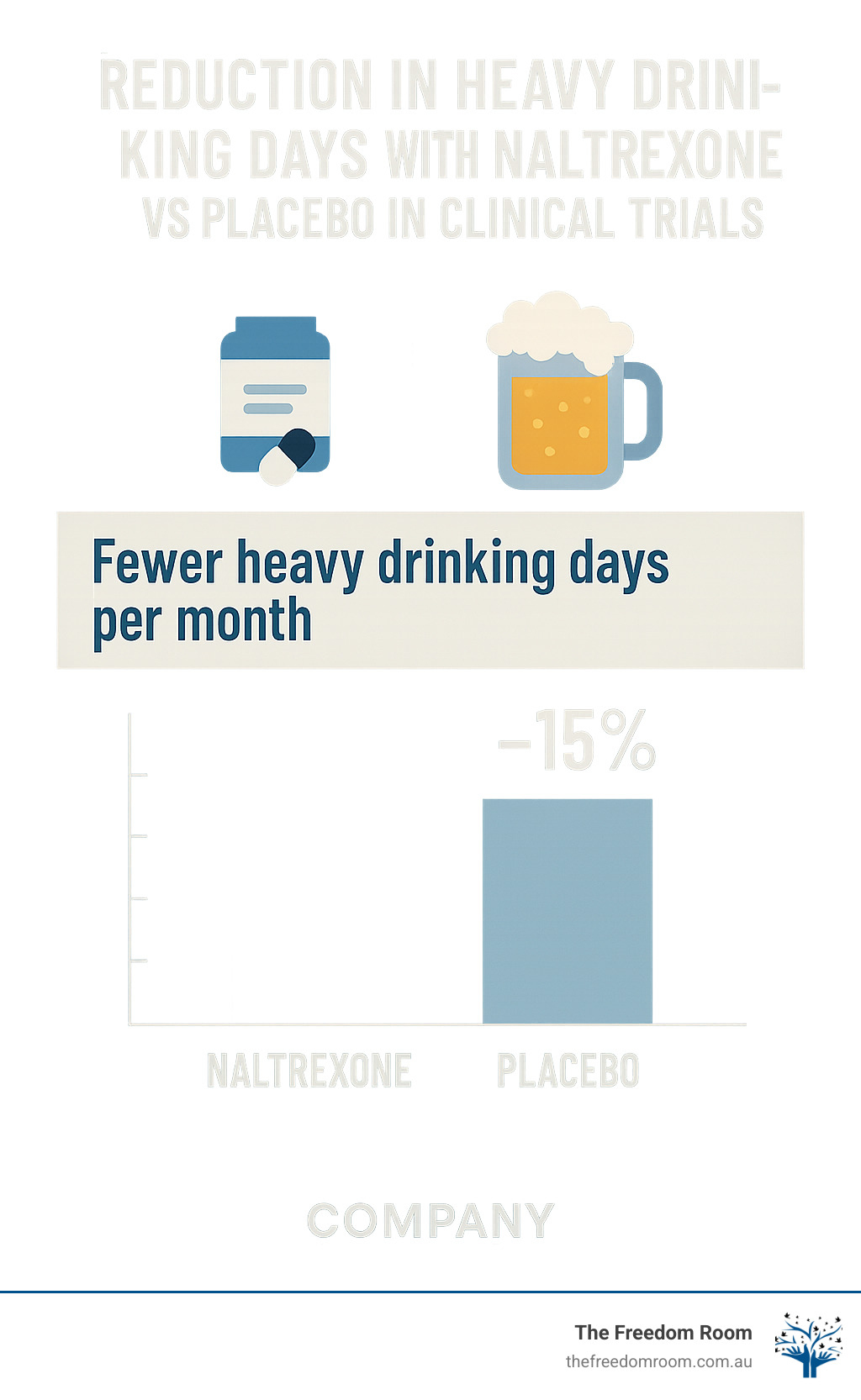
- In a 6-month study, patients receiving VIVITROL injection and counselling had 25% fewer heavy drinking days per month compared to those receiving placebo and counselling.
- Among patients who had stopped drinking for one week prior to starting treatment, 41% receiving VIVITROL remained completely abstinent during the 6-month study compared to 17% on placebo.
- The Sinclair Method, which involves taking naltrexone before drinking occasions, has shown a reported 78% success rate in clinical practice for reducing problematic drinking.
Side Effects and Considerations
Common side effects include:
- Nausea (especially when starting)
- Headache
- Dizziness
- Fatigue
- Sleep disturbances
- Anxiety
Important considerations:
- Naltrexone can cause liver damage in high doses; monitoring of liver function is recommended
- It blocks the effects of opioid medications, so it’s contraindicated in patients:
- Currently taking opioid pain medications
- With acute opioid withdrawal
- Who may need opioids for surgery or emergency pain management
- Patients must be opioid-free for 7-10 days before starting naltrexone to avoid precipitated withdrawal
Best Candidates
Naltrexone is particularly well-suited for:
- Patients who experience strong cravings for alcohol
- Those who drink for the euphoric effects
- Individuals who have trouble with daily medication adherence (injectable form)
- People aiming for either reduced drinking or abstinence
- Those with a family history of alcoholism
At The Freedom Room, we find that many clients benefit from naltrexone’s ability to reduce the reinforcing effects of alcohol, particularly in the early stages of recovery when cravings can be intense. The monthly injectable form can be especially helpful for those who struggle with the discipline of taking daily medication.
Nalmefene (As-Needed Option)
Nalmefene (brand name Selincro) offers a refreshingly different approach to treating alcohol dependence. Unlike traditional medications that require daily dosing, nalmefene introduces a more flexible “as-needed” strategy that many of our clients find liberating and practical.
How It Works
What makes nalmefene unique is its sophisticated interaction with the brain’s opioid system. It works by:
Acting as an antagonist at the μ-opioid receptors (similar to naltrexone), while simultaneously functioning as a partial agonist at κ-opioid receptors and an antagonist at δ-opioid receptors. This triple-action approach specifically targets the brain’s reward pathways that drive excessive drinking.
In simpler terms, nalmefene helps reduce the pleasurable feelings alcohol creates, making it easier to stop after one or two drinks rather than continuing to drink heavily.
Dosing and Administration
The beauty of nalmefene lies in its flexible dosing schedule. Rather than taking medication every day whether you plan to drink or not, nalmefene is taken only when needed:
Take one 18 mg tablet 1-2 hours before situations where you anticipate drinking. This gives the medication time to work before alcohol enters your system. You’ll only take it on days when you might drink, and never more than one tablet in a 24-hour period.
This “targeted” approach represents a significant shift from traditional alcohol dependence treatment drugs and can be particularly appealing if you’re looking to reduce your drinking rather than stop completely.
Effectiveness
The research behind nalmefene is particularly encouraging for those who aren’t ready for complete abstinence but want to gain better control over their drinking habits:
Clinical trials have demonstrated impressive results, with participants reducing their alcohol consumption by approximately 60% after six months. Many people saw their heavy drinking days decrease dramatically—from 19 days per month down to just 7 days.
Nalmefene seems to work best for those with higher drinking risk levels (men consuming more than 60g of alcohol daily, women more than 40g). For perspective, 60g is roughly 6 standard drinks in Australia.
Side Effects and Considerations
Like all medications, nalmefene comes with potential side effects. The most common ones include mild nausea, dizziness, trouble sleeping, headaches, and reduced appetite. These symptoms are typically manageable and often decrease with continued use.
It’s worth noting that nalmefene is currently approved in Europe but hasn’t yet received approval in Australia or the United States. For our Australian clients interested in this approach, we often discuss using naltrexone in a targeted fashion (sometimes called the Sinclair Method) as an available alternative.
Similar to naltrexone, nalmefene blocks opioid receptors, making it unsuitable if you’re taking opioid medications for pain. It’s also specifically designed for reducing consumption rather than maintaining complete abstinence, and works best when combined with psychological support.
Best Candidates
From our experience at The Freedom Room, we find that certain people particularly benefit from this approach. Nalmefene (or targeted naltrexone in Australia) might be right for you if:
You’re not quite ready to commit to complete abstinence but genuinely want to cut back on your drinking. Perhaps you’re concerned about your health or relationships but find the idea of never drinking again too daunting as a first step.
You can identify your triggers and anticipate when you’re likely to drink, allowing you to take the medication proactively.
You prefer flexibility in your treatment approach rather than daily medication.
You’re drinking at higher-risk levels but haven’t developed physical dependence that would require medically supervised detoxification.
While we can’t prescribe nalmefene at The Freedom Room, we stay informed about all evidence-based alcohol dependence treatment drugs and can discuss with you whether this approach might suit your needs. We can then work with your GP to explore available options in Australia that follow similar principles.
New & Emerging Medications and Integrative Therapies
The landscape of alcohol dependence treatment drugs is constantly evolving, offering new hope for people who haven’t found success with traditional medications. At The Freedom Room, we keep a close eye on these emerging options to ensure our clients have access to the most comprehensive support possible.
Off-Label Medications
Several medications originally approved for other conditions have shown promising results for alcohol dependence. Baclofen, a muscle relaxant, has gained popularity particularly in France, where it received temporary approval for alcohol treatment. Many clients with liver disease find it helpful for reducing both cravings and anxiety. The dosing is highly personalised though, which means careful medical supervision is essential.
Topiramate, an anticonvulsant that works on both glutamate and GABA systems in the brain, has demonstrated impressive results in clinical studies. Research shows it can help reduce heavy drinking days by about 27% compared to just 9% with placebo. While effective, it’s worth noting that some people experience side effects like tingling sensations, changes in taste, and temporary cognitive fog.
I’ve seen remarkable improvements in some of our clients who use gabapentin, especially those struggling with sleep disturbances and persistent withdrawal symptoms. This anticonvulsant tends to be well-tolerated and has minimal drug interactions, making it particularly valuable for people taking other medications.
For those who also smoke, varenicline (originally developed for smoking cessation) might offer a dual benefit. By affecting nicotinic acetylcholine receptors, it appears to reduce alcohol cravings while also helping with tobacco dependence. Early research results are quite encouraging, though more studies are underway.
Experimental Approaches
Some of the most exciting developments in alcohol dependence treatment drugs come from unexpected places. Psilocybin-assisted therapy – using the active compound found in “magic mushrooms” alongside professional therapy – is showing remarkable potential in clinical trials. This approach seems to help people gain fresh perspectives on their relationship with alcohol, often breaking deeply entrenched patterns of thinking and behaviour.
Similarly, MDMA-assisted therapy is being investigated for alcohol use disorder, particularly for those with co-occurring PTSD or trauma histories. By creating a window of emotional openness and safety, MDMA may help people process underlying trauma that fuels their drinking. While still in early research phases, the preliminary results give us reason for optimism.

Personalised Medicine Approaches
The future of alcohol treatment is becoming increasingly personalised. Genetic testing may soon help determine which medications will work best for specific individuals, taking the guesswork out of treatment selection. We’re also seeing promising results from combination therapy approaches, where multiple medications with different mechanisms of action are used together to address various aspects of dependence.
Some researchers are developing treatments based on specific drinking patterns and neurobiological profiles, recognising that alcohol dependence isn’t a one-size-fits-all condition. This targeted approach could significantly improve success rates by matching treatments to individual needs.
Integrative Approaches
At The Freedom Room, we’ve always believed that medication is just one piece of the recovery puzzle. That’s why we’re excited about the growing evidence supporting integrative approaches.
Mindfulness-based relapse prevention has shown remarkable effectiveness, helping people develop awareness of triggers and cravings without automatically acting on them. We’ve incorporated elements of this approach into our workshops with fantastic feedback from participants.
Exercise is emerging as a powerful adjunctive treatment – not just for general health, but specifically for brain recovery and craving reduction. The natural endorphin release from regular physical activity can help restore pleasure pathways damaged by alcohol.
We’re also seeing promising results from nutritional approaches that support brain healing. Specific nutrients like omega-3 fatty acids, B vitamins, and amino acid precursors can help restore neurotransmitter balance, potentially reducing cravings and improving mood.
For tech-savvy clients, digital health tools and apps are providing new ways to support medication adherence and track progress. These tools can offer real-time support between sessions and help people identify patterns in their drinking and triggers.
While some of these approaches are still in research stages, we stay informed about emerging evidence so we can provide our clients with comprehensive information about all potential recovery tools. Our goal is to combine the best of traditional approaches with promising innovations to create truly personalised recovery plans that work for each individual’s unique needs and circumstances.
How to Choose the Right Alcohol Dependence Treatment Drug
Selecting the most appropriate alcohol dependence treatment drug is a personalized process that should consider multiple factors. While this decision should ultimately be made with a healthcare provider, understanding the key considerations can help you have an informed discussion.
Key Factors in Medication Selection
Treatment Goals:
- Abstinence vs. reduced drinking
- Short-term stabilization vs. long-term maintenance
- Harm reduction vs. complete cessation
Medical Considerations:
- Liver function (may favor acamprosate over naltrexone if liver impairment exists)
- Kidney function (may require dose adjustment for acamprosate)
- Need for pain management with opioids (contradicts naltrexone/nalmefene)
- Cardiovascular health (may contraindicate disulfiram)
- Pregnancy or breastfeeding status
Psychological Factors:
- Presence of strong cravings (may suggest naltrexone)
- History of impulsive drinking (may benefit from disulfiram as a deterrent)
- Co-occurring mental health conditions
- Previous response to medications
Practical Considerations:
- Ability to adhere to medication schedules
- Cost and insurance coverage
- Availability of support for medication supervision if needed
- Preference for daily vs. as-needed or monthly dosing
Shared Decision-Making
At The Freedom Room, we encourage a collaborative approach between clients, their healthcare providers, and our counselling team. While we don’t prescribe medications ourselves, we can help facilitate conversations about medication options and support clients through the decision-making process.
The best outcomes typically come from a treatment plan that combines:
- Appropriate medication (if indicated)
- Regular counselling or therapy
- Peer support or group participation
- Lifestyle modifications
- Family involvement when possible
Personalised Treatment Planning
Every person’s journey with alcohol dependence is unique, and treatment should reflect this individuality. Some may benefit from sequential trials of different medications to find the best fit, while others might need combination approaches.
At The Freedom Room, our one-to-one sessions provide a safe space to discuss your experiences with medications, address concerns, and adjust your recovery plan as needed. We understand that recovery is not linear, and medication needs may change over time.
More info about one-to-one services
How Alcohol Dependence Treatment Drugs Are Prescribed
Alcohol dependence treatment drugs are typically prescribed following a specific process:
-
Comprehensive Assessment:
- Medical history and physical examination
- Assessment of drinking patterns and dependence severity
- Screening for co-occurring conditions
- Laboratory tests to assess organ function
-
Detoxification Considerations:
- Most medications (except some uses of naltrexone) are started after the acute withdrawal phase
- Medical detoxification may be necessary for those with significant physical dependence
- Baseline labs should be completed before starting medication
-
Prescription and Monitoring:
- Initial prescription often for 1-4 weeks to monitor response and side effects
- Regular follow-up appointments to assess effectiveness and adjust as needed
- Ongoing monitoring of relevant laboratory values
-
Integration with Counselling:
- Medications work best when combined with counselling or therapy
- The prescribing doctor and counsellor should communicate about progress
- Psychosocial support improves medication adherence and overall outcomes
While medications can be valuable tools, they are most effective when used as part of a comprehensive treatment approach that addresses the psychological, social, and behavioral aspects of alcohol dependence.
Common Side Effects of Alcohol Dependence Treatment Drugs
All alcohol dependence treatment drugs can cause side effects, though many are temporary and diminish with continued use:
Gastrointestinal Issues:
- Nausea, vomiting, and diarrhea are common with most alcohol medications
- Taking medication with food can often reduce these effects
- Typically improve within 1-2 weeks of continued use
Headache and Dizziness:
- Particularly common with naltrexone and nalmefene
- Usually mild to moderate in intensity
- May improve with dose adjustments or continued use
Liver Function Changes:
- More common with naltrexone and disulfiram
- Regular monitoring of liver function tests is recommended
- May require dose adjustment or medication change if significant
Fatigue and Sleep Disturbances:
- Can occur with most medications
- May require timing adjustments (e.g., taking sedating medications at night)
- Often improve as the body adjusts to the medication
Managing adherence is crucial for medication effectiveness. Strategies include:
- Simplifying regimens when possible (e.g., once-daily dosing or monthly injections)
- Using pill organizers or reminder apps
- Involving family members in medication support
- Addressing side effects promptly to prevent discontinuation
Frequently Asked Questions about Medication-Assisted Recovery
Do I need to stop drinking before starting medication?
The answer depends on the specific medication:
- Acamprosate: Ideally started after achieving abstinence, though some doctors may begin it during the later stages of withdrawal.
- Naltrexone: Can be started while still drinking, though some protocols recommend a brief period of abstinence (24-48 hours) before the first dose to reduce side effects.
- Disulfiram: Must be started only after at least 12 hours of abstinence to avoid a severe reaction.
- Nalmefene: Designed to be taken while still drinking, specifically on days when drinking is anticipated.
It’s essential to follow your doctor’s specific instructions, as starting certain medications while alcohol is still in your system can lead to adverse effects.
Can I combine these drugs with antidepressants or opioids?
Antidepressants:
Most alcohol dependence treatment drugs can be safely combined with antidepressants, which is important since depression often co-occurs with alcohol use disorder. However, specific combinations should be monitored:
- Acamprosate has minimal interactions with most antidepressants
- Naltrexone combined with certain antidepressants may increase the risk of liver effects
- Disulfiram can interact with some older antidepressants
Opioids:
- Naltrexone and nalmefene block opioid receptors and will prevent opioid pain medications from working
- These medications can precipitate withdrawal in people physically dependent on opioids
- Acamprosate and disulfiram don’t directly interact with opioids but require caution in patients with multiple substance issues
Always inform all healthcare providers about all medications you’re taking to prevent potentially dangerous interactions.
How long should I stay on medication treatment?
The duration of medication treatment varies based on individual needs and response:
- Acamprosate: Typically recommended for 6-12 months, though some patients benefit from longer treatment.
- Naltrexone: Often prescribed for 3-6 months initially, with some patients continuing for a year or longer if beneficial.
- Disulfiram: Can be used for months to years as a deterrent, depending on the individual’s needs and response.
- Nalmefene: Used as needed, with the duration determined by ongoing drinking patterns and treatment goals.
Research suggests that longer durations of treatment (at least 6 months) are associated with better outcomes for most people. The decision to discontinue medication should be made in consultation with healthcare providers and should include a plan for continued support and monitoring.
At The Freedom Room, we recognize that recovery is a long-term process, and medication needs may change over time. Our ongoing support services can help you steer these changes and maintain your recovery momentum even after medication is discontinued.
Ready for Change? Let’s Build a Stronger, Alcohol-Free Future Together
Understanding alcohol dependence treatment drugs is an important step in your recovery journey, but medication alone is rarely sufficient for lasting change. True recovery encompasses healing the mind, body, and spirit, which is exactly what we focus on at The Freedom Room Wellness and Recovery.
Our approach to alcohol dependence recovery is unique because our team has walked this path ourselves. We combine evidence-based therapeutic approaches with the authentic empathy that comes from personal experience. We understand the challenges you’re facing because we’ve faced them too.

At The Freedom Room in Strathpine, QLD, we offer:
-
Personalised One-on-One Sessions – Where we can discuss your experiences with medications, address challenges, and develop strategies custom to your unique needs.
-
Dynamic Workshops – Focused on building the skills and mindsets essential for long-term recovery, complementing any medication treatment you may be receiving.
-
Group Recovery Meetings – Providing the community support that research shows improves the effectiveness of medication treatments.
-
Family Involvement Sessions – Because recovery impacts and requires support from your loved ones.
-
Cognitive Behavioral Therapy (CBT) and Acceptance and Commitment Therapy (ACT) – Evidence-based approaches that work synergistically with medication to change drinking behaviors.
-
Relapse Prevention Planning – Essential for maintaining the gains made with medication-assisted recovery.
We recognize that medication can be a valuable tool in recovery, but it works best when combined with comprehensive support. Our workshops on stress management, emotional regulation, and healthy coping strategies provide the foundation for sustainable recovery beyond what medication alone can achieve.
More info about relapse-prevention workshops
Whether you’re currently taking medication for alcohol dependence, considering it as an option, or seeking alternatives, we’re here to support your journey. Our team can help you steer discussions with healthcare providers, understand your treatment options, and build the skills needed for lasting recovery.
Seeking help is a sign of strength, not weakness. Every journey begins with a single step, and we’re here to walk alongside you every step of the way.
Support & Resources
Reaching out for help is one of the bravest steps you can take on your recovery journey. If you or someone you care about is struggling with alcohol addiction, please know that compassionate, understanding support is just a phone call away.
At The Freedom Room, we’re here to listen, understand, and help you steer the path forward:
Our Office: (07) 3325 1531
Mobile: 0400 236 743 (Rachel)
Sometimes, support is needed outside regular hours, when the challenges feel most overwhelming. During these times, these valuable resources are available 24/7:
Emergency Help: 000 (for immediate crisis situations)
AA Helpline: 1300 222 222 (for peer support from those who understand)
Lifeline: 13 11 14 (for confidential crisis support and suicide prevention)
Al-Anon: www.al-anon.org.au (support for families and friends affected by someone else’s drinking)
Seeking help isn’t a sign of weakness—it’s a powerful step toward reclaiming your life and wellbeing. The journey to recovery isn’t meant to be walked alone, and with the right support, lasting change is possible.
Whether you’re considering alcohol dependence treatment drugs as part of your recovery plan or exploring other approaches, reaching out is your first step toward a healthier, more fulfilling future. We’re here, ready to support you every step of the way.