

Why Group Therapy for Alcoholism Can Transform Your Recovery Journey
Group therapy for alcoholism is a powerful treatment approach where 5-12 people meet regularly with a trained facilitator to address their alcohol use together. This evidence-based method combines peer support, professional guidance, and shared learning to help individuals achieve lasting sobriety.
Key benefits of group therapy for alcoholism:
- Reduces feelings of isolation and shame common in alcohol addiction
- Provides peer support and accountability from others facing similar challenges
- Costs less than individual therapy whilst delivering comparable outcomes
- Offers multiple perspectives and coping strategies from group members
- Creates a safe space to practice social skills without alcohol
Research shows that group therapy can be as effective as individual counselling for treating alcohol use disorder. Most sessions run for 60-90 minutes with groups averaging 6-10 participants.
Common types include:
- Psychoeducational groups that teach about addiction and recovery
- Skills development sessions focusing on relapse prevention
- Cognitive-behavioural therapy groups addressing thought patterns
- Support groups like Alcoholics Anonymous
- Trauma-informed groups for those with co-occurring conditions
The therapeutic power comes from what researchers call “universality” – finding you’re not alone in your struggles. Group members often report feeling less shame and more hopeful when they witness others successfully navigating recovery.
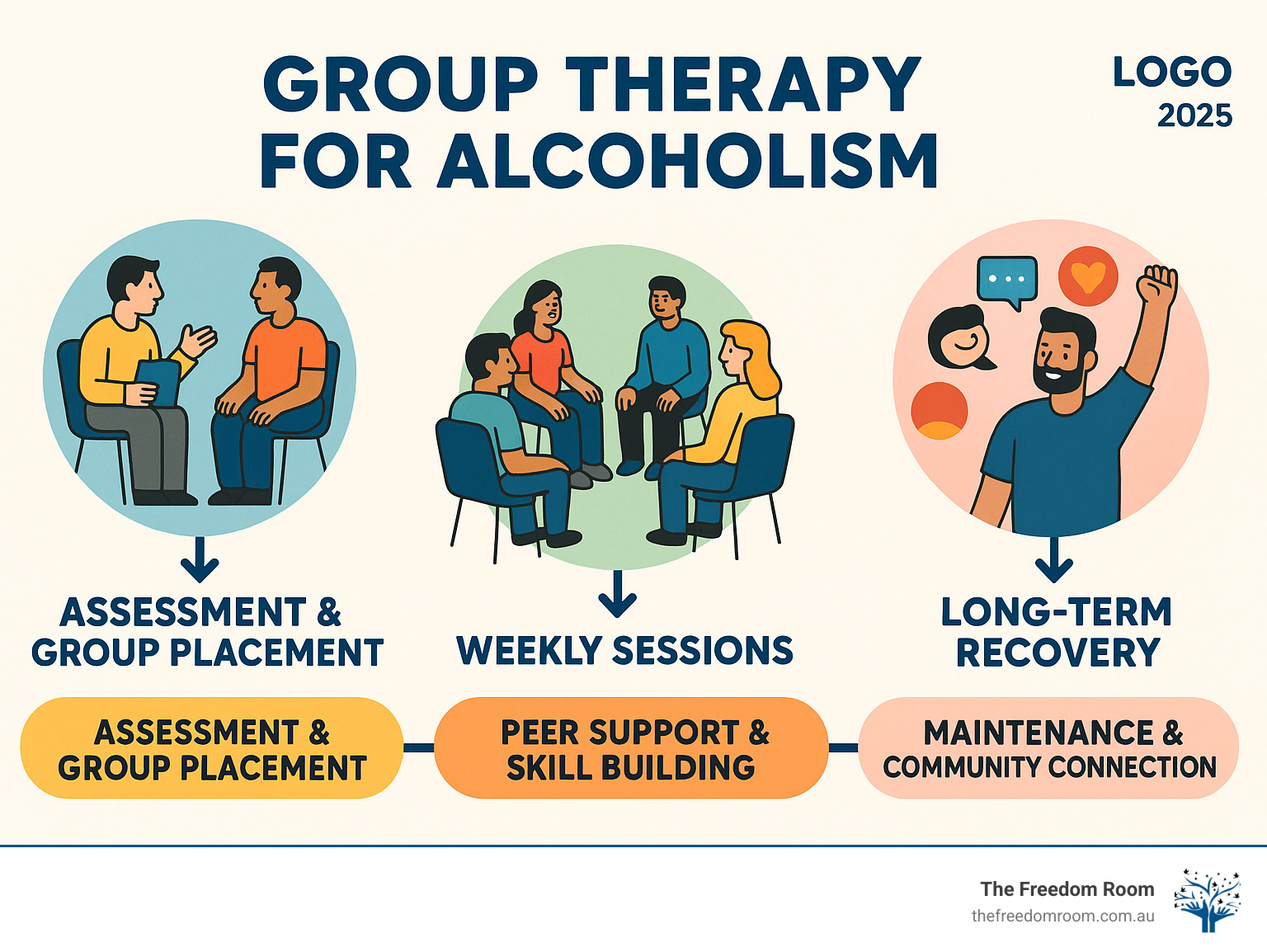
What Is Group Therapy and Why It Matters in Alcohol Recovery
When you’re struggling with alcohol addiction, it can feel like you’re carrying the weight of the world alone. Group therapy for alcoholism changes that by bringing together people who truly understand what you’re going through.
The magic of group therapy lies in what happens when someone shares their story and others nod in recognition. Suddenly, the shame that’s been eating away at you begins to lift. You realise that addiction affects teachers, parents, business owners, students, and everyone in between.
Group sessions provide something that individual therapy simply can’t – the universality of experience. When you hear someone describe the exact thoughts you’ve had or situations you’ve faced, it validates your experience in a profound way.
The psychoeducational aspect helps everyone understand the science behind addiction. Learning about how alcohol affects the brain, why cravings happen, and what recovery looks like removes much of the mystery and self-blame.
Group therapy for alcoholism also offers practical advantages. Sessions cost less than individual therapy whilst delivering equally effective results. You’re getting multiple perspectives on challenges, various coping strategies, and immediate feedback from people who’ve been where you are.
The accountability factor can’t be overstated. When you know your group is expecting you next week, it creates gentle pressure to stay committed to your recovery goals.
How Group Therapy Complements Individual Sessions
Think of individual therapy and group therapy as two parts of a powerful recovery equation. Each brings unique strengths that, when combined, create a comprehensive approach to healing.
Individual sessions provide the privacy needed to explore your personal history, trauma, and deeply rooted patterns. Your individual therapist becomes your safe harbour where you can work through sensitive areas at your own pace.
Group therapy for alcoholism then becomes your practice ground. The coping skills you’ve learned in individual sessions get tested and refined with peer support. It’s one thing to discuss how you’ll handle a craving with your therapist – it’s quite another to role-play that scenario with group members who can offer real-world feedback.
This integrated approach follows a stepped model of care. You might start with individual sessions to stabilise and build foundational skills, then add group therapy to strengthen your recovery through community support.
People who combine both approaches often report feeling more confident in their recovery. They have professional support when they need it and peer support that reminds them they’re part of something bigger than themselves.
Main Goals and Proven Benefits of Group Therapy for Alcoholism
When you’re considering group therapy for alcoholism, it’s helpful to understand what you’re working towards and what research tells us about the outcomes. Group-based treatment addresses multiple aspects of recovery simultaneously whilst building the connections that make lasting sobriety possible.
Relapse prevention forms the cornerstone of group therapy goals. Rather than simply focusing on stopping drinking, groups help you develop a comprehensive toolkit for maintaining sobriety. You’ll learn to spot your personal triggers, practice saying no in realistic scenarios, and create detailed action plans for challenging moments.
What makes this particularly powerful is witnessing how others steer similar situations. When a group member shares how they handled a work party without drinking, you’re not just hearing advice – you’re seeing proof that it’s possible.
The coping skills development that happens naturally in groups is remarkable. Someone might share a breathing technique that helped them through cravings, whilst another describes how they restructured their evening routine. These real-world strategies become part of your own recovery toolkit.
Research consistently shows that group therapy for alcoholism produces outcomes comparable to individual therapy. The scientific evidence demonstrates improved abstinence rates and reduced alcohol consumption when group components are included in treatment plans.
The affordability aspect makes quality treatment accessible to more people. Group sessions allow treatment centres to maintain high standards whilst reducing costs per person.
Outcomes Supported by Research
The evidence supporting group therapy for alcoholism extends far beyond just stopping drinking. Long-term sobriety rates improve significantly when group therapy is part of your treatment plan, with studies showing no meaningful difference in effectiveness between group and individual approaches.
Quality of life improvements reach into every corner of daily living. Group participants consistently report better relationships, increased confidence in social situations, and stronger self-worth. The social skills you practice in group naturally transfer to interactions outside the treatment room.
Mental health improvements are particularly significant. Many people find that their anxiety and depression begin to lift as they engage with the group process. The combination of peer support, professional guidance, and shared problem-solving creates a comprehensive approach to healing.
Peer Support and Community as Catalysts
There’s something profoundly healing about hearing your own struggles reflected in someone else’s story. When another group member describes the shame, fear, or hopelessness you’ve felt, it immediately reduces the isolation that often accompanies alcohol problems.
Accountability emerges naturally without feeling punitive. Group members genuinely care about each other’s progress and gently check in about goals and challenges.
Social networks often require complete rebuilding in recovery. Group therapy provides the foundation for developing new, meaningful relationships with people who understand and actively support your recovery goals.
The mutual aid aspect creates something beautiful – helping others actually strengthens your own recovery. Many group members find that supporting fellow participants reinforces their commitment to sobriety whilst providing renewed purpose and connection.
Types of Group Therapy for Alcohol Use Disorder
When it comes to group therapy for alcoholism, there’s no one-size-fits-all approach. Different types of groups serve different purposes in recovery, and understanding your options helps you find the right fit.
Psychoeducational groups act like recovery classrooms, teaching you about addiction science and recovery principles. You’ll learn about how alcohol affects your brain and why recovery is a medical process, not a moral failing.
Skills development groups focus on the practical side of staying sober. These are your recovery toolkit sessions, where you’ll practice saying no to drinks, managing stress, and building healthy routines.
Cognitive-behavioural therapy (CBT) groups help you rewire the thinking patterns that lead to drinking. These sessions are particularly powerful because you’ll learn alongside others who struggle with similar thought traps.
Support circles provide ongoing encouragement and accountability. Whether professionally facilitated or peer-led, these groups become your recovery family.
Twelve-step programmes like Alcoholics Anonymous offer structured approaches based on spiritual principles and shared experience. Many find the combination of sponsorship and service work creates lasting recovery.
Psychoeducational & Skills Development Groups
Imagine finally understanding why your brain craves alcohol even when you desperately want to stop. That’s the power of psychoeducational groups – they explain addiction and replace shame with knowledge.
Craving science becomes a central focus, helping you understand that urges are temporary neurological responses, not personal weaknesses. When you learn that cravings typically last 15-20 minutes and will diminish over time, it provides real hope.
Refusal skills training involves practicing various scenarios – from casual barbecues to work functions – building confidence in your ability to socialise without alcohol. Role-playing with others who understand the stakes makes these practice sessions both safe and effective.
Cognitive-Behavioural & Relapse Prevention Groups
CBT groups tackle the mental side of addiction head-on. You’ll find how certain thoughts create emotions that trigger drinking urges – and more importantly, how to interrupt these patterns.
The thought-trigger chain becomes your roadmap for understanding personal patterns. Maybe you notice that thinking “I’ve had a terrible day” leads to feeling overwhelmed, which triggers the urge to drink.
Coping planning involves developing specific strategies for high-risk situations. Working with fellow group members, you’ll identify potential triggers and create detailed action plans.
Mutual-Aid & 12-Step Programmes
Alcoholics Anonymous and similar programmes represent the most widely available form of group therapy for alcoholism. These peer-led groups follow structured formats based on spiritual principles and shared experience.
Scientific research on 12-Step effectiveness demonstrates that regular participation significantly improves long-term sobriety rates. The combination of sponsorship, service work, and regular meeting attendance creates a comprehensive support system.
Sponsorship provides one-on-one mentoring within the group context. Experienced members guide newcomers through the recovery process, offering personalised support and accountability.
Inside a Typical Group Therapy Session for Alcoholism
Walking into your first group therapy for alcoholism session can feel daunting, but knowing what to expect helps ease those nerves. Most groups meet in comfortable spaces with chairs arranged in a circle – no one sits at the head, emphasising that everyone’s voice matters equally.
You’ll typically find yourself with 5-10 other people who understand exactly what you’re going through. Sessions run for 60-90 minutes, giving everyone enough time to share and connect without feeling rushed.
The trained facilitator creates a safe container for the group’s work. They’re not there to lecture or judge, but to guide conversations, ensure everyone feels heard, and keep the group focused on recovery goals.
Confidentiality forms the bedrock of every session. What’s shared in the room stays in the room – this sacred rule allows people to be genuinely honest about their struggles.
Ground rules are simple but crucial: arrive on time, switch off phones, speak respectfully, and avoid giving unsolicited advice. These boundaries help maintain the therapeutic focus.
Each session typically opens with a brief check-in where members share how they’re feeling today and any challenges since last meeting. Sessions usually close with each person sharing one takeaway and one commitment for the week ahead.
Common Topics Covered in Group Therapy for Alcoholism
High-risk triggers dominate many group discussions because understanding your personal danger zones is crucial for lasting recovery. Members share their specific triggers and the group collectively brainstorms practical strategies.
Relationship repair often becomes emotionally charged territory as people work through the damage their drinking may have caused. The group provides a safe space to practice difficult conversations before having them with family members.
Mindfulness techniques are woven throughout many sessions, teaching members to pause between feeling an urge and acting on it. You might learn simple breathing exercises that create space between trigger and response.
Goal setting helps shift focus from what you’re giving up (alcohol) to what you’re gaining. Groups explore career aspirations, relationship goals, and personal interests that support long-term recovery.
Group Therapy for Alcoholism and Co-Occurring Conditions
Many people seeking group therapy for alcoholism also struggle with mental health conditions like depression, anxiety, or trauma. Specialised groups use integrated approaches that address both the addiction and underlying mental health challenges simultaneously.
PTSD-informed groups recognise the deep connection between trauma and alcohol use. These sessions require facilitators trained in both addiction and trauma treatment.
Depression and alcohol often feed each other in a vicious cycle. Groups help members understand this connection and develop strategies that break the cycle by addressing both conditions together.
The beauty of integrated treatment protocols is that they recognise you as a whole person rather than treating your addiction in isolation.
Comparing Group Therapy for Alcoholism to Other Treatment Modalities
When you’re exploring recovery options, it’s natural to wonder how group therapy for alcoholism stacks up against other approaches. The most successful recoveries often blend different approaches together.
Individual counselling offers the privacy and undivided attention that many people crave, especially when starting their recovery journey. It’s the perfect space to unpack personal history, work through trauma, or explore deeply personal triggers without worrying about others’ reactions.
Yet group therapy for alcoholism provides something individual sessions can’t – the powerful realisation that you’re not alone in this struggle. There’s something profoundly healing about hearing someone else describe exactly what you’ve been feeling.
Medication-assisted therapy has revolutionised alcohol treatment, particularly with medications like naltrexone that can significantly reduce cravings. These medications address the biological aspects of addiction that willpower alone can’t overcome. However, pills don’t teach you how to handle social situations – that’s where group therapy becomes invaluable.
Family therapy tackles the ripple effects of alcohol use on your closest relationships. While group therapy connects you with peers who understand your experience, family therapy focuses on healing the specific relationships that matter most in your daily life.
Online treatment options have opened doors for people who might otherwise struggle to access help. The convenience is undeniable, but many people find that the immediate, in-person connection of traditional group settings provides irreplaceable support.
Integrating Group Therapy with Medication and One-to-One Support
The most effective recovery plans don’t pit different treatments against each other – they work together like instruments in an orchestra. Group therapy for alcoholism harmonises beautifully with other interventions when coordinated thoughtfully.
MAT coordination ensures your group facilitator understands how any medications might affect your group experience. Some medications can cause fatigue or mood changes that might influence your participation.
Holistic treatment plans recognise that you’re not just someone with an alcohol problem – you’re a whole person with relationships, career concerns, health issues, and dreams for the future.
Relapse monitoring becomes much more comprehensive when your treatment team communicates effectively. Your individual therapist might notice early warning signs that complement observations from your group facilitator.
This coordinated approach acknowledges what many people in recovery already know – healing happens on multiple levels simultaneously. The combination of peer support, professional guidance, medical intervention when appropriate, and family involvement creates a robust foundation for lasting change.
Challenges, Limitations, and Best Practices
Like any treatment approach, group therapy for alcoholism comes with its own set of challenges that both participants and facilitators need to steer thoughtfully.
Drop-out risk poses one of the biggest challenges in group settings. Some people find it daunting to share deeply personal struggles with strangers, especially when they’re already feeling vulnerable about their alcohol use.
Confidentiality concerns weigh heavily on many participants’ minds. Despite signed agreements and clear ground rules, the worry that personal information might somehow leak outside the group can prevent honest sharing.
Group dynamics can become tricky when personalities clash or when one person dominates the conversation. This imbalance can prevent quieter members from getting the support they need.
Cultural fit matters more than many people realise. Someone might feel out of place if they’re the only person of their age, gender, or cultural background in the group.
The facilitator’s skill level makes or breaks the group experience. Running effective group therapy requires a completely different skill set from individual counselling.
Best-Practice Tips for Facilitating Group Therapy for Alcoholism
Creating successful group experiences starts with establishing clear boundaries from day one. Skilled facilitators strike that delicate balance between being warm and approachable whilst maintaining the professional structure that keeps sessions therapeutic.
Inclusive language creates psychological safety for everyone in the room. This means using person-first language – saying “person with alcohol use disorder” rather than “alcoholic” – and avoiding assumptions about people’s backgrounds.
When conflicts arise between group members, experienced facilitators don’t shut them down immediately. Instead, they guide these disagreements into therapeutic discussions that can benefit everyone.
Regular feedback keeps groups on track and continuously improving. Good facilitators check in with participants about what’s working and what isn’t, then adjust their approach accordingly.
Tailoring Groups to Specific Populations
Women-only groups provide unique value by addressing challenges that women specifically face in recovery. These might include topics like trauma, parenting whilst in recovery, or navigating societal expectations.
Adolescent groups require completely different approaches that honour where young people are developmentally. Teen-focused sessions might emphasise peer pressure resistance and identity formation.
LGBTQ+ individuals often benefit from groups where they don’t need to explain or justify their identities. These culturally competent groups create space to explore how discrimination might have contributed to alcohol use.
Veterans’ groups understand the unique military culture and experiences that shape how service members relate to alcohol and recovery.
Cultural sensitivity ensures that group approaches respect diverse backgrounds and belief systems. This might involve incorporating traditional healing practices or adapting communication styles to align with different cultural norms.
The key is recognising that one size doesn’t fit all when it comes to group therapy for alcoholism. The most effective programmes offer various group options so people can find the community where they feel most understood and supported.
Frequently Asked Questions about Group Therapy for Alcoholism
How many sessions before I notice progress?
The journey of recovery is different for everyone, but most people start feeling some benefits from group therapy for alcoholism surprisingly quickly. You might notice reduced feelings of isolation and increased hope after just your first few sessions.
Meaningful progress typically unfolds over several months of consistent attendance. Some participants feel a weight lift off their shoulders immediately after their first group meeting, whilst others need several weeks to feel comfortable enough to fully engage.
Research shows that attending consistently for at least 12 weeks gives you the best chance of success. Many people continue with group therapy for alcoholism for months or even years as part of their ongoing recovery maintenance.
Early signs of progress often include feeling more willing to share in group, developing practical coping strategies, and noticing your mood improve between sessions.
Can I attend group therapy for alcoholism online?
Absolutely, and online group therapy for alcoholism has become increasingly effective and popular. Virtual groups offer fantastic convenience and accessibility, especially if you’re dealing with transport issues, live in a remote area, or have scheduling constraints.
The research is encouraging – online group therapy can produce outcomes that are just as good as face-to-face sessions when they’re properly facilitated. The key ingredients for success include having reliable internet, a private space where you can participate freely, and facilitators who understand virtual group dynamics.
However, online groups aren’t the perfect fit for everyone. Some people find it harder to feel truly connected to others through a screen, and technical hiccups can sometimes disrupt meaningful conversations.
Many treatment programmes now offer hybrid approaches, mixing in-person and online sessions to give you the best of both worlds.
What if I feel uncomfortable sharing in group therapy for alcoholism?
Feeling nervous about opening up in group therapy for alcoholism is completely normal. Most group facilitators expect this discomfort and are skilled at creating environments where you can ease into participation at your own pace.
You’re never required to share more than feels comfortable, especially in your early sessions. Many successful group participants start by simply listening and observing, gradually increasing their participation as trust develops.
Good groups have ground rules that protect you from any pressure to share before you’re ready. Skilled facilitators know how to gently encourage quieter members without putting anyone on the spot.
If your discomfort continues after several sessions, having a private chat with the facilitator can help identify strategies to increase your comfort level. Sometimes switching to a different group format can make all the difference.
Ready for Change? Let’s Build a Stronger, Alcohol-Free Future Together
Group therapy for alcoholism has shown you what’s possible – a life where connection replaces isolation, where understanding replaces shame, and where hope replaces despair. The evidence is overwhelming: recovery happens best in community, with skilled guidance and genuine peer support.
At The Freedom Room, we believe that everyone deserves compassionate care from people who truly understand the journey. Our team includes professionals who’ve walked this path themselves, bringing authentic empathy alongside clinical expertise to every session we facilitate.
We know that reaching out for help takes tremendous courage. That first phone call, that first session – these moments require you to be vulnerable when you might feel most fragile. We honour that bravery by creating safe spaces where your story matters and your recovery is possible.
Our personalised group programmes meet you exactly where you are today. Whether you’re just beginning to consider sobriety or you’re strengthening an existing foundation, we tailor our approach to your unique needs and circumstances.
We integrate various evidence-based approaches – from psychoeducational sessions that explain addiction science to practical skills training that builds real-world coping strategies. When appropriate, we incorporate mindfulness techniques and trauma-informed practices, ensuring we address your whole person rather than just your relationship with alcohol.
The connections formed in our groups often become lifelong sources of support and accountability. You’ll find that helping others strengthens your own recovery whilst building the social network that research shows is essential for sustained sobriety.
Recovery isn’t meant to be a solo journey. The isolation that often accompanies alcohol addiction begins healing the moment you join others who understand your struggles without judgement. Together, we build the stronger, alcohol-free future you deserve – one where your choices, relationships, and dreams are truly your own.
Contact us today to learn more about our group therapy options and begin building the support system that will carry you toward lasting recovery. Your future self is already thanking you for the courage you’re showing right now.