

Why Learning How to Resolve Conflict Transforms Your Life
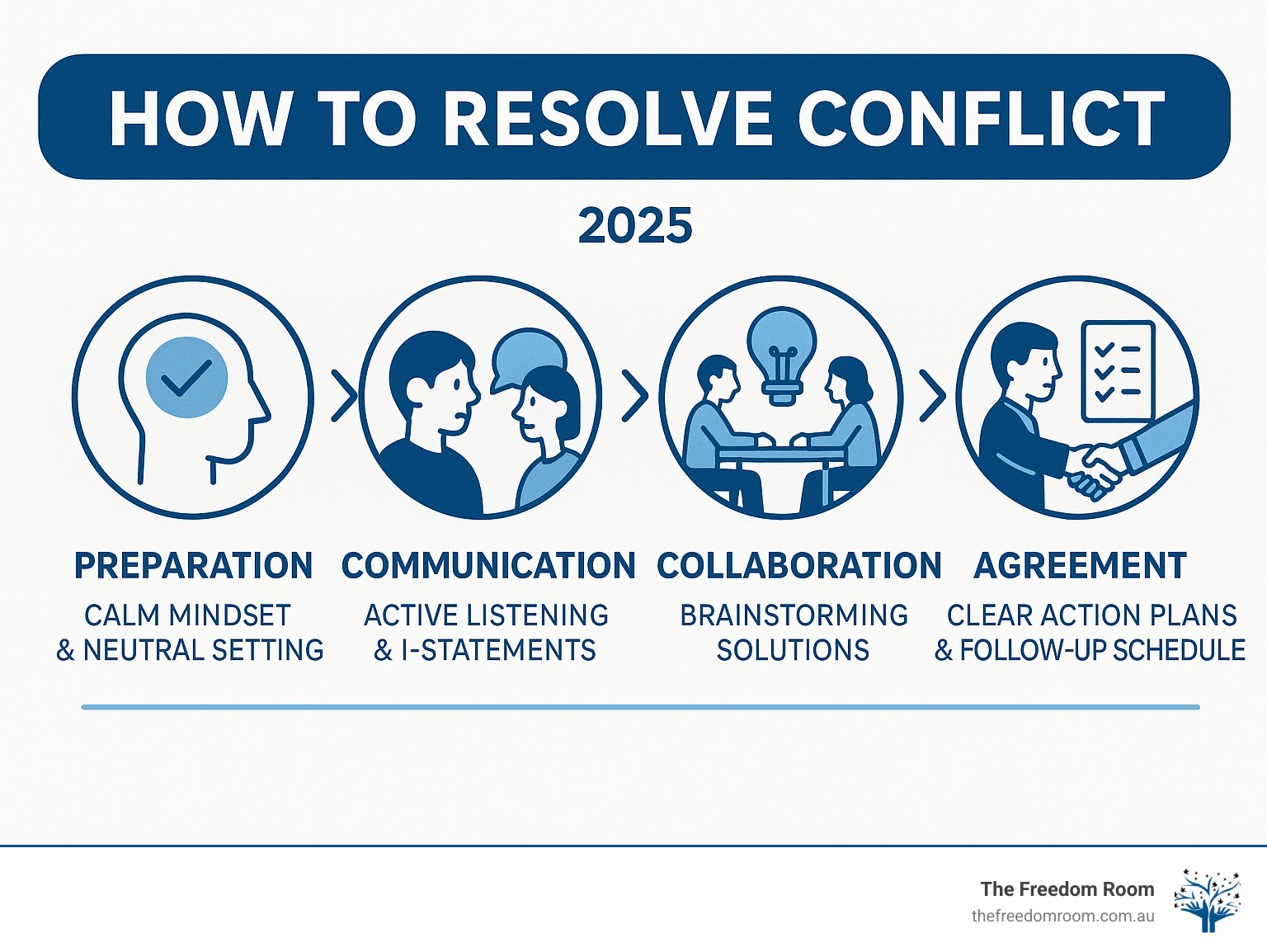
How to resolve conflict effectively starts with understanding that disagreements are inevitable but violence is not. Here is a clear framework for constructive conflict resolution:
- Stay calm and prepare – Choose a neutral location and manage your emotions first
- Listen actively – Use I‑statements and focus on understanding, not winning
- Identify common ground – Separate the people from the problem
- Brainstorm solutions together – Generate multiple win–win options
- Create a clear action plan – Define specific steps and follow-up dates
Conflict touches every part of life in Australia, from workplace tensions to family disagreements. Unresolved issues drain time, reduce morale, and strain relationships across communities.
Handled well, conflict becomes a catalyst for growth. It strengthens relationships, builds trust, and deepens understanding. The key is to view disagreements as opportunities to collaborate and improve systems and communication.
Many people never learn practical conflict skills, which can fuel cycles of avoidance, aggression, or resentment. This creates particular challenges for those managing stress, anxiety, or addiction, where tension can trigger unhelpful coping.
Conflict resolution is learnable. With the right techniques, any disagreement can become a constructive conversation where all parties feel heard, respected, and satisfied with the outcome.
Glossary for how to resolve conflict:
Understanding the Nature and Importance of Conflict Resolution
Conflict resolution is the process of resolving a dispute between two or more people. This can occur in any setting, such as between colleagues, managers, teams, or departments within an organisation. In personal relationships, it involves addressing disagreements between individuals, family members, or community groups. The aim is to find an agreeable solution, improve relationships, and maintain a productive, healthy environment.
Why is Conflict Resolution Important?
Conflict resolution supports a productive workforce and healthy morale. It fosters deeper understanding of different perspectives, strengthens relationships, and leads to peaceful, practical solutions. This, in turn, optimises the use of time and energy and prevents issues from festering and escalating.
For individuals, effective conflict resolution can build trust and encourage personal growth. In Australian workplaces and communities, early conversations and fair processes help people address concerns before they become entrenched.
Common Causes of Workplace Conflict
Workplace conflicts often arise from a variety of factors, including:
- Poor communication: Misunderstandings or a lack of clarity can quickly lead to frustration and disagreement.
- Differing values and opinions: People bring diverse beliefs and approaches to tasks, which can clash.
- Personality clashes: Sometimes, individual styles do not align, leading to friction.
- Unclear expectations: Ambiguity around roles, responsibilities, or project goals can cause confusion and conflict.
- Resource competition: When budget, equipment, or recognition is limited, competition can spark disputes.
- Organisational change: Change can be stressful, leading to resistance and conflict as people adapt.
- Perceived threats: Conflicts often involve perceived threats to status, wellbeing, or values, triggering strong emotional responses.
The Cost of Unresolved Disputes in Australia
Ignoring conflict rarely makes it disappear. It often results in lost productivity, declining morale, and avoidable turnover. Many employees avoid difficult conversations, which allows problems to grow and relationships to deteriorate.
In Queensland and across Australia, addressing issues early, using fair processes, and promoting psychologically safe workplaces help prevent escalation and support better outcomes for everyone.
When conflicts are left unaddressed, they can lead to:
- Missed deadlines and reduced productivity
- Ongoing resentment among team members
- Unsuccessful initiatives and project failures
- Increased employee turnover as individuals seek healthier environments
- A decline in overall workplace morale and engagement
Effectively resolving disputes supports individual wellbeing and contributes to organisational sustainability.
A Practical Guide on How to Resolve Conflict
When facing a disagreement at work or in your personal life, a clear roadmap can turn a potentially destructive situation into a chance for growth. How to resolve conflict effectively follows a four-step process that guides you from preparation through to lasting resolution.
This structured approach reduces guesswork and builds understanding and trust at each stage.
Step 1: Prepare for a Constructive Discussion
Preparation sets the foundation for success. This is not about gathering ammunition; it is about creating the right conditions for genuine understanding.
Choose a neutral, private space where both parties feel safe to speak openly. Agree simple ground rules, such as taking turns to speak without interruption, focusing on behaviours rather than character, and committing to a shared solution.
Be clear on your own position. Identify the outcome you hope for and the core needs beneath your frustration. Managing emotions is crucial: use deep breathing, a short walk, or grounding techniques to settle your nervous system.
For those who feel overwhelmed, consider Emotional Freedom Techniques (EFT). EFT, also known as tapping, is an evidence-informed energy psychology tool that supports stress relief by gently processing the energy of long‑held fear, anger, and worry through nurturing the body with tapping. This helps many people move from feeling overwhelmed to a state of greater calm and ease, allowing natural self‑worth to re‑emerge. You can learn more here: Emotional Freedom Technique.
Self‑awareness throughout this process helps you notice biases and triggers and remain open to different viewpoints.
Step 2: Use Effective Communication Techniques
The quality of communication determines whether a conversation builds bridges or widens the gap.
Active listening sits at the centre of productive dialogue. Give full attention to the other person and reflect back what you have heard, including the emotions and needs underneath.
Use I‑statements to express your experience without putting the other person on the defensive. For example, replace accusatory wording with an I‑statement: I feel unheard when I am interrupted.
Attend to non‑verbal communication. An open posture, steady eye contact, and a calm tone promote safety and respect.
Avoid blame and personal attacks. Steer clear of absolute terms such as always and never, which can escalate emotions. Ask curious, clarifying questions to seek genuine understanding. These helpful communication strategies can further support difficult conversations.
Step 3: Collaboratively Brainstorm Solutions
Once both perspectives are understood, shift to problem‑solving. Reframe the dynamic from me‑versus‑you to us‑together‑against‑the‑problem.
Identify common goals. Separate people from the problem so the issue can be tackled objectively. Generate multiple options without judging them too early.
Focus on interests rather than fixed positions. For instance, the position might be to stop interruptions, while the underlying interest is to feel heard and respected. Aim for win–win outcomes; when that is not possible, a fair compromise can still be constructive.
Step 4: Agree on a Plan and Follow Through
Turn good intentions into action.
Summarise the agreement clearly. For complex matters, capture commitments and timelines in writing. Define specific actions and responsibilities to remove ambiguity. Set realistic timelines and schedule follow‑up meetings to review progress and adjust as needed.
Maintain accountability. When both parties understand their responsibilities and feel supported to meet them, lasting resolution is more likely.
Learning how to resolve conflict through this systematic approach turns disagreements into opportunities for deeper understanding and stronger relationships.
Exploring Different Approaches to Conflict
How to resolve conflict effectively requires understanding that different situations need different approaches. Your natural response to disagreements depends on how assertive you are in pursuing your needs and how cooperative you are in addressing others’ concerns.
Self‑awareness helps you choose the most appropriate strategy for each situation. Some conflicts need decisive action, while others benefit from patient collaboration.
The key is matching your approach to the circumstances rather than using the same response every time.
The Five Conflict Resolution Styles
The Thomas‑Kilmann Model identifies five approaches used when facing disagreement. Each has its place.
Avoiding involves stepping away from the conflict. It can help when emotions are too high for productive discussion, or when the issue is minor. Overuse allows problems to fester.
Competing means pursuing your goals assertively, sometimes at others’ expense. It can be valuable during emergencies or when making necessary but unpopular decisions. Overuse can damage relationships.
Accommodating puts others’ needs first. It strengthens relationships when the issue matters more to them, or when you recognise you are wrong. Overuse can create internal frustration.
Compromising involves mutual concessions to reach middle ground. It is practical when time is limited or when both sides have valid but conflicting needs. While no one gets everything, everyone gains something.
Collaborating seeks win–win solutions that satisfy all parties. It requires more time and energy but creates strong, sustainable outcomes. It suits complex issues where relationships and results both matter.
For deeper insights, see An overview of the Thomas-Kilmann Conflict Model.
How to manage emotions and stress during a conflict situation
Conflict activates the brain’s alarm system, the amygdala, which can trigger the fight–flight–freeze response. When this occurs, stress hormones rise, and clear thinking becomes harder.
This normal, biological response explains why disagreements can feel intense. Your racing heart and heightened anxiety are human responses to perceived threat.
Emotional awareness is the foundation of managing conflict stress. Notice early signs such as muscle tension, shallow breathing, or racing thoughts. These cues create space to pause before reacting.
Quick stress‑relief techniques can help reset your nervous system. Try five slow breaths, grounding through your feet, or gentle shoulder stretches. Even a brief pause can shift you from reactive to responsive.
Self‑regulation strategies become more effective with practice. Some people benefit from journalling before difficult conversations. Others find gentle movement or fresh air restores balance.
For those managing challenges like addiction recovery, emotional regulation is especially important. Unresolved conflict can trigger unhelpful coping. Resources on Mindfulness for Addiction Recovery Tips and Healthy Coping Mechanisms can help.
The role of apology and accountability in how to resolve conflict
Genuine apology and personal accountability can be more powerful than negotiation techniques. They address emotional wounds and create space for repair.
A sincere apology acknowledges the specific impact of your actions, expresses genuine remorse, and avoids excuses. It can de‑escalate tension and demonstrate commitment to the relationship.
Taking responsibility means owning your contribution to the conflict, even when it feels small. This is not accepting blame for everything; it is recognising how your behaviour, words, or choices affected the situation. Accountability also involves clear commitments to different actions going forward.
Forgiveness is a personal process that cannot be rushed. Willingness to forgive — and be forgiven — releases resentment. It does not condone harmful behaviour; it allows you to move beyond the hurt.
Rebuilding trust occurs through consistent, positive actions over time. Trust grows when apologies are backed by genuine behaviour change. Patience from both parties helps create stronger, more resilient relationships.
When to Seek Professional Support
While many conflicts can be resolved through direct communication and the techniques we’ve explored, some situations require additional expertise and support. Recognising when to seek professional help is crucial for how to resolve conflict effectively and safely.
Escalated conflict often signals the need for external intervention. When disagreements become personal, involve repeated arguments without progress, or create a hostile environment, professional mediation becomes essential. These situations typically move beyond normal workplace tensions into territory that can damage relationships permanently if left unaddressed.
Power imbalances create particularly challenging dynamics in conflict resolution. When one party holds significantly more authority, resources, or influence, the other person may struggle to express their needs or negotiate fairly. This imbalance can prevent genuine resolution and may require a neutral professional to level the playing field.
Harassment or bullying behaviours demand immediate professional intervention. These situations go beyond typical workplace disagreements and require swift action from human resources, management, or external authorities. No one should endure harassment in the name of trying to resolve conflict independently.
Sometimes, despite best efforts, one or both parties show unwillingness to participate constructively in the resolution process. This might manifest as refusing to engage, consistently dismissing the other person’s concerns, or repeatedly returning to blame and accusation. Professional mediators have specific skills to work with reluctant participants.
Emotional distress is another clear indicator that professional support is needed. When conflict causes significant anxiety, impacts sleep or concentration, or affects overall mental wellbeing, it’s time to seek help. The stress of unresolved conflict can be particularly challenging for individuals in recovery or those managing mental health conditions.
Involving a Neutral Third-Party Mediator
A neutral third-party mediator brings invaluable skills to complex conflict situations. These professionals serve as impartial facilitators who guide the conversation without taking sides or imposing solutions.
The mediator’s primary role involves facilitating clear communication between parties who may have stopped listening to each other effectively. They help each person express themselves more clearly while ensuring the other party truly hears and understands the message being conveyed.
Ensuring fairness throughout the process is another crucial function. Mediators maintain balance, making sure both sides have equal opportunity to be heard and respected. They’re trained to recognise when power dynamics or emotional intensity might be preventing fair dialogue.
Guiding the process means keeping discussions focused on solutions rather than allowing them to spiral into blame, personal attacks, or rehashing past grievances. Skilled mediators know how to redirect conversations toward productive outcomes.
Maintaining impartiality is perhaps the most critical aspect of professional mediation. Unlike friends, family members, or colleagues who might have their own opinions about the conflict, professional mediators remain neutral and help parties find their own mutually agreeable solutions.
For complex interpersonal issues that involve deeper emotional patterns or trauma responses, seeking Conflict Resolution Therapy can provide a structured and supportive environment for resolution. This approach is particularly valuable when conflicts trigger strong emotional responses or when past experiences influence current relationship dynamics.
Fostering a Culture of Healthy Conflict
Creating an environment where conflict is handled constructively requires intentional leadership and organisational commitment. This cultural shift transforms how disagreements are perceived and managed within teams and workplaces.
Leadership plays a pivotal role in shaping conflict culture. Leaders who model healthy conflict resolution demonstrate active listening, show genuine empathy, and display willingness to find compromise. When team members see their leaders handling disagreements respectfully and constructively, they naturally adopt similar approaches.
Promoting open communication involves creating psychological safety where individuals feel secure expressing differing opinions and concerns. This means establishing clear expectations that diverse viewpoints are valued and that raising concerns won’t result in retribution or negative consequences.
Providing training and development equips everyone with practical conflict resolution skills. This might include workshops on communication techniques, understanding different conflict styles, or learning negotiation strategies. When people have the tools they need, they’re more likely to address disagreements early and effectively.
Encouraging proactive resolution means fostering a culture where disagreements are addressed promptly rather than being ignored or avoided. This prevents small issues from escalating into major conflicts and creates an atmosphere where honest dialogue is the norm.
Focusing on shared goals helps reframe conflicts as opportunities to find better ways to achieve collective success. When teams remember their common objectives, disagreements become collaborative problem-solving sessions rather than personal battles.
This cultural approach recognises that conflict, when handled well, strengthens teams and organisations rather than weakening them. It acknowledges that disagreement is natural and can lead to better solutions, stronger relationships, and more innovative outcomes.
Discover the Support You Need for a Lasting, Successful Recovery
Mastering how to resolve conflict is more than ending disagreements. It is a core life skill that shapes how we connect with others, navigate challenges, and grow. When conflict is handled constructively, tension becomes an opportunity for clarity, respect, and repair.
The journey of learning conflict skills mirrors personal recovery and growth. It asks for patience, self‑awareness, and the courage to face difficult emotions. It encourages new patterns that support healthier relationships at home, at work, and in the community.
How Conflict Resolution Supports Overall Wellbeing
For people in recovery from addiction, the ability to resolve conflict peacefully is crucial. Unresolved tensions can trigger stress, anxiety, and unhelpful coping. Practical skills such as active listening, emotional regulation, collaborative problem‑solving, and honest communication build resilience and strengthen support networks.
Finding Professional Support When You Need It
Some conflicts become too complex or emotionally charged to manage alone, especially when past trauma, addiction, or mental health challenges are involved. Seeking professional support is a wise step.
At The Freedom Room, we recognise that effective conflict resolution often involves addressing the emotional patterns and past experiences that shape current responses. Our team brings both professional expertise and lived experience to support people on their recovery journey, including building the interpersonal skills needed for healthy relationships.
Through a comprehensive approach, we help clients explore how unresolved conflict may be affecting recovery, develop personalised strategies for difficult conversations, and build emotional regulation skills for constructive engagement. Many team members have walked similar paths and bring authentic understanding to their work.
Whether you are dealing with workplace tensions, family disagreements, or interpersonal challenges during recovery, guidance can provide the structure needed to build lasting skills. Our addiction counselling services offer a compassionate, non‑judgemental space to develop these tools.
If you are ready to strengthen these essential skills, reach out today to learn more about how we can support your next step.