

Why Learning to Socialise Sober Matters
How to socialise sober is a question many Australians are asking as more people choose alcohol-free lifestyles. Whether you are in recovery, taking a break from alcohol, or simply sober curious, navigating social events without a drink can feel daunting.
Quick Guide: How to Socialise Sober Successfully
- Plan ahead – Prepare your responses, arrange transport, and set a time limit for events.
- Have a drink in hand – Choose appealing non-alcoholic options to reduce pressure.
- Focus on connection – Engage in meaningful conversations and activities.
- Be the organiser – Suggest alcohol-free venues and activities.
- Build your support network – Connect with others who support your sober lifestyle.
- Give yourself permission to leave – Have an exit strategy and use it when needed.
You are not alone in this. Recent data shows that more Australians are choosing not to drink, with many people who do consume alcohol actively trying to reduce their intake.
Socialising without alcohol can lead to deeper relationships, better health, and clearer memories. The challenge is not the absence of alcohol, but navigating a social landscape where drinking is the default. This guide provides practical strategies to help you socialise confidently and build a fulfilling social life that aligns with your goals.
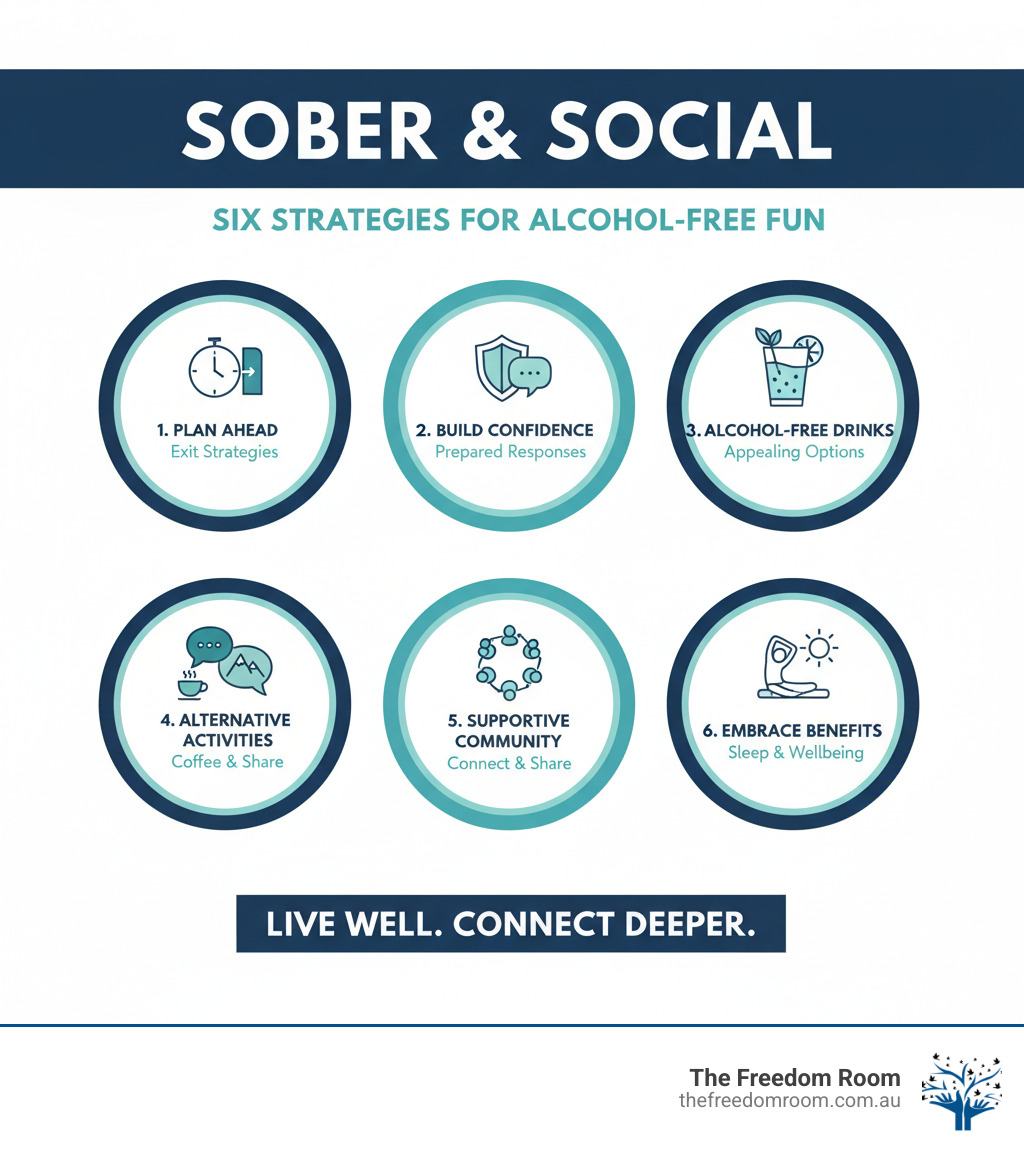
Must know how to socialise sober terms:
A Practical Guide on How to Socialise Sober
Learning how to socialise sober is a key step towards a more authentic social life. While Australian culture often centres social events around drinking, the transition to alcohol-free socialising does not need to be overwhelming.
Navigating parties and work functions without alcohol becomes easier with practical strategies. Concerns about feeling awkward or facing questions are normal, but preparation can make a significant difference.
This guide breaks down how to socialise sober into six manageable approaches. These strategies are designed to help you handle social situations with confidence and authenticity, whether you are in recovery or simply choosing an alcohol-free lifestyle.
Equipping yourself with these tools will help you create a social life that supports your wellbeing. Let’s explore how to make that happen.
1. Prepare for Social Events
Thoughtful preparation can transform anxiety about sober socialising into confidence. Both mental and practical planning are key when learning how to socialise sober.
Start with your mindset. Reframe the event as an opportunity for genuine connection, where you will remember every conversation and meaningful moment. Setting a clear intention, such as connecting with a specific friend, can also shift your focus from anxiety to engagement.
For challenging events, try attending for a set period, like an hour, and then decide if you want to stay. This removes the pressure to stay all evening and empowers you to prioritise your wellbeing.
Practical planning also boosts comfort. Key steps include:
- Confirm drink options: Call the venue to check for appealing alcohol-free drinks.
- Arrange transport: Plan how you will get home in advance so you can leave whenever you need to.
- Use mindfulness: Exercise can relieve stress and anxiety, making it a great pre-event activity. Deep breathing or meditation can also help ground you.
Preparation is about giving yourself strategies to feel in control. Each event will build your confidence as you find what works best for you.
2. Build Confidence and Manage Social Pressure
Navigating social pressure is a common challenge when learning how to socialise sober. You do not owe anyone an explanation for not drinking, but having prepared responses can help you feel more confident.
Assertiveness means communicating your choices clearly and calmly. When offered a drink, a simple phrase is often enough. Consider using one of the following:
- “No thanks, I’m good for now.”
- “I’m driving tonight.”
- “I’m taking a break from drinking.”
- “I’m focusing on my health.”
- “I just feel better without it.”
If someone persists, a firm but polite response like, “I appreciate the offer, but I’m enjoying myself without alcohol,” is effective. Your body language, such as standing tall and making eye contact, can also convey confidence.
Developing healthy coping strategies for your emotions without alcohol is a process that builds resilience against social pressure. True friends will respect your decision. It may be necessary to re-evaluate connections that consistently involve pressure to drink, as building supportive relationships is key to your wellbeing.
3. Choose Alcohol-Free Options and Focus on Connection
Having an appealing non-alcoholic drink can significantly boost your comfort when learning how to socialise sober. It helps you feel included and reduces unwanted drink offers.
The alcohol-free beverage market has expanded, so you are no longer limited to juice or soft drinks. Venues now offer a wide array of sophisticated alternatives.
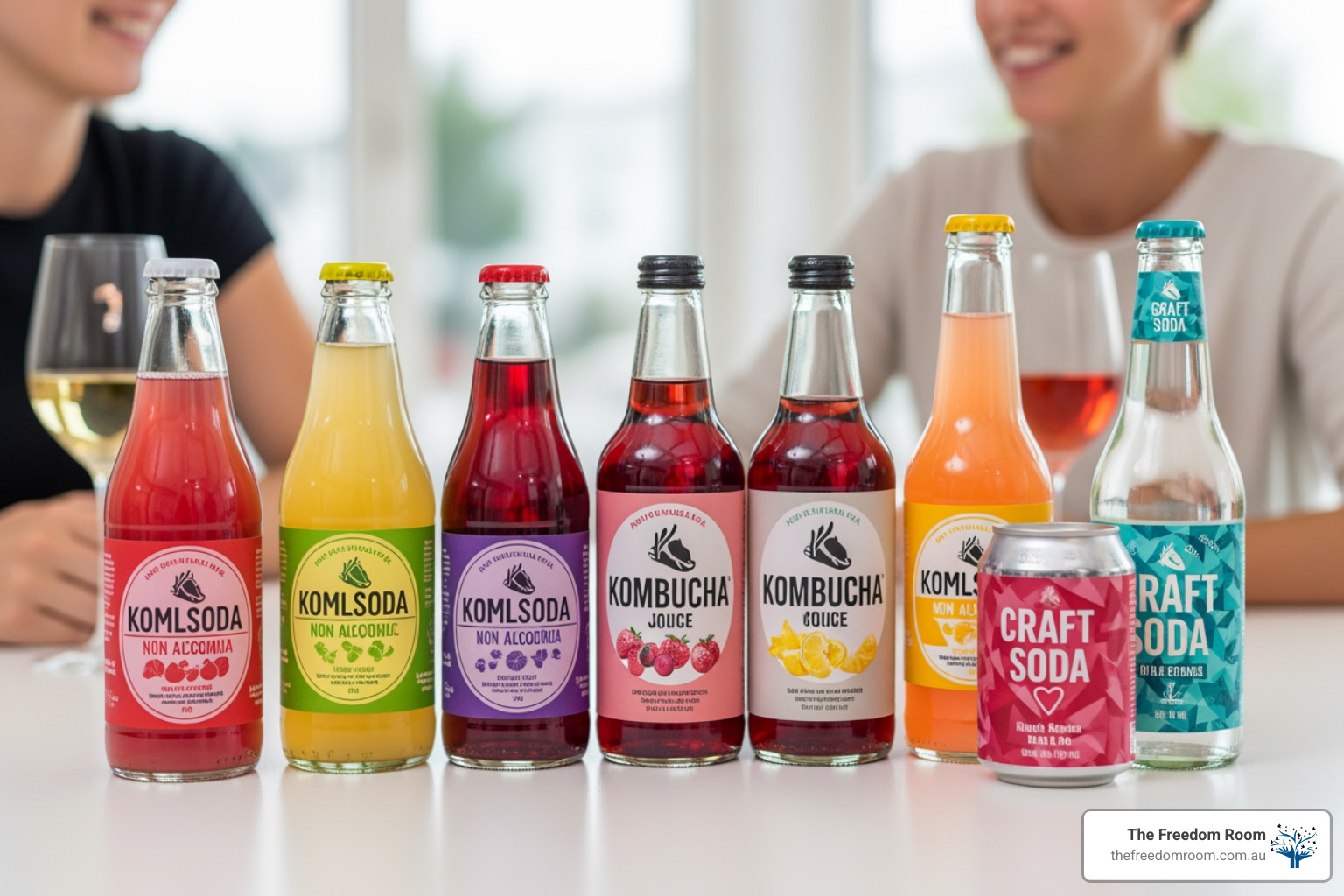
Look for non-alcoholic beers and wines, creative mocktails, or simple classics like sparkling water with lime. Exploring the variety of available options can make your social experience more enjoyable.
Beyond the drink itself, sober socialising shifts your focus from the substance to the people. This allows for more genuine connections and meaningful conversations that you will remember clearly.
Without the fog of alcohol, active listening becomes easier, and you can engage more fully in the moment. These interactions build deeper, more rewarding relationships based on trust and authenticity, achieving the true connection that many people seek in social situations.
4. Suggest New Activities for Socialising Sober
Expanding your social life beyond alcohol-centric venues is a powerful strategy for learning how to socialise sober. By suggesting alternative activities, you can create enjoyable, alcohol-free experiences for everyone.
Daytime activities are often naturally alcohol-free. Consider suggesting a brunch at a local coffee shop, a picnic in a park, or a visit to a museum or gallery to foster connection without the usual distractions of a bar.

Outdoor activities in places like Queensland’s national parks offer excellent opportunities for hiking, kayaking, or cycling. These experiences focus on the activity itself, not on drinking.
Taking the role of organiser gives you control over the environment. You can plan events that do not involve alcohol, such as:
- Hosting a board game night.
- Attending a cooking class.
- Starting a book club.
- Joining a local sports team.
Proposing new activities not only supports your journey but also shows others that connection and fun do not depend on alcohol. This can lead to personal growth and new shared experiences.
5. Find Your People and Build a Support Network
Building a supportive social circle is fundamental to learning how to socialise sober. The people around you can either strengthen your commitment or make it more challenging.
It is important to distinguish between drinking buddies and true friends. Genuine friends will respect your decision and adapt social plans to support you. While some relationships may fade, those that remain will be built on a stronger foundation of mutual respect.
Exploring sober communities can be transformative. Support groups offer a structured environment for connection with others who understand your journey and often organise substance-free events. Participation in these groups can significantly improve long-term outcomes.
Seek new friendships based on shared interests that do not involve alcohol, such as joining a local club, class, or volunteer group. In Queensland, many community activities provide natural settings for forming healthy relationships.
Strengthening connections with people from recovery programmes is also vital, as they offer understanding based on shared experience. A diverse support network provides resilience and fosters healthy relationships in recovery, which is essential for your journey.
6. Accept the Benefits of an Alcohol-Free Social Life
Embracing an alcohol-free social life is a shift from seeing it as a limitation to recognising it as an opportunity for deeper fulfilment. The benefits extend into every area of your life.
When you learn how to socialise sober, you open the door to more authentic relationships. Conversations become more genuine and memorable, and friendships are built on honesty and mutual respect rather than circumstantial drinking habits.
An alcohol-free lifestyle brings significant advantages for your wellbeing, including:
- Improved Health: Waking up without a hangover gives you more energy and clarity. You will also experience better sleep, reduced anxiety, and a lower risk of long-term health conditions.
- Personal Empowerment: You learn to rely on your authentic personality in social situations, which builds genuine confidence and self-worth.
- Financial Savings: The money saved from not buying alcohol can be redirected toward hobbies, travel, or other experiences that enrich your life.
Accepting these benefits reframes the journey. It helps you see that an alcohol-free social life is not about sacrifice, but about creating a more authentic and fulfilling existence.
Take the First Step Toward a Fulfilling, Alcohol-Free Life
Learning how to socialise sober is a journey toward a more authentic and connected way of living. This guide has offered practical strategies, from preparation and managing pressure to finding supportive communities, to help transform your social life.
Progress matters more than perfection. Each sober social event builds confidence and reinforces your commitment, gradually replacing discomfort with genuine enjoyment and deeper connections.
The rewards are significant, including improved health, mental clarity, and authentic friendships. If you are navigating this path and need guidance, The Freedom Room understands. Our team offers compassionate support with lived experience through personalised sessions, workshops, and therapy.
Seeking help is a sign of strength. Every step toward an alcohol-free life is an investment in your future wellbeing.
Discover the Support You Need for a Lasting, Successful Recovery