

Pre-Rehabilitation Support: 7 Powerful Benefits for 2025 Success
Why Pre-Rehabilitation Support Is Essential for Alcohol Recovery Success
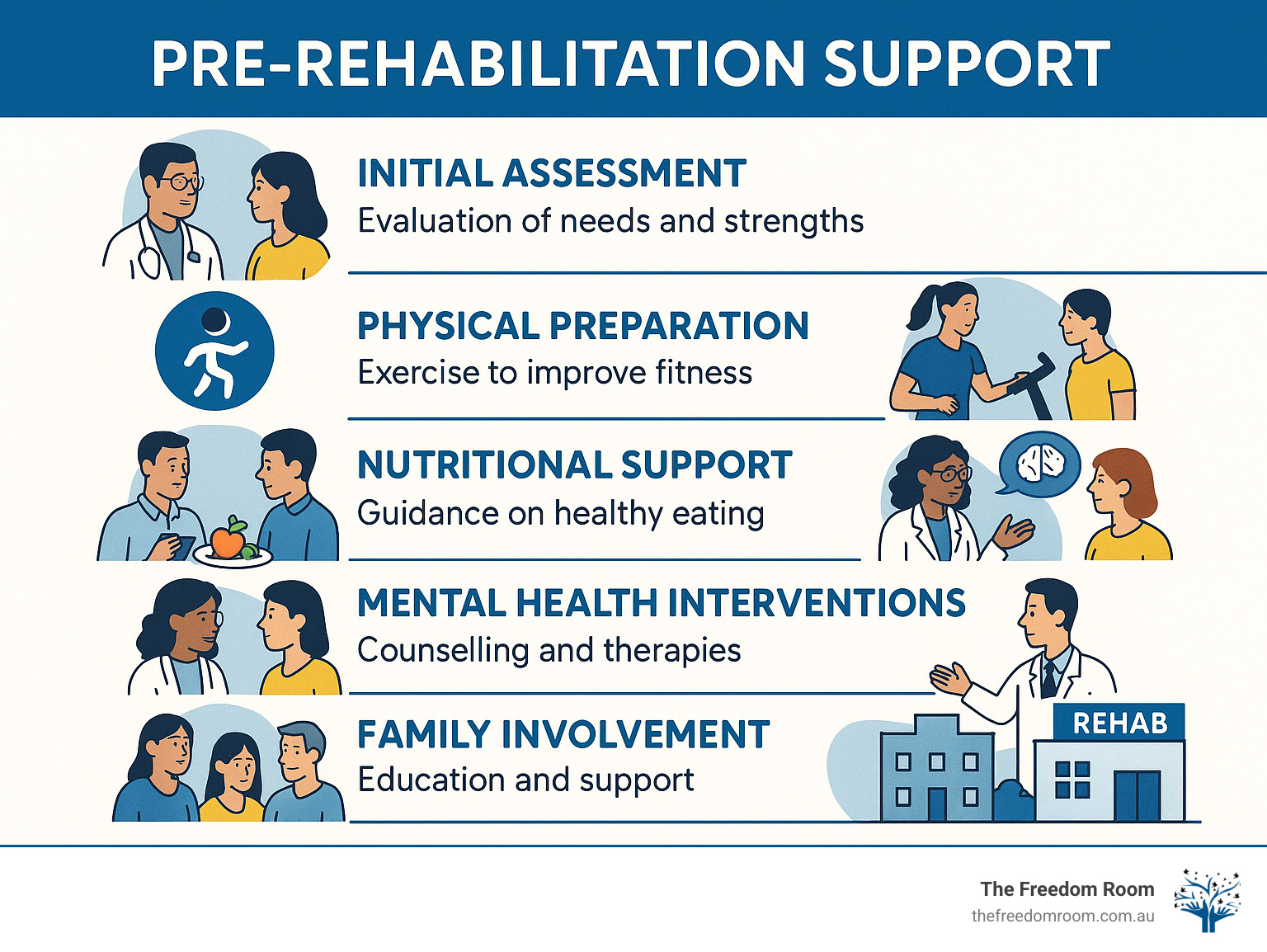
Pre-rehabilitation support (often called prehabilitation) is a proactive way to boost your body, mind and daily routine before you enter formal rehab. Instead of waiting and hoping for the best, you start improving fitness, nutrition and coping skills right now so that treatment feels less daunting and outcomes improve.
Key components:
- Physical preparation – gentle, progressive exercise to limit withdrawal discomfort and lift mood
- Nutritional support – correcting vitamin and mineral gaps common in heavy drinkers
- Mental health preparation – CBT, ACT and mindfulness to build practical coping tools
- Family education – helping loved ones understand the process and reduce conflict
- Risk reduction – addressing smoking, sleep, pain and other health factors
- Goal setting – clear, measurable steps that create early wins
Research borrowed from surgical medicine shows people who prehabilitate experience fewer complications and shorter recovery times. In alcohol use disorder, the same principle turns the “teachable moment” of deciding to change into immediate action, giving you a stronger start in rehab and beyond.
What Is Prehabilitation & How Does It Differ from Rehabilitation?
Prehabilitation means getting ready for recovery rather than reacting to crisis. The strategy originated in surgery: patients who improved strength, nutrition and mental outlook before an operation healed faster and spent less time in hospital. A major review showed structured preparation could **cut post-operative complications by up to 50%.
Applied to alcohol use disorder, pre-rehab flips the script. Instead of waiting until drinking has caused maximum damage, you work on health and habits right away. This period – when you first recognise a problem and feel motivated to change – is often called a teachable moment. Using it well increases the odds you’ll complete rehab and maintain sobriety.
Key Components of Pre-Rehabilitation Support for Alcohol Recovery
Effective pre-rehab focuses on four pillars that reinforce one another.
-
Custom physical activity – Short, enjoyable sessions (e.g. 20-minute walks, body-weight moves) improve sleep, lift mood and ease anxiety within a fortnight. An accredited exercise physiologist can design a safe plan, often Medicare-subsidised.
-
Nutritional foundations – Regular meals rich in protein, B-vitamins, colourful veg and adequate fluid restore energy and cognitive clarity. A dietitian may add targeted supplements after malnutrition screening.
-
Mental wellbeing – Brief CBT or ACT sessions teach you to spot triggers, challenge unhelpful thoughts and act in line with personal values. Practising mindfulness or simple breathing drills reduces stress quickly.
-
Family involvement – When partners or relatives learn about addiction and healthy boundaries, household tension drops and relapse risk falls. Short education sessions or family counselling make a big difference.
These pillars convert “waiting time” into action time, giving you proven tools before formal treatment even starts. For additional guidance, see our addiction counselling page.
How Pre-Rehabilitation Support Improves Outcomes
By boosting what clinicians call functional reserve, pre-rehab helps your body and mind tolerate the stress of detox and therapy. The results are clear:
- Lower medical complications and milder withdrawal symptoms
- Higher treatment completion rates
- Earlier improvements in mood, sleep and quality of life
Each small success builds self-efficacy: the belief you can keep going. That confidence is a potent relapse-prevention tool (see our relapse prevention strategies).
Monitoring Progress
A quick baseline (fitness, nutrition, mood, sleep) lets you track improvements through simple weekly check-ins. Wearables or phone apps can help, but the main goal is staying aware and celebrating momentum.
Overcoming Common Barriers
- Time: Home-based sessions or 10-minute “micro-workouts” fit busy schedules.
- Motivation: Start tiny, review weekly and adjust goals with support.
- Cost: GP chronic disease plans cover many allied-health visits; community options often run low-fee groups.
- Transport: Telehealth and local facilities cut travel hassles. To find an accredited exercise physiologist, visit the ESSA directory.
Building Your Personalised Prehab Plan

- Screen & assess – Your GP reviews health history and basic fitness; a dietitian checks nutrition; a counsellor screens mood and stress.
- Set realistic goals – Examples: “Walk 15 minutes after dinner five days a week” or “Eat breakfast with protein daily”.
- Create a timeline – Six to eight weeks is ideal, but even two weeks of prep helps.
- Build a small team – GP, exercise physiologist, dietitian, counsellor. Many accept self-referral and Medicare rebates.
- Adapt as you go – Review weekly, celebrate wins, tweak anything that isn’t working.
When rehab finishes, ongoing check-ins, peer meetings and community exercise all keep the momentum alive. Learn more about our post-rehabilitation support and full alcohol addiction recovery services.
Frequently Asked Questions about Pre-Rehabilitation Support
What’s the ideal length of a pre-rehab programme?
Most people benefit from 6–8 weeks, but meaningful gains appear within a fortnight. Start as soon as you can rather than waiting for the “perfect” window.
Can I begin while still drinking?
Yes. Pre-rehab often starts alongside a gradual reduction plan overseen by your GP. As fitness, nutrition and coping skills improve, many people naturally cut back further.
Do I need medical clearance before exercising?
If you have heart issues, liver problems or other chronic conditions, get your GP’s okay first. For most people, the clearance is quick and ensures your exercise plan is safe and effective.
Ready for Change? Let’s Build a Stronger, Alcohol-Free Future Together
Pre-Rehabilitation Support represents hope in action – it’s about taking charge of your recovery journey before you even step foot in a treatment facility. This isn’t just another programme; it’s your chance to build strength, confidence, and resilience from day one.
At The Freedom Room Wellness and Recovery, we get it because we’ve lived it. Our entire team is in recovery themselves, which means when you sit across from us, you’re talking to someone who truly understands the fear, the shame, and yes – the incredible possibility that lies ahead.
We know that deciding to get help can feel overwhelming. Maybe you’re worried about taking time off work, or you’re concerned about who’ll look after the kids. That’s exactly why our holistic support approach meets you where you are. Our discreet space even welcomes children if you need to bring them along – because real life doesn’t pause for recovery.
What makes our pre-rehabilitation support different is that we don’t just prepare your body for treatment; we prepare your whole life. We work with you to build personalised plans that fit your circumstances, your goals, and your timeline. Whether you need help with fitness, nutrition, managing anxiety, or simply figuring out how to tell your family – we’re here for it all.
The beauty of starting with Pre-Rehabilitation Support is that you begin winning immediately. Every healthy meal, every walk around the block, every conversation with your counsellor builds momentum. You’re not waiting for recovery to start – you’re actively creating it.
Our lived-experience team brings something textbooks can’t teach: authentic understanding. We’ve been where you are, feeling like recovery is impossible, wondering if we’re worth the effort. We’re living proof that not only is recovery possible, but life can become more beautiful than you ever imagined.
Recovery isn’t a solo journey, and you don’t have to figure it all out alone. We’re not just your treatment providers – we’re your mates who happen to know a thing or two about getting sober and staying that way. Together, we’ll steer the challenges, celebrate every victory (no matter how small), and build the foundation for a life you’ll actually want to wake up for.
Ready to take that first step? We’re here, we understand, and we believe in you – even if you don’t believe in yourself just yet.
For more information about how we can support you through every stage of your recovery journey, explore our comprehensive pre-rehabilitation support services.
Support & Resources
Recovery from alcohol addiction is a journey that requires ongoing support, and knowing where to turn for help can make all the difference in your Pre-Rehabilitation Support and long-term recovery success. Whether you’re taking your first steps toward sobriety or supporting someone you love, professional guidance and community resources provide the foundation for lasting change.
At The Freedom Room, we understand that reaching out for help takes tremendous courage. Our team of counsellors and support staff are all in recovery themselves, bringing authentic understanding to every conversation. We know the challenges you’re facing because we’ve walked the same path, and we’re here to provide the compassionate, professional support you need.
When you’re ready to begin your recovery journey, we’re just a phone call away. Our discrete, welcoming space accommodates your real-world needs – including bringing children if necessary – because we recognise that life doesn’t stop when you decide to get sober.
If you or someone you know is suffering from alcohol addiction, please seek professional help and support at:
Our Office: (07) 3325 1531
Mobile: 0400 236 743 (Rachel)
Recovery doesn’t follow a 9-to-5 schedule, and neither do the challenges that come with it. Sometimes you need support outside regular business hours, and knowing where to turn can be lifesaving. Australia has excellent crisis support services staffed by trained professionals who understand addiction and mental health challenges.
For help outside of these hours, you can also contact:
Emergency Help: Call 000
AA Helpline: 1300 222 222
Lifeline: 13 11 14
Al-Anon: www.al-anon.org.au
Lifeline provides 24-hour crisis support and suicide prevention services, offering a listening ear when you’re struggling with overwhelming emotions or thoughts. Their trained counsellors understand the connection between addiction and mental health challenges.
Alcoholics Anonymous offers peer support through their helpline and meetings across Australia. While not everyone finds the 12-step approach suitable, many people benefit from connecting with others who share similar experiences.
Al-Anon provides crucial support for family members and friends affected by someone else’s drinking. Recovery impacts everyone in the family system, and Al-Anon helps loved ones understand addiction while learning healthy ways to support recovery without enabling harmful behaviours.
Seeking help is a sign of strength, not weakness. Whether you’re in the early stages of considering Pre-Rehabilitation Support or you’re years into recovery, professional support and community resources remain valuable tools for maintaining your sobriety and building the fulfilling, alcohol-free life you deserve.