

Why the Decision to Become Sober Matters
The process of becoming sober from alcohol begins with the recognition that change is possible and the commitment to an alcohol-free life. This journey is one that many undertake, and recovery is an achievable goal.
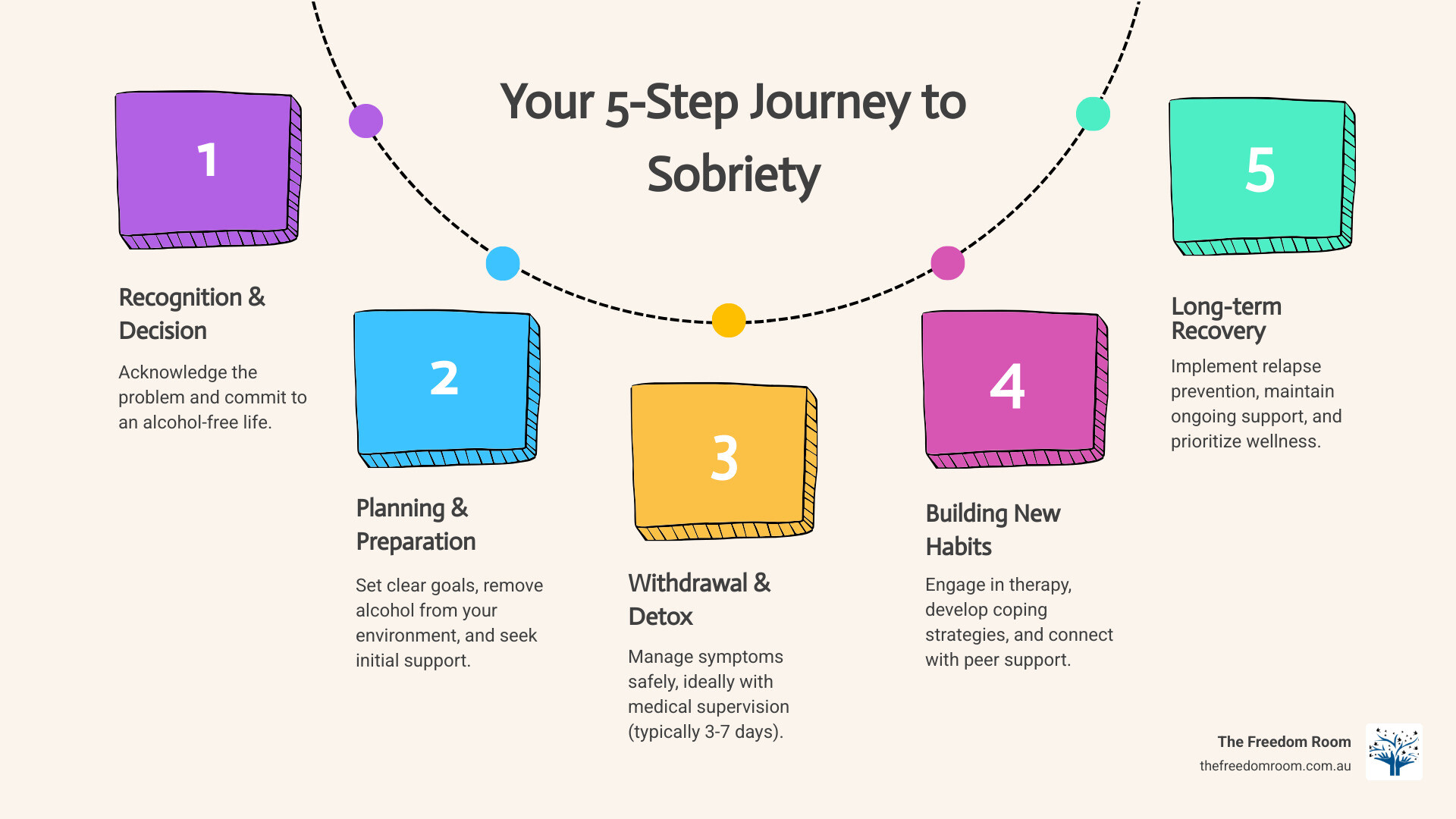
Quick answer: Becoming sober from alcohol involves:
- Making a decision: Acknowledging the need for change and committing to sobriety.
- Creating a plan: Setting clear goals, removing alcohol from the environment, and preparing for triggers.
- Seeking support: Engaging with professionals, support groups, family, and friends.
- Managing withdrawal safely: Accessing medical supervision for withdrawal symptoms, particularly in cases of heavy alcohol consumption.
- Building new habits: Developing healthy coping strategies, engaging in therapy, and creating a meaningful alcohol-free life.
- Maintaining recovery: Continuing with ongoing support, implementing relapse prevention strategies, and acknowledging progress.
Many people seek sobriety when drinking begins to affect their work, relationships, or mental health. Alcohol use disorder is a common medical condition, but with the right support and strategies, a successful recovery is achievable. Sobriety offers profound benefits, including improved sleep, better mental wellbeing, financial savings, and stronger relationships.
Becoming sober is more than ceasing alcohol consumption. It involves understanding one’s relationship with alcohol, building a support network, and developing long-term strategies for an alcohol-free life. For those with a physical dependence on alcohol, medical supervision during withdrawal is essential, as symptoms can be severe.
This guide outlines each stage of the journey, from recognising the need for change to building a fulfilling, sober life. The path to recovery is founded on professional support and practical action.
A Step-by-Step Guide to Becoming Sober from Alcohol

Embarking on the path to sobriety is a significant step towards a healthier and more fulfilling life. The process involves a series of intentional actions, beginning with personal reflection and culminating in robust, long-term strategies for wellbeing. While this path may appear challenging, dividing it into manageable steps provides the necessary knowledge and tools to guide the recovery process.
Initial Planning and Considerations
The first step towards sobriety is recognising that a problem exists. Self-reflection is critical for overcoming denial; therefore, it is important to examine one’s relationship with alcohol, including the reasons for, timing of, and frequency of consumption. The Australian guidelines for low-risk drinking can be a useful tool for assessing consumption levels.
Once the need for change is acknowledged, creating a detailed plan is the next crucial step. This involves setting clear, achievable goals, such as a specific quit date, and preparing the environment by removing all alcohol from the home and workplace. Maintaining a written list of motivations for quitting can serve as a powerful reminder during challenging moments. It is also beneficial to inform trusted friends and family of this decision, as their support is often integral to success.
Quitting alcohol offers numerous benefits across physical, mental, and financial aspects of life. Anticipated benefits include improved physical health, such as better sleep and reduced risk of certain diseases; enhanced mental wellbeing; and significant financial savings. Sobriety also leads to clearer decision-making and can reverse some visible effects of alcohol on appearance.
It is also crucial to understand the risks associated with ceasing alcohol consumption, particularly after heavy, prolonged use. Abrupt cessation can be dangerous. Alcohol withdrawal symptoms can range in severity from mild discomfort to life-threatening conditions, including anxiety, tremors, nausea, and in severe cases, seizures or delirium tremens (DTs). Attempting to detoxify at home without professional support is not recommended. Seeking medical guidance is essential for anyone with a physical dependence on alcohol to ensure safety during the withdrawal process.
Establishing a Support System

Professional guidance is often necessary for a safe and effective recovery. For individuals with a physical dependence on alcohol, medically supervised withdrawal is critical to ensure safety during detoxification. While detoxification is an important first step, it is typically not sufficient for lasting sobriety and should be part of a comprehensive treatment plan. Personalised treatment planning is essential, as individual needs vary.
Effective treatment approaches often include:
- Cognitive Behavioural Therapy (CBT): Aims to identify and modify unhelpful thoughts and behaviours related to alcohol use.
- Motivational Enhancement Therapy (MET): Strengthens motivation and commitment to sobriety by resolving ambivalence about change.
- Emotional Freedom Techniques (EFT): An approach used for managing cravings, stress, and underlying emotional triggers.
- Family Counselling: Aims to repair relationships and cultivate a supportive home environment for recovery.
- Dual Diagnosis Services: Provides integrated treatment for co-occurring substance use and mental health conditions.
Further information regarding our comprehensive and personalised approach to recovery is available on our website: More info about our addiction treatment services.
A strong support network of friends, family, and peers is an indispensable component of maintaining sobriety. Peer support groups, such as Alcoholics Anonymous (AA) and SMART Recovery, also offer a valuable sense of community and shared understanding.
Identifying and managing triggers is another cornerstone of long-term sobriety. Triggers are the people, places, or emotions that create an urge to drink. Effective strategies for managing triggers and cravings include:
- Avoidance: Where possible, avoid high-risk situations or people whofulfilment trigger the desire to drink.
- Substitute Behaviours: When an urge arises, engage in a distracting activity until it passes.
- Mindfulness: Acknowledge the craving without judgment and allow the sensation to pass naturally.
- Physical Activity: Exercise can improve mood and help manage stress and cravings.
- New Interests: Engaging in meaningful, alcohol-free hobbies or volunteer work can create a sense of purpose.
- Journaling: Documenting positive experiences can provide a positive focus during difficult moments.
The Recovery Process and Long-Term Maintenance
An understanding of the recovery timeline can assist in preparing for the physiological and psychological changes that occur. While the process is individualised, it often follows a general pattern. The initial detoxification phase involves withdrawal symptoms that vary in intensity.
- 4 to 12 Hours: Early symptoms such as anxiety, headache, and nausea may begin.
- 24 to 72 Hours: This period often represents the peak of withdrawal, with a risk of severe symptoms like seizures and delirium tremens (DTs). Medical supervision is critical during this time.
- After 72 Hours: Acute physical symptoms typically subside, although some discomfort and sleep disturbances may persist.
Some individuals experience Post-Acute Withdrawal Syndrome (PAWS), which involves persistent symptoms such as mood swings, anxiety, and low energy for weeks or months. These symptoms gradually improve over time. Physical recovery can be significant, with improvements in liver health and energy levels often observed within a month. Mentally and emotionally, sustained sobriety leads to improved mood and clearer thinking as healthier coping mechanisms are developed.
Long-term sobriety involves building a fulfilling, alcohol-free life and developing robust strategies to prevent relapse. Recovery is an ongoing process that requires continuous effort and a commitment to personal growth. Key long-term strategies include:
- Relapse Prevention Planning: Identify triggers, develop coping strategies, and create a plan for challenging situations. Setbacks should be viewed as opportunities for learning and adjustment.
- Building Healthy Routines: Establish consistent daily routines for sleep, nutrition, and physical activity to support mental and physical wellbeing.
- Creating a Meaningful Life: Pursue activities that provide fulfilment and a sense of purpose.
- Ongoing Therapy and Support: Ongoing engagement with therapy and support groups provides guidance and accountability. Our EFT and CBT Therapy offers tools for this purpose.
- Acknowledging Progress: Acknowledge milestones to reinforce positive behaviour and maintain motivation.
- Supporting Others: Assisting others in their recovery can be a powerful method for reinforcing one’s own sobriety.
The process of achieving sobriety requires long-term adaptability and dedication.
The Path to a Fulfilling, Alcohol-Free Life
The process of becoming sober from alcohol is one of profound personal growth. While the path is unique for each individual, the destination of a fulfilling, alcohol-free life is universally rewarding. Recovery is not merely the absence of alcohol; it is the presence of a life rich in purpose, connection, and wellbeing.
At The Freedom Room, we operate on the principle that recovery is always possible. Our team, which includes individuals with lived experience in recovery, offers professional support and empathy. We provide personalised sessions, workshops, and therapy designed to address unique client needs and to build the skills required for lasting sobriety.
For individuals ready to explore a path to an alcohol-free life, we encourage connecting with our services to begin the process of healing and achieving sobriety.