

Rebuilding Your Life After Addiction: 7 Powerful Steps 2025
The Journey to Reclaiming Your Life After Addiction
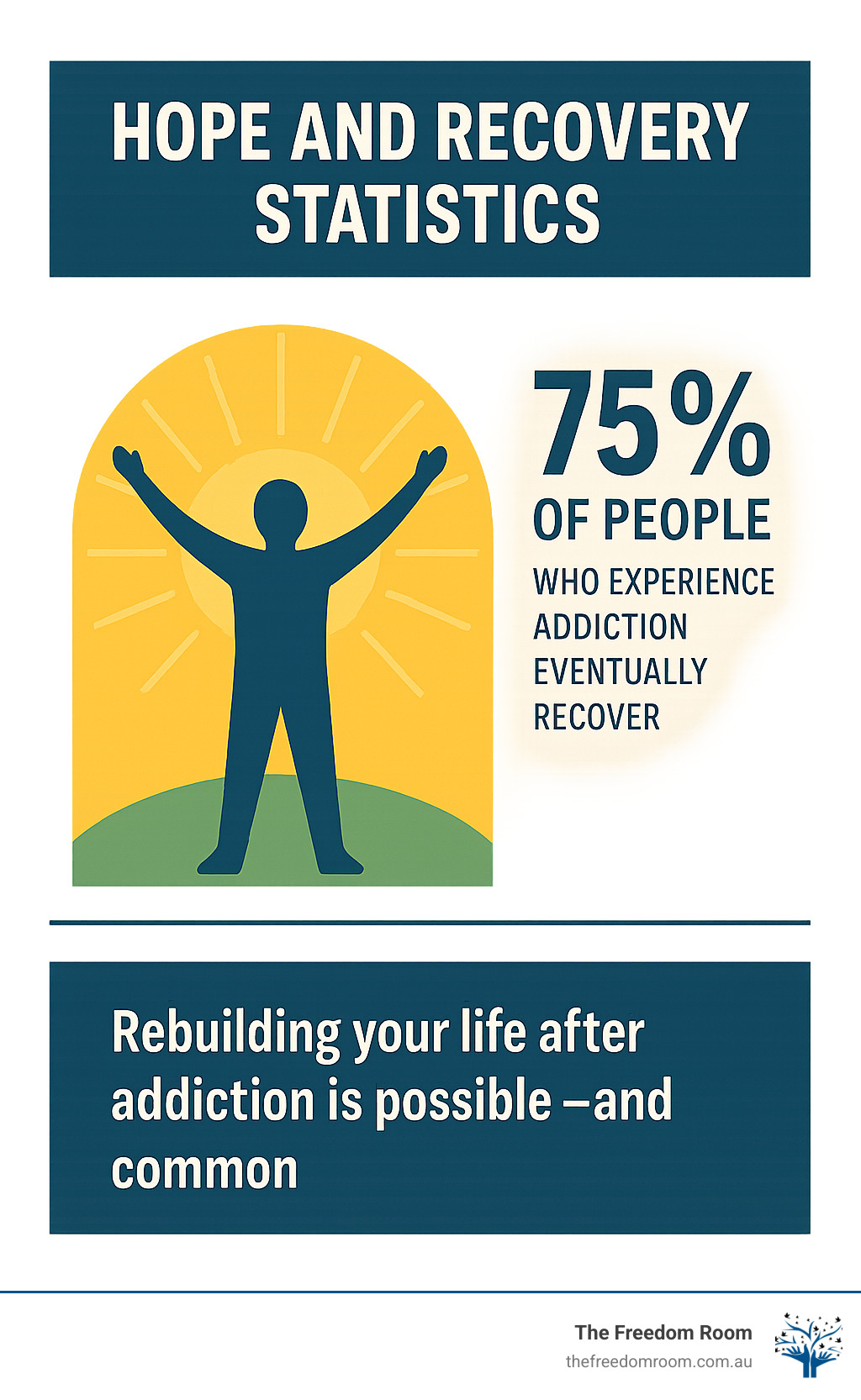
Rebuilding your life after addiction is a journey that follows a clear path, though it requires patience and commitment. Research shows that about 75% of people who experience addiction eventually recover and go on to live fulfilling lives.
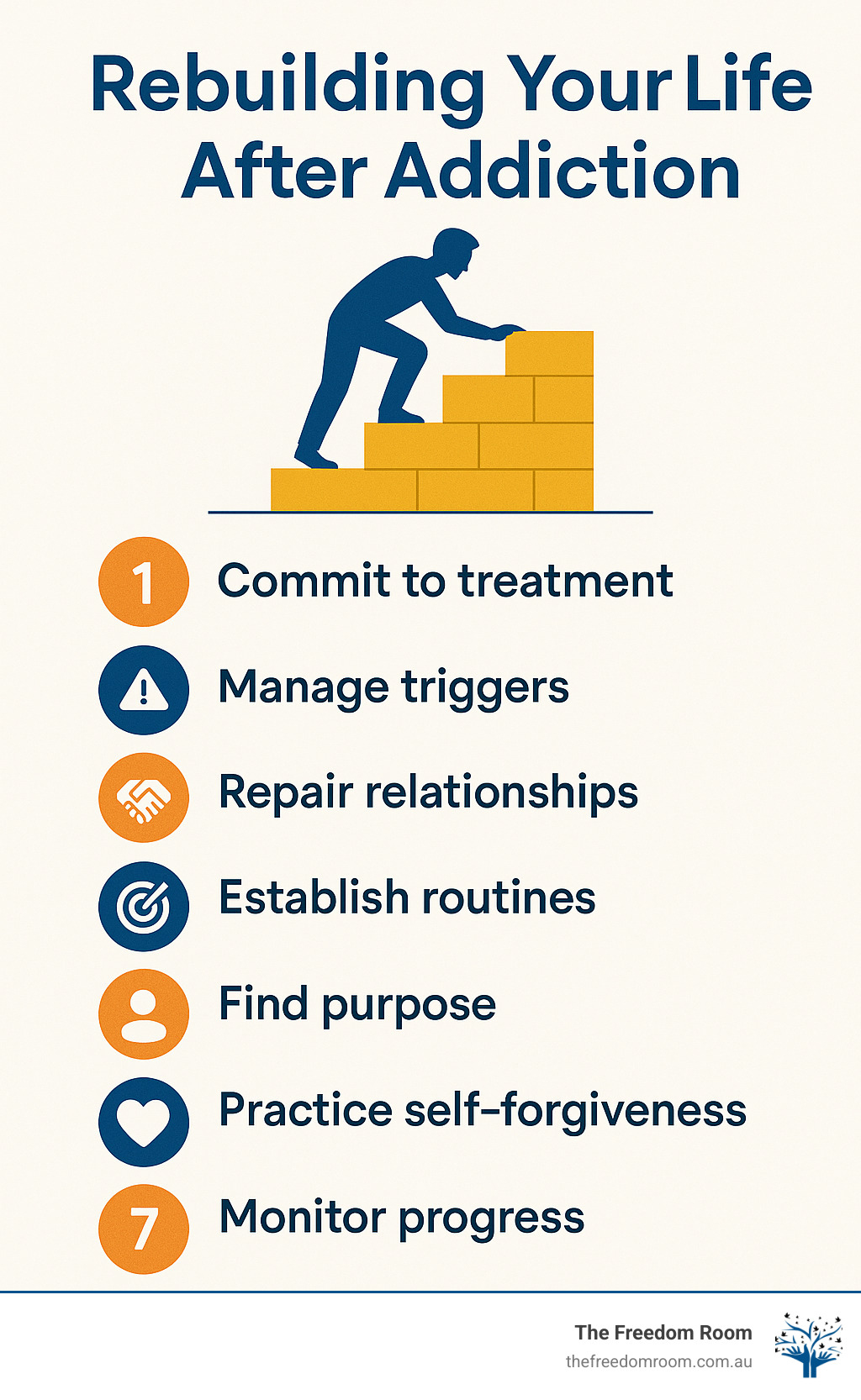
Here are the key steps to rebuilding your life after addiction:
- Commit to ongoing treatment and aftercare support
- Identify and manage triggers before they lead to relapse
- Repair damaged relationships through honest communication
- Establish healthy daily routines including exercise and proper nutrition
- Find new purpose and meaning through goals and activities
- Practice self-forgiveness and develop self-compassion
- Monitor progress and celebrate milestones along the way
Addiction recovery isn’t just about abstaining from substances—it’s about creating a new life where using substances becomes unnecessary. The process involves healing physically, mentally, and emotionally while developing new skills and relationships that support long-term sobriety.
I’m Rachel Acres, founder of The Freedom Room, and my own journey through addiction and recovery sparked my passion for helping others rebuild their lives. Rebuilding your life after addiction requires guidance and support, which is why I’ve dedicated my life to creating accessible recovery pathways for everyone.
Life After Addiction: Statistics and Mindset Shift
The journey of rebuilding your life after addiction begins with embracing a powerful truth: recovery isn’t just a possibility—it’s actually the norm. This perspective shift can be the guide of hope you need when facing tough days.
Did you know that approximately 22.3 million Americans—over 9% of adults—are currently living fulfilling lives in recovery from substance use disorders? Research consistently shows that more than 75% of people who experience addiction eventually recover, especially when they receive quality treatment and support.
Recovery is rarely an overnight change. Scientific research on recovery statistics suggests it typically takes eight years or longer to achieve stable, long-term remission—even with excellent treatment. This timeline isn’t meant to discourage you, but rather to highlight why patience and consistent support are absolutely essential parts of the journey.
The science behind recovery is genuinely fascinating. Your brain has an incredible ability to heal itself through neuroplasticity—the biological foundation of recovery. When substance use stops, your brain immediately begins repairing neural pathways damaged by addiction. This healing process continues throughout recovery, gradually restoring normal functioning in areas responsible for decision-making, impulse control, and emotional regulation.
With the right support and mindset, you can break free from the stigma of addiction and accept the science of hope that shows most people do recover and thrive.
The 7-Step Blueprint to Rebuilding Your Life After Addiction
Rebuilding your life after addiction isn’t just about staying sober—it’s about creating a life so rich and fulfilling that substances become unnecessary. I’ve seen countless people transform their lives through this journey, and I’ve finded there’s a clear path forward. Let’s walk through the seven essential steps that will guide you toward a healthier, happier future:
Step 1: Commit to Ongoing Treatment and Aftercare
The day you leave formal treatment isn’t the end of your recovery journey—it’s just the beginning. Think of it as graduating from primary school when you still have high school and university ahead. Continuing care dramatically reduces your relapse risk and provides crucial support as you steer life’s challenges without substances.
Your aftercare might include regular therapy sessions to address underlying issues, participation in support groups (whether that’s 12-step programs or alternatives like SMART Recovery), check-ins with healthcare providers, or ongoing outpatient programs that provide structure when you need it most.
Step 2: Identify and Manage Triggers Early
Think of triggers as the alarm bells that ring before a potential relapse. Learning to hear these bells—and respond appropriately—is crucial when rebuilding your life after addiction.
Your triggers might include stressful situations, people or places connected to your past substance use, negative emotions like loneliness or boredom, or even positive feelings like excessive excitement. Surprisingly, many people don’t realise that celebrations and good news can be just as triggering as difficult times.
Effective trigger management starts with awareness. Mindfulness practices help you stay tuned in to your emotional state, while journaling can track patterns you might otherwise miss. Creating structured daily routines provides stability, and developing healthy coping mechanisms—like exercise, creative outlets, or calling a support person—gives you alternatives when cravings hit.
Sometimes, the most effective strategy is simply changing your environment. This might mean taking a different route home to avoid passing the pub, rearranging furniture where you used to drink, or in some cases, even relocating to a new neighbourhood if necessary.
Step 3: Repair and Rebuild Relationships
Addiction rarely travels alone—it usually brings relationship damage in its wake. Healing these connections is a vital part of rebuilding your life after addiction and creating the supportive environment you’ll need for long-term recovery.
Begin by making thoughtful amends to those you’ve hurt (when appropriate and not harmful). This isn’t just saying “sorry” but acknowledging specific harms and showing how you’re changing. Communicate openly about your recovery journey, set healthy boundaries that protect your sobriety, and be patient—trust that was broken over years won’t be rebuilt overnight.
Most importantly, follow through consistently on your commitments. Each time you do what you say you’ll do, you lay another brick in rebuilding the foundation of trust.
Family therapy can be particularly healing during this process. At The Freedom Room, our family sessions help both clients and loved ones develop a greater understanding of addiction and recovery, creating space for honest communication and healing.
Relationships heal at their own pace, not according to our preferred timeline. Your job is simply to show up consistently, communicate honestly, and demonstrate your commitment through changed behaviour.
Step 4: Design Healthy Daily Routines
Structure is the unsung hero of recovery. Establishing healthy routines provides stability and supports your physical and mental wellbeing—both essential when rebuilding your life after addiction.

Regular exercise—aim for at least 30 minutes daily—releases endorphins that can help replace the chemical rewards previously provided by substances. It also reduces stress, improves sleep quality, and boosts your overall mental health. Many of our clients find that activities like walking, swimming, or yoga become not just healthy habits but genuine pleasures.
Balanced nutrition helps repair physical damage caused by addiction. Many people with substance use disorders experience malnutrition, and a nutrient-rich diet supports healing and energy regulation. Focus on whole foods, plenty of vegetables, lean proteins, and healthy fats.
Quality sleep is equally important but often overlooked. Adults need around 8 hours of sleep per night to support recovery, as sleep deprivation increases stress and vulnerability to relapse. Try to maintain consistent bedtimes and wake times, even on weekends.
As your brain chemistry stabilises through these healthy practices, you’ll gradually find everyday activities becoming more naturally rewarding—a beautiful sign that healing is happening.
Step 5: Cultivate Purpose and Meaning – Rebuilding Your Life After Addiction
Without purpose and meaning, sobriety can feel empty. Finding direction and fulfillment isn’t just nice to have—it’s necessary for sustainable recovery.
Begin by setting meaningful goals—both short-term achievements to celebrate soon and longer-term aspirations that pull you forward. Explore interests and hobbies that may have been overshadowed by addiction, whether that’s music, art, sports, cooking, or anything that sparks joy.
Many people in recovery find profound meaning in helping others facing similar struggles. This might involve becoming a peer support specialist, volunteering at recovery organisations, or simply sharing your experience to inspire someone who’s just beginning their journey.
At The Freedom Room, we help our clients identify and pursue their passions through workshops and one-on-one sessions. It’s remarkable to watch someone refind talents and interests that addiction had buried, creating pathways to a more fulfilling life.
Step 6: Accept Self-Forgiveness and Self-Love
The harshest judge you’ll face in recovery is often the one in the mirror. Self-forgiveness and self-compassion are essential for rebuilding your life after addiction, yet many people struggle with shame, guilt, and negative self-perception that can undermine their progress.
Start by acknowledging past mistakes without dwelling on them. Recognise that addiction is a complex condition—not a moral failing or character flaw. Practice daily affirmations and positive self-talk to counter negative thought patterns, and engage in self-care activities that reinforce your inherent worth.
Journaling about your personal growth and positive changes can help you see how far you’ve come, especially on days when progress feels slow. At The Freedom Room, we incorporate self-compassion practices into our workshops and therapy sessions, helping clients develop a healthier relationship with themselves.
True healing requires acknowledging past mistakes while deliberately choosing to move forward. This balanced approach allows you to learn from the past without being defined by it.
Be wary of perfectionism in recovery. Setting unrealistic expectations creates unnecessary pressure and sets the stage for disappointment. Instead, focus on progress rather than perfection, celebrating small victories along the way.
Step 7: Monitor Progress and Celebrate Wins – Proof You’re Rebuilding Your Life After Addiction
Recovery progress can sometimes feel abstract—that’s why tracking your journey and celebrating milestones is so important. These practices make your growth concrete and visible, providing motivation during challenging times.
Keep a recovery journal to document changes and insights. Track your sober days (there are helpful apps for this), set and review personal goals regularly, and note improvements in relationships, work, and health. Identify significant milestones—30 days, 6 months, 1 year—and find meaningful ways to honour these achievements.
Even small wins deserve recognition. Perhaps you handled a stressful situation without turning to substances, repaired a relationship, or developed a new healthy habit. Each of these represents meaningful progress in rebuilding your life after addiction.
At The Freedom Room, we encourage celebrating small milestones as critical motivators in the rebuilding process. These celebrations create positive associations with recovery and strengthen your commitment to continued growth.
If you experience setbacks—which are common in recovery—approach them with compassion rather than criticism. Use them as learning opportunities to identify triggers or vulnerabilities that need attention, then adjust your recovery plan accordingly. A setback is just that—a temporary step back, not a return to square one.
Strengthening Relationships, Purpose and Self-Love
Rebuilding your life after addiction isn’t just about staying sober—it’s about creating a life rich with connection, meaning, and self-acceptance. These three pillars form the foundation of lasting recovery and help create a life where substances become increasingly irrelevant.
Building Supportive Relationships
The people around you can make or break your recovery journey. Research consistently shows that strong social connections significantly reduce relapse risk while improving overall wellbeing and quality of life.
Strong relationships provide both practical support during tough moments and emotional nourishment that helps fill the void substances once occupied. At The Freedom Room, we’ve seen how our group recovery meetings create bonds that become lifelines during challenging times. Members often describe these connections as “the family I chose” that understands their struggles without judgment.
To build your support network, consider reconnecting with family and friends who support your sobriety journey. Set clear boundaries with those who might unintentionally undermine your progress. Seek out new friendships through healthy activities and recovery communities. And don’t hesitate to consider relationship counselling for important connections that need healing—sometimes professional guidance helps bridge communication gaps that seem impossible to cross alone.
Deepening Purpose and Meaning
Finding purpose is like finding your personal North Star—it guides you forward even when the path gets rocky. Without meaningful direction, the emptiness that substances once masked can return, creating vulnerability to relapse.
At The Freedom Room, we’ve witnessed remarkable changes when clients connect with activities aligned with their core values. Whether it’s through creative expression, helping others in recovery, pursuing education, or reconnecting with spiritual practices, purpose creates a compelling reason to maintain sobriety.
Many of our clients find that sharing their recovery story becomes a powerful source of meaning. By helping others steer similar challenges, they transform painful experiences into valuable wisdom. This outward focus often creates a positive cycle—the more you help others, the more purpose and fulfillment you experience, which further strengthens your own recovery.
Cultivating Self-Love and Compassion
Self-compassion acts as an antidote to the shame and self-criticism that often accompany addiction. Learning to treat yourself with the same kindness you’d offer a good friend isn’t just nice—research shows it actively reduces relapse risk and improves mental health outcomes.
Many people in recovery struggle with persistent negative self-talk and harsh self-judgment. Mindfulness meditation can help develop the skill of observing these thoughts without believing them. Self-forgiveness exercises and gratitude journaling shift focus from what’s broken to what’s healing. Setting healthy boundaries protects your wellbeing and signals to yourself that you matter.
We’ve noticed at The Freedom Room that self-love often develops indirectly—through performing acts of kindness toward others, you begin to see yourself as someone worthy of the same compassion. This shift in self-perception creates a foundation for lasting recovery that can weather life’s inevitable challenges.
These three elements—relationships, purpose, and self-love—work together to create emotional sobriety, a state where you’re not just abstaining from substances but genuinely thriving. As you strengthen these areas, you’ll find yourself increasingly resilient against life’s challenges and more capable of experiencing genuine joy and contentment—the ultimate goals of rebuilding your life after addiction.
Resilience Toolkit: Healthy Habits, Community and Relapse Prevention
Building resilience is like creating your personal shield against life’s challenges. When rebuilding your life after addiction, this resilience becomes your superpower—helping you steer difficult moments without returning to substances. Let’s explore the three pillars that form a solid foundation for lasting recovery.
The Power of Healthy Habits
Your body is an incredible healing machine, especially when you give it the right tools. Research published in Frontiers in Psychiatry confirms what many in recovery already know—regular exercise significantly reduces substance cravings while naturally lifting your mood. You don’t need to become a marathon runner; even a daily 30-minute walk can transform your recovery journey by releasing those feel-good endorphins your brain craves.
What you eat matters tremendously too. Addiction often leaves your body depleted of essential nutrients, which is why proper nutrition becomes your ally in recovery. Focus on balancing your plate with proteins for rebuilding, complex carbohydrates for steady energy, healthy fats for brain function, and colourful fruits and vegetables for overall healing. Many of our clients at The Freedom Room report that these dietary changes not only improve their physical health but also stabilise their emotional wellbeing.
Sleep might be the unsung hero of recovery. During those precious hours of rest, your brain processes emotions and consolidates new learning—both crucial for developing healthy patterns that replace addictive behaviours. Try setting consistent sleep and wake times to support this natural healing rhythm.
Have you tried mindfulness? Even five minutes of daily meditation can strengthen your brain’s ability to observe cravings without automatically acting on them. We call this skill “urge surfing”—watching the craving rise like a wave and then, crucially, seeing it fall away without being swept under.
Building Community Support
Recovery flourishes in good company. While professional guidance provides essential structure, there’s something uniquely powerful about connecting with others who truly understand your journey.
At The Freedom Room, our group recovery meetings create spaces where genuine connections form naturally. These relationships often become lifelines during challenging times, offering both practical advice and emotional support when you need it most.
Beyond our walls, supportive communities exist in many forms. Traditional 12-step programs like Alcoholics Anonymous provide structure and fellowship, while alternatives like SMART Recovery offer science-based approaches. Online recovery communities can provide around-the-clock support, and alumni programs from treatment facilities help maintain connections formed during treatment. For those with spiritual inclinations, faith-based recovery groups can add meaningful dimension to the healing journey.
Isolation feeds addiction while connection nurtures recovery. Finding your people—those who understand without judgment and support without enabling—is perhaps the most powerful resilience tool available.
Comprehensive Relapse Prevention
Preventing relapse isn’t about willpower alone—it’s about having a thoughtful, multi-layered plan that addresses your unique triggers and vulnerabilities.
Start by mapping your personal triggers. Maybe it’s certain people, places, emotions, or even celebration events. Once identified, develop specific response plans for each. Keep emergency contacts readily available—people you can call day or night when cravings intensify. Practice stress-management techniques regularly, not just during crises. And create structure in your days to minimise idle time that might invite old thinking patterns.
One of our counsellors often shares this wisdom: “When positive thinking feels forced, maintaining a neutral mindset can be a helpful interim approach.” This practical insight acknowledges that recovery has natural ebbs and flows—some days you’ll feel strong and optimistic, while others might require simply getting through without using.
If setbacks occur—and they sometimes do—remember that they don’t erase your progress. The research on addiction recovery shows that many people make several attempts before achieving lasting sobriety. Should relapse happen, reach out for help immediately, approach the situation with self-compassion rather than shame, and use the experience to strengthen your prevention plan going forward.
Building resilience through healthy habits, community support, and thoughtful relapse prevention creates a powerful foundation for rebuilding your life after addiction. This isn’t just about avoiding substances—it’s about creating a life so fulfilling that substances become increasingly irrelevant to your story.
Frequently Asked Questions about Rebuilding Your Life After Addiction
How can I regain trust with loved ones?
Trust is like a delicate plant that needs consistent care to flourish, especially after it’s been damaged by addiction. Rebuilding your life after addiction means facing the reality that trust won’t return overnight—it’s earned back through small, consistent actions over time.
Start by acknowledging the hurt you’ve caused without making excuses. This honest accountability creates the foundation for healing. Actions speak louder than promises, so focus on demonstrating reliability through consistent behaviour rather than grand declarations.
Be completely honest about everything, even small things that might seem insignificant. Each truthful interaction is a brick in rebuilding the foundation of trust. Follow through on every commitment you make—whether it’s arriving on time for dinner or attending a family event.
It’s important to respect the boundaries your loved ones set, even if they feel restrictive. These boundaries help them feel safe as they cautiously open their hearts again. Family therapy can provide a structured, supportive environment for healing conversations that might be too difficult to steer alone.
Our family counsellor at The Freedom Room often reminds clients that transparency creates the conditions for trust to grow naturally. Some relationships may heal more quickly than others, and a few might not be repairable at all. Focus your energy on nurturing connections that support your recovery journey.
What should I do if I relapse?
Relapse is often part of the recovery journey, not the end of it. If you find yourself in this situation while rebuilding your life after addiction, take a deep breath and remember that how you respond to this setback matters more than the setback itself.
First, reach out for help immediately—call your sponsor, counsellor, or someone from your support group. The sooner you reconnect with your support system, the sooner you can get back on track. Remove yourself from any triggering environments and attend a meeting or therapy session as quickly as possible.
Treat yourself with the same compassion you would offer a friend in your situation. Shame only fuels the cycle of addiction, while self-compassion creates space for growth. Use this experience as an opportunity to learn by identifying what led to the relapse—was it stress, certain people, or perhaps complacency?
At The Freedom Room, we view relapse not as a personal failure but as a signal that your recovery plan needs adjustment. Our relapse prevention program helps identify gaps in your support system and develop more effective strategies moving forward. Recovery isn’t about perfection—it’s about progress and how you respond when challenges arise.
How do I stay motivated long-term?
Maintaining motivation throughout years of recovery requires intentional practices that keep you connected to your “why”—the deep reasons you chose sobriety in the first place. Rebuilding your life after addiction is a marathon, not a sprint, and your motivation will naturally fluctuate along the way.
Track and celebrate your progress, even small wins. Each day sober, each healthy choice, each repaired relationship is worth acknowledging. These celebrations create positive associations with recovery that strengthen your commitment over time.
Surround yourself with people who support your recovery journey. Their encouragement can lift you when your own motivation wanes. Consider sharing your story to help others—this not only reinforces your commitment but also transforms your struggles into something meaningful.
Developing a gratitude practice shifts your focus from what you’ve given up to what you’ve gained through sobriety. Set meaningful goals that recovery makes possible, whether that’s advancing in your career, rebuilding relationships, or pursuing new interests.
During challenging periods when motivation is low, rely on the habits and support systems you’ve established rather than waiting for motivation to return. As one of our long-term recovery specialists at The Freedom Room notes, recovery should be a time of thriving and gratitude—a commitment to a full and healthy life ahead.
It’s normal for motivation to ebb and flow. When you find yourself in a difficult patch, be gentle with yourself and reach out for support. Sometimes just connecting with others who understand your journey can reignite your commitment to continuing on this path.
Join Our Community of Support and Thrive in Your Recovery
Rebuilding your life after addiction is both challenging and deeply rewarding. At The Freedom Room Wellness and Recovery, we understand this journey intimately because we’ve walked it ourselves. Our team of counsellors, meeting facilitators, and workshop leaders are all in recovery, bringing authentic understanding and empathy to every interaction.
Located in Strathpine, QLD, we offer a comprehensive approach to recovery that addresses the whole person—mind, body, and spirit. Our services include personalised one-on-one sessions, couples and family therapy, conflict resolution, cognitive-behavioural therapy, and group recovery meetings.
What sets us apart is our lived experience. When you work with us, you’re connecting with people who truly understand the challenges you’re facing because they’ve overcome them themselves. This shared experience creates a foundation of trust and authenticity that supports meaningful change.
Recovery isn’t a solo journey—it thrives in community. By joining The Freedom Room, you become part of a supportive network of individuals committed to building fulfilling, substance-free lives. Together, we celebrate victories, steer challenges, and create the conditions for lasting recovery.
Approximately 75% of people who experience addiction eventually recover. With the right support and commitment, you can be among them, creating a life that’s not just free from substances but rich with purpose, connection, and joy.
The path to rebuilding your life after addiction begins with a single step. We’re here to walk alongside you every step of the way. Visit our website at thefreedomroom.com.au to learn more about our services and how we can support your recovery journey.
Support & Resources
Rebuilding your life after addiction is a journey that’s rarely walked alone. When you need guidance, a listening ear, or immediate help, we’re here for you—and we’ve made sure other support options are available when we can’t be.
If you or someone you know is suffering from alcohol addiction, please seek professional help and support at:
Our Office: (07) 3325 1531
Mobile: 0400 236 743 (Rachel)
For help outside of these hours, you can also contact:
Emergency Help: Call 000
AA Helpline: 1300 222 222
Lifeline: 13 11 14
Al-Anon: www.al-anon.org.au
We understand that challenges don’t always arise during convenient hours. That’s why we recommend saving these emergency contacts for support anytime, day or night.
For immediate crisis situations, call Emergency Help at 000. When every minute matters, this should be your first call.
The AA Helpline at 1300 222 222 connects you with volunteers who understand addiction and can provide guidance based on lived experience.
Lifeline at 13 11 14 offers 24/7 crisis support and suicide prevention services. Their trained counsellors provide a compassionate ear when you’re struggling.
For family members affected by someone else’s drinking, Al-Anon (www.al-anon.org.au) provides support groups and resources to help you steer your own journey alongside your loved one’s recovery.
At The Freedom Room, we believe that accessible support is fundamental to successful recovery. No one should face addiction alone, and with these resources at your fingertips, you never have to. Whether you need professional guidance, peer support, or emergency intervention, help is available.
Reaching out isn’t a sign of weakness—it’s a powerful step toward rebuilding your life after addiction and creating the future you deserve.