

Defining Emotional Health
The emotional health definition pertains to an individual’s ability to recognise, understand, and manage feelings while coping with life’s challenges. It is characterised not by constant happiness, but by the development of skills to steer both positive and difficult emotions with resilience and self-awareness.
Key components of emotional health include:
- Self-awareness – recognising emotions as they arise
- Emotional regulation – managing feelings without being overwhelmed
- Healthy coping strategies – dealing with stress constructively
- Resilience – recovering from setbacks
- Meaningful connections – building supportive relationships
- Sense of purpose – finding meaning and direction in life
For individuals in addiction recovery, emotional health is particularly crucial. A common precursor to substance use is the attempt to cope with overwhelming emotions; therefore, learning to process feelings in a healthy manner is a cornerstone of lasting recovery.
Emotional health exists on a spectrum, with periods of emotional balance alongside more challenging times. This is a normal part of the human experience, especially during recovery as new coping skills are learned. Emotional health can be developed and strengthened over time through consistent practice and appropriate support.
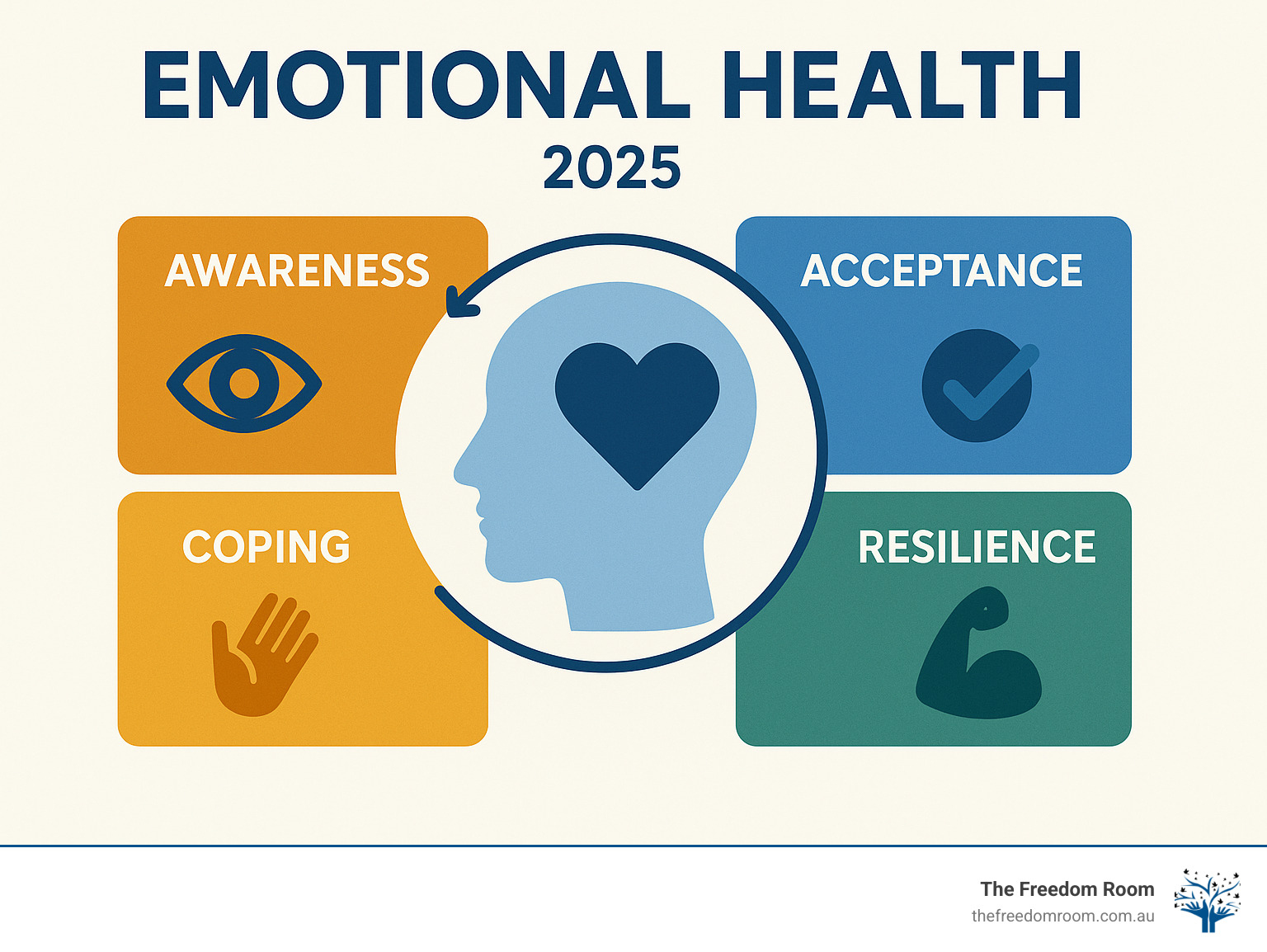
A Comprehensive Definition of Emotional Health
The emotional health definition centres on the ability to recognise, understand, and respond to emotions in healthy ways. It involves developing the skills to steer life’s challenges while maintaining a sense of balance and wellbeing. Emotional health functions as an internal regulatory system that guides an individual toward constructive responses. This capacity is vital during addiction recovery, where processing emotions without resorting to numbing agents is a cornerstone of lasting sobriety.
Core Characteristics of Emotional Health
Emotional health is not an innate trait; it is a set of skills that can be developed over time. Key characteristics include:
- Self-awareness – The foundation of emotional health, this involves an individual’s capacity to recognise their emotions as they arise, including associated physical signs like muscle tension.
- Emotional Regulation – This refers to the ability to express emotions appropriately and find healthy outlets, rather than suppressing them. Examples include taking a walk when angry or speaking with a friend when sad.
- Stress Management – Strong emotional health enables adaptation to challenges and the use of constructive coping mechanisms, which is invaluable for managing recovery triggers.
- Resilience – The ability to recover from setbacks. In a recovery context, it involves viewing a difficult period as temporary and maintaining progress.
- Sense of Purpose – A connection to something larger than immediate feelings, such as family, meaningful work, or community contribution.
- Acceptance of a Full Emotional Range – Healthy emotional functioning involves experiencing a full spectrum of emotions and processing them constructively.
The Relationship Between Emotional and Mental Health
While often used interchangeably, emotional and mental health are distinct yet interconnected concepts. Understanding this relationship is beneficial for supporting the recovery process.
Defining Mental Health
Mental health refers to an individual’s overall psychological wellbeing, encompassing thoughts, feelings, and behaviours. It is influenced by factors such as brain chemistry, genetics, and life experiences.
Defining Emotional Health
Emotional health focuses specifically on an individual’s relationship with their feelings—how they are recognised, processed, and expressed. It pertains to the capacity to regulate emotions.
The Interconnection
The key difference is one of scope: mental health represents the entire psychological state, while emotional health is the emotional dimension of that state. For example, an individual can possess effective emotional regulation skills while managing a mental health condition like depression.
In recovery, both are vital. Strong emotional health skills contribute to better mental health, and addressing mental health concerns can facilitate the development of emotional regulation. Nurturing one often supports the other, creating a stronger foundation for lasting recovery.
The Importance of Emotional Health for Overall Wellbeing
Emotional health is a vital component of overall wellbeing and quality of life. It influences the management of daily activities, the development of relationships, and the maintenance of physical health. Due to the strong mind-body connection, an individual’s emotional state directly impacts physical health, resilience, and the ability to thrive.
Emotional health equips individuals to manage stress and adapt to change. This capacity to handle challenges is known as resilience, which helps maintain a healthy perspective during difficult times.
The Impact on Physical Health
The link between emotions and physical health is well-supported. Unmanaged emotional challenges can lead to chronic stress, which is harmful to the body.
Good emotional health offers physical benefits, such as:
- Lower blood pressure
- Healthier weight
- Reduced risk of heart disease
- Lower risk of illness and injury
- Faster recovery times
Regular physical activity supports both emotional and physical health. Walking for 15-60 minutes daily can reduce the risk of major depressive disorder by over 25%. Exercise reduces stress hormones and releases mood-boosting endorphins. Quality sleep is also vital for mental and physical health.
The Role in Addiction and Recovery
For individuals in addiction recovery, nurturing emotional health is crucial. Substance use is often a method of coping with overwhelming emotions, creating a cycle where substance use exacerbates emotional issues.
In recovery, learning to manage emotions healthily is a cornerstone for preventing relapse. It involves developing emotional regulation skills to process feelings rather than suppressing them. This provides powerful tools to handle triggers and stressors.
Addiction treatment programs often operate on the understanding that addiction can stem from an inability to process emotions effectively. A common therapeutic approach is to focus on helping individuals build healthy relationships, manage emotions in early sobriety, and develop the emotional resilience needed to face life’s challenges without relying on substances. This work aims to break the cycle of addiction and support long-term recovery.
Recognising the Signs of Emotional Distress
Emotional health is dynamic, with natural fluctuations. Recognising the signs of emotional distress in oneself or others is a vital first step toward seeking support.

When emotional wellbeing is compromised, it can affect thoughts, feelings, and behaviours, signalling that an individual’s usual coping mechanisms may be insufficient.
Common Indicators of Emotional Distress
Emotional distress can manifest in many ways. Common signs include:
- Persistent mood changes – This includes ongoing sadness, hopelessness, increased irritability, or frequent mood swings.
- Feeling overwhelmed – Finding it difficult to cope with everyday tasks or small stressors.
- Cognitive difficulties – Experiencing trouble with concentration, memory, or focus.
- Behavioural changes – Neglecting personal care, losing interest in once-loved activities, or changes in sleep or eating habits.
- Low energy – A general sense of constant fatigue and lack of motivation.
- Social withdrawal – Isolating from friends and family and preferring to be alone.
- Increased substance use – A critical sign, especially in recovery, is turning to substances to numb emotional pain.
- Negative self-perception – Intense feelings of guilt, worthlessness, or feeling like a burden.
If several of these signs are present in an individual, seeking professional support is a recommended course of action.
Strategies for Nurturing Emotional Health
Developing strong emotional health is a process that requires patience and practice. These skills can be cultivated at any stage of life, particularly within a commitment to recovery. Small, consistent actions tend to create the most lasting change.
Developing Self-Awareness and Acceptance
Self-awareness is the foundation of emotional wellbeing. The following practices can be beneficial:
- Naming emotions – Identifying feelings as they arise allows for thoughtful, rather than reactive, responses.
- Accepting feelings without judgement – Acknowledging all emotions with curiosity can provide valuable information about an individual’s needs.
- Practising gratitude – Noticing small moments of appreciation can help shift focus toward positive aspects of life.
- Practising self-compassion – Treating oneself with kindness, particularly during difficult times, is a key component of emotional health.
- Understanding triggers – Recognising situations or stimuli that cause overwhelm allows for the preparation of healthy responses.
Cultivating Healthy Physical Habits
Caring for physical health directly supports emotional wellbeing.
- Regular exercise – Even a 15-minute daily walk can improve mood. Australian research shows walking for 15-60 minutes daily can reduce the risk of major depression by over 25%.
- Balanced nutrition – Focusing on whole foods provides the brain with steady fuel and helps to avoid mood swings from blood sugar spikes.
- Adequate sleep – Aiming for 7-9 hours of quality sleep is recommended, as sleep deprivation can impair emotional processing.
- Hydration – Even mild dehydration can affect mood and concentration, so regular water intake is important.
Strengthening Social Connections

Supportive relationships are crucial for emotional health. The quality of connections is more valuable than the quantity.
- Open communication – Sharing experiences and listening to others can provide perspective and reduce feelings of isolation.
- Setting boundaries – Protecting one’s emotional energy by declining requests when necessary and limiting exposure to draining interactions is a healthy practice.
- Community involvement – Joining groups or volunteering can foster a sense of purpose and expand an individual’s support network.
- Building healthy relationships in recovery – It is beneficial to replace connections centred on substance use with relationships that support sobriety and wellbeing.
Seeking assistance when struggling is a proactive and effective tool for maintaining emotional health.
Seeking Professional Support for Emotional Health
While self-care practices are invaluable, there are times when emotional distress may become overwhelming or persistent. Recognising when to seek professional help is a crucial component of managing emotional health. If persistent sadness, anxiety, or other emotional struggles begin to interfere with daily life, it may be time to contact a professional. This is especially true if unhealthy coping mechanisms, such as increased substance use, re-emerge.
Pathways to Professional Support
Seeking professional support in Australia is accessible through several pathways:
- General Practitioners (GPs) – A GP can serve as an effective first point of contact. They are qualified to assess an individual’s health, provide referrals to specialists, and discuss mental health care plans that may assist with costs.
- Qualified Therapists and Counsellors – These professionals offer a safe, non-judgemental space to manage emotions, develop coping strategies, and address underlying issues.
- Locating a Therapist – Qualified professionals can be located through official bodies such as the Australian Psychological Society’s Find a Psychologist service, as well as through online directories or professional recommendations.
When selecting a professional, the quality of the therapeutic relationship is a key factor in treatment efficacy.
Therapeutic Approaches
Many evidence-based therapies are available, including Cognitive Behavioural Therapy (CBT) and Dialectical Behaviour Therapy (DBT). These offer structured ways to process thoughts and feelings.

One evidence-based approach for emotional processing and trauma is Emotional Freedom Techniques (EFT).
The Role of an EFT Practitioner
An EFT Practitioner guides an individual in the process of releasing emotional trauma that may be held in the body and subconscious. A trained therapist facilitates the clearing of traumas without requiring the individual to relive the past pain. Unlike some talk therapies, EFT aims to clear negative emotions within the session, with the goal of improving the individual’s emotional state. The primary objective is to remove the emotional charge associated with a traumatic memory.
Health Applications of EFT
EFT can be applied to a wide range of healing processes, based on the premise that many illnesses have an emotional component. The reduction of emotional stress may allow the body to relax and engage its natural healing processes. Areas where EFT has been shown to be beneficial include:
- Addictions
- Anxiety and Depression
- Trauma and PTSD
- Stress Management
- Phobias and Grief
- Self-Esteem Issues
The Mechanism of EFT
EFT works with the body’s natural stress response. The brain’s alarm system, the amygdala, can become overactive in modern life, triggering a “fight, flight, or freeze” response to everyday stressors.
Tapping on specific acupressure points while focusing on a distressing emotion sends a calming signal to the amygdala. This disrupts the stress response and helps the nervous system return to a balanced state. Over time, regular EFT practice can retrain this response, fostering greater emotional resilience and calm.
Conclusion: A Commitment to Emotional Wellbeing
Achieving and maintaining emotional health is a continuous process that involves developing new skills, practising self-compassion, and recognising when to seek support. Over time, it is possible to develop the ability to steer emotions with greater ease and confidence.
For individuals in recovery, emotional health is intrinsically linked to a lasting outcome. Specialised support services can provide structured guidance through personalised sessions, workshops, and various therapies. The core principle of such programs is that by addressing and healing the emotional foundations of distress, a solid base can be established for a fulfilling, substance-free life.
For those navigating the complexities of addiction and emotional health, professional support is available. Taking proactive steps to understand and nurture emotional wellbeing is a critical component of a successful, long-term recovery strategy.