

The Role of Private Counselling in Alcohol Addiction Recovery
Private counselling for alcohol addiction provides individualised, confidential support tailored to a person’s specific circumstances and recovery requirements. In contrast to group therapy or public services, private counselling offers immediate access to qualified professionals, flexible scheduling, and individualised treatment plans designed specifically for one’s journey to sobriety.
Key Benefits of Private Alcohol Addiction Counselling
- Immediate Access: Treatment can commence without lengthy waiting lists or delays.
- Personalised Approach: Treatment plans are designed around an individual’s specific needs and circumstances.
- Enhanced Privacy: Complete confidentiality is maintained in a secure, non-judgemental environment.
- Flexible Scheduling: Sessions can be arranged to accommodate work and personal commitments.
- Choice of Therapist: Individuals can select a counsellor who specialises in addiction and is a suitable match for their needs.
- Focused Attention: One-on-one sessions proceed without the distractions of group dynamics.
Seeking professional help for alcohol addiction is a significant first step toward recovery. The process requires more than willpower; it necessitates professional guidance that addresses the complex emotional, psychological, and physical aspects of addiction.
Data from the Australian Institute of Health and Welfare indicates that a significant number of Australians experience alcohol use disorder, yet many do not access appropriate support. Private counselling addresses this issue by offering immediate, specialised care that focuses not only on drinking behaviour but also on the underlying causes that contribute to addiction.
A suitable private counsellor will collaborate with you to identify triggers, develop healthy coping strategies, and build the resilience required for long-term sobriety. Such professionals understand that alcohol addiction can be associated with deeper issues such as trauma, anxiety, or depression, and will address these root causes as part of a comprehensive recovery plan.
Private counselling for alcohol addiction definitions:
Defining Private Counselling for Alcohol Addiction
For individuals experiencing alcohol addiction, private counselling for alcohol addiction offers a dedicated therapeutic space where the recovery journey is the central focus. In contrast to group sessions or public services, private counselling provides an environment where every conversation and therapeutic milestone is concentrated on the individual.
This personalised method acknowledges that alcohol addiction is not solely about the act of drinking. It often involves a complex interplay of emotions, past experiences, and coping mechanisms developed over time. Private counselling for alcohol addiction facilitates the exploration of these factors at an individual’s own pace, with professional guidance from a practitioner who understands the intricate nature of addiction recovery.
The value of private counselling is evident in its flexibility and immediacy. When an individual is ready to begin the recovery process, they should not face delays of weeks or months for support. Private counselling offers direct access to qualified professionals who can begin work promptly, developing a customised treatment plan that addresses specific circumstances, triggers, and goals.
How Private Counselling Is Distinct
The difference between private counselling and other treatment options is apparent from the first session. Direct access to support allows the recovery journey to begin when motivation is high, preventing a loss of momentum while waiting for appointments. This immediacy can be a critical factor in taking action rather than remaining in harmful patterns.
Reduced wait times are not merely a matter of convenience; they are about capitalising on the moments when an individual is ready for change. In private counselling, individualised care means each session is structured around unique needs, experiences, and recovery objectives. A one-size-fits-all approach is not utilised.
The personalised approach extends beyond the treatment methods employed. The counsellor develops a comprehensive understanding of the client, including their strengths, vulnerabilities, and objectives. This deep understanding promotes improved confidentiality within a secure environment where difficult emotions can be explored without judgment.
Addiction Counselling becomes more effective when it is customised to the individual’s situation, addressing not just the symptoms of alcohol addiction but also the underlying causes.
The Core Benefits of a Private Approach
A significant advantage of private counselling is the immediate support available when it is most needed. Recovery does not adhere to a standard schedule, and having access to professional guidance when challenges arise can help prevent setbacks and maintain progress.
The focused attention received in private sessions allows for an in-depth exploration of underlying issues that might not be addressed in group settings. For individuals dealing with past trauma, anxiety, depression, or other mental health conditions alongside alcohol addiction, private counselling provides the necessary time and space to address these interconnected issues.
Building a strong therapeutic relationship is the foundation of recovery. This involves finding a qualified professional who understands the individual’s journey and can provide guidance through both challenges and successes.
The therapeutic alliance formed in private counselling can serve as a model for other healthy relationships. As one learns to trust, communicate openly, and work collaboratively with a counsellor, these skills can be applied to relationships with family, friends, and colleagues.
Alcohol Addiction Counselling Brisbane exemplifies how location-specific, private support can make recovery more accessible and relevant to daily life by addressing local challenges and utilising community resources that support sobriety goals.
Selecting a Private Addiction Counsellor

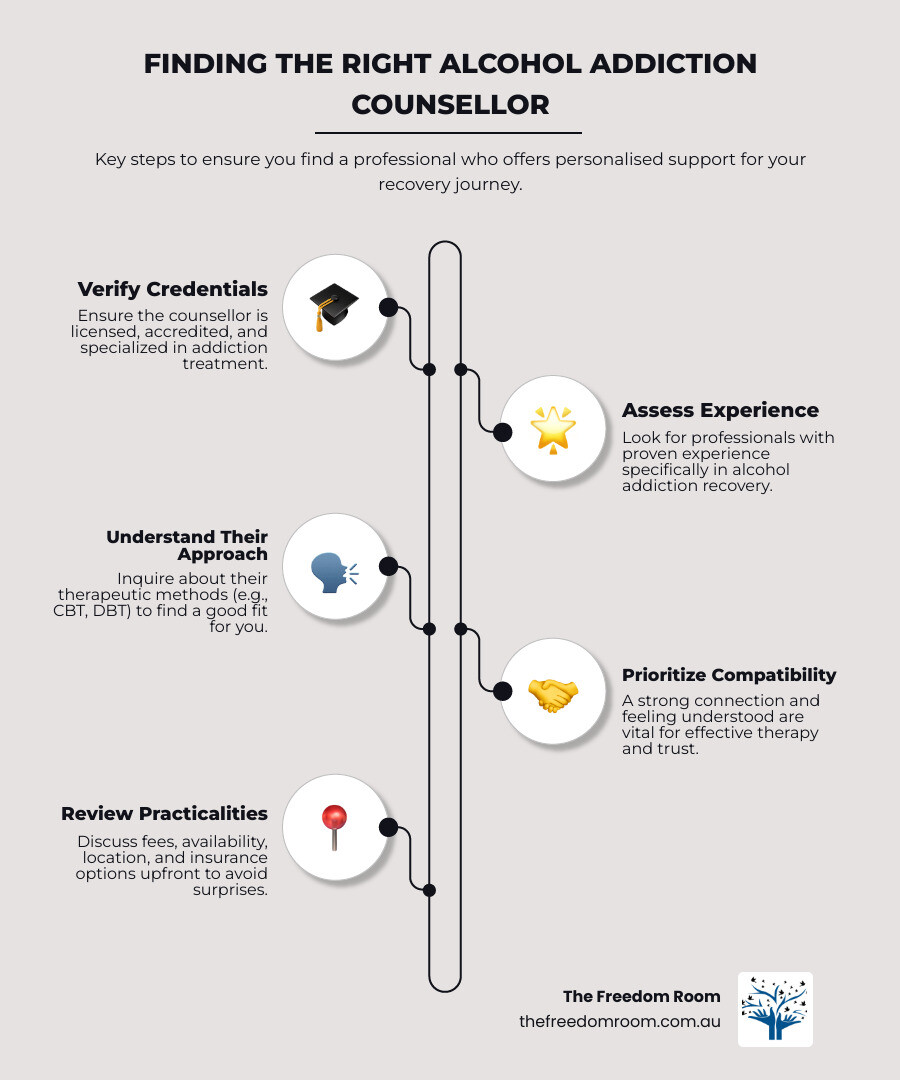
Choosing the right professional for private counselling for alcohol addiction is a critical decision in the recovery process. This choice extends beyond simple availability and requires careful consideration of several key factors to ensure the selected counsellor has the requisite expertise in addiction and can support an individual’s path to sobriety.
The process of finding a suitable practitioner may seem complex, but a thorough evaluation of options will be beneficial throughout recovery. The counsellor serves as a guide and supporter in overcoming alcohol addiction, making an informed choice essential.
Qualifications and Specialisation
Verifying a private addiction counsellor’s qualifications is the foundational step in the selection process.
Professional Accreditation and Registration
Registration with relevant Australian bodies, such as the Psychotherapy and Counselling Federation of Australia (PACFA) or the Australian Counselling Association (ACA), demonstrates adherence to professional standards and ethical guidelines.
Specialisation in Addiction Counselling
A specialisation in addiction counselling distinguishes practitioners who possess a deep understanding of the complexities of alcohol dependency. While general counselling can be beneficial, a specialist brings advanced knowledge of addiction patterns, withdrawal challenges, and recovery processes. It is advisable to look for counsellors whose training specifically focuses on alcohol and substance use disorders.
Ongoing Professional Development
A counsellor’s commitment to ongoing professional development indicates they remain current with the latest research and therapeutic techniques. The field of addiction treatment is continually evolving, and dedicated professionals regularly engage in further training to provide the most effective support.
Relevant Experience in Alcohol Addiction Support
Practical experience in treating alcohol addiction translates theory into effective treatment. Prospective clients should inquire about a counsellor’s hands-on experience working with individuals facing similar challenges, as this experience often leads to more nuanced and successful approaches.
Understanding of Co-occurring Mental Health Conditions
Proficiency in addressing co-occurring conditions is crucial, as alcohol addiction frequently exists alongside anxiety, depression, or trauma. A counsellor skilled in treating these dual diagnoses can provide more comprehensive and effective treatment by recognising how these conditions interconnect and influence one another.
Drug rehab: what works and what to keep in mind when choosing a private treatment provider
Therapeutic Approaches and Modalities
Effective private counsellors utilise evidence-based practices supported by scientific research. These therapeutic approaches address both the psychological and behavioural aspects of addiction, assisting individuals in developing healthier coping mechanisms and thought patterns.
Cognitive Behavioural Therapy (CBT)
CBT is one of the most effective approaches for alcohol addiction. This structured talking therapy helps individuals identify and challenge unhelpful thinking patterns and behaviours that contribute to alcohol use. CBT teaches clients to recognise cognitive distortions, develop problem-solving skills, and build self-confidence. For example, if alcohol is used to cope with stress, CBT can help a person learn new methods for managing that stress without drinking. Cognitive Therapy for Alcoholics
Emotional Freedom Techniques (EFT)
EFT, also known as tapping, is another valuable tool in addiction recovery. This technique involves gently tapping on specific acupressure points while focusing on distressing thoughts or emotions. The process sends calming signals to the amygdala, the brain’s stress-response centre, helping to disrupt the stress cycle. EFT is particularly beneficial for releasing emotional trauma, anxiety, and other unresolved feelings that may underlie addictive behaviours.
Motivational Interviewing
This approach helps individuals explore and resolve ambivalence about change, thereby strengthening their commitment to recovery. It acknowledges that mixed feelings about ceasing alcohol use are normal and works collaboratively with these feelings.
A Client-Centred Approach
This method ensures that the client’s unique perspectives and goals guide the therapeutic process. This collaborative model fosters an empowering environment where the individual remains actively involved in shaping their recovery journey.
The Importance of the Therapeutic Alliance
Beyond qualifications and techniques, the personal connection between a client and counsellor, known as the therapeutic alliance, is a significant factor in successful recovery. This relationship forms the foundation upon which all other therapeutic work is built. Feeling safe, understood, and respected by the counsellor facilitates open communication and honest self-disclosure.
Recovery involves exploring sensitive and often difficult aspects of one’s life. A strong rapport with a counsellor creates the trust necessary for this vulnerable work. It is essential to feel comfortable sharing struggles, fears, and setbacks without concern for judgement.
Lived experience can add another dimension to this connection. Counsellors who have navigated their own recovery journey may offer an authentic understanding and empathy that resonates with clients. This shared experience can foster trust and hope by demonstrating that recovery is both possible and sustainable.
The initial consultation provides an opportunity to assess this connection. During this first meeting, it is important to consider how one feels. Is there a sense of being heard and understood? Does the counsellor’s style and personality seem appropriate? The suitability of this professional relationship is a key determinant of progress.
This trust and rapport are invaluable when navigating the challenges of overcoming alcohol addiction. The right therapeutic relationship can be the difference between struggling through recovery alone and feeling genuinely supported throughout the process. How to Counsel Someone with Alcohol Addiction
The Structure of Private Counselling for Alcohol Addiction

Understanding the expected process of private counselling for alcohol addiction can help individuals feel more prepared to take the first step. The journey from initial contact to ongoing support follows a structured approach that prioritises the client’s comfort and recovery goals at every stage.
The Initial Assessment
The recovery journey commences with a comprehensive initial assessment, often offered as a no-obligation consultation. This first meeting serves as a foundation for subsequent work, allowing both the client and the counsellor to determine the suitability of a therapeutic partnership.
During this session, time is taken to understand the client’s unique situation. This involves gathering information about their relationship with alcohol, exploring personal history, and discussing any challenges that may have contributed to their current circumstances. Clients are encouraged to share information at a level they are comfortable with, in a safe and non-judgemental space.
The assessment also provides an opportunity for the client to ask questions about the therapeutic approach, share their goals for counselling, and express any concerns. Clear and realistic expectations are established from the outset to ensure the client feels informed and confident about the process.
Developing a Personalised Treatment Plan
Following the initial assessment, the counsellor and client collaborate to create a treatment plan that reflects the individual’s needs and circumstances. This collaborative approach ensures the client’s perspective is integral to the process, as successful recovery requires active participation and commitment.
This personalised plan extends beyond addressing drinking behaviours. The focus is on identifying and addressing the root causes that may have led to alcohol use as a coping mechanism. This could involve exploring past experiences, managing co-occurring mental health conditions such as anxiety, depression, or trauma, or developing healthier strategies for handling stress and emotional challenges.
Alcohol addiction often affects an individual’s entire support network. When appropriate, family involvement can be incorporated into the treatment plan through Family Alcohol Counseling, which helps loved ones understand addiction and learn how to provide meaningful support during recovery.
Ongoing Sessions and Long-Term Support
Once a treatment plan is established, regular counselling sessions become a central component of the recovery journey. The frequency of sessions is tailored to the client’s needs and progress, often beginning with weekly appointments and adjusting as greater stability and confidence are achieved.
These ongoing sessions focus on building essential coping skills that will be of use long after formal counselling concludes. The client will learn to identify personal triggers, manage cravings effectively, and navigate challenging situations without resorting to alcohol. Practical strategies are developed collaboratively to fit the client’s lifestyle and circumstances.
Relapse prevention is a crucial component of long-term support. Recovery is viewed as an ongoing journey that requires preparation and resilience, rather than a final destination. The relapse prevention plan will include strategies for managing high-risk situations, maintaining motivation during difficult periods, and accessing support when needed.
As life circumstances can change, flexible support options, including online counselling sessions, are available. This ensures that geographical barriers or scheduling challenges do not interrupt progress. The commitment extends beyond individual sessions, with the aim of supporting long-term sobriety and helping the client build a fulfilling, alcohol-free future. Alcohol Addiction Support Services
Practical Considerations for Your Recovery Journey
Initiating private counselling for alcohol addiction involves practical planning in addition to selecting a suitable counsellor. Understanding these logistical elements can help ensure that one’s energy remains focused on healing and personal growth.
Making recovery accessible involves creating a sustainable plan that functions within an individual’s life circumstances and financial situation. Clarity regarding these logistics can help a person move forward with the process confidently.
Costs and Funding for Private Counselling for Alcohol Addiction
The financial investment in private counselling for alcohol addiction can vary based on several factors, including the counsellor’s qualifications, experience, and the specific therapeutic approaches offered. Many private practices structure their services with flexibility, offering both individual session fees and package options that may provide greater value for ongoing support.
Investigating funding options can help ease the financial commitment. Individuals with private health insurance should check whether their policy includes coverage for psychological or counselling services. The rebate amount will depend on the level of cover and whether the chosen counsellor holds the appropriate professional registration with recognised bodies.
Medicare support through a Mental Health Treatment Plan is another potential funding source. With a referral from a GP, a client may be eligible for Medicare rebates for sessions with registered psychologists or accredited social workers. This can make professional support more accessible.
Private counselling should be viewed as an investment in long-term health and wellbeing. The value it brings to recovery from addiction often outweighs the financial cost when compared to the costs associated with continued addiction.
Privacy and Confidentiality in Private Counselling for Alcohol Addiction
A key aspect of private counselling for alcohol addiction is the strict commitment to client privacy and confidentiality. This is a fundamental requirement bound by ethical obligations and legal standards that protect personal information.
All information shared during counselling sessions remains strictly confidential. This policy creates the secure, trusting therapeutic space essential for the honest exploration of sensitive issues. The counsellor is required to maintain secure record-keeping practices, ensuring personal and medical information is protected in accordance with Australian privacy laws.
Clients have a right to understand the rare circumstances where confidentiality may be limited. These situations typically involve a serious risk of harm to the client or others, as required by law. The counsellor will discuss these boundaries clearly during the initial sessions so that the client understands exactly how their privacy is protected.
This commitment to confidentiality allows for the exploration of sensitive aspects of one’s relationship with alcohol without fear of judgment or exposure. Whether discussing family relationships, work challenges, or personal experiences that contribute to drinking, the client can be assured that this information remains between them and their counsellor. This security is fundamental to effective recovery and enables the deep, honest work necessary for lasting change.
Take the First Step Toward an Alcohol-Free Life
Recognising the need for support and taking action to find private counselling for alcohol addiction is a significant decision. This step signals a commitment to change and to pursuing a healthier future. The path forward begins with finding a suitable counsellor who understands the individual’s journey and can provide compassionate, evidence-based support.
Recovery from alcohol addiction is achievable and can lead to a more fulfilling existence. Working with a professional who combines clinical expertise with a genuine understanding of the recovery process can facilitate change that extends beyond abstinence. It can positively impact all aspects of life, including relationships, career, and self-worth.
At The Freedom Room, our approach is grounded in both professional training and lived experience with addiction and recovery. This combination allows us to offer authentic support that complements clinical knowledge. This perspective helps create a foundation of trust and empathy that can be beneficial to the healing process.
Our support includes personalised counselling sessions that address specific needs and circumstances. We utilise evidence-based approaches like Cognitive Behavioural Therapy (CBT) and Emotional Freedom Techniques (EFT) to help clients develop healthy coping strategies, process underlying issues, and build resilience for long-term sobriety. We offer both face-to-face and online counselling sessions to adapt our services to individual requirements.
The journey to recovery is personal, and every step forward is a sign of progress. Seeking information about private counselling for alcohol addiction demonstrates strength and readiness for change. The next step is to transform that intention into action. An alcohol-free future is an attainable goal.
Start your recovery with our addiction counselling services
Frequently Asked Questions about Private Alcohol Addiction Counselling
How long does private alcohol addiction counselling usually take?
The duration of private counselling for alcohol addiction is not fixed, as every individual’s recovery journey is unique. The timeline depends on personal factors, including the history of alcohol use, the presence of co-occurring mental health challenges, and the specific goals of the therapy.
Some individuals may find that short-term, focused work is sufficient to address immediate concerns and develop essential coping strategies. Others may benefit from long-term therapy to explore deeper emotional patterns, past experiences, or complex trauma that contributes to their alcohol use.
Private counselling is flexible, allowing individuals to progress at a suitable pace without being confined to a predetermined schedule. The treatment journey adapts to evolving needs, ensuring comprehensive support for lasting change.
How does private counselling help with relapse prevention?
Private counselling for alcohol addiction establishes a strong foundation for maintaining sobriety by helping individuals understand and prepare for potential challenges. In one-on-one sessions, the counsellor and client work together to identify specific triggers. These may include certain emotions, social situations, or environments associated with the desire to drink.
Once triggers are identified, personalised coping strategies are developed. Clients learn healthy ways to respond when challenges arise, building confidence in their ability to manage difficult moments without resorting to alcohol.
Building a support network is another crucial element of a relapse prevention plan. This includes people in the client’s life who understand their journey, as well as the ongoing therapeutic relationship. A detailed action plan is also created, outlining concrete steps to take if sobriety feels at risk.
Regular ongoing support sessions allow for the refinement of these strategies as life circumstances change and new stressors emerge. This continuous reinforcement strengthens the ability to maintain long-term recovery.
Is online counselling as effective as face-to-face sessions?
Research indicates that for many individuals, online counselling can be as effective as in-person sessions for recovery from alcohol addiction. The primary determinant of effectiveness is often personal preference and which format feels most comfortable and accessible for the individual.
Online counselling offers significant convenience and accessibility, which is particularly valuable for those in regional areas or with busy schedules. It eliminates travel time and geographical barriers, allowing for consistent care from a private and comfortable space.
Some individuals find that being in a familiar environment helps them feel more relaxed and open during sessions, while others prefer the direct connection of face-to-face meetings. The most important factor is the maintenance of a consistent therapeutic relationship, regardless of the format.
The ability to continue counselling sessions via a secure online platform ensures that practical challenges do not interrupt the recovery process. This continuity of care has proven to be a valuable component of maintaining sobriety for many people. Research on the efficacy of online therapy