

Why Getting Help for Drinking Matters
If you need to get help for drinking, here are your immediate next steps:
- Talk to your GP – They can assess your situation and refer you to appropriate services
- Call the National Alcohol and Other Drug Hotline – Free, confidential support at 1800 250 015
- Contact a specialist service – Programs like The Freedom Room offer evidence-based treatment with lived experience support
- Seek medical supervision – If you’re physically dependent on alcohol, safe withdrawal is essential
- Build your support network – Connect with peer support groups and counselling services
Taking the first step to seek help takes courage.
If you’re reading this, you’ve already shown immense strength by acknowledging that alcohol has become a problem in your life. Whether you’re experiencing stress, anxiety, depression, or simply feeling trapped in a cycle of drinking, you’re not alone.
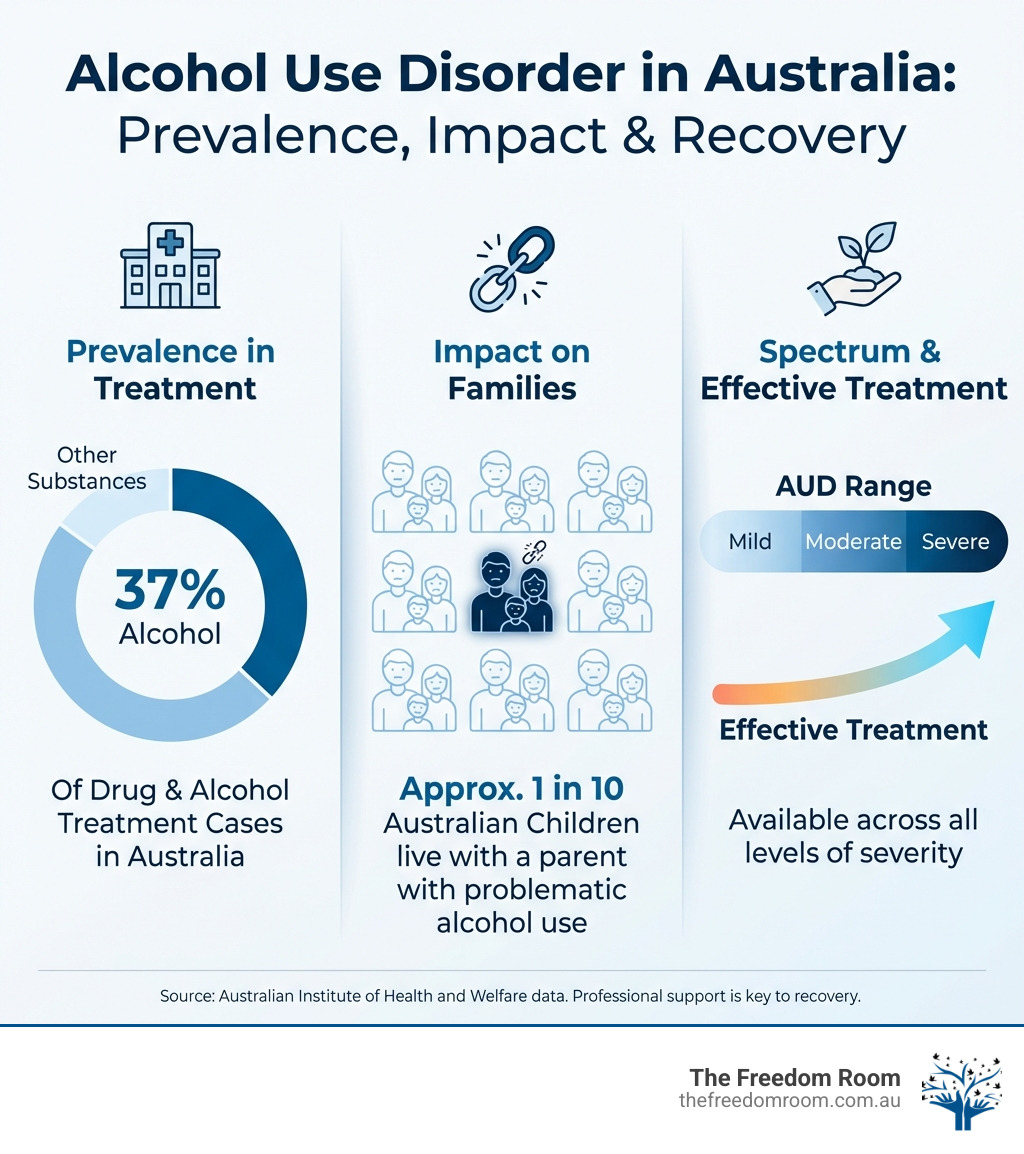
Unhealthy alcohol use is one of Australia’s most significant public health challenges. According to the Australian Institute of Health and Welfare, alcohol was the primary concern for 37% of people seeking treatment for drug and alcohol issues in 2020-2021. That’s thousands of Australians who, like you, made the decision to reach out.
Here’s the hopeful truth: recovery is absolutely possible with the right support.
No matter how severe your drinking problem feels right now, research shows that most people with alcohol use disorder can benefit from treatment. Many people substantially reduce their drinking or stop entirely, and go on to report fewer alcohol-related problems and improved quality of life.
The path to recovery isn’t always straightforward, and it’s different for everyone. But understanding your options, knowing where to turn, and having access to compassionate, evidence-based support can make all the difference.
This guide will walk you through recognising the signs of problematic drinking, understanding when professional help is needed, exploring treatment options available in Australia, building a supportive recovery network, and developing strategies for lasting change.
Terms related to getting help for drinking:
A Comprehensive Guide to Getting Help for Drinking
Recognising the Signs and When to Seek Help
Understanding if your alcohol consumption has become problematic is the first crucial step towards seeking help. Alcohol use disorder (AUD) is a medical condition characterised by an impaired ability to stop or control alcohol use despite adverse social, occupational, or health consequences. It’s not a moral failing, but a health issue that can be effectively treated.
The signs of a problem with alcohol can manifest in various ways, impacting physical health, mental well-being, and relationships. It is important to remember that AUD exists on a spectrum, from mild to severe. According to the Diagnostic and Statistical Manual of Mental Disorders (DSM-5), AUD can be mild (two to three symptoms), moderate (four to five symptoms), or severe (six or more symptoms).
Common signs that may indicate a problem with alcohol include:
- Drinking more or longer than you intended.
- Wanting to cut down or stop drinking but being unable to.
- Spending a lot of time drinking or recovering from its effects.
- Experiencing strong urges or cravings to drink.
- Continuing to drink even when it causes problems with family, friends, or work.
- Giving up or cutting back on important activities because of drinking.
- Engaging in risky behaviours while drinking, such as driving under the influence.
- Developing a tolerance means you need to drink more to get the same effect.
- Experiencing withdrawal symptoms when the effects of alcohol wear off, such as trouble sleeping, shakiness, restlessness, nausea, sweating, or a racing heart.
- Continuing to drink even when it makes you feel depressed or anxious, or adds to another health problem.
For a more in-depth understanding of these indicators, you can explore our guide on Warning Signs of Alcohol Dependency.
When considering whether it’s time to seek professional help, consider the impact alcohol has on your daily life. If your drinking is causing distress, negatively affecting your health, relationships, or responsibilities, it is a strong indicator that support is needed. It is important to note that you do not need to hit ‘rock bottom’ to seek help; early intervention can significantly improve outcomes.
A key point to understand is the difference between physical and psychological dependence. Physical dependence means your body has adapted to alcohol, and you may experience withdrawal symptoms if you cut down or stop. Psychological dependence is when you feel you need alcohol to cope with stress, anxiety, or difficult emotions. If you think you might be physically dependent, getting medical supervision for withdrawal is essential. Stopping suddenly without professional support can be dangerous and, in serious cases, life‑threatening. A medically supported detox helps keep you safe and as comfortable as possible in this early stage. Learn more about Safe Alcohol Detox.
The Australian guidelines recommend that to reduce the risk of harm from alcohol-related disease or injury for healthy adults, drink no more than 10 standard drinks per week and no more than 4 standard drinks on any one day. If your consumption consistently exceeds these recommendations, it is advisable to seek professional advice. Australian health bodies also emphasise the importance of screening and behavioural counselling interventions to reduce unhealthy alcohol use, highlighting the value of early identification and support.
Exploring Professional Support and Treatment Pathways
Once you recognise the need to get help for drinking, navigating the various professional support and treatment pathways can feel overwhelming. However, a wide array of effective options are available, custom to individual needs.
A great starting point is always your General Practitioner (GP). Your GP can conduct an initial assessment, discuss your drinking patterns, and provide referrals to appropriate specialists or services. Being honest and accurate about your alcohol consumption with your GP is vital to receiving the most effective guidance.
Treatment for alcohol use disorder is not a one-size-fits-all approach. It can occur in various settings and through different modalities. The Freedom Room offers a range of services, including personalised in-person sessions, workshops, and telehealth options, allowing us to support individuals across different locations, including Strathpine, QLD. Online Alcohol Support has also become a highly accessible and effective way for many to receive treatment, particularly for those in regional areas or with busy schedules.
Behavioural therapies are a cornerstone of effective alcohol treatment. These therapies help individuals identify and change the thought patterns and behaviours that contribute to their drinking. Key behavioural therapies include:
- Cognitive Behavioural Therapy (CBT): This therapy helps you identify triggers, challenge negative thoughts, and develop coping strategies to manage cravings and high-risk situations. For more information, see our guide on Cognitive Behavioural Therapy Alcohol.
- Acceptance and Commitment Therapy (ACT): ACT focuses on accepting difficult thoughts and feelings rather than fighting them, while committing to actions aligned with your values.
- Motivational Interviewing (MI): This approach helps you explore and resolve ambivalence about changing your drinking behaviour, building intrinsic motivation for change.
Medication can also play a significant role in treating alcohol use disorder, especially when combined with behavioural therapies. Medicines, prescribed by a medical professional, can help reduce cravings, manage withdrawal symptoms, or create an unpleasant reaction to alcohol, supporting abstinence. It is crucial to consult a doctor to determine if medication is appropriate for your specific situation. You can find more details on Alcohol Dependence Medication.
Finding a qualified healthcare provider or treatment program in Australia involves looking for services that align with national standards and person-centred care. The National Drug and Alcohol Hotline (1800 250 015) can provide referrals to services in your state or territory. When considering private providers like The Freedom Room, look for those with qualified staff, evidence-based approaches, and a commitment to holistic, coordinated care. Our team at The Freedom Room brings lived experience to the recovery process, offering authentic empathy and understanding that complements professional expertise.

Building a Supportive Recovery Network
A strong support network is often cited as a critical factor in successful long-term recovery from alcohol use disorder. Recovery is rarely a solitary journey; connection and shared experience can provide immense strength and encouragement.
Mutual-support groups and peer support play a vital role in this network. These groups offer a safe, non-judgmental space where individuals can share their experiences, challenges, and successes with others who understand what they are going through. The sense of community and belonging found in these groups can combat feelings of isolation and provide practical strategies for managing sobriety. Examples of such groups include Alcoholics Anonymous (AA) and SMART Recovery, both of which have a presence in Australia. The Freedom Room also integrates community-based recovery groups and peer-led meetings into our approach, recognising the power of shared lived experience. Explore more about Alcohol Addiction Support Groups.
The role of family and friends in supporting someone with an alcohol problem is also incredibly significant. Loved ones can offer emotional support, encouragement, and practical assistance throughout the recovery process. However, it’s also important for family and friends to understand that they cannot ‘fix’ the problem for the individual, and they often need support for themselves. Al-Anon Family Groups, for instance, provide support and understanding to the families and friends of problem drinkers, whether they are still drinking or not. For families seeking guidance, The Freedom Room provides specific Alcohol Family Support services, helping steer the complexities of addiction and recovery within family dynamics.
Support for loved ones can involve:
- Educating themselves about alcohol use disorder.
- Setting healthy boundaries.
- Encouraging their loved one to seek and maintain treatment.
- Participating in family therapy or counselling.
- Seeking their own support through groups like Al-Anon.
A comprehensive recovery network often includes a blend of professional guidance, peer support, and family involvement. This multi-faceted approach ensures that individuals have access to diverse forms of encouragement and accountability, which are essential for navigating the challenges of recovery and building a fulfilling, alcohol-free life.
Strategies for a Successful Recovery Journey
Starting on a recovery journey requires dedication and a well-thought-out strategy. It is about more than just stopping drinking; it involves building a new way of life that supports long-term sobriety and overall well-being.
Setting realistic and achievable goals for reducing or stopping drinking is fundamental. This might involve setting a quit date, gradually reducing consumption, or committing to alcohol-free days. It is helpful to make these goals specific, measurable, achievable, relevant, and time-bound (SMART). For instance, instead of saying “I’ll drink less,” a SMART goal might be “I will not drink on weekdays for the next month.” Reflecting on past attempts to change your drinking habits can also provide valuable insights into what strategies have worked or failed previously.
Managing cravings and avoiding triggers are crucial skills in recovery. Cravings can be intense, especially in the early stages, but they are temporary. Strategies for coping include:
- Distraction: Engaging in an activity that takes your mind off alcohol.
- Talking it out: Reaching out to a trusted friend, sponsor, or therapist.
- “Urge Surfing”: A mindfulness technique that involves observing cravings without judgment, allowing them to pass naturally.
- Reminding yourself of your reasons: Recalling your motivations for sobriety.
For more detailed techniques, our guide on Coping with Alcohol Cravings offers practical advice. Avoiding triggers—people, places, or situations associated with drinking—is also vital. This might mean changing social circles, finding new hobbies, or planning ahead for high-risk events.
Developing healthy coping mechanisms is essential for managing stress, emotions, and life’s challenges without resorting to alcohol. These can include exercise, mindfulness, meditation, journaling, engaging in creative pursuits, or spending time in nature. The Freedom Room focuses on empowering individuals with a range of healthy coping skills. Our resources on Healthy Coping Mechanisms provide extensive guidance.

Coping with setbacks during recovery is an inevitable part of the process for many. A setback, or ‘slip,’ does not equate to failure; rather, it is an opportunity for learning and growth. If a setback occurs:
- Do not let guilt or shame overwhelm you.
- Re-evaluate what led to the setback.
- Reach out for support immediately.
- Recommit to your recovery plan.
Developing a Relapse Prevention Plan Guide is a proactive way to prepare for potential challenges, identifying warning signs and outlining specific actions to take. The journey to recovery is a marathon, not a sprint, and persistence, self-compassion, and continuous learning are key to achieving lasting sobriety.
Take the First Step Toward a Fulfilling, Alcohol-Free Life
Recognising that you need to get help for drinking is a powerful act of self-care and the foundation for a healthier future. As we have explored, multiple pathways to recovery exist, each custom to support individuals on their unique journey. Whether through medical intervention, behavioural therapies, mutual-support groups, or a combination of these, effective treatment is within reach.
Seeking help is not a sign of weakness, but a profound demonstration of strength and courage. It signifies a commitment to reclaiming your life from the grip of alcohol use disorder. At The Freedom Room, we understand this journey intimately. Our team brings lived experience to the recovery process, offering compassionate, cost-effective alcohol addiction treatment through personalised sessions, workshops, and therapy. We believe in providing authentic support and empathy, guiding you towards lasting change.
You do not have to steer this path alone. We encourage you to take that vital first step today. Find the comprehensive support and understanding waiting for you.
Learn more about our services.