

Why Self-Care for Recovery Is Essential to Your Journey
Self-care for recovery is the intentional practice of nurturing your physical, emotional, and mental wellbeing as you rebuild your life after addiction. It is not indulgent; it is essential for preventing burnout, managing stress, and building the resilience needed for long-term sobriety.
Quick Answer: Essential Self-Care Practices for Recovery
- Physical care – Regular meals, consistent sleep, gentle exercise
- Emotional wellness – Journaling, mindfulness, therapy
- Social connection – Support groups, trusted relationships, community involvement
- Mental health – Stress management, setting boundaries, professional support
- Spiritual grounding – Meaningful activities, gratitude practice, purpose-driven pursuits
When you’re rebuilding your life, the idea of self-care can feel uncomfortable. Many people in recovery struggle with guilt, believing they do not deserve rest or joy after the harm their substance use may have caused. This perception of self-care as selfish is not only wrong, but it is also dangerous.
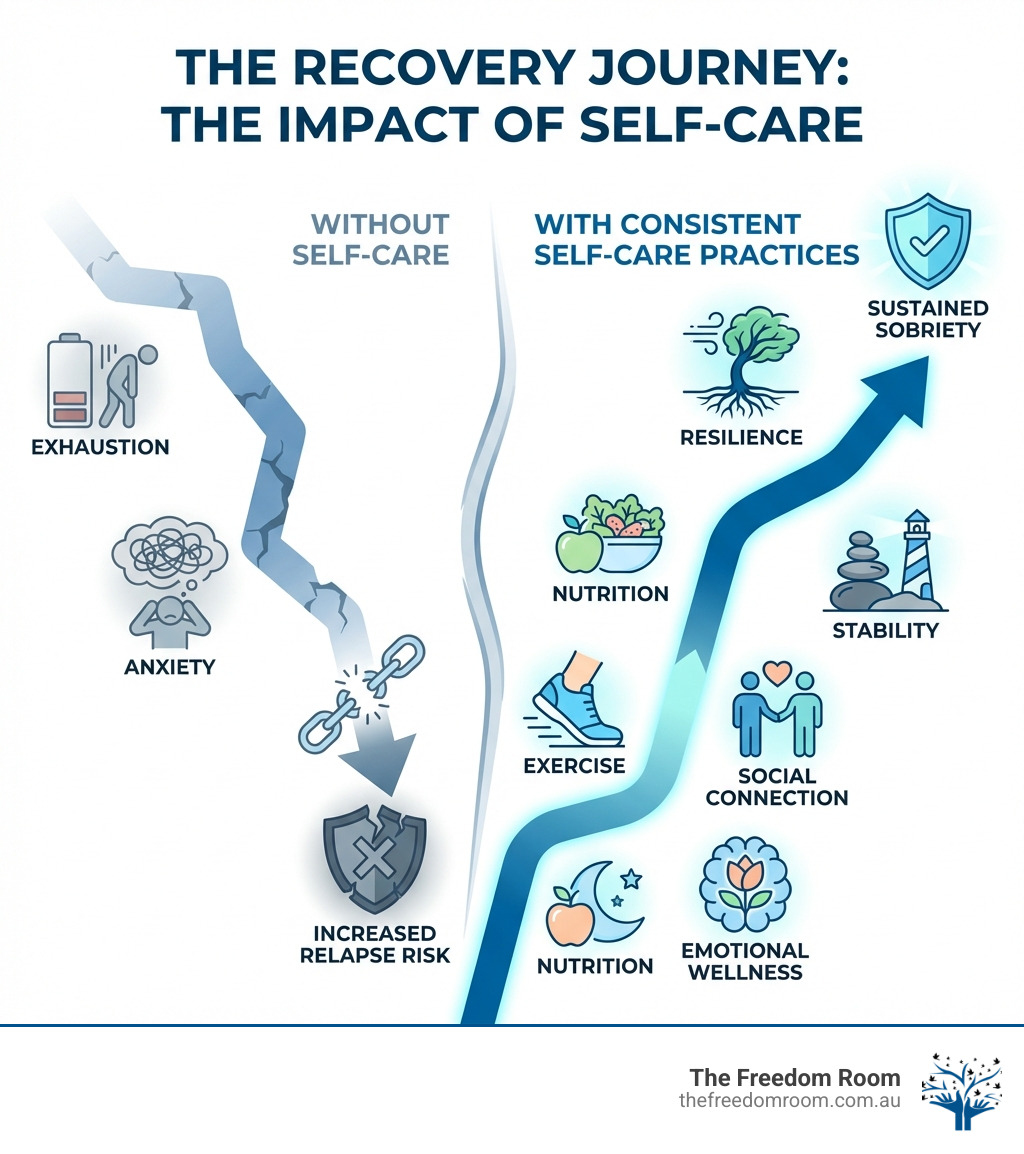
Self-care for recovery is about self-preservation. When you neglect your basic needs, exhaustion and anxiety build up. For someone in recovery, where everyday stressors carry profound weight, this neglect can become a direct path to relapse. Neglecting basic needs can lead to exhaustion, anxiety, and feeling overwhelmed, with higher stakes for those in recovery, where everyday stressors can have profound implications.
Recovery is more than abstaining from substances. It is about refinding your worth and creating a life you do not want to escape from. Self-care is the foundation of that life, equipping you to stay healthy, present, and strong for yourself and the people who matter to you.
Understanding that everyone is worthy of care is a key part of recovery. This journey of refinding one’s value helps to overcome the myth that self-care is selfish.
The research is clear: self-care practices like mindfulness, proper nutrition, regular exercise, and social connection significantly contribute to resilience throughout the recovery process. These are not luxuries; they are the building blocks of lasting sobriety.
Self-care for recovery terms you need:
A Practical Guide to Self-Care for Recovery

Embracing self-care for recovery means adopting a holistic approach, recognising the intricate connection between our mind, body, and spirit. It is about progress over perfection, understanding that every small step contributes to a stronger, more balanced you. This guide offers practical strategies and simple starting points to build a robust foundation for your recovery journey.
Foundational Practices: The Eight Dimensions of Wellness
The Eight Dimensions of Wellness provide a comprehensive framework for understanding and addressing our overall well-being. Applying this framework helps us identify areas that require attention, ensuring our self-care for recovery is well-rounded and sustainable. These dimensions include:
- Physical: Caring for our bodies through nutrition, exercise, and sleep.
- Emotional: Understanding and managing our feelings, and developing healthy coping mechanisms.
- Social: Building and maintaining supportive relationships and community connections.
- Spiritual: Finding meaning and purpose in life, which does not necessarily mean religious practice.
- Occupational: Gaining personal satisfaction and enrichment from our work or daily activities.
- Intellectual: Engaging in creative and mentally stimulating activities.
- Environmental: Creating a pleasant and safe living space, and respecting our planet.
- Financial: Managing our resources to reduce stress and live within our means.
For individuals in early recovery, starting with simple, foundational acts of self-care can make a significant difference. These small acts build momentum and reinforce the message that we are worthy of care.
Here are some practical and simple ways to start practising self-care for recovery in the early stages:
- Take a daily shower: This basic act of hygiene can be surprisingly grounding and refreshing.
- Eat regular, nutritious meals: Fuel your body to support both physical and mental healing.
- Prioritise consistent sleep: Aim for adequate rest to restore energy and improve mood.
- Engage in gentle movement: Short walks in nature can boost mood and reduce stress.
- Stay hydrated: Drink plenty of water throughout the day.
- Practice good hygiene: Beyond showering, this includes dental care and keeping your living space tidy.
Even small acts of self-care in your daily life can have a big impact, helping to manage stress, lower illness risk, and increase energy. For more ideas on how to nurture yourself, explore our resources on Self-Care Activities and Take Care of Yourself.
Nurturing Your Mind and Body for Emotional Sobriety

Physical health plays a crucial role in self-care for recovery. Our body and mind are deeply interconnected, and addressing physical needs directly supports emotional well-being and reduces the risk of relapse.
- Nutrition: Proper nutrition fuels the body with essential nutrients that aid in healing from the physical effects of addiction. A balanced diet provides the energy needed for both physical and mental tasks. Consider adding an extra serving of fruits and vegetables to your meals.
- Exercise: Regular exercise releases endorphins, which naturally improve mood and reduce stress. Eating healthy foods and staying active can significantly boost your energy and improve your mood, helping you feel stronger, happier, and more resilient. Even a 30-minute walk daily can make a difference.
- Sleep Hygiene: Prioritising adequate and consistent sleep is fundamental. Sleep deprivation can exacerbate anxiety and make it harder to cope with daily stressors. Establishing a calming bedtime routine can help improve sleep quality.
Managing stress and emotional well-being is vital in self-care for recovery. We can develop healthier responses to challenges by incorporating practices that provide alternative outlets for stress and anxiety.
- Mindfulness: Mindfulness practices improve metacognition and mental health, showing effectiveness in treating mental health conditions and improving cognitive control. Practising mindfulness, like meditation and journaling, is a great way to connect with your feelings and understand what is going on inside your head. Even just five minutes of mindful breathing can make a difference. Find valuable tips on Mindfulness for Addiction Recovery Tips.
- Gratitude: Keeping a gratitude journal helps shift our focus to positive aspects of life. Daily gratitude practice, by being specific about what you are thankful for, can cultivate positivity and build emotional strength.
- Journaling: Journaling allows us to unpack thoughts and feelings, process emotions, and gain self-awareness. It provides a safe space to express ourselves honestly. Find the benefits in The Healing Power of Journalling.
- Emotional Wellness: Understanding and managing our emotions is key to emotional sobriety. Therapy and peer support groups also offer avenues for improving emotional well-being. For more insights into fostering a healthy emotional state, visit our page on Emotional Wellness.
If you find yourself struggling with emotional well-being, reaching out for support is a sign of strength. You can find support and guidance from BeyondBlue.
Building Sustainable Habits for Lifelong Self-Care for Recovery
Building long-term, sustainable self-care for recovery habits is crucial for preventing relapse and promoting lasting sobriety. This involves identifying our unique needs, adapting practices as we progress through recovery, and cultivating a strong support system.
Strategies for building sustainable habits include:
- Setting Realistic Goals: Break down larger aspirations into smaller, manageable steps. Celebrate every small victory along the way to maintain motivation and acknowledge your hard work.
- Identifying Unique Needs: Self-care for recovery is deeply personal. What works for one person might not work for another. Regularly check in with yourself to assess your needs and adjust your self-care plan accordingly.
- Adapting to Stages of Recovery: Early recovery might focus on basic needs and managing acute stressors. As you progress, your self-care might expand to include annual retreats, consistent exercise routines, or deeper self-reflection. Staying flexible and adapting your plan is key, as life is always changing.
Social Connection and Support Networks
Connecting with others through support groups, friends, family, and community involvement reinforces motivation and encouragement. Research shows that strong social connections are associated with increased happiness, better health, and a longer life. Building a robust support network is a cornerstone of self-care for recovery.
- Support Groups: Joining a support group or finding an accountability partner provides a community of understanding and empathy. These connections can help keep you motivated and focused on your goals.
- Trusted Relationships: Lean on friends and family who offer emotional support, perspective, and validation. Asking for help is a sign of strength, not weakness.
Meaningful Activities
Engaging in activities that bring joy and fulfilment is a powerful component of self-care for recovery. These positive activities help replace destructive habits with purpose-driven pursuits.
- Hobbies: Rediscover old passions or explore new ones, such as art, music, gardening, or reading.
- Volunteering: Helping others can provide a profound sense of purpose and connection.
- Nature: Spending time outdoors, whether walking in a park or by the beach, can reduce stress and improve mental clarity.
- Creative Outlets: Expressive arts like dancing, singing, or creating art provide healthy avenues for emotional release.
To develop healthy ways of coping and to foster personal growth throughout your journey, explore our guides on Personal Growth in Recovery and Healthy Coping Mechanisms.
Accept Your Recovery Path with Us by Your Side
Self-care for recovery is not a destination but an ongoing practice, an art of self-love that builds a strong, resilient foundation for a fulfilling life. It is the conscious and intentional commitment to preserving your health and improving your well-being, directly contributing to preventing relapse and promoting long-term sobriety.
The journey of recovery often requires professional support, and embracing this help is a vital aspect of self-care for recovery. Therapy and support groups offer structured environments to develop self-care practices, manage emotions, and build coping skills.
These settings provide a safe, non-judgemental space to express thoughts and feelings and work through difficult emotions. Receiving understanding and empathy is crucial for healing, and professional care offers the structure and guidance for rebuilding balance.
At The Freedom Room, we understand the unique challenges of recovery because our team has lived experience. We offer compassionate, cost-effective treatment for alcohol dependence through personalised sessions, workshops, and therapy right here in Strathpine, QLD.
Our approach is designed to empower you, providing the tools and support you need to integrate self-care for recovery into every aspect of your life. We believe in fostering your empowerment and guiding you towards a path of lasting well-being. For more on how to reclaim your strength, visit our Empowerment in Recovery Ultimate Guide.
Take the next step in your journey by exploring our personalised services.