

Why Personal Growth is the Key to Lasting Recovery
Personal growth in recovery is a transformative process that extends beyond mere abstinence from alcohol or other substances. This process involves developing new perspectives, addressing emotional challenges, and establishing a purposeful life that sustains long-term sobriety.
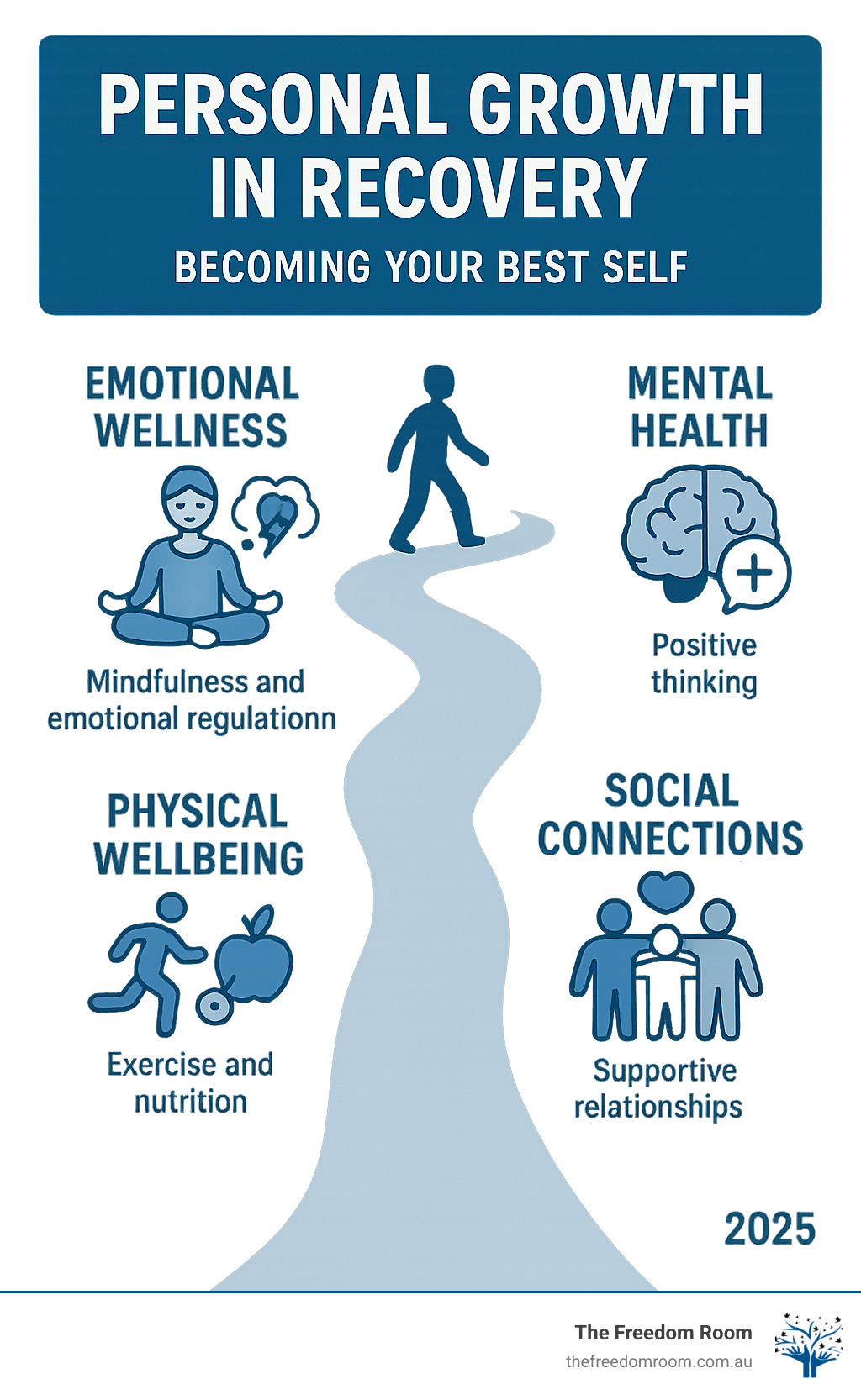
Essential areas for personal growth in recovery include:
- Emotional wellness – Learning to manage emotions without reliance on substances and developing effective coping mechanisms.
- Mental health – Building resilience, challenging negative thought patterns, and cultivating self-awareness.
- Physical wellbeing – Establishing healthy routines for nutrition, exercise, and sleep.
- Social connections – Rebuilding trust, setting boundaries, and forming supportive relationships.
- Purpose and meaning – Establishing meaningful goals and identifying sources of genuine fulfilment.
Recovery offers an opportunity for profound personal development. The objective is not merely the removal of a harmful behaviour but the construction of a robust, positive foundation in its place.
Personal growth in recovery is a lifelong journey rather than a destination. Each day offers new opportunities to reinforce this foundation, improve resilience, and progress towards one’s full potential. This process necessitates patience, self-compassion, and commitment, with rewards that extend beyond sobriety to include a genuinely fulfilling life.
The Foundation of Growth: Mindset and Self-Awareness
Personal growth in recovery is fundamental to building lasting change. The active pursuit of self-improvement is not solely focused on maintaining sobriety; it is about constructing a life that holistically supports one’s wellbeing.
Scientific studies show that engagement in personal growth activities explains 15% of the variance in relapse rates among people in recovery. This evidence indicates that engagement in personal development activities provides a measurable defence against relapse.
Recovery necessitates a comprehensive reconstruction of one’s life, encompassing relationships, daily routines, and a sense of purpose. Personal growth is essential for developing the capacity to manage emotions without resorting to substances and for acquiring the tools to steer challenging feelings effectively. For deeper insights, explore Rebuilding Your Life After Addiction.
What is a Growth Mindset?
A growth mindset is the belief that one’s abilities and character can be developed through dedication and effort. This contrasts with a fixed mindset, which assumes these qualities are static, causing setbacks to be perceived as permanent failures.
Adopting a growth mindset is instrumental in recovery. It helps to counteract the diminished self-confidence frequently associated with substance use disorders. For example, a thought such as, “I am incapable of handling stress,” can be reframed to, “I am in the process of learning more effective stress management techniques.”
This is supported by the concept of neuroplasticity—the brain’s ability to change—which confirms that positive behavioural changes are always possible as new habits are developed.
This shift in mindset enables individuals to view challenges as opportunities for growth and to learn from setbacks without excessive self-criticism. It fosters a realistic belief that consistent effort leads to meaningful change.
Cultivating Self-Awareness and Acceptance
Self-awareness is the cornerstone of lasting recovery. It requires an honest examination of one’s thoughts, behaviours, and emotions to identify triggers and habitual stress responses.
This understanding facilitates the recognition of emotions as they emerge, providing the capacity to select alternative responses. It involves identifying the underlying feelings, thoughts, or physical sensations that create vulnerability, such as loneliness or anxiety.
Tools for Developing Self-Awareness
Helpful tools for developing self-awareness include:
- Journaling: This practice facilitates the processing of difficult emotions, the tracking of behavioural patterns, and creates an opportunity for reflection and self-forgiveness.
- Mindfulness: Activities such as meditation or mindful walking assist in the non-judgemental observation of thoughts and feelings. For guidance, explore Mindfulness and ACT.
Acceptance is a crucial element of this foundation. It involves acknowledging one’s current situation, including past mistakes, without shame. Acceptance is distinct from resignation; it is the acknowledgement of one’s current position, which is necessary to chart a realistic path forward.
Pillars of Personal Growth in Recovery
Personal growth in recovery is a holistic process that addresses the mind, body, and spirit. It involves enhancing all aspects of wellbeing to facilitate incremental progress. As explored in Life After Addiction, recovery requires a comprehensive approach to achieve profound personal change.
Emotional and Mental Wellbeing
Developing emotional and mental wellbeing is a critical component of recovery. This involves cultivating emotional sobriety, which is the ability to manage feelings without resorting to substances. Learning to appropriately accept and express deep-seated emotions such as anger, grief, and shame is vital for the healing process.
Techniques for Emotional Regulation
Techniques for emotional regulation and processing include:
- Stress management: Utilise deep breathing, physical exercise, and constructive hobbies to manage stress.
- Emotional regulation: Develop skills to regulate intense emotions and minimise impulsive reactions.
- Positive mindset cultivation: Maintain a gratitude journal and engage in positive self-talk.
- Therapy: Professional therapy provides a safe space to address emotional issues and develop coping skills.
- Journaling: This practice assists in processing emotions and identifying behavioural patterns.
- Emotional Freedom Techniques (EFT): This evidence-based technique, also known as Tapping, can provide relief from stress and other psychological challenges.
Using Emotional Freedom Techniques (EFT) to Process Trauma and Stress
EFT is a therapeutic tool designed to address the physiological and psychological impact of persistent fear, anger, and anxiety. The process aims to reduce feelings of being overwhelmed and foster a state of greater emotional regulation and calm. For more detailed information, you can explore More info about EFT and CBT therapy.
How EFT Works
EFT, or Tapping, works with the body’s natural stress response. The brain’s alarm system, the amygdala, can become overactive in response to modern-day stressors or past experiences, leading to chronic activation of the “fight, flight, or freeze” response.
The application of light pressure, or tapping, on specific acupressure points while focusing on a distressing thought sends a calming signal to the amygdala. This action helps disrupt the stress response pathway, allowing the nervous system to return to a more balanced state. Over time, consistent use of EFT can help retrain this response, fostering greater emotional resilience.
The Role of an EFT Practitioner
An EFT Practitioner facilitates the processing of emotional trauma in a safe and controlled therapeutic environment. They are trained to assist clients in addressing traumatic memories without necessitating a re-experiencing of the associated distress. The objective is to reach a state where the traumatic event no longer elicits a significant emotional or physiological response.
Physical Health and Wellness
The connection between mental and physical health is well-established. Nurturing one’s physical health is a vital component of personal growth in recovery, as physical wellbeing underpins mental clarity and emotional stability.
Key aspects of physical wellness include:
- Proper nutrition: Consume a nutritious diet to support both physical and mental health.
- Regular exercise: Physical activity releases endorphins, improves mood, and reduces stress. For practical tips, explore Breathing Exercises for Addiction.
- Adequate sleep: Prioritise sufficient sleep to facilitate mental and physical healing and promote emotional stability.
- Self-care: Implement self-care practices that promote physical and mental rejuvenation. More ideas can be found in Self-Care Activities.
Social Connections and Healthy Relationships
Building healthy social connections is paramount for sustained sobriety. As addiction often results in social isolation, the process of rebuilding trust and fostering supportive relationships is essential for healing.
Key strategies for social connection include:
- Identifying supportive people: Associate with individuals who are supportive of your personal growth.
- Rebuilding trust: This requires patience, honesty, and consistent effort through open communication.
- Communicating effectively: Practise active listening and empathy to improve social skills.
- Building a support system: Participation in support groups can foster a sense of community and provide motivation.
- Seeking family support: Constructive family relationships can be a significant source of support.
Connecting with peers in recovery provides accountability and reinforces the feasibility of long-term success. For further guidance, refer to Healthy Relationships in Recovery.
Actionable Strategies for Sustained Personal Growth in Recovery

The process of personal growth in recovery requires proactive strategies. Practical strategies create momentum and provide the necessary structure to transition from early recovery to a sustained, purposeful life. For additional guidance, explore The Freedom Room Sobriety Tips.
Setting Meaningful Goals for the Future
Goals provide direction and motivation. An effective approach involves balancing achievable short-term objectives with long-term aspirations that guide significant personal development.
The SMART framework is a tool for changing aspirations into concrete, achievable targets. Goals should be Specific, Measurable, Achievable, Relevant, and Time-bound. For example, instead of a vague goal like “I want to be healthier,” a SMART goal is: “I will walk for 30 minutes, three times per week, for the next month.”
Celebrating milestones reinforces progress and maintains momentum. Each accomplishment, regardless of its scale, builds self-efficacy and provides tangible evidence of progress. This sense of accomplishment can contribute to greater wellbeing, as explored in Increase Your Happiness.
Creating Healthy Habits and Refinding Joy
A key aspect of recovery is replacing substance use with meaningful and fulfilling activities. Replacing old routines with positive alternatives creates a foundation for lasting change.
Engaging in new hobbies can provide opportunities for personal fulfilment and social connection. Consider activities such as:
- Learning a musical instrument
- Photography
- Gardening or cooking
- Joining a book club or sports team
Volunteering can be a significant avenue for growth, offering a sense of purpose and a broader perspective. Continuing education provides structure and opens new opportunities, whether through completing a formal course or learning a new skill.
These activities assist in redefining one’s identity outside of addiction and contribute to the profound satisfaction derived from authentic living. Find more about this change in The Joys of Sobriety.
The Role of Ongoing Support
Personal growth in recovery is significantly improved by a supportive community. Ongoing support is crucial throughout the entire recovery journey.
Continuing therapy provides a consistent space to process challenges and develop new coping strategies. Attending support groups facilitates connection with peers who have shared experiences, offering accountability and collective insight.
Peer support is particularly effective, providing a unique form of understanding grounded in lived experience. These relationships offer empathy, practical advice, and tangible evidence that sustained change is achievable. Learn more about these connections through Peer Support and Recovery.
Establishing a strong sober network provides crucial support during challenging periods. Seeking support is an indication of commitment to one’s continued growth and wellbeing.
Navigating Challenges on the Path to Growth

The path of personal growth in recovery inevitably involves challenges. These experiences should not be viewed as failures, but rather as integral opportunities for building resilience and developing the necessary tools for sustained change.
As research on what having a growth mindset actually means shows, viewing challenges as opportunities transforms how one steers difficulties. The critical factor is not the avoidance of challenges, but the manner in which one responds to them—ideally with self-compassion and determination.
Overcoming Fear and Negative Self-Perception
Fear of change and negative self-perception can create significant barriers to growth. Navigating life without established coping mechanisms can be a significant source of distress.
Challenging negative self-talk requires developing an awareness of one’s internal narrative. Instead of accepting unhelpful thoughts as facts, it is beneficial to learn to question their validity. This practice allows for the development of more balanced perspectives.
Practising self-compassion involves treating oneself with the same kindness and understanding that would be extended to a friend. In the event of a setback, self-compassion enables an individual to acknowledge the difficulty of the situation without being overcome by shame.
The use of affirmations can be an effective technique for retraining thought patterns towards a more positive self-perception. Consistent repetition of phrases such as “I am capable of growth” can help to modify deeply ingrained negative beliefs. For daily inspiration, explore our collection of Daily Recovery Affirmations.
Managing Setbacks and Complacency
Setbacks encountered during personal growth in recovery do not negate prior progress. It is crucial to view them as learning experiences without allowing them to dictate future outcomes.
Viewing relapse as a learning opportunity can transform the experience into valuable insight. An analysis of the contributing circumstances and warning signs can help to develop a more robust set of strategies for future challenges.
Avoiding dichotomous thinking is essential. The focus of recovery is on progress rather than perfection. The capacity for prompt re-engagement with recovery principles following a setback is more critical than the complete avoidance of such events.
Sustaining engagement in one’s recovery programme requires intentional effort, particularly during periods of stability. Recognising the warning signs of complacency, such as neglecting support meetings or social isolation, is crucial for preventing more significant issues. Recovery requires ongoing attention and diligence as an investment in the life one is constructing.
Frequently Asked Questions about Personal Growth in Recovery
How long does personal growth in recovery take?
Personal growth in recovery is a continuous, lifelong process rather than a destination with a defined endpoint. The process is unique to each individual and unfolds over months and years.
The primary focus should be on continuous progress rather than adherence to arbitrary timelines. This perspective alleviates undue pressure and fosters an appreciation for the ongoing nature of personal development.
Can I pursue personal growth on my own?
While self-directed learning and individual effort are valuable, pursuing personal growth in complete isolation can present significant challenges. A combination of approaches is often most effective.
Professional guidance through therapy and counselling provides structured support and evidence-based tools. Concurrently, support groups provide the benefits of shared experience and community accountability. The most effective strategies typically integrate self-directed practices with professional and peer-based support.
What if I feel stuck or unmotivated?
Experiencing periods of stagnation or low motivation is a common aspect of the recovery process. It should not be interpreted as a sign of failure. When motivation decreases, several strategies can be helpful.
- Re-evaluate your goals: It may be necessary to adjust one’s objectives to better align with one’s current circumstances. Deconstructing larger goals into smaller, more manageable steps can also be beneficial.
- Connect with your support network: Discussing these feelings with one’s support network can offer new perspectives and encouragement from individuals with similar experiences.
- Try a new approach: Engaging in a different hobby, exercise routine, or creative pursuit may renew motivation.
Above all, it is important to practise self-compassion. It is important to acknowledge that such feelings are typically temporary. If these feelings persist, consulting a therapist can provide new strategies and professional support.
Conclusion: A Commitment to Sustained Growth
In summary, personal growth in recovery is a comprehensive process that extends beyond mere abstinence. It is founded on the cultivation of a growth mindset and improved self-awareness, and is supported by the core pillars of emotional, mental, physical, and social wellbeing. Nurturing these domains creates a robust foundation upon which lasting recovery can be built.
Setting meaningful goals and replacing former habits with constructive activities provides purpose and fulfilment. This is a lifelong process, and challenges should be viewed as integral opportunities for development. With appropriate support systems, it is possible to steer these difficulties and emerge with greater resilience.
Effective recovery is facilitated by professional, non-judgemental support. If you are ready to commit to this transformative journey, we invite you to explore our addiction counselling services to learn how structured guidance can support your long-term goals.