

Understanding Your Path to Affordable Recovery
Sober living resources provide structured, substance-free environments that bridge the gap between intensive treatment and independent living. For individuals in Australia seeking to maintain long-term stability, these resources offer a vital safety net during the transition from clinical care to daily life. According to the Australian Institute of Health and Welfare, alcohol remains the most common substance for which people seek treatment, accounting for a significant portion of all episodes of care. This highlights the critical need for accessible and effective post-treatment support systems.
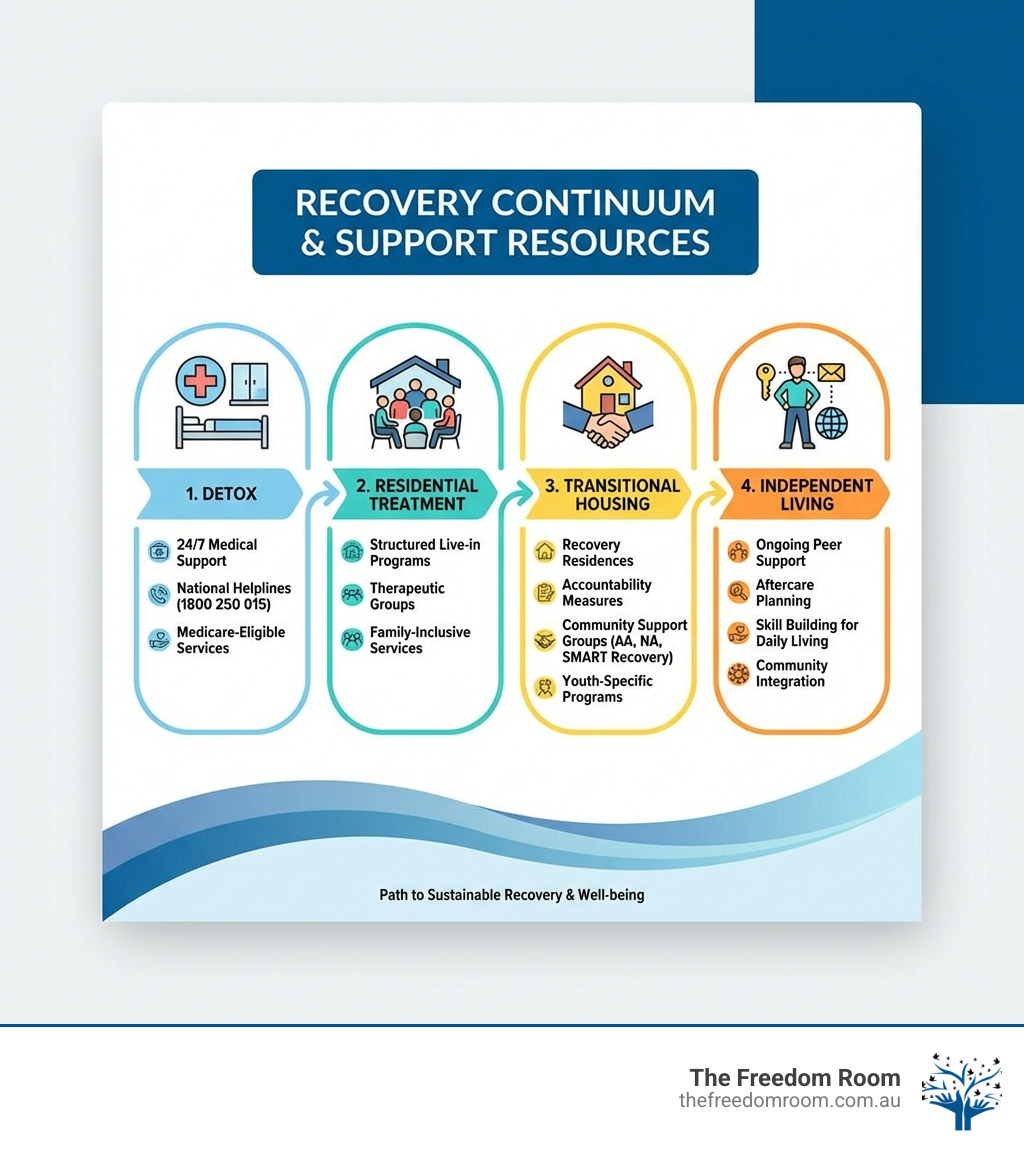
Key Sober Living Resources in Australia include:
- Residential rehabilitation programs that offer structured live-in treatment with 24/7 support.
- Recovery residences that provide peer-supported housing with clear accountability measures.
- Community support groups such as Alcoholics Anonymous, Narcotics Anonymous, and SMART Recovery meetings.
- National helplines like the National Drug and Alcohol Hotline on 1800 250 015 offer confidential guidance.
- Medicare-eligible services, including bulk billing options and rebates for psychological support.
- Youth-specific programs designed for age-appropriate environments for young people.
- Family-inclusive services that allow children to stay with parents during certain treatment phases.
Recovery should not be out of reach because of financial barriers. In Australia, approximately 139,300 people received alcohol and drug treatment in 2020 to 2021, with many accessing free or low-cost public services. The reality is that most publicly funded treatment programs accept self-referral and operate on sliding scales or co-payment models. This ensures that individuals from all socioeconomic backgrounds can access the care they require to manage a physical alcohol dependence.
The journey from dependence to independence requires more than just detoxification. It demands a supportive environment where you can rebuild routines, restore relationships, and develop practical skills for daily living. Whether you are just completing formal treatment or seeking stability after years of struggling alone, understanding the full spectrum of available resources helps you make informed decisions about your next steps. Research shows that individuals who stay in structured sober living environments demonstrate improved abstinence rates at 6, 12, and 18 months compared to baseline. These outcomes are not about willpower alone; they are about having the right support systems in place during vulnerable transition periods.
Navigating Sober Living Resources in Australia
Finding the right sober living resources in Australia involves understanding the standards that govern quality care. All alcohol and other drug service providers must meet the requirements of the National Quality Framework for Drug and Alcohol Treatment Services. This framework ensures that whether a facility is public or private, it must adhere to strict safety, ethical, and clinical standards. This regulation provides peace of mind for those seeking a safe environment to continue their recovery journey.
A recovery residence is more than just a place to sleep. It is a community built on peer support and mutual accountability. Residents typically participate in regular drug and alcohol screenings to maintain a safe environment for everyone. These measures are not designed to be punitive but rather to provide the necessary structure to support a person who is managing a physical alcohol dependence. By removing the immediate pressure of the outside world, these homes allow individuals to focus entirely on their health and wellbeing.
House rules are a fundamental part of the experience. These often include curfews, mandatory attendance at house meetings, and active participation in the upkeep of the home. This structure helps individuals re-establish the discipline required for daily life. Many facilities in Queensland focus on creating a live-in program where people can receive treatment and support in a safe and highly structured 24/7 environment. This level of oversight is particularly beneficial for those in the early stages of their recovery journey.
Essential Sober Living Resources for Long-Term Stability
Long-term stability is achieved when an individual moves beyond simply avoiding substances and begins to build a fulfilling life. Relapse prevention is a core component of this process. It involves identifying triggers and developing healthy coping mechanisms. Community building within the residence allows individuals to share their experiences and support one another through difficult moments. This shared experience fosters a sense of belonging that is often missing during active dependence.
Life skills training is another essential resource. Many residents find that their time in dependence caused them to lose touch with basic routines such as cooking, cleaning, and managing personal finances. Structured environments provide the space to practice these skills without the pressure of total independence. You can find more info about staying sober after rehab to help navigate this phase. These practical skills are the building blocks of a self-sufficient and productive life.
Most recovery homes require a commitment to specific house requirements to ensure the success of the community. These typically include:
- Maintaining complete abstinence from all mind-altering substances.
- Contributing to the household through assigned chores and maintenance tasks.
- Attending a minimum number of recovery meetings per week.
- Participating in regular house meetings to discuss communal issues.
- Engaging in a daily schedule that includes work, study, or volunteer activities.
Comparing Halfway Houses and Recovery Residences
It is common to hear the terms halfway house and recovery residence used interchangeably, but there are distinct differences in how they operate in Australia. Halfway houses are often more formal and may be linked to the correctional system or specific clinical requirements. They often have a limited length of stay, sometimes ranging from a few weeks to several months. These facilities are generally designed for those who require a high level of supervision following a period of incarceration or intensive hospitalisation.
Recovery residences, or sober living homes, are typically more flexible. They focus heavily on peer support and may allow residents to stay for longer periods, sometimes up to 18 months or more, depending on individual needs. The National Framework for Alcohol, Tobacco, and other Drug Treatment provides the guiding principles for these services, emphasising person-centred and equitable care. This approach ensures that the individual’s unique needs and goals are at the forefront of the recovery process.
The funding models also differ between these two types of housing. Some halfway houses receive specific government grants to house certain populations, while recovery residences may operate on a co-payment or private-pay basis. For those seeking a bridge between intensive rehab and home, exploring sober living solutions can provide a clearer picture of which model fits their current stage of recovery. Understanding these differences is crucial for selecting the environment that best supports your specific path.
Finding Local Support and Sober Living Resources
Locating support in your local area starts with knowing where to look. In Australia, the National Drug and Alcohol Hotline on 1800 250 015 is a vital starting point for confidential guidance. This service can connect you with local clinics and residential options in your state or territory. It is a free service that operates 24 hours a day, ensuring that help is always available when it is needed most.
Your General Practitioner is another essential resource. A GP can provide referrals to public residential rehabilitation services and help you manage any co-occurring physical or mental health conditions. Community clinics often provide outpatient support, which can be used in conjunction with sober living. For a comprehensive look at what follows intensive care, you can read more info about post-rehab support. Your GP can also help you access a Mental Health Care Plan, which provides Medicare rebates for sessions with a psychologist.
Several Australian support networks offer free meetings and peer connection:
- Alcoholics Anonymous: A 12-step program focused on peer support and spiritual growth.
- Narcotics Anonymous: A similar 12-step model for those recovering from drug dependence.
- SMART Recovery: A secular, science-based program that uses cognitive behavioural tools to manage recovery.
- Family Drug Support: Resources and helplines specifically for the families of those struggling with substance use.
Financial Strategies for Sustainable Recovery
One of the biggest concerns for individuals seeking sober living resources is the cost. However, the Australian healthcare system provides several avenues for affordable care. Publicly funded residential rehabilitation is often low-cost or free, with some providers asking for a small co-payment that can be deducted from Centrelink benefits. This ensures that financial status does not prevent someone from receiving the help they need.
Medicare rebates are available for many outpatient services, including sessions with psychologists and certain medical specialists. Some clinics offer bulk billing, meaning there is no out-of-pocket cost for the patient. It is important to ask potential providers about their billing practices and whether they offer a sliding scale based on income. Many organisations are committed to making their services as accessible as possible to the community.
For those in Strathpine or the wider Queensland area, checking with local community health centres can uncover hidden resources. Some organisations provide emergency financial assistance or housing subsidies for individuals in early recovery. You can find more info about affordable addiction treatment to help you plan your budget effectively. Taking the time to research these options can significantly reduce the stress associated with the cost of care.
Transitioning to Independence After Residential Care
The ultimate goal of any recovery program is to return to a life of independence. This transition is often the most challenging part of the journey. Vocational support is a key resource during this time, helping individuals find stable employment or return to study. Having a job provides not only financial stability but also a sense of purpose and a structured daily routine. Many sober living homes partner with local businesses to help residents find suitable work opportunities.
Social reintegration involves rebuilding a social circle that does not revolve around substance use. This may mean finding new hobbies, joining sports clubs, or volunteering. Budgeting skills are also vital, as many people need to learn how to manage their income to cover rent, food, and other living expenses independently. These skills are often taught through workshops or one-on-one sessions within the recovery residence.
The process of moving out of a structured environment should be gradual. Many successful programs offer a discharge plan that includes ongoing outpatient counselling and peer support. Understanding life after addiction is about recognising that while the environment changes, the commitment to recovery remains a daily practice. This ongoing commitment is supported by the community and the skills developed during the stay in a sober living home.
Discover the Support You Need for a Lasting, Successful Recovery
At The Freedom Room Wellness and Recovery, we understand that the path to sobriety is rarely a straight line. We provide compassionate and cost-effective alcohol treatment services designed to meet you where you are. Our team in Strathpine, Queensland, brings lived experience to the table, offering authentic support and empathy because we have been in your shoes. We believe that this personal understanding is essential for building a strong therapeutic relationship.
We focus on the whole person, not just the symptoms of dependence. Through personalised sessions, workshops, and evidence-informed therapy, we help you build the internal resources needed for long-term change. Our approach is grounded in the belief that everyone deserves access to high-quality recovery support, regardless of their financial situation. We are dedicated to providing a safe space where you can explore the underlying causes of your dependence and develop the tools for a brighter future.
Whether you are looking for a way to maintain your sobriety after leaving a residential program or you are just starting your journey, we are here to walk beside you. Our services are tailored to your individual needs, ensuring that you receive the right level of support at the right time. For more details on how we can assist your transition, explore more info about our post-rehabilitation support. We invite you to reach out and discover how our community can support your lasting recovery.
Frequently Asked Questions About Recovery Housing
How long can I stay in a sober living home? The duration of stay varies depending on the facility and your personal goals. Many programs recommend a minimum stay of 90 days to establish firm routines, but some residents choose to stay for 12 to 18 months as they work toward full independence. The length of stay is often determined by the individual’s progress and their readiness to manage the challenges of independent living.
What happens if someone relapses in the home? Relapse is handled with a focus on safety and accountability. Most homes have a strict policy that requires an individual to leave the house immediately to protect the sobriety of other residents. However, the goal is often to help the person find a higher level of care or a detoxification program so they can return to stability. The safety of the entire community is always the primary concern.
How much does sober living cost in Australia? Costs depend on whether the service is public or private. Public services are often free or require a small co-payment from government benefits. Private residences charge fees comparable to modest rental accommodation, often covering utilities and some support services. It is important to discuss all costs upfront with any potential provider.
What is the admission process for a recovery residence? The process usually begins with an initial assessment to ensure the facility is the right fit for your needs. You may need to be drug-free or stable on pharmacotherapy before entering. You can find more info about sober living admission to prepare for this step. This assessment helps to ensure that the environment is safe for both the new resident and the existing community.
Do I have to attend meetings while living there? Yes, most sober living resources include mandatory attendance at peer support meetings like Alcoholics Anonymous, Narcotics Anonymous, or SMART Recovery. These meetings are essential for building a support network outside of the home. They provide a space to share experiences and learn from others who are on a similar journey.
Can I work while living in a sober home? Most residences encourage or even require residents to be employed, studying, or volunteering. This helps you reintegrate into society and provides the financial means to pay for your stay. Engaging in productive activities is a key part of building a stable and fulfilling life in recovery.