

Supporting a Partner in Recovery: Healthy Boundaries That Protect You Both
Loving someone in recovery can bring uncertainty. You may have spent time adapting to alcohol use, managing difficult moments, protecting the household, or placing your partner’s needs before your own. Needing healthy boundaries does not mean abandoning or punishing them. Your wellbeing and safety matter too.
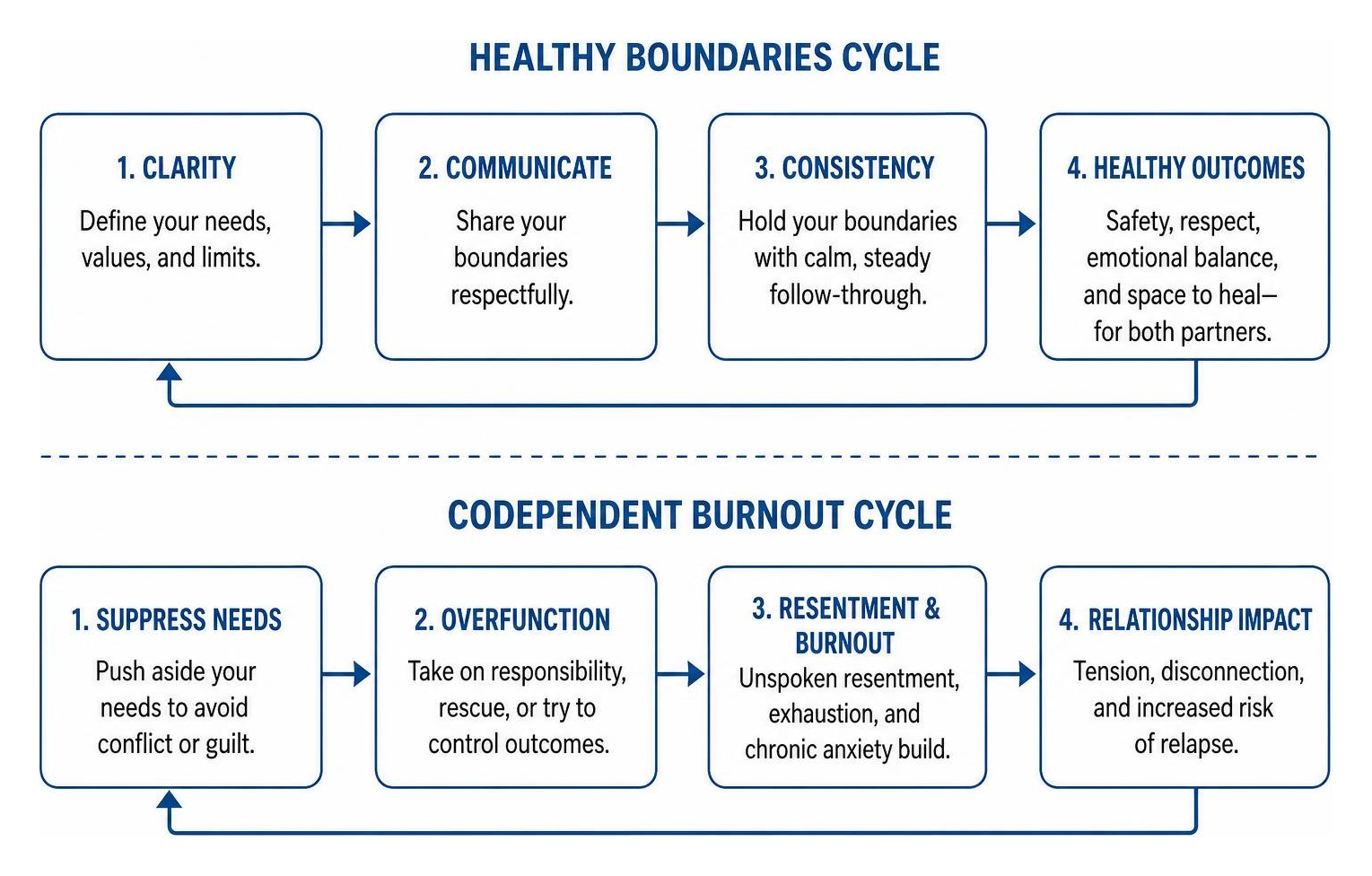
Setting healthy boundaries with a partner in recovery means being clear about what you can do and how you will respond when alcohol use affects you or the home. Boundaries can reduce enabling and create more predictable support, without suggesting you can control another person’s choices or guarantee sobriety.
Alcohol was the principal drug of concern in 41% of Australian alcohol and other drug treatment episodes in 2024–25, according to the Australian Institute of Health and Welfare. Its effects often extend beyond the person receiving treatment.
In my work supporting people affected by alcohol use and recovery, I see how hard it is for partners to recognise when care has become carrying too much. Clear, compassionate limits can protect connection while helping each person remain responsible for their own part in recovery.
Key Takeaways
- Set boundaries around your own behaviour, safety, wellbeing, time, and finances.
- Keep boundaries separate from attempts to control your partner’s recovery.
- Discuss household expectations, alcohol, trust, and emotional safety at calm times.
- Agree on a safe response if alcohol use or a recovery setback affects the household.
- Seek professional support when boundaries are repeatedly crossed or safety is a concern.
Three Practical Steps for Setting Healthy Boundaries
Setting boundaries does not need to happen all at once. If you are unsure where to begin, start with one limit that makes daily life feel safer or manageable. Every relationship and recovery journey is different, so adapt these ideas to your circumstances.
The three strategies below offer a practical starting point for creating clearer, more sustainable boundaries while remaining supportive. They are not about controlling a partner’s recovery; they are about protecting wellbeing, safety and mutual respect.
1. Set Clear Financial, Emotional and Personal Boundaries
A healthy boundary describes what you will do to protect your wellbeing, safety, time, or finances. It is not an attempt to decide whether your partner drinks, attends treatment, or remains sober. When you care deeply about someone and feel overwhelmed, this distinction can be reassuring: you can offer support without taking charge of their recovery.
A boundary is different from a rule. “If you are intoxicated, I will not argue with you” explains your response, whereas “You are not allowed to drink” tries to dictate another person’s behaviour. Couples can agree on shared household rules, such as keeping alcohol out of the home, when those agreements are mutual, transparent, and centred on safety.
Practical limits may apply in several areas. An emotional boundary could be, “If the conversation becomes aggressive, I will pause it until we are both calmer.” A financial boundary could be, “I will not use household savings to cover alcohol-related debt.” A personal boundary might be continuing your work, social, and wellbeing commitments rather than cancelling them whenever your partner is struggling.
Financial safeguards need to fit the circumstances. Where alcohol-related spending has affected bills or debt, a couple may agree that essential costs are paid from a shared account while each person keeps some independent spending money. Regular budget conversations or paying key bills directly can also help. These options should not become one person unilaterally controlling access to money, and significant debt or legal obligations may warrant independent advice.
It can help to communicate a boundary at a calm, sober time. Name what is happening, explain why it affects you, and state the response you can follow through on. For example: “When conversations become shouting, I feel unsafe and unable to listen. I will take a break and return in thirty minutes when we are calmer.” Effective conflict-resolution techniques may help keep the conversation focused.
2. Create a Safe and Predictable Home Environment
Once you are clear about your limits, the next step is making home life more predictable. Couples may agree on alcohol in the home, visitors, privacy, downtime, and how responsibilities will be managed when one person is overwhelmed. Shared expectations are usually more sustainable than one partner monitoring every decision.
Trust can take time to rebuild after alcohol has affected a relationship. Reasonable transparency may help when both people agree on what feels supportive, such as discussing plans or checking in after a difficult day. Searching belongings, reading messages, or monitoring whereabouts can place the supporting partner in an exhausting policing role. Consistent behaviour and conversations about what each person is comfortable sharing offer a steadier foundation for trust.
Support becomes enabling when you repeatedly protect your partner from consequences that remain theirs to address. This may include calling in sick on their behalf, hiding the impact from others, providing money without agreed safeguards, or taking over responsibilities they can manage. You can encourage counselling, peer support, or contact with a sponsor while allowing your partner to take responsibility for recovery. Helping them without enabling them and accountability in addiction recovery provide further guidance.
Planning for a recovery setback can make a stressful moment feel less chaotic. You might agree to pause difficult conversations, arrange separate transport, or encourage contact with a counsellor, sponsor, or healthcare professional if alcohol use returns. The purpose is to clarify your response, not to make you responsible for preventing relapse.
When a Boundary Is Not Enough
Boundaries are relationship tools, not substitutes for emergency or professional intervention. If there is immediate danger, violence or threats, unsafe driving, a child or vulnerable person at risk, severe intoxication, or a medical emergency, prioritise safety and seek urgent help.
3. Follow Through While Protecting Your Own Wellbeing
Setting a boundary is only the beginning. Following through calmly, when it is safe to do so, helps make the limit predictable. If your partner returns home after drinking, you may choose to pause a difficult conversation until the next morning rather than trying to resolve it while emotions are high.
This can be difficult if you have become used to keeping the peace or carrying the household. Looking after your rest, trusted relationships, work, and personal support is not a rejection of your partner. It can help you respond thoughtfully rather than from exhaustion or fear.
Professional support can be valuable when boundaries are repeatedly crossed, communication has broken down, codependency is a concern, or alcohol-related harm is placing strain on the relationship. A research review of couple and family interventions for substance use disorders found benefits for substance-use and relationship outcomes, although results vary by approach and outcome. A general practitioner, counsellor, peer-support group, EFT and CBT therapy, or addiction counselling can provide a supported space for communication and recovery planning.
Review and Adjust Boundaries Over Time
Healthy boundaries do not need to be permanently rigid. As trust, stability, and recovery support develop, ask whether a boundary is still necessary, realistic, respected, and protecting wellbeing. Reviewing arrangements together can maintain clarity without losing compassion, while safety concerns may require firmer limits or additional help.
Discover the Support You Need for a Lasting, Successful Recovery
Healthy boundaries are a practical expression of care. They can protect safety, reduce enabling, and create clearer expectations without asking one partner to manage the other’s recovery.
For compassionate professional support, explore Our Services, Contact Us, or addiction counselling. Visit The Freedom Room at 9a/521 Beams Rd, Carseldine QLD 4034 to discuss suitable next steps.
Frequently Asked Questions
What are healthy boundaries in a relationship during recovery?
Healthy boundaries protect your safety, time, finances and emotional wellbeing. They focus on what you will do, rather than controlling your partner’s recovery.
How do I set boundaries without feeling guilty?
Guilt is understandable if you are used to putting your partner first. Begin with one realistic limit and follow through calmly; this can protect both your wellbeing and the relationship from resentment.
How do I support my partner without enabling their drinking?
Support can include listening, encouraging treatment and helping your partner contact help. Repeatedly covering debts, making excuses or rescuing them from consequences may make it harder for them to take ownership of recovery.
What boundaries should I set around alcohol at home?
Agree on arrangements that make the home feel safer and more predictable, such as alcohol in the home, visitors, private space or a response to intoxication. Discuss what is workable at a calm time.
What should I do if my partner breaks a recovery boundary?
Follow the response you have already stated, provided it is safe and within your control, such as pausing a conversation or taking space. Seek urgent professional or emergency help for threats, violence, unsafe driving, severe intoxication or immediate risk.
What should I do if my partner says they may relapse when I set a boundary?
It is understandable to feel frightened. Their distress may be real, but preventing relapse is not your responsibility; maintain the boundary with compassion and encourage contact with a counsellor, sponsor, peer-support service or healthcare professional.
Should I search my partner’s belongings if I suspect alcohol use?
Wanting certainty can be understandable, but constant monitoring can become exhausting. Focus on observable behaviour, mutually agreed transparency and the limits you need for safety and wellbeing.
Can couples set different boundaries during recovery?
Yes. Each person may need different limits based on responsibilities, safety needs and capacity, and clear conversations can keep them respectful.
Can boundaries change as recovery progresses?
Yes. As trust and stability develop, review whether each boundary remains necessary, realistic, respected and protective of wellbeing; safety concerns may require firmer limits or further support.