

When stress, overwhelm, irritability or low mood start to affect your day, it is not always easy to know what you need. You might feel more easily frustrated, find it difficult to switch off at night, lose interest in things you usually enjoy, or simply feel like you have less emotional energy than usual. Sometimes, you know that something feels wrong but cannot quite put your finger on what would make things feel a little easier.
That is where emotional self-care can offer a place to start. Rather than trying to push difficult feelings away or expecting yourself to stay positive, it gives you a chance to slow down, notice what is happening, and consider what you might need in that moment. Sometimes that might mean taking a break. Other times, it might mean putting something into words, setting a boundary, moving your body, or reaching out to someone you trust.
These small choices can become self-care practices that promote emotional balance. Grounding, journaling, gentle movement, setting boundaries and taking breaks from digital demands are all options you can explore, depending on what feels useful and realistic for you. You do not need to try everything, follow a perfect routine or get it right every time. The aim is simply to find small ways of caring for yourself through difficult moments, while recognising when you may need a little more support.
Key Takeaways
- Emotional self-care means noticing feelings and responding with care rather than ignoring them.
- Small, realistic practices are easier to repeat than elaborate routines.
- Grounding, journalling, boundaries, gentle movement, and digital breaks are practical options to try.
- Consistency matters more than perfection; one manageable step is a useful beginning.
- Additional support may be helpful when distress persists, daily life becomes harder to manage, or self-care no longer feels enough.
What Self-Care Practices That Promote Emotional Balance Can You Start Today?
Sadness, anger, fear, and anxiety can be useful signals. They may point to stress, unmet needs, or boundaries that need attention. You do not need to suppress or solve them immediately.
Emotional self-care looks different for everyone. You do not need to follow every suggestion or create a perfect routine. Find approaches that feel realistic and useful, such as taking a pause, writing down what is on your mind, or speaking with someone you trust.

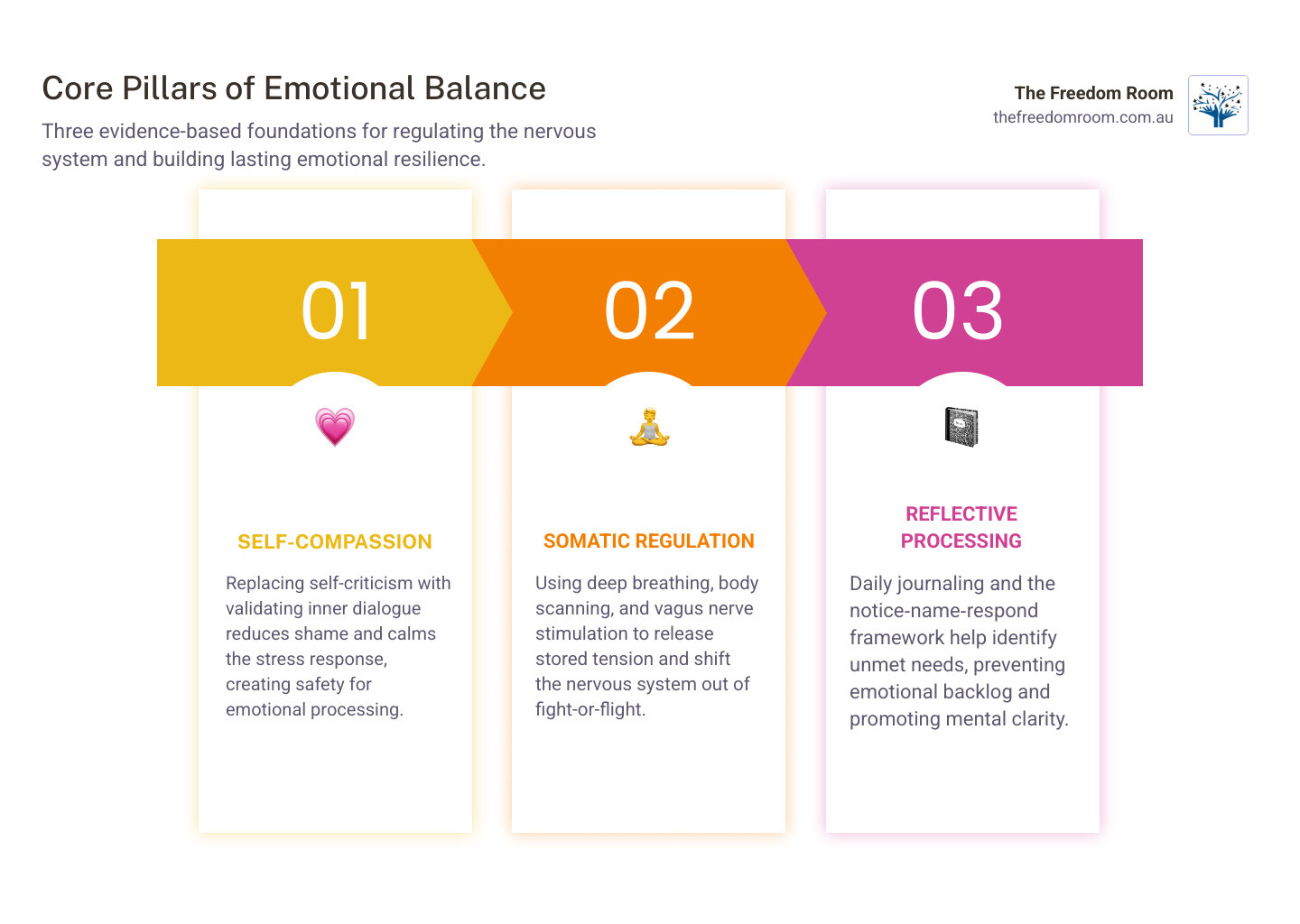
Self-compassion is important. Harsh self-criticism or shame can make it harder to take a supportive next step. A kinder response can help you notice what you need and decide what may help.
Australian research has also explored the relationship between self-compassion, emotion regulation, and wellbeing. A 2025 study from Swinburne University of Technology involving 201 adults found an association between these factors. The study was preliminary, so it cannot show that self-compassion directly causes better wellbeing. It supports responding to difficult emotions with less self-criticism and greater self-kindness. Read the study.
Understanding the Link Between Emotional Wellbeing and Overall Health
Ongoing stress can affect sleep, energy and everyday tasks. Emotional self-care can help you notice these changes and consider what may help.
Mindfulness, reflection and routines can help you notice thoughts and feelings. For a deeper introduction, explore our guide to emotional health and wellbeing.
Which Self-Care Practices Can Support Emotional Balance?
Choose one or two realistic practices. You do not need a perfect routine.
Grounding and Breathing
Grounding is one option to try when you feel overwhelmed. It may give you a little space before you react.
How to try it: If this feels useful, take five slow breaths, then notice five things you can see, four you can feel, and three you can hear. Healthdirect’s stress-relief guidance includes other relaxation options.
What to keep in mind: There is no single breathing pattern that works for everyone. If focusing on your breath feels uncomfortable, try noticing objects, sounds, or sensations around you instead.
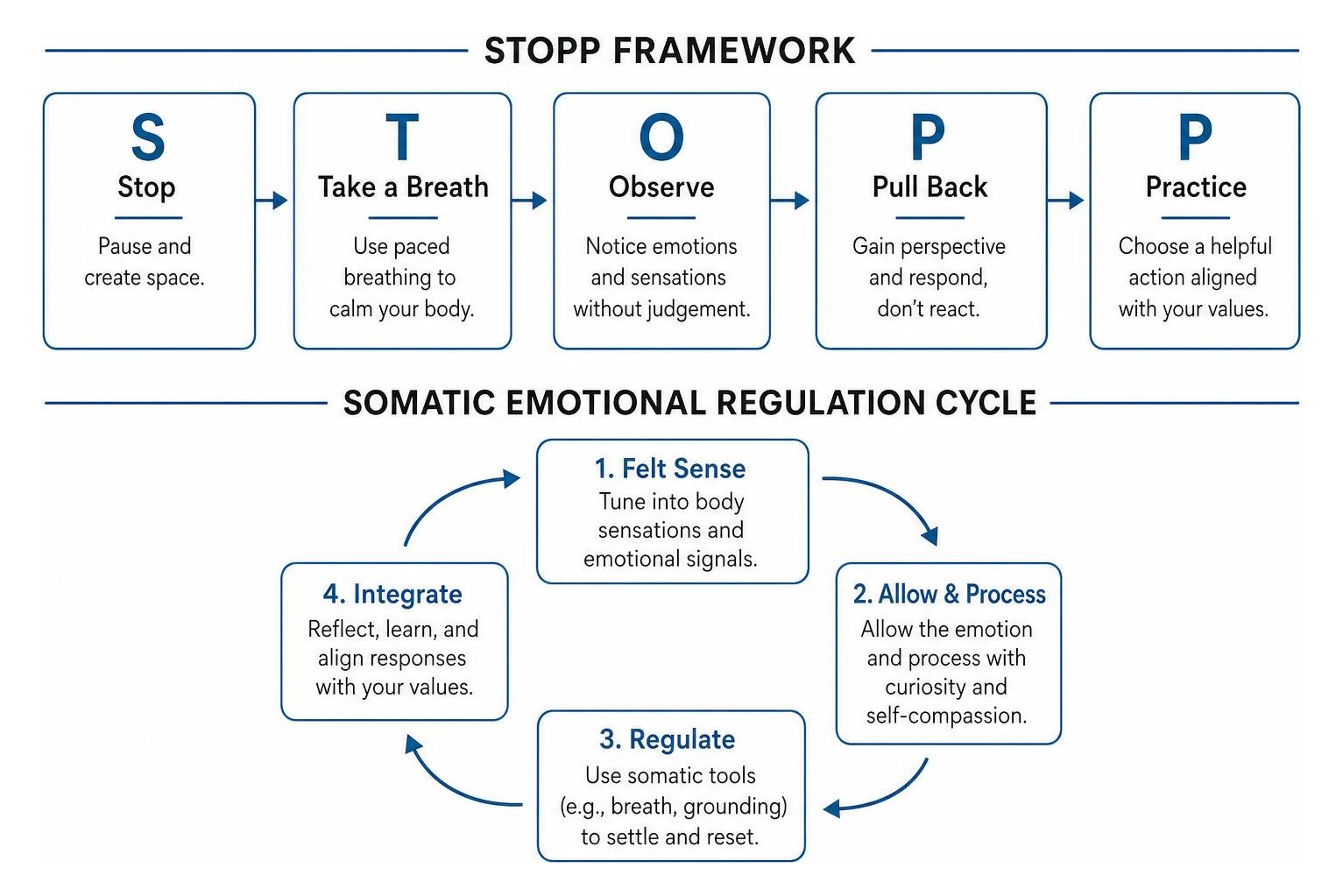
STOPP is a simple reminder to pause: stop, take a breath, notice your thoughts and feelings without judgement, then choose a constructive next step.
Journalling
Journalling puts feelings into words. It may help you make sense of what you are feeling and what you might need.
How to try it: Set aside five minutes and write without editing yourself. Begin with one or two prompts:
- What Am I Feeling Right Now?
- What Happened That Brought This Feeling Up?
- What Do I Need Today?
- Is There Something I Need To Say, Change, Or Let Go Of?
- What Would I Say To A Friend Experiencing The Same Thing?
What to keep in mind: Notes, a voice memo, or talking may feel more useful. Our guide to the healing power of journalling offers ideas for making it sustainable.
Setting Boundaries
Boundaries can protect your time and energy when commitments leave you depleted.
How to try it: Consider one commitment you could reduce, postpone, or decline this week. A clear response might be, “I cannot take that on at the moment.”
What to keep in mind: Boundaries can be difficult in relationships or at work. Start with one realistic limit.
Gentle Movement
Gentle movement can mean changing your position or environment, rather than doing a structured workout. A short walk, a few stretches, or stepping outside may help when you feel tense or caught in racing thoughts.
How to try it: If it feels realistic, walk, stretch between tasks, or step outside. Choose what suits your energy, mobility, time, and circumstances.
What to keep in mind: Movement is not treatment for emotional difficulties or a fitness goal. If it is not accessible or appealing, a quiet place or change of scenery may offer a similar pause.
Digital Breaks
Digital breaks may help when notifications, distressing news, or social comparison feel overwhelming. Phones and social media can also offer connection and support, so the aim is not to avoid them completely.
How to try it: Try one small screen boundary: put your phone away during dinner, turn off non-essential notifications, or spend part of the evening away from screens. Choose what feels manageable.
What to keep in mind: If a full break is not realistic, mute a stressful feed or choose a brief notification-free period. One small change can be a practical start.
Healthdirect notes that slow breathing, mindfulness, physical activity, sleep, and relaxation may help with everyday stress, but are not treatments for mental health conditions or physical dependence on alcohol.
How Can You Build Sustainable Emotional Habits and Maintain Long-Term Balance?

Self-care can fit into everyday life.
Try a daily check-in: name what you feel and ask what may help. You could breathe, write in a journal, step outside, or message someone you trust.
Habit stacking can help. Attach a check-in to an established habit, such as waiting for the kettle to boil or brushing your teeth. Our guide to emotional wellbeing offers more ideas for routines.
Adapting Self-Care for Life Transitions and Addiction Recovery
Life transitions, grief, and recovery can bring up difficult emotions. During recovery, some people are learning to recognise feelings that were previously avoided, pushed aside, or managed through alcohol or other substances. Emotional self-care can offer ways to notice stress, respond with care, and ask for support.
The Australian Institute of Health and Welfare provides evidence on the health impacts of risky alcohol consumption in Australia. Alongside professional or peer-led care, self-care practices may support steadier routines during recovery.
Tracking Emotional Progress and Knowing When to Seek Professional Support
Self-care is one way of supporting yourself, but it does not mean you have to handle everything by yourself. Everyday emotional strain may ease with rest, grounding, reflection, and support from trusted people.
Additional support may be helpful when difficult emotions persist, affect daily life or relationships, substance use is worsening, or things feel difficult to manage alone. Asking for help does not mean you have failed at self-care. It can be a compassionate way to gain support and perspective.
Emotional balance does not mean feeling happy all the time. It can mean having ways to work through difficult moments and return to the routines that matter to you.
If you are having thoughts of self-harm, feel unable to stay safe, or are in immediate danger, call 000. For crisis support, contact Lifeline on 13 11 14, Beyond Blue on 1300 22 4636, or healthdirect’s mental health helplines for further Australian support.
Discover the Support You Need for a Lasting, Successful Recovery
Emotional self-care is not about getting every feeling right. It is about small, repeatable ways to check in with yourself, respond with care, and seek support when you need it. You do not have to manage emotional overwhelm or physical dependence on alcohol alone.
The Freedom Room provides compassionate, evidence-based alcohol treatment and therapeutic counselling tailored to your circumstances.
- Explore Our Services
- Learn About Alcohol Treatment and Recovery Support
- Contact The Freedom Room to Discuss Your Support Options
Visit us at 9a/521 Beams Rd, Carseldine QLD 4034, or connect with our Strathpine support network when you are ready to begin your recovery.
Frequently Asked Questions
What self-care practices promote emotional balance?
Grounding, journalling, boundaries, gentle movement, and digital breaks may support emotional balance. Begin with one manageable step.
What is the difference between physical self-care and emotional self-care?
Physical self-care includes sleep, movement, nutrition, hygiene, and medical care. Emotional self-care centres on feelings, boundaries, and self-compassion.
What is a simple emotional self-care routine for a busy day?
Try breathing slowly, walking briefly, noting what you need, or putting your phone away during dinner. A short check-in may help.
What should I write in an emotional self-care journal?
Write what happened, how you feel, and what you need next. Consider what to change, communicate, or let go of.
When is self-care not enough?
Additional help may be useful if distress persists, affects daily life, substance use worsens, or you have thoughts of self-harm.
Can self-care replace professional support?
Self-care can complement professional support but cannot replace clinical care or recovery support for physical dependence on alcohol.