

Understanding Anxiety and Its Impact on Daily Life
Anxiety relief is a common goal for individuals experiencing overwhelming worry. For those dealing with racing thoughts, physical tension, or a constant sense of unease, finding effective ways to manage anxiety is crucial for one’s wellbeing.
Immediate anxiety relief methods include:
- Breathing exercises – 4-7-8 technique to calm the nervous system
- Grounding techniques – 5-4-3-2-1 method to reconnect with the present
- Progressive muscle relaxation – Release physical tension systematically
- Cold water therapy – Splash cold water on wrists or face
- Mindful movement – Gentle walking or stretching
- Limit stimulants – Reduce caffeine and alcohol intake
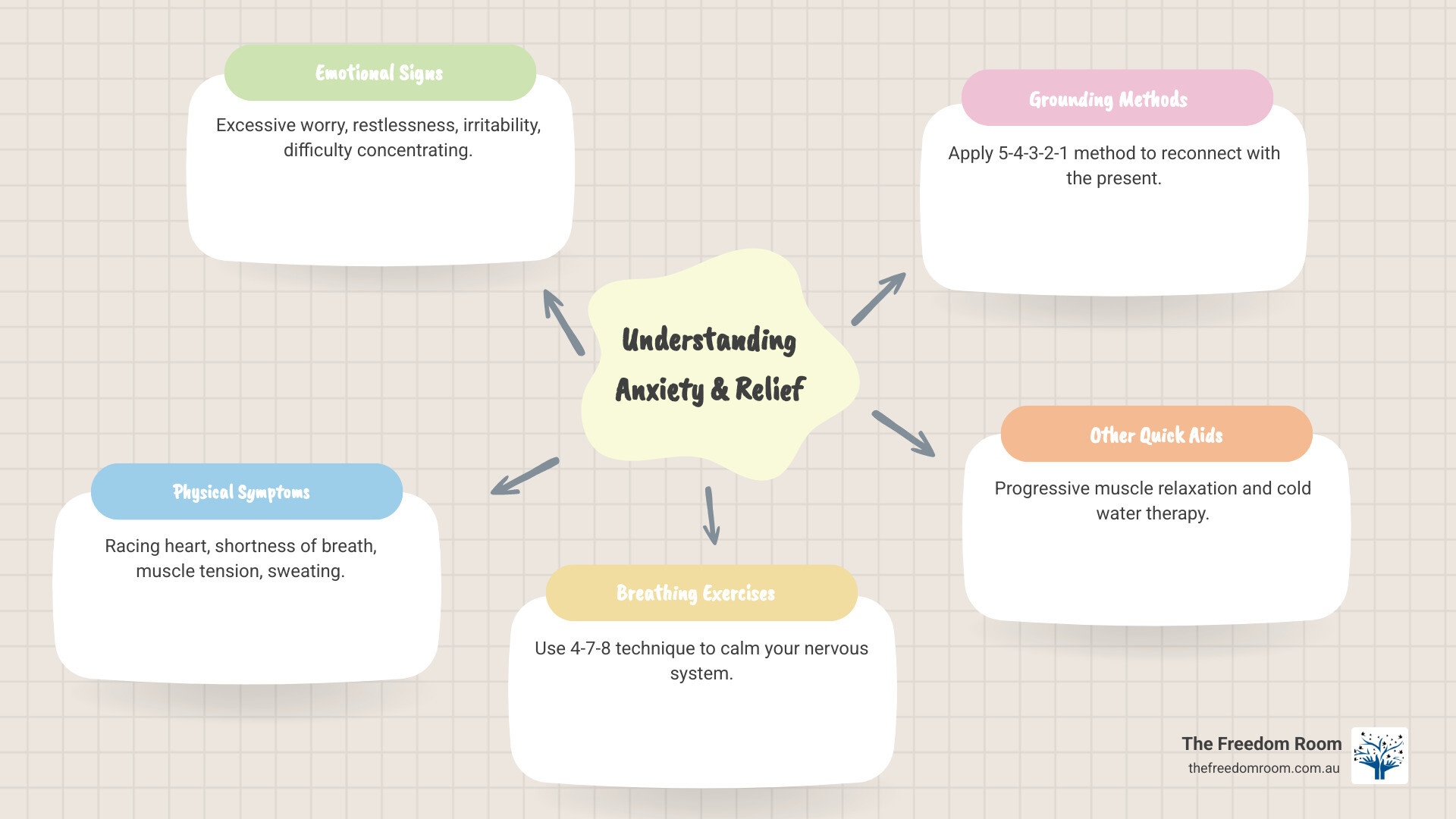
Anxiety affects one in five Australians and can manifest both emotionally and physically. An individual might experience excessive worry, restlessness, or difficulty concentrating alongside symptoms like increased heart rate, shortness of breath, or muscle tension.
Common triggers include work stress, financial concerns, relationship issues, major life events, and past trauma. For many people, anxiety becomes intertwined with other challenges like alcohol dependency, creating a cycle that can be difficult to break.
Anxiety is highly treatable. A range of proven methods, from immediate coping strategies to long-term lifestyle changes and professional support, can help individuals regain control and find lasting relief.
What is Anxiety?
Anxiety is a sustained, excessive worry about a future threat. While occasional anxiety is normal, it becomes a concern when it significantly impacts daily life. When anxious, the body releases stress hormones like adrenaline and cortisol, triggering the fight-or-flight response.
Emotionally, this can manifest as irritability, constant worry, and poor concentration. Physically, symptoms include increased heart rate, shortness of breath, and muscle aches. Understanding these symptoms is the first step towards effective anxiety relief.
Common Triggers and Causes
Anxiety triggers are varied and personal. They often include work or study pressure, financial stress, relationship issues, and health concerns. Major life events and past trauma can also play a significant role.
Lifestyle choices, particularly alcohol and drug use, can worsen anxiety over time, creating a difficult cycle of anxiety exacerbated by substance use. These complex relationships are explored further in our resources on The Link Between ADHD and Addiction and Stress and Alcohol Addiction.
In-the-Moment Strategies for Immediate Anxiety Relief
When anxiety arises suddenly, having a toolkit of immediate strategies can be the difference between feeling overwhelmed and regaining a sense of control. These techniques are designed to provide rapid anxiety relief by engaging the body’s natural responses and redirecting focus to the present moment.
Recognising and Navigating a Panic Attack
A panic attack is an intense wave of fear accompanied by physical symptoms like a racing heart, dizziness, shortness of breath, and trembling. While frightening, it is crucial to remember that panic attacks are not dangerous and typically subside within 5 to 30 minutes.
The objective is to allow the episode to pass rather than resist it. Use reassuring coping statements like “This too will pass” or “I’m safe, this is just anxiety.” It is advisable to remain in place, as this helps the mind learn that the panic will subside without the need for escape.
Grounding Techniques to Re-centre the Mind
When anxiety causes a feeling of disconnection, grounding techniques can anchor an individual in the present by engaging the senses. The 5-4-3-2-1 method is a powerful example:
- Acknowledge 5 things you can see around you.
- Notice 4 things you can feel, like your feet on the ground.
- Identify 3 things you can hear, such as distant traffic.
- Find 2 things you can smell.
- Acknowledge 1 thing you can taste.
Other effective techniques include progressive muscle relaxation, where you systematically tense and release muscle groups, and cold water therapy, which involves splashing cold water on your face or wrists for an immediate sensory reset.
Breathing Exercises for Rapid Calm
Breathing is a powerful tool for immediate anxiety relief. Slowing one’s breath activates the parasympathetic nervous system, which calms the body’s “fight or flight” response.
Diaphragmatic breathing is a foundational technique. With one hand on the abdomen, breathe in through the nose, feeling the abdomen rise. Exhale slowly through pursed lips, making the exhale longer than the inhale.
The 4-7-8 breathing technique offers a structured approach:
- Inhale through the nose for four counts.
- Hold the breath for seven counts.
- Exhale through the mouth for eight counts.
Repeating this cycle can slow the heart rate and promote relaxation. Further information is available regarding how the 4-7-8 method works. Regular practice makes these techniques more effective.
Long-Term Lifestyle Changes for Managing Anxiety
While immediate strategies are crucial for acute moments, sustainable anxiety relief often comes from adopting long-term lifestyle changes. These holistic approaches help to build resilience, reduce overall anxiety levels, and support mental and physical well-being. Building sustainable habits into a daily routine creates a foundation for lasting change, helping to prevent anxiety from becoming established.
The Role of Physical Activity and Diet
Regular physical activity is a powerful antidote to anxiety, burning off stress hormones and releasing mood-boosting endorphins. Even a brisk 20-minute walk can make a significant difference. To maintain consistency, it is beneficial to select an enjoyable activity, such as walking, yoga, or swimming.
Diet also plays a key role.
- Eat regular, nutritious meals with whole foods to stabilise energy levels.
- Be mindful of substances that can worsen anxiety, such as caffeine and alcohol. Anxiety following alcohol consumption is a common phenomenon.
- Follow the Australian Guidelines to reduce risks from drinking.
- Stay hydrated, as dehydration can mimic or trigger anxiety symptoms.
Prioritising Sleep and Mindfulness
Quality sleep is a cornerstone of mental health. Sleep deprivation worsens anxiety, so establishing a regular sleep schedule is vital. Establishing a calming bedtime routine, such as reading or taking a warm bath, and ensuring the bedroom is cool, dark, and quiet is recommended.
Mindfulness and meditation offer profound benefits by teaching individuals to observe anxious thoughts without judgement. Even 5-10 minutes of daily practice can improve emotional regulation. Explore related tools such as Mindfulness for Alcohol Recovery and The Healing Power of Journalling to support this journey.
The Power of Nature and Connection
Connecting with nature lowers stress hormones and promotes peace. Simple acts like taking an “awe walk”, having plants indoors, or eating lunch in a park can provide significant anxiety relief.
Social connection is another vital component.
- Discussing feelings with trusted friends or family can reduce isolation and provide perspective.
- Actively engaging with others counteracts the urge to withdraw when anxious.
- Peer Support Recovery offers a unique environment of shared understanding.
Managing boundaries through Work-Life Balance and Burnout Prevention also supports overall wellbeing.
Natural Approaches and Nutritional Support for Anxiety
Beyond lifestyle adjustments, certain natural approaches and nutritional supplements are gaining attention for their potential to provide anxiety relief. While these can be beneficial, it is crucial to approach them with caution and under the guidance of a healthcare professional.
Evidence-Informed Nutritional and Lifestyle Support
Diet provides the building blocks for brain health. Certain nutrients and herbs can support mood regulation, but a balanced diet of whole foods should be prioritised.
- Magnesium: Found in leafy greens, nuts, and seeds, this mineral supports nerve function. Research suggests it can help manage anxiety.
- Vitamin D: Essential for mental wellbeing, low levels of the “sunshine vitamin” are linked to anxiety.
- Omega-3 Fatty Acids: Found in fatty fish and flaxseeds, these support brain health and may reduce anxiety symptoms.
- Herbal Teas: Gentle options like chamomile and valerian root have been traditionally used to promote calm.
- Adaptogens: Herbs like Ashwagandha and Saffron have shown potential in reducing stress in some studies.
These natural approaches are supportive, but a healthy lifestyle is the foundation of anxiety relief.
Important Precautions and Potential Risks
When considering natural remedies for anxiety relief, it is vital to proceed with caution. Most supplements are not regulated as rigorously as medications by Australia’s Therapeutic Goods Administration (TGA), so their purity and safety can vary.
It is essential to consult a doctor before starting any new supplement, particularly for individuals taking other medications, who are pregnant, or who have pre-existing health conditions.
- Drug Interactions: Supplements can have dangerous interactions. St. John’s Wort, for example, can interfere with antidepressants and birth control.
- Specific Risks: Some herbs carry risks. Kava has been linked to liver damage, while Kratom is addictive and should be avoided.
- “Natural” Does Not Mean Risk-Free: All supplements should be discussed with a doctor to ensure safety and correct dosage.
Prioritising dietary changes where possible is a gentler and safer approach than concentrated supplements.
When and How to Seek Professional Support
While self-help strategies and lifestyle changes are valuable for anxiety relief, there are times when professional support becomes essential. Recognising these moments is a sign of strength and a crucial step towards lasting well-being.
Recognising When Professional Help is Needed
It is a sign of strength to seek professional help when anxiety becomes unmanageable. Consider support if anxiety significantly interferes with one’s daily life for an extended period (e.g., six months or more), or if self-help strategies are no longer sufficient.
Key signs that professional help may be needed include:
- Frequent or intense panic attacks
- Persistent feelings of hopelessness
- Increasing social isolation
- Thoughts of self-harm
These signs require immediate intervention. Breaking the Stigma around mental health is crucial. For immediate support, contact Lifeline at 13 11 14 or Beyond Blue at 1300 22 4636. A General Practitioner (GP) is also an excellent first point of contact.
Therapeutic Approaches for Lasting Anxiety Relief
Professional therapy offers structured, evidence-based approaches for lasting anxiety relief. A combination of therapy and, in some cases, medication provides the most comprehensive treatment.
Cognitive Behavioural Therapy (CBT) is one of the most effective treatments. It helps individuals identify and challenge negative thought patterns and behaviours that fuel anxiety. More information is available on How to Use CBT Techniques for Addiction.
Within CBT, exposure therapy involves gradually confronting feared situations to build resilience. Other approaches like psychodynamic therapy or acceptance and commitment therapy (ACT) may also be beneficial. Finding a trusted therapist is the foundation for meaningful change.
An Introduction to Emotional Freedom Techniques (EFT) for Anxiety Relief
Emotional Freedom Techniques (EFT), or “tapping,” is a valuable, evidence-based tool for stress and emotional challenges. It involves gently processing difficult emotions like fear and anger by tapping on specific acupressure points, helping an individual move from a state of being overwhelmed to a state of calm.
An EFT Practitioner’s role is to guide the client in safely releasing emotional trauma held in the body and subconscious. They are trained to help clients steer past traumas without reliving them, with the goal of improving their emotional state after sessions. Unlike some talk therapies, EFT is designed to clear negative emotions directly.
EFT can be part of any healing journey, as it addresses the emotional roots of many conditions. It is known to be beneficial for:
- Addictions, anxiety, and depression
- PTSD and childhood trauma
- Phobias and stress management
- Pain management, loss, and grief
- Self-confidence issues
How EFT works: Tapping on specific points while focusing on a distressing issue sends a calming signal to the brain’s alarm system, the amygdala. This disrupts the “fight, flight, or freeze” response, allowing the nervous system to return to balance. Over time, EFT can retrain this stress response, building emotional resilience. Support is offered through Tapping for Anxiety Relief, Trauma Informed Therapy, and EFT and CBT Therapy.
Conclusion: A Holistic Path to Lasting Anxiety Relief
Achieving lasting anxiety relief is a process of progress rather than perfection. This article has explored a comprehensive toolkit that spans from immediate coping strategies to sustainable lifestyle changes and professional support options. Each approach serves a unique purpose in overall wellbeing.
Immediate techniques like the 5-4-3-2-1 grounding method, breathing exercises, and progressive muscle relaxation provide essential relief when anxiety occurs. These serve as a first line of defence, offering rapid calm when most needed. Meanwhile, long-term strategies such as regular physical activity, nutritious eating, quality sleep, and connecting with nature build the foundation for sustained mental health.
The efficacy of managing anxiety lies in a holistic approach. A morning walk, for instance, might prevent an afternoon panic attack. A consistent sleep routine can reduce overall stress levels. Simple changes like limiting caffeine or spending time in a local park can create meaningful shifts in one’s daily emotional state.
Professional support becomes invaluable when self-help strategies are not enough. Whether through Cognitive Behavioural Therapy, medication, or innovative approaches like Emotional Freedom Techniques, qualified professionals can guide individuals through more complex challenges. Seeking help is a sign of strength.
For many Australians, anxiety intertwines with other challenges like alcohol dependency, creating cycles that can be difficult to break. In these cases, specialised support is particularly beneficial. Understanding these connections and addressing them with compassionate, evidence-based care can transform one’s relationship with both anxiety and recovery.
Each individual’s journey is unique, and there is no single path that is effective for everyone. Some people find relief through mindfulness and lifestyle changes, while others benefit from therapy or medication. Many find that a combination of approaches works best. The key is to begin the process and remain open to different approaches.
At The Freedom Room, it is understood that anxiety relief is often part of a broader healing journey. The team brings lived experience alongside professional expertise, creating a supportive environment where clients can explore what works for their specific situation. Personalised sessions are offered that address the complex relationship between anxiety, trauma, and addiction recovery.
The principle of ‘progress over perfection’ is a guiding tenet. Every small step forward is significant, whether it is trying a new breathing technique, seeking support, or making gradual lifestyle changes. This investment in one’s wellbeing is worthwhile, as individuals deserve to live free from overwhelming anxiety.
The path to lasting anxiety relief and Emotional Sobriety is attainable. Through our Addiction Counselling services and therapeutic approaches, we support clients in building emotional resilience and creating the life they deserve. The strength for recovery is inherent; our role is to help clients access it.