

Mindfulness for Alcohol Recovery: 8 Powerful Benefits in 2025
Why Mindfulness for Alcohol Recovery Changes Everything
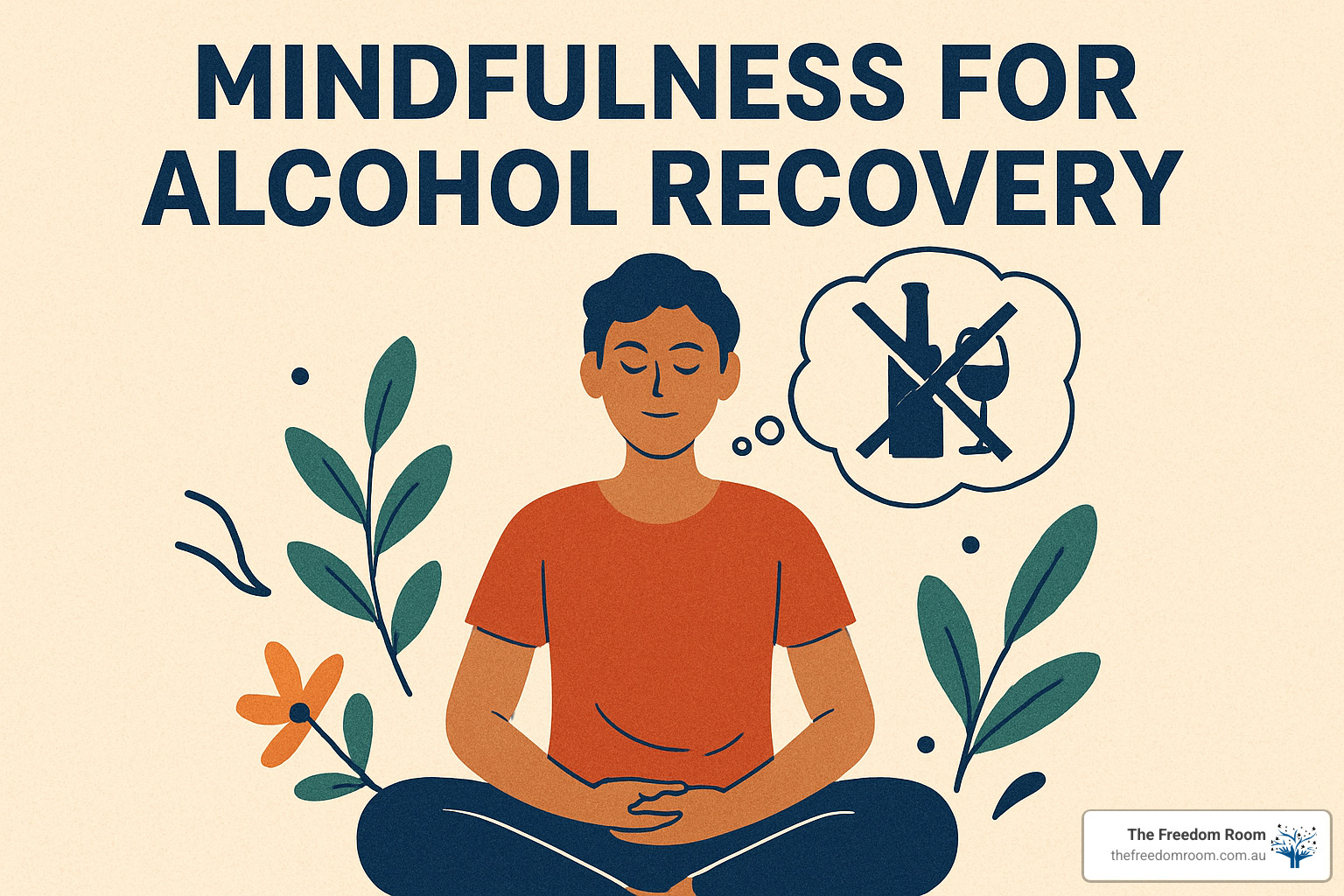
Mindfulness for alcohol recovery offers a powerful way to break free from addiction by training your brain to respond differently to cravings and triggers. Instead of being controlled by automatic drinking patterns, you learn to pause, observe, and choose healthier responses.
Key mindfulness techniques for alcohol recovery:
- Urge surfing – Observing cravings without acting on them
- Mindful breathing – Using breath as an anchor during difficult moments
- Body scanning – Noticing physical sensations to prevent relapse
- Present-moment awareness – Staying grounded instead of dwelling on past guilt or future fears
- Non-judgmental observation – Accepting thoughts and feelings without criticism
Research shows remarkable results. In one study, participants who completed an 8-week mindfulness course were abstinent on 94.5% of study days. Nearly half achieved complete abstinence, while stress, anxiety and depression – all major relapse triggers – dropped significantly.
What makes mindfulness different from traditional therapy? It doesn’t just address why you drink. It rewires how your brain responds to alcohol cues. Mindfulness breaks this autopilot pattern.
The science is clear: mindfulness literally reshapes your brain. Just 15 minutes of practice can reduce cravings by about 30% – equivalent to pain relief from 5mg of oxycodone. Your prefrontal cortex (the brain’s control centre) gets stronger, while stress circuits calm down.
But here’s the truth – mindfulness isn’t magic. It’s a skill that requires practice. The good news? You can start with techniques as simple as mindful breathing at traffic lights or observing your feet while walking.
Understanding Mindfulness for Alcohol Recovery
Picture your mind as a busy intersection where thoughts, feelings, and impulses are constantly crossing paths. When you’re struggling with alcohol dependence, it’s like being stuck in rush-hour traffic with a broken traffic light – everything feels chaotic and out of control. Mindfulness for alcohol recovery acts as that traffic light, helping you pause and create order from the chaos.
The beauty of mindfulness lies in its simplicity: awareness without judgement. This isn’t about forcing yourself to think positive thoughts or pushing away uncomfortable feelings. Instead, it’s about learning to observe what’s happening in your mind and body without immediately reacting.
When we’re caught in the addiction cycle, our brains slip into autopilot mode. You might find yourself reaching for a drink before you’ve even consciously decided to have one. That’s your brain following well-worn neural pathways – like water flowing down a familiar stream. The scientific research on mindfulness shows us something remarkable: we can actually carve out new pathways through neuroplasticity.
Think of neuroplasticity as your brain’s incredible ability to renovate itself. Just as you might renovate a house to better suit your needs, mindfulness helps renovate your brain’s responses to alcohol cues and triggers. This isn’t wishful thinking – it’s backed by solid neuroscience.
The S-ART model (Sober Attention and Response Training) demonstrates how mindfulness works in recovery. Instead of the old pattern of trigger-craving-drinking, you develop a new sequence: trigger-awareness-pause-choice. That pause is where your freedom lives.
What Is Mindfulness & How It Addresses Alcohol Dependence
Jon Kabat-Zinn, the researcher who brought mindfulness into Western medicine, describes it as “paying attention in a particular way: on purpose, in the present moment, and non-judgementally.” For someone in recovery, this definition becomes a lifeline.
Present-moment focus is crucial because that’s where cravings actually exist. They’re not permanent fixtures in your life – they’re temporary visitors that arise and pass away. When you’re dwelling on past drinking mistakes or worrying about staying sober forever, you’re missing what’s actually happening right now. And right now is the only moment where you have real power to choose.
The magic happens when mindfulness breaks automaticity – those unconscious patterns that lead to drinking. Mindfulness creates a conscious pause between the trigger and your response.
Why Is Mindfulness for Alcohol Recovery Different from Traditional Therapy?
Traditional Cognitive Behavioural Therapy (CBT) works brilliantly by helping you identify and change unhelpful thought patterns. Mindfulness-based interventions (MBIs), however, work more like a wise friend who sits quietly with you through difficult moments.
CBT might help you recognise: “I’m having a craving because I always drink when I’m anxious about work presentations. Let me challenge this thought and use my coping strategies.” This analytical approach gives you tools and insights.
Mindfulness takes a different path: “I notice anxiety building in my chest and thoughts spinning about tomorrow’s presentation. I can breathe with these sensations and watch how they change.” Rather than trying to fix or change the experience, you learn to be present with it.
The beautiful thing about mindfulness-based relapse prevention is that it doesn’t replace traditional therapy – it improves it. When you combine the practical skills of CBT with the present-moment awareness of mindfulness, you’re building a comprehensive toolkit for recovery.
How Mindfulness for Alcohol Recovery Rewires the Brain
The scientific research on neurobiology reveals something extraordinary: your brain is constantly changing based on what you repeatedly think, feel, and do. This means the neural pathways carved by years of drinking aren’t permanent highways – they’re more like garden paths that can grow over when you stop walking on them.
Prefrontal control is like having a wise CEO running your mental boardroom. This brain region handles decision-making, impulse control, and long-term planning. Alcohol dependence often hijacks this CEO, leaving the emotional limbic system in charge. Mindfulness practice strengthens your prefrontal cortex, helping your inner CEO reclaim leadership.
Meanwhile, mindfulness calms your stress circuits. The amygdala – your brain’s smoke detector – learns to distinguish between real threats and false alarms. Instead of sounding the stress alarm every time you pass a bottle shop or feel anxious, it becomes more discerning.
After just eight weeks of mindfulness training, brain scans show increased activity in areas responsible for attention and awareness, while stress-related regions become less reactive. Your brain literally reshapes itself to support your recovery journey.
Evidence-Based Benefits: Staying Sober with Science
When we first started incorporating mindfulness for alcohol recovery into our programmes at The Freedom Room, we weren’t just following a trend. We were responding to compelling research that shows mindfulness isn’t just helpful—it’s transformative for people struggling with alcohol dependence.
The numbers speak for themselves. In one groundbreaking study, participants who practised mindfulness were abstinent on 94.5% of study days. That’s remarkable when you consider typical relapse rates, where roughly half of people return to drinking within their first year of treatment.
But here’s what really gets us excited: mindfulness doesn’t just help you avoid alcohol. It actually improves your entire quality of life. The scientific research on relapse prevention reveals that people who accept mindfulness experience significant reductions in stress and anxiety—two of the biggest triggers for relapse.
Imagine going from a perceived stress score of 21.9 to just 13.7 in eight weeks. That’s the kind of change participants reported. They weren’t just white-knuckling their way through sobriety; they were genuinely feeling better.
The benefits extend far beyond staying sober. People report better emotional regulation, meaning they’re less reactive to those everyday frustrations that used to send them straight to the bottle. Their sleep quality improves, inflammation markers drop, and they experience sharper focus and decision-making abilities.
Perhaps most surprisingly, mindfulness provides genuine pain relief. Just 15 minutes of practice can reduce pain by about 30%—equivalent to taking 5mg of oxycodone. This is life-changing for people who’ve been drinking to cope with chronic pain.
Key Statistics You Should Know
That 94.5% abstinent days figure isn’t just impressive—it represents real people staying sober through real challenges. Nearly 47% achieved complete abstinence during the study period, while others dramatically reduced their heavy drinking days.
When researchers studied Mindfulness-Oriented Recovery Improvement (MORE), they found participants were twice as likely to stop misusing substances nine months after treatment compared to those receiving traditional supportive therapy alone.
The 30% pain reduction from just 15 minutes of mindfulness practice has profound implications. Many people drink because they’re trying to escape physical discomfort. Mindfulness offers a healthier alternative that actually works.
Most encouraging of all, depression, anxiety, and stress scores all decreased significantly among mindfulness practitioners. These aren’t just feel-good improvements—they’re measurable changes that create a foundation for lasting recovery.
Limitations & Risks to Consider
We believe in giving you the complete picture. While mindfulness is generally safe and incredibly effective, it’s not a magic cure-all, and it’s not right for everyone in every situation.
If you have a history of trauma or PTSD, basic mindfulness meditation might trigger flashbacks or intrusive memories. This doesn’t mean mindfulness is off-limits for you—it just means you need proper guidance from someone who understands trauma-informed approaches.
Some people initially struggle with dissociation risks, using mindfulness as another way to space out rather than truly staying present. Good instruction helps you distinguish between genuine mindful awareness and mental escape.
Here’s something we always emphasise: mindfulness isn’t a standalone treatment. It works best as part of a comprehensive recovery plan that includes therapy, medical support when needed, and strong social connections. At The Freedom Room, we integrate mindfulness with approaches like CBT and ACT because we’ve seen how powerful these combinations can be.
Most importantly, professional guidance matters enormously. Poorly taught mindfulness can be ineffective or even counterproductive. That’s why our team—all of whom are in recovery themselves—brings both lived experience and proper training to every session.
Practical Mindfulness Techniques to Curb Cravings
Let’s get practical. These mindfulness for alcohol recovery techniques aren’t just theories – they’re tools you can use right now to change how you respond to cravings. Every person in recovery needs a toolkit, and these practices have helped thousands of people break free from the automatic cycle of drinking.
The most powerful technique you’ll learn is urge surfing. Think of cravings like ocean waves – they build up, reach a peak, then naturally subside. Most people never find this because they either give in to the craving or frantically try to distract themselves before the wave completes its natural cycle.
When a craving hits, instead of fighting it or surrendering to it, you can surf it. Start by simply noticing the craving without judgement: “I’m having a craving right now.” Then observe where you feel it in your body – perhaps tension in your chest, restless legs, or tight shoulders. Breathe with the sensation rather than against it, watching how it changes and moves around your body. Most importantly, remind yourself that this feeling is temporary and you don’t have to act on it.
Mindful breathing becomes your constant companion in recovery. Your breath is always available, even in the most challenging moments. When cravings strike, try the 4-7-8 technique: breathe in for 4 counts, hold for 7, then exhale for 8. This simple practice activates your body’s natural relaxation response, helping calm the stress that often triggers drinking.
Body scanning helps you catch warning signs before cravings become overwhelming. Starting from the top of your head, slowly move your attention down through your entire body. Notice where you hold tension and what sensations arise. Often, your body knows you’re stressed or triggered before your mind catches up.
The RAIN technique gives you a structured way to handle difficult emotions. When you’re struggling, ask yourself: What am I recognising right now? Can I allow this feeling to be here without fighting it? How can I investigate what my body needs in this moment? Finally, you don’t need to attach to this feeling – it’s not permanent or who you are.
Mindful walking transforms a simple activity into a recovery tool. Feel your feet connecting with the ground, notice your surroundings, and coordinate your breath with your steps. This practice is particularly helpful when you feel trapped or overwhelmed indoors – sometimes the best thing you can do is step outside and walk mindfully around the block.
Quick 2-Minute Practices for Emergencies
Sometimes cravings hit like a freight train and you need immediate relief. These rapid techniques can serve as circuit breakers when you’re in crisis mode.
The anchor breath is your fastest reset button. Place one hand on your chest and one on your belly, then take five slow breaths while focusing on whichever hand moves more. This simple practice grounds you in your body and interrupts the racing thoughts that often accompany intense cravings.
Try a five-sense check when you feel overwhelmed. Name five things you can see around you, four things you can hear, three things you can touch, two things you can smell, and one thing you can taste. This technique pulls you out of internal craving loops and anchors you firmly in the present moment.
Having a pocket mantra ready can provide instant comfort. Choose a phrase that resonates with you – perhaps “This too shall pass,” “I am stronger than this feeling,” or simply “One breath at a time.” Repeat your chosen phrase while breathing slowly. The repetition gives your mind something constructive to focus on instead of the craving.
Building a Daily Routine
Mindfulness for alcohol recovery works best when it becomes woven into your daily life rather than something you only reach for during emergencies. Building sustainable practices takes time, but the results are worth the effort.
Start your day with morning meditation, even if it’s just five minutes while you’re still in bed. A simple breath-focused meditation or body scan sets a mindful tone for your entire day and strengthens your awareness when you’re mentally fresh. Think of it as training your mindfulness muscle.
Transform routine activities into mindful transitions. Brush your teeth mindfully, really feeling the bristles and noticing the taste of toothpaste. Take three conscious breaths before starting your car. These micro-practices might seem small, but they add up to create a more mindful way of living.
Evening reflection helps you learn from each day without harsh self-judgement. Spend five minutes before bed reviewing your day – what triggered stress or cravings? When did you feel most present and calm? This practice builds self-awareness and helps you recognise patterns in your recovery journey.
Consider implementing digital detox periods during your day. Set specific times when you put away phones and screens, using this time for mindful activities like walking, journaling, or simply sitting quietly. Technology often keeps us in reactive mode, while mindfulness helps us become more responsive and intentional.
If you’d like support in building these routines into a comprehensive recovery plan, our relapse prevention services integrate mindfulness with practical recovery planning custom to your unique needs.
Integrating Mindfulness Into Your Recovery Plan
Mindfulness for alcohol recovery works best when it becomes part of your bigger picture – not something you do separately, but something that strengthens every other aspect of your healing journey. Think of mindfulness as the thread that weaves through all your recovery efforts, making each one more effective.
The beauty of mindfulness is how it transforms ordinary recovery tools into something more powerful. Take trigger journaling, for example. Most people write down what happened and how they felt. But when you add mindfulness, you start noticing the subtle warning signs your body gives you before triggers hit.
Instead of just writing “felt stressed at work,” you might notice: “shoulders tensed up during the morning meeting, breathing became shallow, had the thought ‘I can’t cope with this’ three times before lunch.” This deeper awareness helps you catch potential problems much earlier.
Your daily journal entries become more helpful when they include physical sensations (that tight feeling in your chest, restless energy in your legs), emotions (frustrated, lonely, overwhelmed), and thoughts (those “I can’t handle this” moments). Then you can track which mindfulness techniques worked best for different situations.
Relapse prevention planning changes completely when mindfulness is involved. Traditional plans focus on avoiding triggers – don’t go to pubs, don’t hang around drinking friends. But life happens, and sometimes you can’t avoid every trigger. Mindfulness teaches you to stay present with uncomfortable situations instead of running away or giving in.
Your mindful relapse prevention plan becomes more realistic and flexible. You’ll include early warning signs you’ve learned to recognise through body awareness, specific mindfulness techniques for different types of triggers, and a list of mindful activities that help you find your centre again when things get wobbly.
Accountability partnerships work differently too when both people understand mindfulness. Instead of just asking “did you drink today?” your support person might check in about your stress levels, how your mindfulness practice is going, or what you’ve noticed about your emotional patterns lately.
Building a support network that understands mindfulness creates a safety net of people who get it. They know that recovery isn’t just about not drinking – it’s about learning to be present with all of life’s ups and downs without needing to escape.
Combining Mindfulness with Other Therapies
Here’s something we’ve finded at The Freedom Room – mindfulness doesn’t replace other treatments, it makes them work better. It’s like adding a secret ingredient that improves everything else you’re doing.
When you combine mindfulness with CBT, something magical happens. Cognitive Behavioural Therapy teaches you to spot unhelpful thought patterns and challenge them. But mindfulness helps you catch those thoughts before they spiral out of control. Instead of getting swept away by “I’m a failure” thoughts, you learn to observe them with curiosity: “Oh, there’s that familiar thought again.”
Mindfulness and ACT (Acceptance and Commitment Therapy) are natural partners. ACT focuses on living according to your values even when emotions get difficult. Mindfulness gives you the present-moment awareness you need to choose value-based actions instead of just reacting to whatever you’re feeling.
If you’re taking medication for alcohol dependence, anxiety, or depression, mindfulness helps you tune into how these medications affect your body and mood. This awareness helps you and your doctor make better decisions about what’s working and what might need adjusting.
Family therapy becomes more effective when everyone learns mindfulness skills together. Families can communicate more calmly during difficult conversations and support each other’s emotional ups and downs. When one person gets triggered, the whole family doesn’t have to go into crisis mode.
Our CBT and ACT services work beautifully with mindfulness approaches, giving you a complete toolkit for lasting recovery.
Mindfulness-Based Programmes You Can Try
Several proven programmes specifically blend mindfulness with addiction recovery. These aren’t just theory – they’re tested approaches that have helped thousands of people stay sober.
Mindfulness-Based Sobriety (MBS) combines mindfulness with motivational interviewing and practical relapse prevention. It helps you get clear on what really matters to you, strengthen your motivation to stay sober, and develop solid coping strategies for tricky situations.
Mindfulness-Based Relapse Prevention (MBRP) was created specifically for people in recovery. It teaches you to spot high-risk situations early and respond with awareness instead of old automatic patterns. The scientific research on MBRP shows impressive results – people report less intense cravings and lower relapse rates.
Mindfulness-Oriented Recovery Improvement (MORE) takes a unique approach by combining mindfulness with cognitive work and positive psychology. It helps you refind pleasure in natural experiences – good food, beautiful sunsets, meaningful conversations – instead of relying on substances for reward.
Mindfulness-Based Cognitive Therapy (MBCT) was originally developed for depression, but it’s brilliant for breaking those cycles of negative thinking that often lead to drinking. If your alcohol use is tied up with mood problems, MBCT can be particularly helpful.
The key is finding an approach that fits your personality and circumstances. Some people love the structure of formal programmes, while others prefer integrating mindfulness into their existing therapy. There’s no wrong way to do it – just the way that works for you.
Frequently Asked Questions about Mindfulness & Sobriety
Does mindfulness work if I have severe cravings?
Yes, mindfulness for alcohol recovery can be particularly powerful for people experiencing intense cravings. This might seem counterintuitive – when you’re in the grip of a strong urge to drink, sitting quietly with your thoughts can feel like the last thing you want to do.
Here’s what makes mindfulness different: it doesn’t promise to eliminate your cravings. Instead, it fundamentally changes how you relate to them. Rather than being at the mercy of these intense feelings, you learn to observe them with curiosity rather than fear.
Think of severe cravings like a storm. Traditional approaches often involve either battening down the hatches (white-knuckling through) or running for shelter (drinking to make it stop). Mindfulness teaches you to stand in the storm and notice that you’re not actually being blown away – you’re still here, still breathing, still capable of choice.
Research shows that people with the most intense cravings often experience the most dramatic improvements with mindfulness training. This makes sense when you consider that stronger sensations are actually easier to observe and work with than subtle ones.
The key is starting small. If you’re experiencing severe cravings, begin with just 30 seconds of mindful breathing rather than attempting longer meditation sessions. Build your tolerance gradually, like strengthening any other muscle.
How long before I see benefits?
Many people notice subtle shifts within their first week of consistent practice. You might find yourself pausing for a split second before reaching for your phone when stressed, or catching yourself in the middle of an anxious thought spiral. These small moments of awareness are actually huge victories – they’re your brain creating new pathways.
More substantial changes typically emerge after 4-8 weeks of regular practice. This timeline aligns perfectly with neuroscience research showing that measurable brain changes from mindfulness meditation become evident around the 8-week mark. Your prefrontal cortex (the brain’s control centre) literally gets stronger and better connected.
However, mindfulness benefits compound over time like interest in a savings account. People who maintain their practice for months or years report continued deepening of awareness and emotional regulation skills. What felt challenging in month one becomes natural and automatic by month six.
The beautiful thing about mindfulness is that even on days when practice feels difficult or your mind seems particularly restless, you’re still building neural pathways. There’s no such thing as a “bad” meditation session – there’s only practice.
Be patient with yourself. Recovery is a marathon, not a sprint, and mindfulness skills develop gradually. Focus on consistency rather than perfection, and celebrate small wins along the way.
Can mindfulness replace medication?
Mindfulness should never replace prescribed medications without proper medical supervision. If you’re currently taking medication for alcohol dependence, anxiety, depression, or other conditions, it’s crucial to continue following your doctor’s guidance while adding mindfulness to your recovery toolkit.
That said, mindfulness can be a powerful complement to medication. Many people find that consistent mindfulness practice helps them feel more connected to their bodies and better able to notice how medications affect their mood, energy, and overall wellbeing. This increased body awareness can lead to more informed conversations with healthcare providers about dosing and timing.
Some individuals find that regular mindfulness practice allows them to work collaboratively with their doctor to gradually adjust certain medications over time. However, this process should always unfold slowly and under professional supervision. Never make medication changes on your own, even if you’re feeling significantly better.
Think of mindfulness as strengthening your overall recovery foundation rather than replacing any particular treatment. The stronger your foundation becomes through mindfulness practice, the more effective all your other recovery tools tend to be – including medications, therapy, and social support.
At The Freedom Room, our team understands how different recovery approaches work together. We can help you integrate mindfulness with whatever medical treatment you’re receiving, ensuring all aspects of your recovery plan support each other effectively.
Ready for Change? Let’s Build a Stronger, Alcohol-Free Future Together
Mindfulness for alcohol recovery isn’t just about stopping drinking – it’s about refinding who you are when you’re not running from difficult emotions or numbing yourself with alcohol. At The Freedom Room, we understand this journey intimately because we’ve lived it ourselves.
Every member of our team is in recovery. We’re not just professionally trained – we’re personally experienced. When you sit across from one of our counsellors, you’re talking to someone who knows what it feels like when cravings hit at 3am, when social situations feel impossible without a drink, or when shame threatens to pull you back into old patterns.
This lived experience brings something textbooks can’t teach: authentic empathy. We don’t just understand your struggles intellectually – we’ve felt them in our bones. We’ve practiced urge surfing during our own desperate moments, used mindful breathing to get through our own difficult days, and finded that recovery isn’t just about what you stop doing – it’s about who you become.
Our approach weaves mindfulness naturally into everything we do. Whether you choose intensive one-to-one sessions where we can tailor mindfulness practices to your specific triggers, or you join our group meetings where shared experiences create powerful healing connections, you’ll find mindfulness isn’t an add-on – it’s woven into the fabric of real recovery.
We keep our support cost-effective because we believe healing shouldn’t be a luxury. Recovery is challenging enough without financial stress adding to your burden. Our team knows what it’s like to rebuild your life from scratch, and we’re committed to making genuine support accessible.
What makes The Freedom Room different isn’t just our qualifications or our personal recovery stories – it’s our understanding that recovery is both deeply personal and inherently communal. You need space to find your own path, but you also need companions who understand the journey. We’re not just your treatment providers; we’re fellow travellers who happen to be a few steps ahead on the same path.
The science behind mindfulness is compelling, but what matters more is how it feels when you realise you can experience a craving without being controlled by it. When you find that difficult emotions have beginnings, middles, and ends. When you understand that the present moment – even when it’s uncomfortable – is always manageable.
Your journey to lasting sobriety doesn’t require perfection. It requires presence, practice, and support. Every moment offers a fresh opportunity to choose awareness over automaticity, connection over isolation, and growth over stagnation.
We’re here when you’re ready – whether that’s today, next week, or when life finally becomes more uncomfortable than change. Recovery isn’t a destination you arrive at; it’s a way of living you grow into, one mindful moment at a time.
Support & Resources
Recovery is a journey that doesn’t end when our sessions conclude – it’s an ongoing process that benefits from multiple layers of support. Mindfulness for alcohol recovery works best when you have a comprehensive network of resources available, especially during challenging moments when cravings feel overwhelming or life throws unexpected curveballs your way.
At The Freedom Room, we understand that addiction affects every aspect of your life, which is why we’ve built connections with various support services throughout Australia. Our team members, all being in recovery themselves, know how crucial it is to have reliable contacts when you need immediate help or simply someone who understands what you’re going through.
Professional support forms the foundation of lasting recovery. Our office team is available during business hours to provide guidance, answer questions about your mindfulness practice, or help you steer challenging situations. We’ve structured our services to be accessible and responsive because we know that recovery doesn’t follow a nine-to-five schedule.
Crisis support becomes essential when mindfulness techniques alone aren’t enough to manage intense cravings or emotional distress. These moments don’t make you weak or unsuccessful in your recovery – they’re simply part of the healing process that requires additional support layers.
Family and community resources play a vital role in long-term sobriety success. Al-Anon provides invaluable support for family members who are learning to steer their own healing journey alongside your recovery. When families understand addiction as a disease rather than a moral failing, it creates space for genuine healing and restored relationships.
The beauty of combining mindfulness with traditional support networks is that you develop both internal resources (your mindfulness skills) and external resources (professional and peer support). This dual approach creates resilience that can weather the storms that inevitably arise in recovery.
Reaching out for support isn’t a sign of failure – it’s a sign of wisdom and strength. Every person in long-term recovery has learned to use their support network effectively, and we’re here to help you build yours.
If you or someone you know is suffering from alcohol addiction, please seek professional help and support at:
Our Office: (07) 3325 1531
Mobile: 0400 236 743 (Rachel)
For help outside of these hours, you can also contact:
Emergency Help: Call 000
AA Helpline: 1300 222 222
Lifeline: 13 11 14
Al-Anon: www.al-anon.org.au