

Why Stress Management is Essential for Young Adults
Stress management for young adults is crucial for navigating a period of significant life transitions. This stage, characterized by new responsibilities and complex decisions, can be a source of considerable pressure, making effective stress management an essential skill for long-term wellbeing.
Research indicates that over half of young adults face mental health concerns, with stress as a primary factor. Pressures such as academic demands, career uncertainty, and financial instability are common. Due to ongoing brain development, young adults can exhibit heightened stress responses, where the body’s ‘fight-or-flight’ mechanism becomes overactive.
Common symptoms of stress include:
- Headaches and muscle tension
- Sleep disruption and fatigue
- Difficulty concentrating and irritability
- Feeling overwhelmed or anxious
- Changes in appetite
It is important to recognise that stress can be effectively managed. This guide provides evidence-based techniques to assist in building resilience and developing a foundation for lifelong health.
Key Terminology in Stress Management for Young Adults:
Understanding Stress and Its Impact on Young Adults
The Body’s Natural Stress Response
The human body possesses an innate survival mechanism known as the ‘fight-or-flight’ response. When confronted with a perceived threat, the endocrine system releases stress hormones, including adrenaline and cortisol, which prepare the body to react. This physiological process results in a surge of energy, heightened focus, and increased physical strength.
Chronic Stress in Modern Life
A significant challenge for young adults is that this survival system responds to modern stressors, such as academic examinations or professional interviews, with the same intensity as it would to a physical threat. While acute, short-term stress can serve as a motivator, the chronic activation of this response is physically and mentally depleting and can be detrimental to an individual’s health.
When stress management for young adults is not prioritised, the consequences can be far-reaching. Emotionally, it may manifest as fear, anger, or emotional numbness. Mentally, it can lead to cognitive impairment or ‘brain fog’, making concentration difficult. The physical effects can include persistent headaches, digestive problems, and sleep disturbances, which may contribute to the development of more serious health conditions over time.
Common Stressors for Young Adults
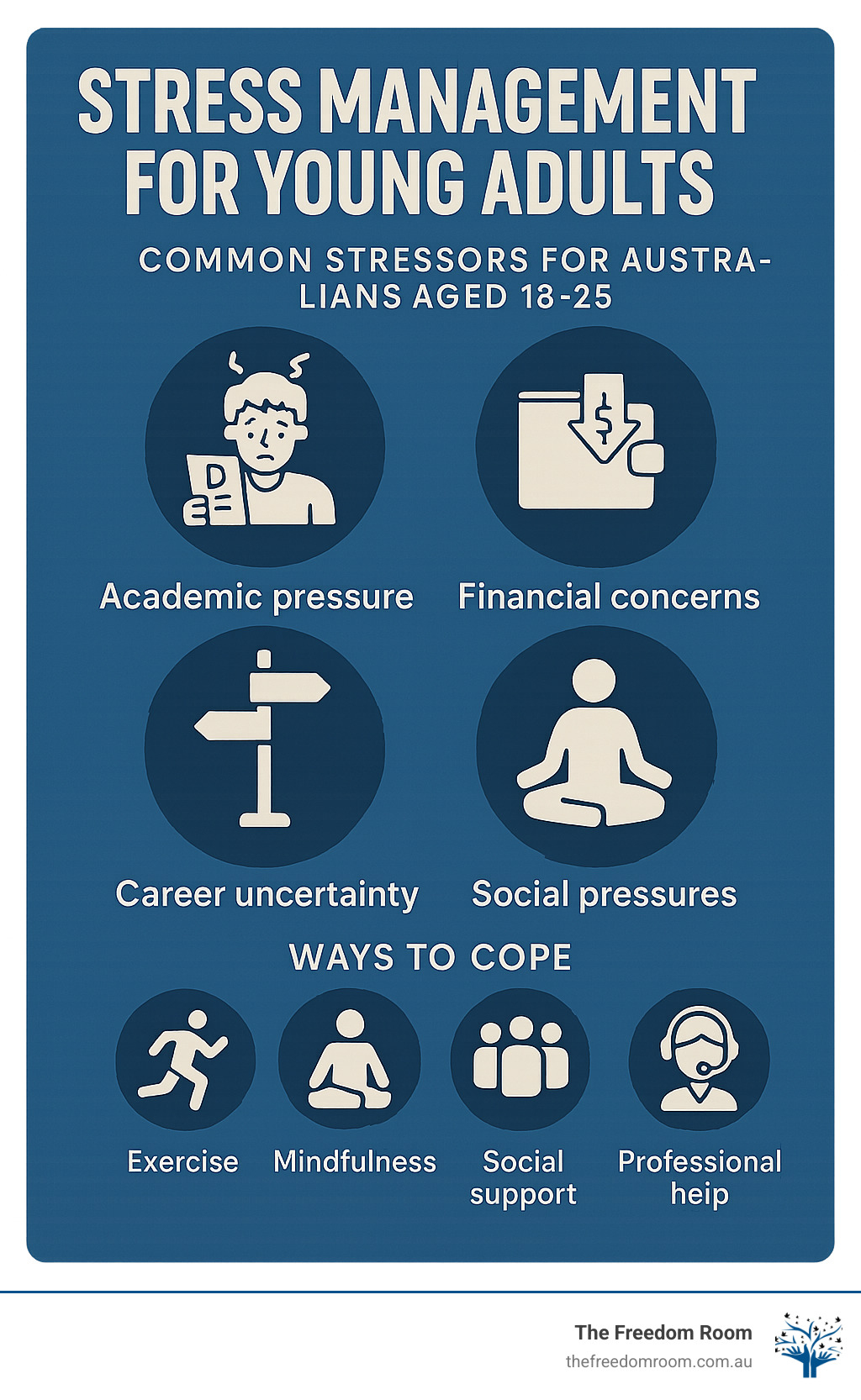
Young adulthood is a unique period of increasing independence and responsibility. Common stressors include:
- Academic pressure: The transition to higher education brings intense workloads and high expectations.
- Career uncertainty: The pressure to choose a career path and navigate a competitive job market creates significant anxiety.
- Financial instability: Managing student loans, living expenses, and housing affordability is a major concern for many young Australians.
- Social pressures: Friendships and romantic relationships become more complex, and social media can create constant comparison.
- Family expectations: Balancing family values with personal aspirations can lead to internal conflict.
- Life transitions: Moving out and managing a household for the first time brings both freedom and daunting responsibility.
For guidance on managing competing demands, explore our resources on work-life balance and burnout prevention.
Physical and Emotional Manifestations of Stress
Recognising the signs of stress is the first step toward managing it. These symptoms can appear both physically and emotionally.
Physical manifestations often include frequent headaches, muscle tension (especially in the neck and shoulders), and digestive issues. Sleep can be disrupted, leading to fatigue and fluctuating energy levels. An individual may also notice significant changes in their appetite.
Emotional signs include irritability, mood swings, and a persistent feeling of being overwhelmed. An individual may experience constant worry or sadness, find it difficult to concentrate, and lose interest in activities they once enjoyed. Stress can also lead to social withdrawal or becoming more reactive in relationships.
If you’re experiencing overwhelming anxiety, our guide on anxiety relief offers additional support.
Foundational Lifestyle Strategies for Building Resilience
Resilience is the capacity to adapt to and recover from stress. Effective stress management for young adults involves proactively developing this capacity. Foundational lifestyle factors, including physical activity, nutrition, and adequate sleep, are integral to strengthening an individual’s ability to manage psychological challenges.

The Role of Physical Activity
Exercise is a highly effective tool for stress management. It stimulates the release of endorphins, the brain’s natural mood-elevating neurochemicals, and assists in metabolising excess stress hormones. A weekly target of approximately 2.5 hours of moderate activity is recommended. Selecting enjoyable activities can improve consistency.
Examples of stress-reducing activities:
- Walking in nature
- Yoga or stretching
- Team sports
- Swimming
- Cycling
Research indicates that physically active young people report significantly lower levels of stress and higher levels of happiness.
The Importance of a Nutritious Diet
Diet plays a critical role in brain function and emotional regulation. A balanced diet composed of fruits, vegetables, lean proteins, and whole grains supplies the sustained energy required for maintaining calmness and focus. Certain foods, such as oily fish rich in omega-3 fatty acids, support brain health. Conversely, limiting processed foods high in sugar and fat and maintaining adequate hydration can help prevent fluctuations in energy and mood that may exacerbate stress. For more insights, explore our guide on how to feel better.
Prioritising Restful Sleep
Quality sleep is fundamental to stress management. Young adults typically require 8 to 10 hours of sleep per night for optimal functioning. Adhering to a consistent sleep schedule, including on weekends, helps regulate the body’s circadian rhythms.
Establishing a relaxing pre-sleep routine, such as reading or listening to calm music, and avoiding electronic screens for at least one hour before bed is beneficial. The sleep environment should be dark, quiet, and cool to promote rest. According to youth mental health service headspace, quality sleep is one of the most powerful tools for building resilience.
Practical Techniques for Daily Stress Management for Young Adults
In addition to foundational lifestyle strategies, effective stress management for young adults necessitates the use of practical techniques for managing acute, in-the-moment challenges. These daily methods can equip individuals to navigate difficult situations with greater composure and self-assurance.

Embracing Mindfulness and Self-Awareness
Mindfulness is the practice of maintaining present-moment awareness without judgement. This practice allows an individual to observe overwhelming thoughts and emotions with detachment, thereby enabling a more considered response.
- Deep breathing exercises: Slow, deliberate abdominal breathing can quickly activate the body’s relaxation response, sending a calming signal to the nervous system.
- Guided meditation: Australian apps such as Smiling Mind offer structured support for developing a regular meditation practice.
- Body scan meditation: This practice involves systematically focusing attention on different parts of the body to notice physical sensations, which promotes deep relaxation.
- Journaling: The act of writing down thoughts and feelings can help to process emotions and identify stress patterns.
For a deeper understanding, explore our resources on mindfulness and ACT.
Applying Cognitive and Emotional Tools
Thoughts significantly influence the experience of stress. Learning to challenge negative self-talk and reframe one’s perspective can transform overwhelming situations into manageable challenges. This involves questioning unhelpful interpretations and consciously adopting a more balanced viewpoint.
Another powerful tool is Emotional Freedom Techniques (EFT), an evidence-based approach for processing difficult emotions. Learn more in our guide to EFT Tapping for beginners.
Emotional Freedom Techniques (EFT) Explained
Emotional Freedom Techniques (EFT), also known as “tapping,” is a valuable and evidence-based energy psychology tool that offers relief from stress and a wide range of other challenges. EFT is not about suppressing emotions, but rather about processing the physiological sensations associated with fear, anger, and worry. This is achieved by tapping on specific body points. This process can assist an individual in transitioning from a state of being overwhelmed to one of greater calm and ease, which can foster an improved sense of self-worth.
What is the role of an EFT Practitioner?
The role of an EFT Practitioner (also known as an ‘Emotional Freedom Technique Therapist’) is to support and guide the release of emotional trauma held within the body and in subconscious memories in a safe and controlled way. An EFT Therapist is trained to help clients navigate and clear traumas without re-experiencing the past hurt. The aim is to bring an individual to a state where the traumatic event no longer holds an emotional charge.
What health areas does EFT focus on?
The ‘Emotional Freedom Technique’ can be used as part of any healing journey, as most illnesses have an emotional component. Clearing emotional stress allows the body to relax and begin its natural healing process. Areas where EFT is known to be particularly beneficial are:
- Addictions
- Anxiety
- Depression
- Sexual/Emotional/Physical Abuse
- PTSD (Post Traumatic Stress Disorder)
- Stress Management
- Childhood Trauma
- Phobias
- Pain Management
- Loss and Grief
- Self-Confidence/Self-Esteem
How EFT Works
EFT, or Tapping, works with the body’s natural stress response. Deep within the brain, the amygdala functions as a threat-detection centre, initiating the “fight, flight, or freeze” response when it perceives danger. This response floods the body with stress hormones, a mechanism which is critical for survival but can become chronically overactive in modern life.
The gentle tapping on specific acupressure points while focusing on a distressing thought is believed to send a calming signal to the amygdala. This disrupts the typical stress response, allowing the nervous system to return to a more balanced state. Over time, consistent use of EFT can help retrain this response, reducing the intensity of overwhelming reactions and fostering greater emotional resilience.
Effective Strategies for Managing Academic and Social Pressures
Developing practical strategies is key to managing academic and social stress.
- Time management: Deconstruct large assignments into smaller, more manageable tasks to mitigate feelings of being overwhelmed. Utilise a planner to organise schedules.
- Setting boundaries: It is important to learn how to politely decline commitments that may overextend one’s time and energy, particularly during demanding periods.
- Communicating needs: Open communication with lecturers, tutors, or family is advisable when feeling overwhelmed. Most Australian educational institutions provide student support services.
- Limiting social media: Taking regular breaks from social media platforms can reduce the stress associated with social comparison and exposure to negative content.
Developing healthy coping mechanisms provides a toolkit for managing these daily pressures effectively.
Building a Support System and Knowing When to Seek Help
Navigating young adulthood can be less challenging with a robust support system. Establishing meaningful social connections and understanding when to seek professional assistance are vital components of stress management for young adults. Seeking help is an important act of self-management and awareness.
Cultivating a Strong Support Network
Strong relationships act as a powerful buffer against stress. A support network can provide different perspectives, practical help, and emotional comfort.
- Trusted friends and family: These are individuals who listen without judgement and offer authentic support.
- Mentors: An older colleague, teacher, or community member can offer valuable guidance based on their own experiences.
- University or TAFE support services: Most institutions offer free counselling, academic advising, and peer support programs.
- Community groups: Sporting clubs, volunteer organisations, or hobby groups provide a sense of belonging and connection.
Discussing one’s experiences can facilitate emotional processing and reduce feelings of isolation.
When to Seek Professional Help for Stress
While self-help strategies are valuable, some situations require professional intervention. Recognising these signs is a crucial skill for protecting one’s mental health.
Professional help should be considered if an individual experiences:
- Persistent overwhelm: Feelings of stress, anxiety, or sadness are constant and interfere with daily life.
- Impact on daily functioning: There is difficulty concentrating, completing tasks, sleeping, or noticeable changes in appetite.
- Unhealthy coping mechanisms: There is a reliance on alcohol or other substances to manage difficult feelings. We offer compassionate support for those struggling with stress and alcohol addiction.
- Feelings of hopelessness or suicidal thoughts: Such thoughts necessitate immediate professional intervention. These are serious symptoms that require urgent assessment and support.
Accessing Support in Australia
Australia offers numerous accessible pathways for young adults seeking mental health support.
A GP is an excellent first point of contact. They can assess the situation and provide referrals to mental health professionals. Youth-specific services like headspace offer free, confidential support for people aged 12-25. Finding a therapist or counsellor can provide an individual with tools and strategies that will be of service throughout their life.
Creating Your Personalised Stress Management Plan
Effective stress management for young adults is highly individualised. A personalised plan allows an individual to take an active role in their mental health by providing a structured approach tailored to their specific circumstances and challenges.
Step 1: Identify Individual Stressors
Identifying the specific triggers of stress is the foundational step in proactive management. This can be achieved by keeping a journal for one to two weeks to document instances of stress and the corresponding circumstances.
Analysis of this journal may reveal patterns in external situations and internal responses. Physical signals, such as an elevated heart rate or muscle tension, often serve as early indicators of a stress response. The objective is not the complete elimination of stressors, but rather the development of awareness to enable a more considered response.
Step 2: Select Appropriate Coping Strategies
A personal collection of reliable coping strategies, or a ‘stress toolkit’, should be developed. The selection of techniques should be based on the specific stressors identified and individual preferences.
- If academic pressure is a trigger, a focus on time management and task deconstruction is beneficial.
- If emotional overwhelm is common, mindfulness or EFT tapping may be effective.
- For those who enjoy being active, physical movement like running or yoga can be used.
- For those who prefer quiet activities, journaling or meditation may be suitable.
Strategies should be aligned with one’s lifestyle to ensure consistent application. The most effective strategy is one that can be maintained over time.
Step 3: Implement and Review the Plan
The integration of the plan into daily habits is critical for achieving meaningful change.
- Set realistic goals: Commencing with one or two new strategies can help build confidence and foster sustainable change.
- Schedule self-care: Time should be allocated for stress management activities, which should be regarded with the same importance as academic or professional commitments.
- Track progress: Observing instances where situations are handled more calmly or resilience is improved can help identify effective strategies.
- Adjust the plan as needed: As life circumstances evolve, so too will stress management requirements. The plan should be regularly reviewed and adapted to maintain its relevance and efficacy.
A personalised stress management plan for young adults should be viewed as a dynamic document that evolves with the individual, providing ongoing support.
Professional Support
While navigating young adulthood presents challenges, stress is a manageable condition. By developing effective skills, individuals can build lasting resilience to handle life’s demands. Each step taken towards better stress management for young adults contributes to long-term wellbeing.
At The Freedom Room, we recognise that significant stress can sometimes lead to the development of unhealthy coping mechanisms, such as alcohol dependence. Our professional approach is informed by lived experience, providing a deep understanding of the challenges associated with such issues.
Support is available for individuals experiencing stress, anxiety, or reliance on alcohol as a coping mechanism. Recovery and wellness are processes of continual growth, and seeking professional help is a proactive step towards improved health.
Our addiction counselling services are structured to provide personalised support tailored to the individual’s specific circumstances and journey.