

Why an Individual Support Plan is Essential for Your Recovery Journey
An individual support plan is a personalised, written document that outlines the supports, services, and strategies you need to achieve your wellness goals and live a fulfilling life. Whether you’re navigating recovery from alcohol dependency, managing mental health challenges, or seeking holistic support, an effective plan puts you at the centre of your own care.
What an Individual Support Plan includes:
- Your strengths and preferences – what works for you and what doesn’t
- Clear, achievable goals – both short-term and long-term aspirations
- Support strategies – proactive and reactive approaches customised to your needs
- Triggers and risk factors – identified challenges and how to address them
- Communication needs – how you prefer to receive information and make decisions
- Review timeline – regular check-ins to ensure the plan stays relevant
The power of an individual support plan lies in its person-centred approach. Australian research and healthcare standards emphasise that plans developed through collaborative, person-centred processes lead to more consistent support and better outcomes.
Rather than a medical model that focuses on what’s wrong, your plan focuses on what matters to you. It highlights your dreams, your goals, and your vision for a good life.
For those navigating recovery from alcohol dependency, an individual support plan becomes a roadmap through uncertain terrain. It helps predict and prevent potential challenges by providing context around your unique needs. When stress, anxiety, or depression threaten your progress, your plan offers concrete strategies rather than leaving you to steer alone.
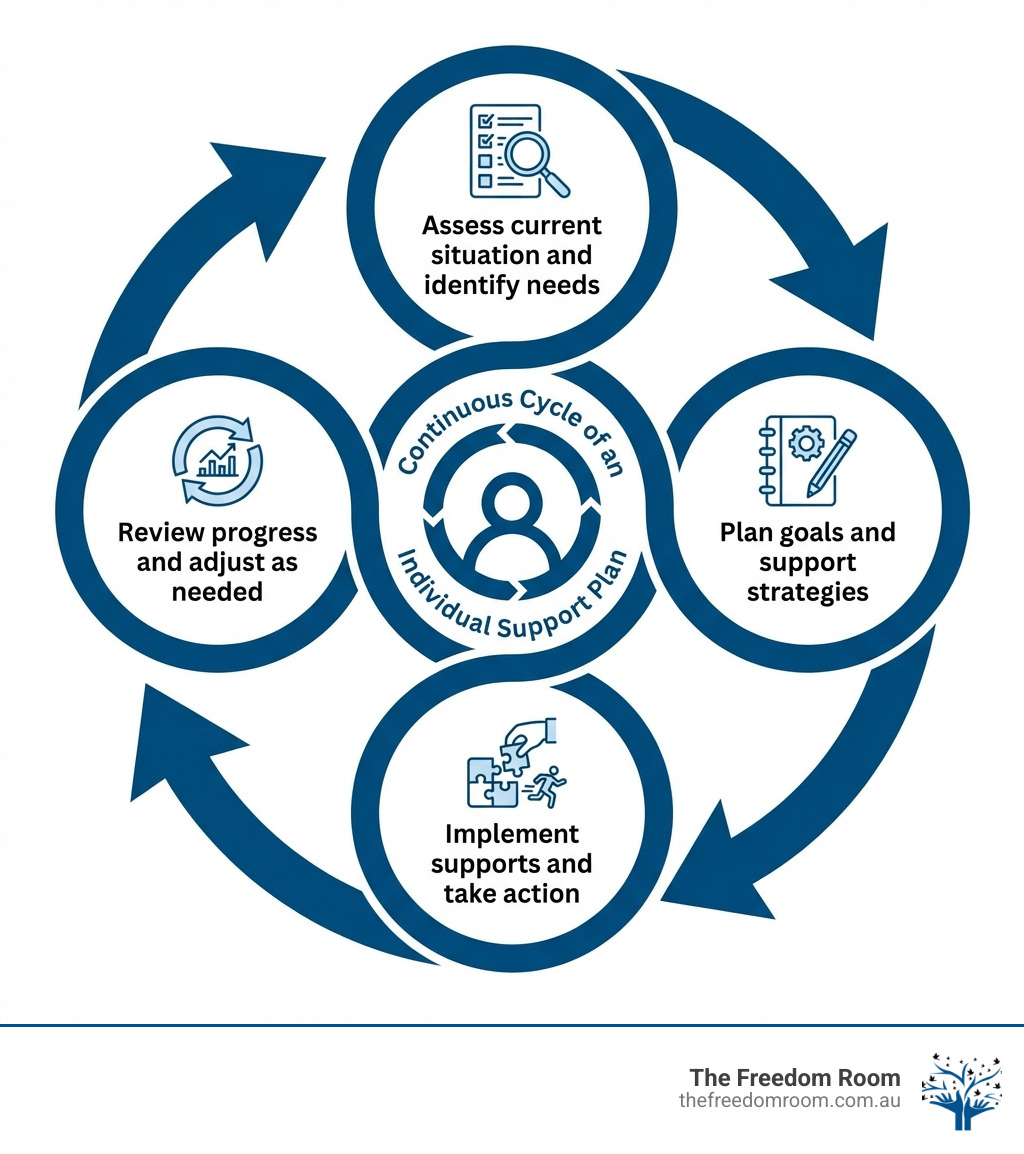
The process of creating your plan is as important as the document itself. It’s an opportunity to reflect on your journey, identify your support network, and clarify what you’re working towards. Your plan should be a living document that evolves with you, not a static report that sits in a drawer.
Many people confuse individual support plans with other types of plans, such as NDIS plans, Individual Education Plans (IEPs), or behaviour support plans. While these documents serve different purposes across various sectors, they all share a common goal: ensuring you receive the right support at the right time.
At The Freedom Room, we’ve seen how a well-crafted individual support plan transforms the recovery experience. It creates consistency across different settings, empowers you to take ownership of your journey, and ensures everyone supporting you understands what you need to thrive.
This guide will walk you through every aspect of developing your own individual support plan, from understanding its core components to navigating the collaborative process with family and professionals. You’ll learn practical steps for creating a plan that truly reflects your needs, your strengths, and your aspirations for an alcohol-free life.
A Comprehensive Guide to Developing Your Individual Support Plan
Developing a comprehensive individual support plan empowers you to actively shape your wellness journey. It moves beyond a one-size-fits-all approach, crafting a strategy that truly resonates with your personal circumstances and aspirations. This section details the practical steps and essential elements of creating a robust and effective plan, enabling you to take control of your support and recovery.
The Core Components of a Powerful Individual Support Plan
An effective individual support plan is a succinct and insightful working document. It provides essential information about you, allowing those supporting you to understand your background and context. This understanding helps to predict and prevent potential scenarios, fostering a proactive approach to your care.
Here are the key elements that should be included:
- Personal Snapshot: This section offers a quick overview of who you are. It includes your likes, dislikes, strengths, and areas where you may struggle. It also identifies your preferred communication methods. For instance, if you have a keen interest in a particular hobby, this can be used as a conversation starter to build trust and rapport.
- Triggers: Identifying your triggers is crucial for proactive support. These are the situations, emotions, or environmental factors that might lead to heightened arousal or behaviours of concern, especially in the context of alcohol dependency. Understanding these helps in developing strategies to avoid or manage them.
- Presentation: This describes how you typically behave when you are feeling well (regulated) versus when you are experiencing distress (dysregulated). What might be a sign of stress for one person could be typical behaviour for another. Documenting your individual presentation ensures that support is customised to your unique needs.
- Support Strategies: This outlines both proactive and reactive approaches. Proactive strategies aim to minimise or prevent unwanted behaviours by modifying environments, routines, or interactions. Reactive strategies detail how to respond when challenges arise, focusing on de-escalation techniques. These strategies should be consistent across all individuals providing support.
- Risk Assessment: An appropriate risk assessment identifies potential health, safety, or relapse risks. It details measures to minimise these risks, such as environmental changes, routine alterations, or additional supports. This ensures your safety and well-being are prioritised at all times.
- Goals and Aspirations: Your plan should clearly articulate your short-term and long-term goals. These are often rooted in your personal preferences, dreams, and wishes. They should be specific, measurable, achievable, relevant, and time-bound (SMART goals) to guide your progress.
- Past Accomplishments: Reflecting on your past successes can be incredibly motivating. This section acknowledges your achievements and progress, reinforcing your capabilities and resilience.
- Future Plans: What do you want your future to look like? This part of the plan helps to map out the steps needed to achieve your vision for a fulfilling, alcohol-free life.
We encourage you to use resources like our editable individual support plan template and guidance to help structure your thoughts and needs. Developing healthy coping mechanisms and creating a relapse prevention plan are vital aspects that your plan should address. These proactive steps are cornerstones of enduring recovery and wellness.
The Collaborative Process: Who, How, and When
The development of an individual support plan is a collaborative and person-centred process. It involves you, your family, and a team of professionals working together to create a document that truly reflects your needs and aspirations. This collective effort ensures consistency and effectiveness in your support.
The Person-Centred Planning (PCP) process is fundamental to this. It starts with your preferences and goals, which are then supplemented by input from assessments performed by professionals. This approach ensures the plan is about what is important to you, rather than just what is important for you.
Here are the key steps in developing your individual support plan:
- Initiation and Information Gathering: This begins by gathering information about your personal preferences, dreams, wishes, medical history, current medical concerns, and communication preferences. This initial data helps to paint a comprehensive picture of your needs.
- Team Formation: A diverse team is assembled, including you, your family or chosen representatives, and relevant professionals such as counsellors, therapists, and support workers. This team ensures a holistic perspective.
- Person-Centred Discussions: The team engages in conversations focused on your life. This includes discussing what you want to change, what you want to keep the same, and your personal history. Methods like ‘Dream Boards’ or ‘PATH’ approaches can be used to visually represent your aspirations.
- Assessment and Screening: Screening tools and assessments can inform the process by identifying specific needs or areas for support. For example, in the context of alcohol and other drug (AOD) recovery, tools like the Victorian AOD Intake and Assessment Tools provide a structured way to evaluate various aspects of your health and well-being. These tools help to ensure that your plan addresses all relevant factors.
- Drafting the Plan: Based on all gathered information and discussions, the team drafts the individual support plan, outlining specific goals, strategies, and responsibilities.
- Review and Finalisation: The draft is reviewed with you to ensure it accurately reflects your wishes and needs. Your informed consent is crucial, and the plan is finalised only when everyone agrees.
- Implementation and Ownership: Key staff and support providers take ownership of implementing the plan. This includes documenting and evaluating new strategies and sharing successes or challenges with the team.
- Regular Updates: An individual support plan is a living document. It must be updated any time there is a change in your desires, needs, or circumstances. Regular reviews, typically annually, ensure the plan remains relevant and effective.
Establishing and maintaining ownership of an individual support plan is a shared responsibility. While you are at the centre, professionals facilitate the process, and family members provide invaluable insights and support.
Effective communication, especially for individuals with diverse communication needs, is paramount. Using alternative and augmentative communication aids can support understanding and ensure your voice is heard throughout the process.
For those on the journey to recovery, understanding the addiction recovery process and finding mental health support are often intertwined with developing a robust individual support plan.
ISP vs. Other Plans: Understanding the Key Differences
While the term “individual plan” might be used across various sectors, it’s important to understand the distinctions between an individual support plan in a general wellness or recovery context and other specific types of plans. Each plan serves a unique purpose and operates under different regulatory frameworks.
- Individual Support Plan (ISP) for Wellness/Recovery: This is the focus of our discussion. It’s a holistic, person-centred document designed to help you achieve your personal goals, manage challenges, and live a fulfilling life. It’s highly flexible and customised to your unique journey, particularly relevant for those navigating alcohol dependency recovery. Its primary purpose is to empower you and ensure consistent, customised support.
- National Disability Insurance Scheme (NDIS) Plans: In Australia, NDIS plans are designed for individuals with permanent and significant disabilities. These plans outline the reasonable and necessary supports funded by the NDIS to help participants achieve their goals, participate in the community, and improve their independence. While NDIS plans are also person-centred, they operate within a specific legislative and funding framework.
- Individual Education Plans (IEPs): These plans are used in Australian educational settings for students with disabilities who require special education services. IEPs, like those implemented in Victorian schools, outline academic and functional goals, special education services, and accommodations to support a student’s access to the curriculum.
- Behaviour Support Plans: These plans are often a component within a broader individual support plan or IEP. They specifically address behaviours of concern, outlining triggers, proactive strategies, and reactive responses to manage and reduce challenging behaviours. They are crucial for ensuring safety and promoting positive behaviour.
The legal and regulatory requirements for these plans vary significantly. For instance, NDIS plans adhere to Australian federal legislation, while IEPs are governed by state and territory education laws. For an individual support plan focused on personal wellness and recovery, the emphasis is on collaborative goal-setting and consistent, evidence-based therapy approaches rather than strict legal mandates, though best practice guidelines are always followed. Our approach at The Freedom Room integrates these best practices to ensure your plan is both effective and supportive.

Start Your Journey to Lifelong Recovery Today
An individual support plan is more than a document; it is a dynamic roadmap that places you at the centre of your own wellness journey. By defining what is important to you, identifying your strengths, and outlining clear strategies for support, you create a powerful tool for consistency, proactive care, and long-term success. At The Freedom Room, we believe in empowering individuals with personalised strategies that foster resilience and growth. Your journey is unique, and your plan should be too.

Take the first step with personalised addiction treatment. We are here to support you in building a life of freedom and fulfilment.
Ready to design your own Individual Support Plan or update an existing one? Reach out today and get personalised guidance that fits your life, values, and goals. Contact us to start building a support and wellness plan that truly works for you.