

Understanding Couples Group Therapy in Addiction Recovery
Couples group therapy brings multiple couples together in a structured, therapist-led setting to address relationship challenges in conjunction with recovery from alcohol use disorder. This group format offers shared learning, peer support, and the opportunity to observe how other couples manage similar difficulties.
Key Characteristics of Couples Group Therapy:
- Multiple couples participate in the same therapy sessions
- A qualified therapist facilitates group discussions and skill-building exercises
- Couples learn from each other’s experiences and perspectives
- The focus is on healing relationships while supporting sobriety
- Sessions typically run for 2 to 2.5 hours with structured activities
- Costs are often lower per couple than individual therapy sessions
When alcohol use disorder affects a relationship, both partners experience strain as communication breaks down and trust erodes. Research shows that couple therapy is as effective as other evidence-based interventions for alcohol problems and can be more effective than individual or group interventions for alcohol-related relationship conflict.
The group setting helps participants realise they are not alone in their experiences. Witnessing other couples navigate similar struggles with intimacy, financial stress, and communication reduces feelings of isolation and provides hope for recovery. For couples recovering from alcohol use disorder, group therapy addresses both the substance use and its related relationship dynamics. Participants gain practical skills in communication and conflict resolution while observing how other couples apply these tools in a supportive environment.
The Dynamics of Couples Group Therapy in Recovery
Research on systemic interventions like couples therapy shows the average client fares better than 71% of those in control groups. Mutually satisfying relationships are linked to better health and greater financial stability, highlighting why addressing relationship health during recovery is essential.
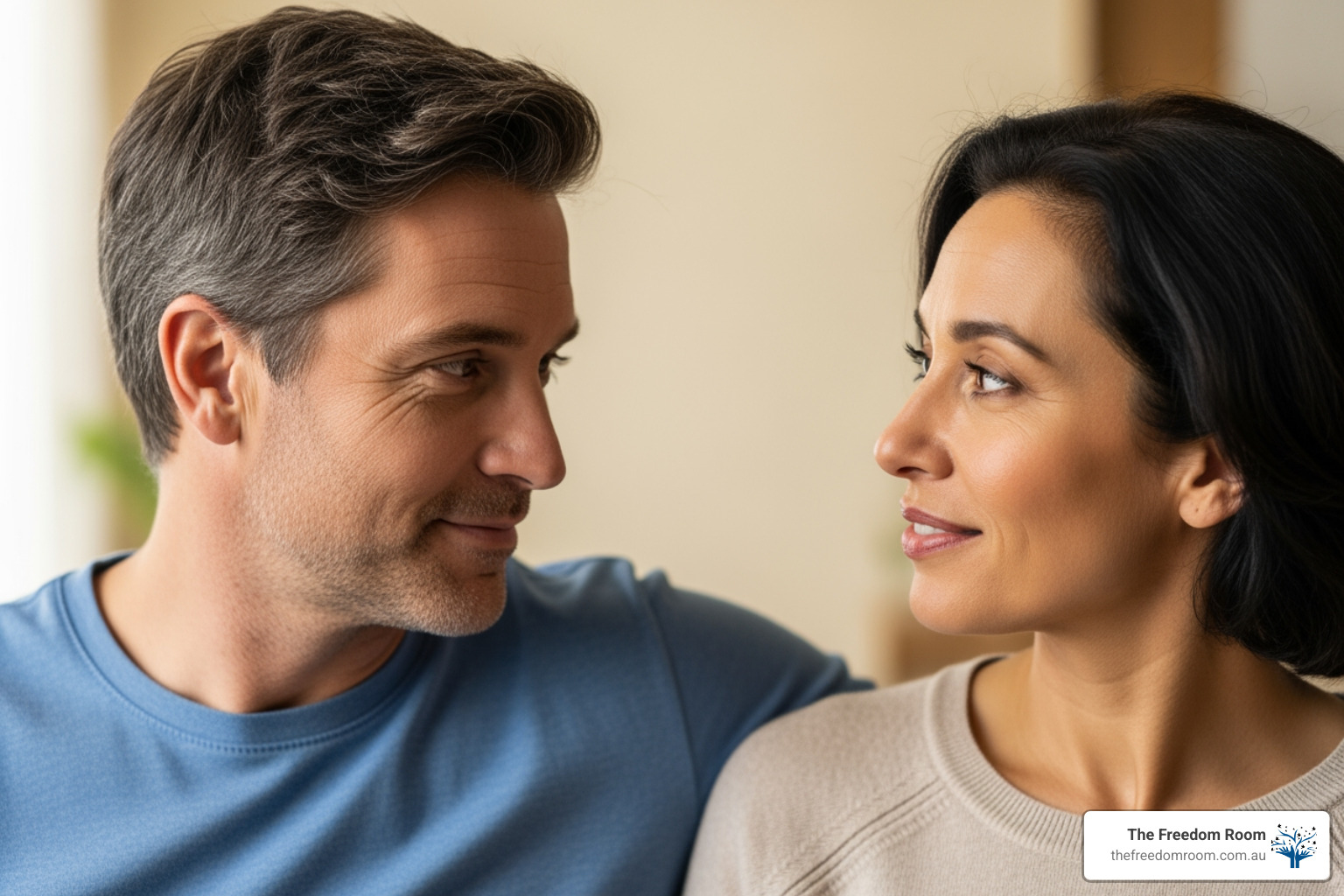
How It Works: The Group Process and Therapist’s Role
Couples group therapy brings multiple couples together with a trained therapist who understands addiction and relationship dynamics. The process integrates principles from group and family therapy, focusing on individual growth and the couple as a unit. The goal is a safe, confidential space for couples to explore patterns and learn healthier ways to connect.
A typical session runs for two to two and a half hours, often starting with psychoeducation about relationship dynamics and the effects of alcohol use disorder. Guided discussions follow, allowing couples to share experiences and learn from one another’s breakthroughs. The therapist facilitates these conversations, ensuring everyone feels heard while maintaining confidentiality.
Skill-building exercises are a core component. Couples practise new ways of communicating and resolving conflicts. For example, Relationship Improvement therapy teaches techniques for expressing feelings without blame and listening with empathy. Practising these skills with feedback from the therapist and peers accelerates learning.
The therapist’s role is to create a “holding environment” of acceptance where couples feel safe. They guide conflict resolution, offer communication strategies, and help foster deeper emotional connections.
Common approaches include:
- Emotionally Focused Therapy (EFT): This method views distress as stemming from insecure attachment and works to foster security. The “Hold Me Tight” programme helps partners understand their emotional needs to rebuild trust.
- The Gottman Method: This approach uses research to improve communication, manage conflict, and build intimacy. Scientific research on The Gottman Method is available for those wishing to understand its framework.
- Other Therapies: Cognitive Behavioural Therapy helps change negative thought patterns, while Dialectical Behaviour Therapy skills aid in managing intense emotions. For more on therapeutic options, visit Therapy for Alcoholism.
The Unique Benefits and Potential Challenges
The group format offers advantages that individual counselling cannot. Couples group therapy provides a sense of community, reducing isolation and normalising experiences that may otherwise feel shameful. Hearing another couple describe similar communication breakdowns validates that these challenges are common, rather than personal failings.
Learning from other couples’ experiences accelerates growth by offering fresh insights and practical strategies. The group setting also provides a safe space for practising new skills with immediate feedback. From a practical perspective, group therapy is often more accessible and cost-effective than individual counselling.
However, the group format presents challenges. Sharing personal struggles requires vulnerability, and some couples may fear judgement. Privacy is another consideration; while confidentiality is strict, sharing in a group involves more people. Navigating different personalities and engagement levels can also add complexity.
Key benefits for couples in addiction recovery include:
- Reduced isolation through connecting with couples facing similar challenges
- Normalising struggles by recognising relationship difficulties are common in recovery
- Gaining diverse perspectives from multiple couples’ unique journeys
- Improving communication skills through practising active listening and constructive expression
- Improved conflict resolution by learning and applying effective strategies
- Increased empathy for your partner and others
- Skill modelling from observing other couples’ successes and challenges
- Mutual accountability through peer support and encouragement

Common Issues Addressed in Couples Group Therapy
Couples group therapy addresses relationship issues intensified by alcohol use disorder. A primary focus is communication breakdown, where the group provides a structured setting to practise active listening and constructive expression.
Conflict resolution skills are also critical. Group therapy equips partners with tools to manage disagreements about finances, intimacy, or daily stresses without blame. Rebuilding trust after deceptive behaviours is another key area, where observing other couples provides validation that healing is possible.
The group helps examine co-dependency and enabling behaviours, teaching couples to set healthier boundaries. It also addresses financial conflict by promoting transparency and teamwork, and helps couples steer intimacy challenges as they rebuild their connection.
Learning to face life transitions and external stressors as a united front strengthens the partnership’s resilience. Research confirms that couple therapy effectively addresses relationship distress and is beneficial for alcohol problems. Fostering Healthy Relationships in Recovery is a cornerstone of lasting sobriety. For broader evidence, review scientific research on couple therapy for adult-focused problems.
Finding a Group and Sustaining Your Progress
Commencing couples group therapy is a significant step towards healing a relationship during recovery. The first task is finding a qualified therapist or group with experience in both addiction and relationship dynamics. Researching local therapists or organisations, especially those familiar with the Australian context, helps identify suitable options.
An initial consultation allows prospective participants to assess compatibility and ask questions. Preparation for the first session involves discussing shared goals with one’s partner, such as improving communication or rebuilding trust. A willingness to be vulnerable is necessary for the process to be effective.
Maintaining progress after therapy requires ongoing commitment. The skills acquired are intended for lifelong practice, not as temporary solutions. Regular communication with one’s partner, completion of any assigned tasks, and consistent application of new techniques are vital for integrating these skills into daily life.
Sustaining progress involves scheduling dedicated time to discuss feelings, arranging follow-up sessions if needed, and building a strong support system. Exploring Addiction Peer Support can strengthen a support network. Fostering an environment of open sharing helps maintain the foundation built during therapy, as recovery is an ongoing process.

A Path Toward Relationship Recovery
When alcohol use disorder affects a relationship, professional guidance combined with peer support can be a powerful mechanism for healing. Couples group therapy provides a structured environment that addresses both individual recovery and the associated relationship dynamics.
The unique benefit of this therapeutic approach lies in its ability to create a community of shared understanding. Witnessing other couples work through similar challenges helps to normalise these difficulties and reduce feelings of isolation. This process reinforces the possibility of recovery and provides hope that the relationship can heal.
At The Freedom Room, our services are informed by both clinical expertise and lived experience in recovery. The team provides compassionate, authentic support grounded in practical strategies that are effective.
For couples who are prepared to strengthen their bond, couples group therapy can be an integral part of the journey towards an alcohol-free future. This commitment to mutual healing is a significant step towards a healthier life together. Information on our Family Alcohol Counseling services is available for those seeking to support their family’s recovery and long-term wellbeing.
Taking the next step is an important decision in the recovery process.