

A Simple Way to Use Tapping for Panic Attacks
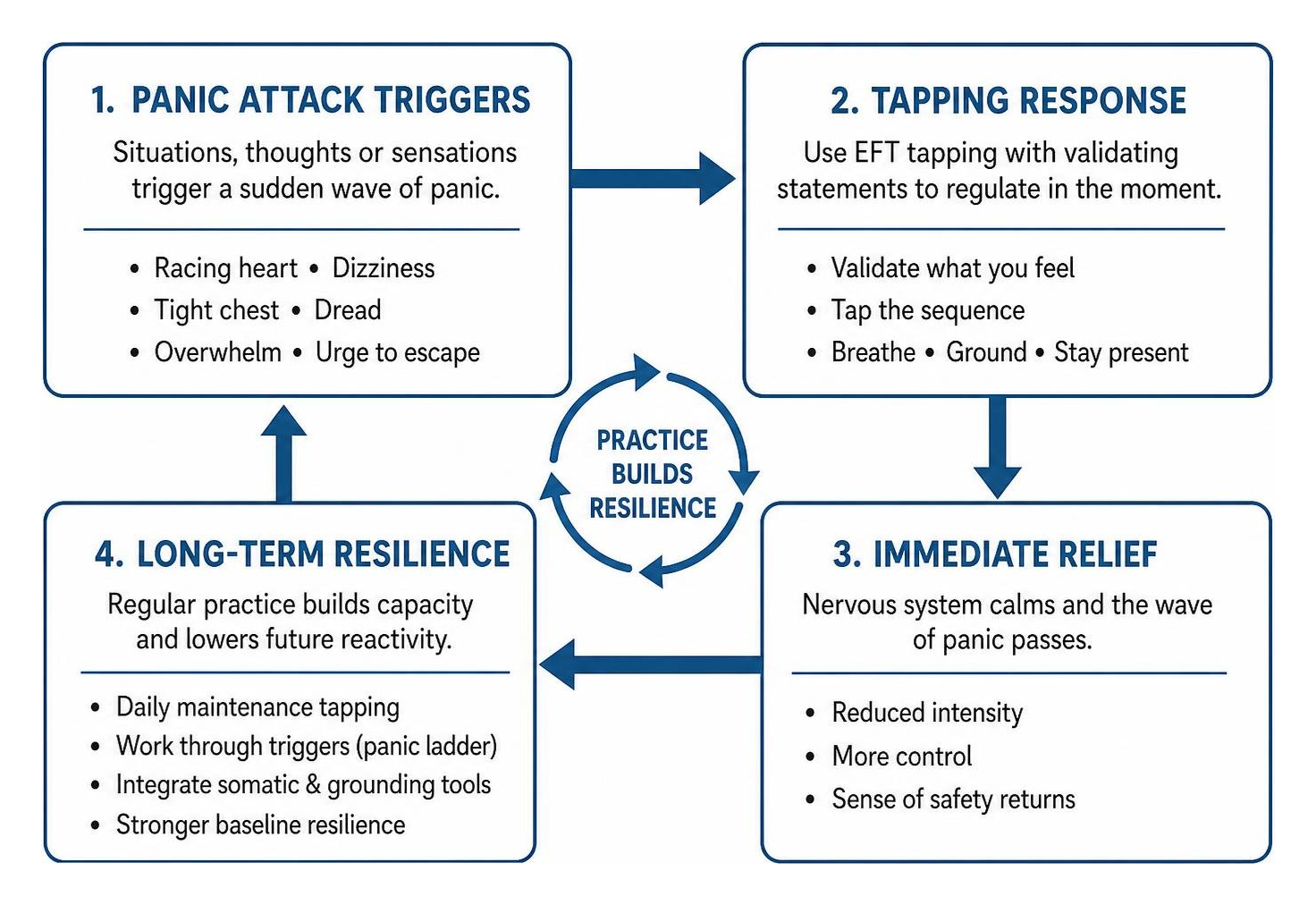
Tapping for panic attacks is a short grounding exercise you can use when panic starts to rise. Rate the intensity from 0 to 10, tap gently on the side of your hand while naming what you feel, then tap through the face and body points while using brief phrases such as, “This panic feels intense, and I am safe right now.”
Try this quick approach:
- Notice the strongest sensation, such as a racing heart, tight chest, dizziness, or fear.
- Give the feeling a number from 0 to 10 on a distress scale.
- Tap through the EFT points while breathing slowly and repeating a simple, truthful phrase.
- Pause, breathe, and rate the feeling again.
- Repeat if needed, or move to another grounding strategy.
EFT, short for Emotional Freedom Techniques, combines focused attention with gentle tapping on acupressure points. Many individuals across Australia find that this practice creates sufficient cognitive and somatic space to slow their breathing, interrupt hyperventilation, and regain emotional equilibrium during sudden surges of distress. It is important to note that tapping is not a replacement for urgent medical assessment, especially if severe chest pain, sudden fainting, atypical neurological symptoms, or thoughts of self-harm are present.
Panic can feel exceptionally challenging when psychological stress, generalised anxiety, or physical alcohol dependence become intertwined. Tapping represents a portable somatic skill that can be practised privately, requires no specialised equipment, and integrates smoothly alongside professional mental health treatment and structured alcohol recovery support programmes.
Glossary for tapping for panic attacks:
Understanding How Tapping for Panic Attacks Works
When an acute surge of panic begins, the autonomic nervous system shifts rapidly into an intense fight-or-flight response. The sympathetic branch floods the bloodstream with catecholamines, including adrenaline and noradrenaline, as well as biological stress hormones such as cortisol. This sudden surge accelerates heart rate, constricts peripheral blood vessels, diverts blood flow away from non-essential organs, and induces rapid, shallow thoracic breathing. In Australia, acute panic episodes are widespread. Epidemiological data indicates that up to 35% of Australians experience an acute panic attack at some point in their lifetime, with approximately 11% experiencing an episode within any given twelve-month period. For individuals who are managing co-occurring challenges such as physical dependence on alcohol, documented in comprehensive AIHW alcohol reporting, sudden physiological spikes can trigger intense urges to self-soothe through substance consumption.

Emotional Freedom Technique provides an active somatic counter-response to sympathetic nervous system activation. By combining gentle percussive stimulation of cutaneous mechanoreceptors with focused cognitive awareness, tapping interrupts the biological panic loop. Clinical research reveals that somatic tapping protocols can reduce biological cortisol levels by up to 43%, transmitting deactivating regulatory signals to survival centres in the brain and facilitating a measurable shift toward parasympathetic restorative functioning.
The Science of Calming the Amygdala
At the neurological centre of panic reactivity lies the amygdala, which functions as the primary threat-detection centre of the brain. During an acute episode, the amygdala misinterprets benign internal sensations, such as an elevated pulse or muscle tremors, as catastrophic danger. As highlighted in Psychology Today research on tapping efficacy, tapping generates rapid somatosensory signals that travel directly to the limbic system. This mechanical touch acts as an exposure-based safety cue that dampens hyperarousal and severs the conditioned association between physical arousal and perceived mortality.
Key Acupressure Points on the Body
The standard clinical EFT protocol stimulates nine primary meridian acupoints situated across the head, face, torso, and hands, as detailed in our comprehensive guide to EFT Tapping for Beginners.
The nine vital points include:
- Side of the Hand (Karate Chop): The fleshy outer border of the hand located between the base of the little finger and the wrist joint.
- Eyebrow (EB): The inner boundary of either eyebrow, situated just above the bridge of the nose.
- Side of the Eye (SE): The orbital bone located at the outer corner of either eye.
- Under the Eye (UE): The infraorbital ridge directly beneath the pupil on either cheekbone.
- Under the Nose (UN): The small depression centred between the bottom of the nose and the upper lip.
- Chin Crease (Ch): The horizontal indentation positioned midway between the lower lip and the chin point.
- Collarbone (CB): The junction where the collarbones, first ribs, and sternum converge.
- Under the Arm (UA): Located approximately ten centimetres below the armpit along the lateral ribcage.
- Top of the Head (TH): Centred directly at the crown of the skull.
The 5-Step Process: Step-by-Step Tapping Guide
When navigating acute panic, a clear, structured somatic roadmap prevents cognitive paralysis and assists your autonomic nervous system in downregulating rapidly.

How to Use Tapping for Panic Attacks in 5 Steps
Follow these actionable steps as soon as you recognise the initial bodily warning signals of an impending panic surge:
- Identify the Core Sensations: Focus your awareness on your immediate somatic experience, such as a restricted chest, hyperventilation, trembling hands, or a racing pulse.
- Establish a Baseline Rating: Quantify your subjective level of distress using the Subjective Units of Distress Scale (SUDS), rating your discomfort from 0 (completely calm and grounded) to 10 (maximum panic and acute distress).
- Perform the Setup Statement: Tap continuously on the Side of the Hand point using two or three fingertips while vocalising a balancing phrase: “Even though I am experiencing this intense wave of panic, I deeply accept how I feel and I recognise that my body is safe in this moment.”
- Complete the Sequence Rotation: Tap through the eight remaining points sequentially (Eyebrow, Side of Eye, Under Eye, Under Nose, Chin, Collarbone, Under Arm, and Top of Head). Apply firm, gentle taps 5 to 7 times on each spot while repeating a brief reminder phrase. Learn additional sequence variations in How to Use Tapping to Calm Anxiety 5 Methods That Guarantee Results.
- Breathe, Reassess, and Repeat: Pause, take a slow diaphragmatic breath with an extended exhalation, and re-evaluate your SUDS rating. Continue cycling through the points until your score diminishes to a manageable baseline.
Phrases and Setup Statements for Real-Time Relief
Effective EFT setup statements validate uncomfortable sensations rather than suppressing them, anchoring the nervous system in physiological safety:
- “Even though my heart is racing rapidly and I feel lightheaded, I recognise this is an adrenaline surge and my body knows how to regain calm.”
- “Even though a wave of sudden dread feels overwhelming, I am breathing, I am physically supported, and this temporary discomfort will pass.”
While rotating through the meridian points, utilise concise reminder phrases to keep the cognitive focus steady, such as “This racing heartbeat” at the Eyebrow point, “This tightness across my chest” at the Side of the Eye, or “My body is safe right now” under the Arm. Explore supplementary clinical exercises in Tapping for Anxiety Relief.
Preventing Future Episodes with Tapping for Panic Attacks
Consistent daily tapping practice steadily reduces baseline nervous system reactivity. Allocating five to ten minutes each morning or evening lowers circulating cortisol and strengthens vagal tone. Constructing a graded hierarchy of personal panic triggers enables you to tap proactively through anticipatory anxiety before physical symptoms escalate, as highlighted in this Psychology Today guide on controlling panic. Integrating these daily somatic exercises alongside our recommended Stress and Anxiety Management Techniques creates a resilient foundation for long-term emotional regulation.
Finding Long-Term Calm and Professional Support
While self-administered somatic tools serve as valuable resources for de-escalating daily anxiety spikes, chronic panic disorder, complex trauma, and persistent autonomic dysregulation frequently necessitate professional, multi-modal clinical intervention. When recurrent panic is intricately linked with maladaptive coping patterns or physical alcohol dependence, treating the biological, psychological, and behavioural dimensions concurrently is crucial for sustainable recovery.
Rigorous comparative research spanning multiple years indicates that combining somatic methodologies with cognitive restructuring delivers superior clinical outcomes over standalone modalities. Longitudinal clinical studies demonstrate that 90% of individuals who utilised somatic tapping protocols exhibited measurable clinical improvement, compared to 63% of patients receiving standard cognitive behavioural therapy alone. In addition, complete symptom remission was documented in 76% of tapping participants compared to 51% in traditional CBT groups, with tapping interventions requiring significantly fewer sessions to establish durable neurobiological stability.
At The Freedom Room, we recognise that severe panic attacks, elevated distress, and substance dependence frequently originate from underlying nervous system trauma and dysregulation. Our dedicated clinical team brings extensive professional expertise and compassionate insight to each therapeutic relationship. By integrating advanced somatic techniques with evidence-based cognitive therapy through our structured EFT and CBT Therapy programmes, we support you in processing underlying emotional triggers, restoring autonomous self-regulation, and establishing lasting emotional sobriety.
Discover the Support You Need for a Lasting, Successful Recovery
Recovering from recurring panic attacks, chronic emotional distress, and co-occurring physical alcohol dependence is a journey that no individual needs to undertake in isolation. Our experienced clinical practitioners offer an empathetic, evidence-based, and non-judgemental framework designed to help you regain full control over your psychological and physical wellbeing.
Whether you require individual clinical psychotherapy, specialised somatic workshops, or comprehensive alcohol recovery support, our team is committed to providing personalised care tailored to your unique circumstances. Discover our full range of therapeutic pathways through Our Services, or take the next step in your healing journey by connecting directly with our compassionate team via our Contact Us page.
The Freedom Room Wellness and Recovery 9a/521 Beams Rd, Carseldine QLD 4034 Providing professional therapeutic care and recovery programmes for Strathpine, Carseldine, and communities throughout greater Queensland.
Frequently Asked Questions
Can tapping stop a panic attack immediately?
Many individuals observe significant somatic relief within two to five minutes of starting a focused tapping sequence. Severe panic episodes may require multiple consecutive rounds combined with extended diaphragmatic breathing. Any unfamiliar, severe, or potentially life-threatening medical symptoms should always receive prompt clinical evaluation from emergency healthcare professionals.
What if I cannot focus enough to follow the complete tapping sequence?
When acute physiological hyperarousal makes remembering the full nine-point sequence difficult, simplify your somatic focus. Gently stimulate only the Side of the Hand or the Collarbone point while concentrating on prolonged exhalations and repeating a grounding phrase such as, “This sensation is panic, it is temporary, and my body will settle.”
How does EFT tapping compare to traditional Cognitive Behavioural Therapy (CBT)?
Both EFT and CBT represent robust, evidence-backed therapeutic approaches. Traditional CBT focuses primarily on identifying and reframing distorted cognitive appraisals, whereas EFT incorporates direct percussive stimulation of cutaneous acupressure points to calm the limbic system simultaneously. Combining both modalities through professional guidance frequently accelerates emotional regulation.
Are there any risks or side effects associated with tapping for panic?
EFT tapping is a non-invasive, safe somatic technique. However, individuals navigating unresolved developmental trauma, acute clinical panic disorder, physical dependence on alcohol, or co-occurring depressive symptoms should engage in somatic therapy under the supervision of qualified mental health practitioners.