
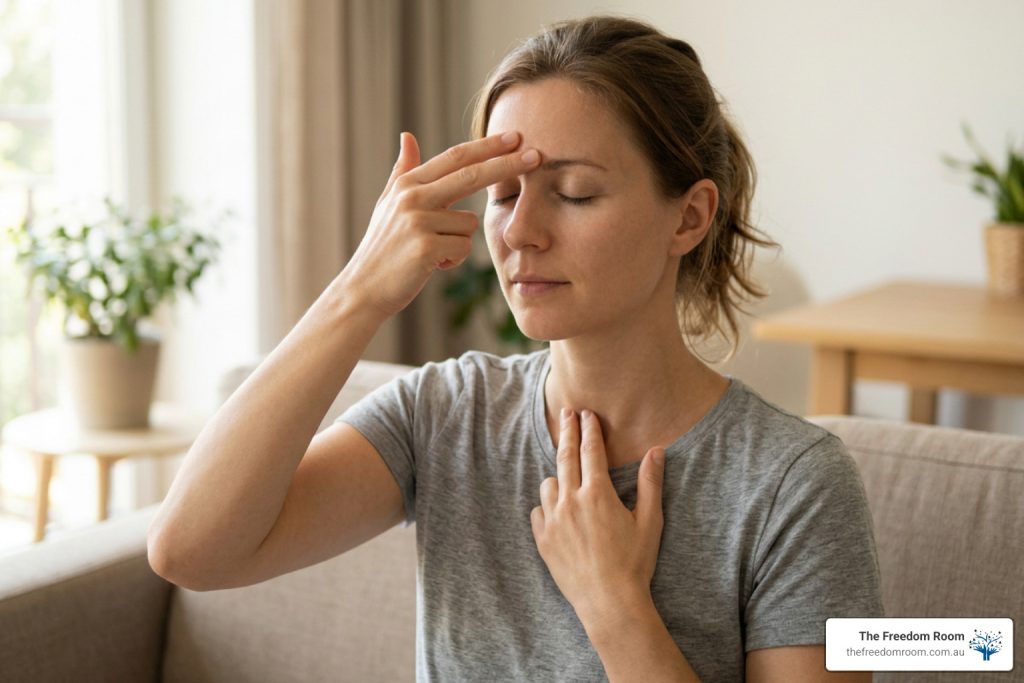
How Tapping to Calm Anxiety Works in the Brain and Body
Tapping to calm anxiety relies on a structured somatic method: first, identify your specific stressor and rate your distress on a 0 to 10 scale; second, tap the side of your hand while reciting a setup statement of self-acceptance; and third, tap through the nine core acupressure points while repeating a reminder phrase. Somatic interventions like Emotional Freedom Technique provide an immediate physical pathway to interrupt heightened distress. By applying gentle fingertip pressure to meridian points, tactile signals travel through mechanoreceptors to regulatory centres in the brain, communicating physiological safety and restoring calm.
Rather than attempting to suppress distressing thoughts through willpower alone, tapping pairs cognitive exposure with reassuring physical feedback. Research highlighted in Psychology Today research on tapping indicates that this pairing decouples stressful triggers from acute physical reactivity. As somatic tension dissipates, the parasympathetic nervous system engages to restore equilibrium, steady respiration, and promote clear cognitive processing.
Neurological and Physical Benefits of Tapping to Calm Anxiety
Acupoint stimulation creates measurable changes across neural and biological markers. Clinical evaluations demonstrate that tapping downregulates amygdala hyperarousal, directly reducing threat perception. Electroencephalogram (EEG) studies reveal significant reductions in the amplitude of the Late Positive Potential (LPP), an electrophysiological marker associated with emotional reactivity and subjective distress.
Beyond neural changes, somatic tapping directly influences the endocrine and cardiovascular systems:
- Cortisol reduction: Structured tapping significantly lowers biological cortisol levels, easing systemic tension across the body.
- Cardiovascular stabilisation: Gentle acupoint stimulation helps reduce resting heart rates and stabilise blood pressure during acute stress.
- Autonomic balance: Consistent practice trains the autonomic nervous system to shift smoothly out of fight-or-flight into restorative calm.
As detailed in the Cleveland Clinic guide to EFT benefits, these physiological shifts make tapping an effective complement to broader Stress and Anxiety Management Techniques. For individuals beginning EFT Tapping for Beginners, regular practice provides accessible regulation to prevent everyday anxiety from escalating into debilitating panic.
Comparing Acupoint Stimulation to Conventional Anxiety Care
The scientific foundation supporting EFT has expanded substantially, with over 100 clinical trials demonstrating its therapeutic efficacy. Meta-analyses demonstrate a large effect size (Cohen’s d = 1.23) for tapping in treating anxiety symptoms across diverse cohorts. In large clinical studies, participants utilising tapping experienced greater symptom reduction than individuals receiving conventional talk therapy interventions alone.
International clinical bodies recognise EFT as an evidence-based complementary approach for trauma and post-traumatic stress. Research comparing authentic acupoint tapping against sham protocols confirms that stimulating genuine meridian points yields distinct therapeutic benefits beyond standard placebo responses.
When combined with cognitive reappraisal, tapping serves as a powerful partner to structured psychological care. Integrating EFT and CBT Therapy allows individuals to address unhelpful thinking patterns while soothing somatic distress. Practised alongside evidence-based Relaxation Techniques for Anxiety, acupoint stimulation equips individuals with versatile tools for real-time emotional self-regulation.
A Step-by-Step Guide to Restoring Calm and Emotional Balance
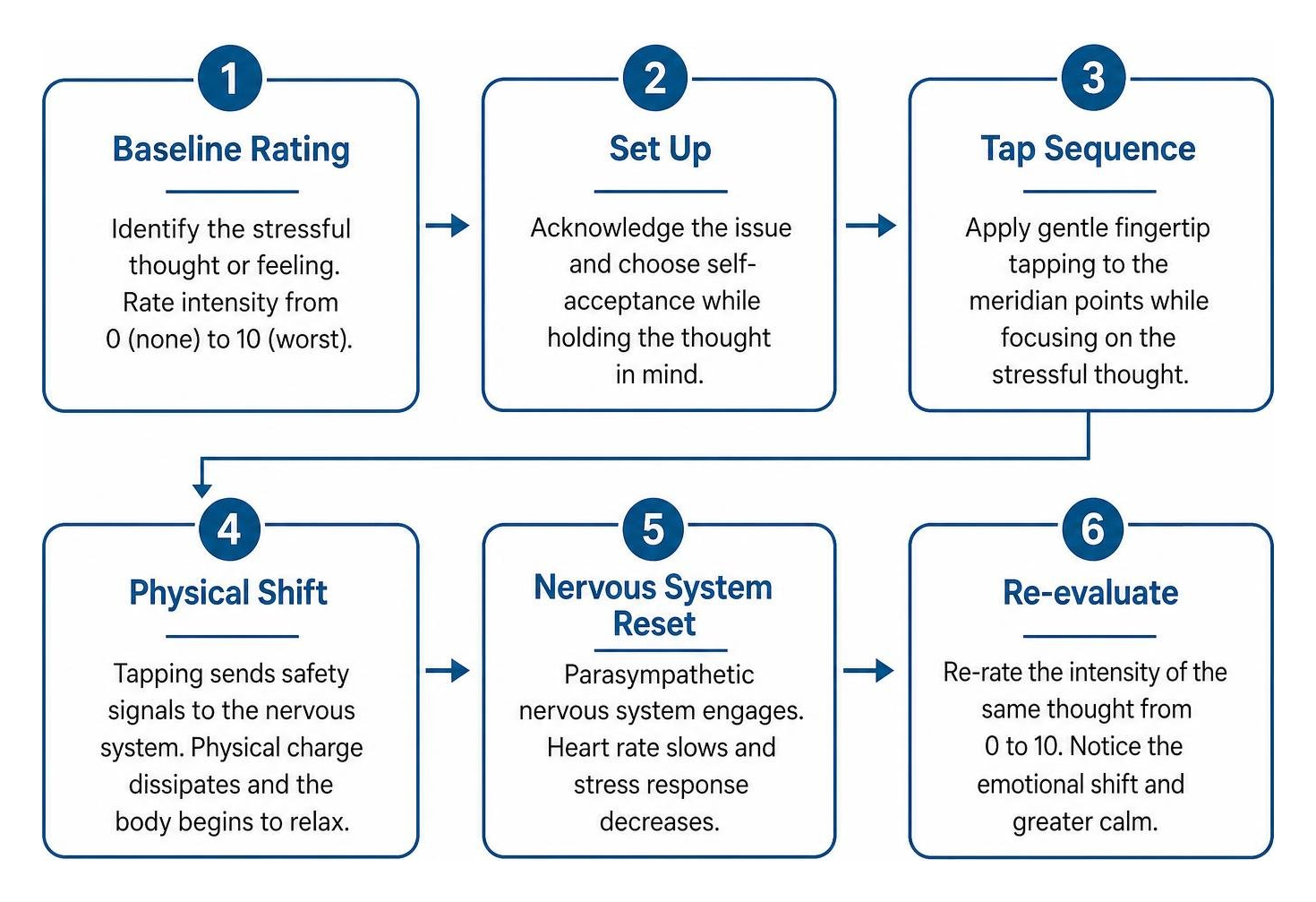
Learning to use tapping effectively begins with establishing a calm, structured routine. Before initiating the physical sequence, taking a moment to ground yourself improves focus and somatic awareness. Utilising established protocols for Tapping for Anxiety Relief allows you to systematically track your emotional state from start to finish.
Prepare for your session by completing these foundational steps:
- Sit comfortably with your feet flat on the floor, relaxing your shoulders and posture.
- Take two slow, intentional breaths, allowing your exhalations to be slightly longer than your inhalations.
- Perform a brief somatic body scan to locate where anxiety is held physically, such as chest tightness or jaw clenching.
- Bring your attention to a single, specific stressor rather than attempting to resolve multiple worries at once.
Step 1: Identify Your Distressing Feeling and Baseline Score
The first step in an effective tapping session is defining the exact feeling or challenge you want to address. Vague intentions yield diffuse results, whereas zeroing in on a precise trigger allows the brain to target the relevant neural pathway. Focus on the core emotion, whether it is fear regarding an upcoming event, workplace frustration, or somatic tension.
Once the issue is identified, measure your current level of distress using the Subjective Units of Distress Scale (SUDS), rated from 0 to 10:
- 0: Absolute calm, peace, and absence of distress.
- 5: Moderate tension or noticeable physical unease that distracts your focus.
- 10: Extreme panic, peak anxiety, or maximum emotional overwhelm.
Assigning a baseline number creates an objective benchmark to evaluate progress. For individuals managing social apprehension, applying Social Anxiety Tapping How to Stop Feeling Like a Nervous Wreck provides clear, real-time feedback as elevated scores gradually descend toward calm.
Step 2: Formulate Your Setup Statement with Self-Acceptance
With your baseline score established, create your setup statement. This statement follows a precise two-part framework: acknowledging the genuine problem, followed by an unconditional affirmation of self-acceptance. A typical phrasing is: “Even though I have this anxiety about my workload, I deeply and completely accept myself.”
Begin by tapping the fleshy outer edge of your hand, known as the karate chop point, using the fingertips of your opposite hand. While maintaining a steady, rhythmic tap, recite your setup phrase aloud three times.
Pairing the uncomfortable feeling with unconditional self-acceptance prevents the cognitive dissonance often caused by forced positive thinking. In line with principles from Mindfulness and ACT, this practice encourages psychological flexibility by acknowledging present realities without judgement, laying the foundation for authentic relief.
Step 3: Complete the 9 Acupressure Points Sequence
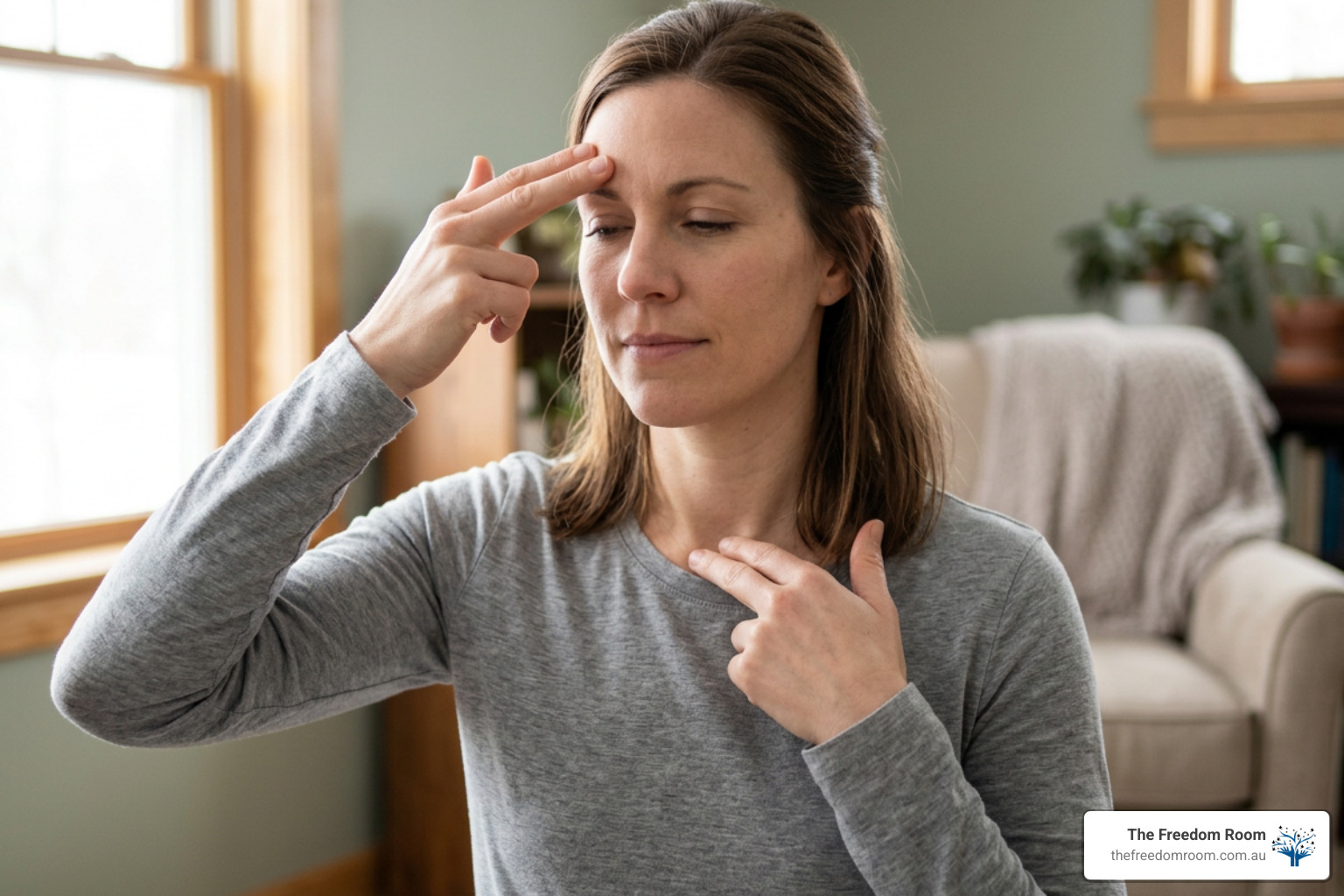
After reciting the setup statement on the karate chop point, transition to the remaining eight acupressure points across the face and upper torso. Use two or three fingertips to tap gently yet firmly, approximately 5 to 9 times per point, while repeating a brief reminder phrase (such as “this anxious feeling” or “this chest tightness”).
The standard tapping sequence follows this order:
- Side of Hand (Karate Chop): The outer fleshy edge of the hand below the little finger.
- Eyebrow (EB): Just above the bridge of the nose at the start of the inner eyebrow.
- Side of Eye (SE): On the bone bordering the outer corner of the eye socket.
- Under Eye (UE): On the bone directly beneath the pupil.
- Under Nose (UN): Centred in the space between the bottom of the nose and the upper lip.
- Chin Crease (CH): In the natural indentation between the lower lip and chin.
- Collarbone (CB): Just below the collarbone point and slightly outward from the breastbone.
- Under Arm (UA): Approximately four inches below the armpit along the ribcage.
- Crown of Head (TH): Directly on top of the head at the centre of the scalp.
As outlined in the Verywell Mind step-by-step tapping overview, the body’s meridians are symmetrical, meaning you can tap either side or both sides simultaneously.
After completing the full circuit, pause, take a deep breath, and reassess your distress on the 0 to 10 scale. If your rating remains above a 2 or 3, repeat the cycle. Incorporating this routine builds reliable Healthy Coping Mechanisms that support long-term emotional balance.
Best Practices for Tapping to Calm Anxiety at Home or with a Practitioner
Applying tapping consistently enhances its therapeutic value. Integrating short 5-minute tapping sessions into your morning or evening routine acts as preventative maintenance, lowering baseline stress before unexpected pressures arise.
During a session, you may experience spontaneous yawning, deep sighs, or emotional tears. These physical responses represent healthy releases of stored somatic tension as the autonomic nervous system resets.
While self-guided tapping is excellent for daily stress management, addressing deep-rooted emotional distress, chronic trauma, or complex substance use triggers is best supported by a certified practitioner. At The Freedom Room, we understand these interconnected challenges firsthand. Our team members bring lived experience in recovery, offering empathetic, personalised care through a holistic approach to emotional freedom to help you build lasting resilience.
Discover the Support You Need for a Lasting, Successful Recovery
Navigating persistent emotional distress and overcoming maladaptive behaviours requires evidence-based tools and dedicated guidance. Chronic stress and anxiety frequently fuel physical dependence on alcohol, creating repetitive cycles that can feel overwhelming to manage in isolation. According to verified data from the Australian Institute of Health and Welfare, alcohol remains one of the most widely used substances in Australia, with many individuals seeking structured support to reclaim their physical health and emotional equilibrium.
At The Freedom Room Wellness and Recovery, we provide accessible, compassionate programs designed to help you regain control and develop sustainable emotional regulation strategies. Because our team has navigated recovery firsthand, we offer authentic understanding and structured clinical guidance without judgement.
Take the next step in your healing journey:
- Explore our tailored treatment options on our Our Services page.
- Connect with our compassionate team through our Contact Us page to discuss your individual needs.
- Visit us in person at our welcoming centre: 9a/521 Beams Rd, Carseldine QLD 4034.
Your path to emotional balance and lasting health begins with dedicated support. Reach out today to begin your recovery journey.
Frequently Asked Questions
Can I practise EFT tapping every day?
Yes. Practising EFT daily is completely safe and serves as effective preventative maintenance for the autonomic nervous system. Short 5 to 10 minute sessions help lower resting cortisol levels and strengthen long-term emotional regulation skills.
Is it normal to cry or yawn while tapping?
Yes. Crying, yawning, sighing, and subtle bodily temperature shifts are common somatic release signs. These involuntary physiological responses indicate that your nervous system is shifting out of a fight-or-flight state and releasing accumulated muscular and autonomic tension.
What should I do if my anxiety increases during a tapping round?
If focusing on a trigger causes an uncomfortable surge in distress, pause the verbal script and gently tap the acupressure points while breathing deeply. Engage somatic grounding techniques by feeling your feet firmly on the floor and observing your immediate physical environment until calm returns.
How quickly does tapping relieve acute anxiety?
Many individuals experience a noticeable drop in subjective distress within 3 to 5 minutes or after 2 to 3 completed sequences. Resolving chronic patterns, significant trauma, or entrenched emotional associations generally requires structured sessions over several weeks with a qualified practitioner.