

The Accessibility of Drug Rehabilitation in Australia
Affordable drug rehab options are accessible throughout Australia via public health services, community programs, and flexible payment arrangements. These pathways ensure that quality treatment is available irrespective of an individual’s financial circumstances.
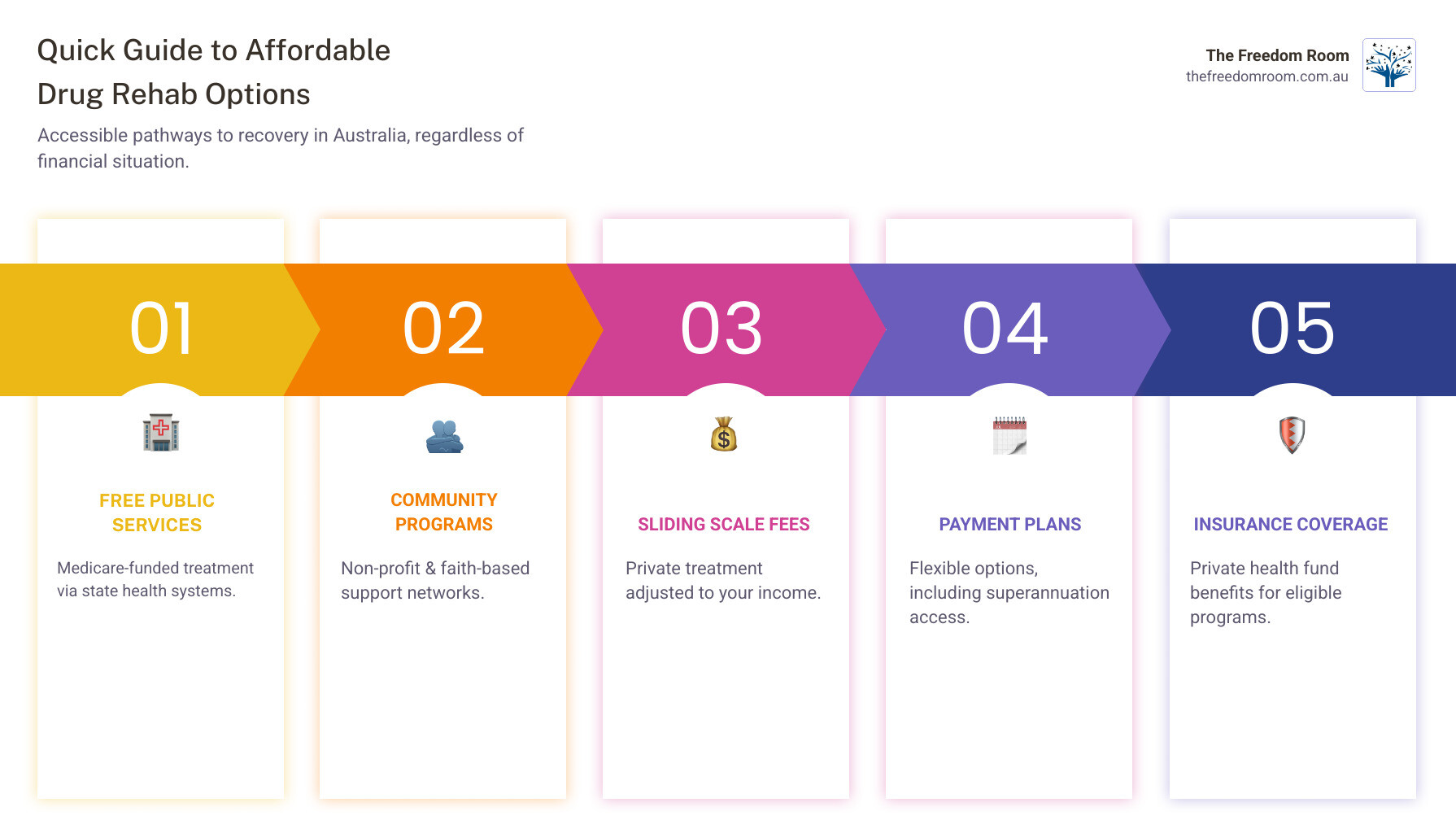
Key Pathways to Affordable Drug Rehabilitation:
- Public Services: Access free, Medicare-funded treatment through state and territory health systems.
- Community Programs: Utilise support networks provided by non-profit and faith-based organisations.
- Sliding Scale Fees: Engage with private treatment facilities that adjust fees according to income level.
- Payment Plans: Explore flexible payment options, which may include access to superannuation.
- Insurance Coverage: Use private health fund benefits for eligible rehabilitation programs.
According to the Australian Institute of Health and Welfare, many Australians struggle with substance use disorders, often believing quality treatment is financially out of reach. This misconception can trap people in addiction cycles when effective, evidence-based help is available.
Investing in recovery is a critical step toward long-term well-being. While addiction has mounting costs, treatment offers a path to reclaim one’s life and future.
The Australian healthcare system provides multiple pathways to affordable care, from Medicare-supported public programs to community-based support networks. Options exist for every financial situation, with many private facilities offering sliding scale fees and payment plans.
An understanding of these options allows individuals to pursue recovery without the added stress of prohibitive costs. Quality treatment provides evidence-based therapies and support for long-term success, regardless of the price.
Understanding the Cost of Addiction vs. The Cost of Recovery
Addiction creates a financial burden that extends far beyond the cost of substances. The true expense lies in the consequences of untreated substance use.
The Hidden Costs of Ongoing Addiction
- Health Complications: Chronic diseases, mental health issues, and injuries lead to substantial medical bills from emergency visits, specialist care, and ongoing treatment.
- Relationship Strain: Addiction damages connections with family members, friends, and colleagues, often leading to isolation, lost support, and broken trust.
- Employment Instability: Reduced productivity and absenteeism can cause job loss and financial instability, creating a cycle where stress fuels further substance use.
- Legal Issues: Court costs, fines, and criminal charges add financial pressure and can limit future employment opportunities.
Treatment as a Sound Investment
Compared to these escalating costs, affordable drug rehab is a wise investment in your future. Recovery programs provide the tools to rebuild your health, relationships, and financial stability.
Investing in treatment pays dividends through improved health, restored relationships, and better employment prospects. The cost is often recovered quickly through better work performance and reduced medical or legal expenses.
Factors That Influence Treatment Costs
Several elements affect rehab costs. The primary differentiators are inpatient versus outpatient care and program length, with longer programs often yielding better outcomes. Location and amenities also play a role, but the key is finding effective, evidence-based treatment that fits your budget.
Understanding these factors helps you make an informed decision without compromising on quality. More information about rehab costs in Australia provides detailed guidance for planning your recovery investment.
The most important consideration is accessing effective treatment that fits your financial situation and provides the support needed for lasting recovery.
A Guide to Free and Low-Cost Drug Rehabilitation in Australia
Financial constraints should not be a prohibitive factor in accessing necessary treatment. Australia provides numerous pathways to affordable drug rehab, including government-funded programs, community initiatives, and flexible private arrangements.

Publicly-Funded and Subsidised Services
Through Medicare, the Australian public health system makes many services available at little to no cost. State and territory health services, like Queensland Health, operate comprehensive programs through public hospitals and community health centres, offering detox, counselling, and rehab.
While waitlists can exist due to high demand, this should not be a deterrent. Enquiring early can facilitate quicker access, and many services offer crisis support during waiting periods. A General Practitioner can provide guidance on navigating the healthcare system.
Community and Non-Profit Support
Community networks offer compassionate and effective affordable drug rehab options, understanding that recovery thrives in supportive communities. Local charities and faith-based groups like The Salvation Army often provide residential programs and practical assistance.
Peer support groups like Alcoholics Anonymous and Narcotics Anonymous are highly accessible. They offer free, confidential meetings where shared experiences provide strength and demonstrate the power of mutual support. Recovery communities also include online forums and local networks.
Flexible Payment Options for Private Treatment
Private treatment can be made affordable. Many facilities offer flexible solutions to make their programs more accessible.
- Sliding Scale Fees: These arrangements adjust treatment costs based on an individual’s income, ensuring payments for quality care are proportional.
- Payment Plans: These options distribute the total cost over a series of manageable instalments.
- Superannuation Access: Early release of superannuation may be granted on compassionate grounds to cover treatment costs.
- Private Health Insurance: This can cover a portion of the costs, although coverage levels vary. It is essential to contact the insurer directly to clarify policy inclusions and any out-of-pocket expenses.
For comprehensive information about effective approaches to alcohol addiction support and treatment options, explore our detailed guide: Effective Help With Alcohol Addiction Support and Solutions.
What Services Are Included in Affordable Treatment?
A common misconception is that affordable drug rehab equates to a lower standard of care. In practice, accessible programs deliver the same evidence-based treatments found in more expensive facilities; differences are often limited to ancillary amenities. The quality of treatment is determined by the effectiveness of the therapies and the qualifications of the professionals delivering them, not by luxury.
The foundation of quality care, whether public or private, is the use of proven methods to address the root causes of addiction.
Core Therapeutic Approaches
Effective affordable drug rehab programs use multiple therapeutic approaches to address the different aspects of addiction. This comprehensive method tackles substance use and the thoughts, emotions, and behaviours that underpin it.
- Individual Counselling: This forms the backbone of treatment, offering a confidential space to explore personal challenges and develop customised recovery strategies. Our Addiction Counselling services focus on this personalised approach.
- Group Therapy: Bringing people with similar challenges together creates a powerful sense of community and shared understanding. Our Group Therapy Addiction Complete Guide explores how this support accelerates healing.
Two particularly effective approaches are Cognitive Behavioural Therapy (CBT) and Emotional Freedom Techniques (EFT). We have seen remarkable results using CBT for Alcoholism.
Emotional Freedom Techniques (EFT)
Emotional Freedom Techniques (EFT) is an evidence-based tool for managing stress and emotional challenges. The technique involves tapping on specific acupressure points while concentrating on distressing thoughts. This process sends calming signals to the brain’s stress centre.
An EFT practitioner guides the individual to safely process and release emotional trauma without needing to relive the experience. This approach is noted for its effectiveness in treating addiction, anxiety, trauma, and stress, and may be suitable for individuals who find conventional talk therapy too intensive.
Cognitive Behavioural Therapy (CBT)
Cognitive Behavioural Therapy (CBT) is a well-researched talking therapy for addiction that focuses on the links between thoughts, feelings, and actions. It helps individuals identify and change unhelpful thinking patterns that fuel substance use, building their confidence to cope without it.
This practical, collaborative approach develops problem-solving skills for long-term recovery. Strategies are customised and may include facing fears, role-playing, and relaxation techniques.
Levels of Care and Support in Rehabilitation
Understanding the different levels of care available in affordable drug rehab is crucial for selecting the appropriate program. Effective treatment pathways offer various intensities of support, as each recovery journey is unique.
Detoxification and Medically Supervised Withdrawal
This is often the initial step, ensuring safety and comfort during the withdrawal phase. Medical staff monitor the individual and may administer medication to alleviate symptoms.
Residential and Inpatient Programs
For those needing intensive support, inpatient programs involve being admitted and staying overnight in a structured, 24-hour care environment. This immersive setting removes you from daily triggers, allowing a complete focus on recovery.
Outpatient Programs
Outpatient programs provide structured therapy and support while allowing individuals to live at home and maintain daily commitments. They offer regular therapy sessions without requiring a residential stay. Options include Intensive Outpatient Programs (IOPs), which involve several hours of therapy multiple days a week, and Partial Hospitalization Programs (PHPs), offering even more structured, day-long treatment where you return home each evening. This flexibility helps integrate recovery into everyday life.
Ongoing Support
Following formal treatment, continuing care is essential for long-term success. This includes scheduled check-ins with a counsellor, participation in support groups, relapse prevention planning, and access to crisis support.
Each level builds on the last, creating a comprehensive approach that adapts to individual needs. For alcohol-specific concerns, our specialised Alcohol Use Disorder Treatment incorporates these levels of care.
Aftercare and Relapse Prevention
The completion of an affordable drug rehab program is a significant milestone, but it marks the beginning of a lifelong process. The transition back to daily life necessitates ongoing support, as successful long-term recovery is highly dependent on post-treatment strategies.
Comprehensive aftercare planning isn’t just a good idea; it’s the essential roadmap for lasting sobriety. It provides the ongoing support and practical strategies needed to steer life’s challenges and build a strong, sustainable recovery.
Ongoing Support and Relapse Prevention Strategies
Effective aftercare starts with a personalised plan created during treatment. This roadmap for sobriety should include relapse prevention strategies, which are the cornerstone of aftercare.
Key strategies include the identification of personal triggers, the development of healthy coping mechanisms, the creation of emergency action plans, and the establishment of regular check-ins with support networks.
Continuing professional support, such as counselling, can provide stability during this transition.
Access to Peer-Led Recovery Groups
Peer support is a valuable component of recovery. Connecting with others who have direct experience with addiction can create strong bonds of accountability and mutual strength. These groups offer practical wisdom and emotional support.
You can explore various Alcohol Addiction Support Groups to find a community that aligns with your recovery approach. These groups often become a vital part of a person’s routine.
The Value of Aftercare Planning for Long-Term Success
Comprehensive aftercare planning addresses all aspects of life, including relationships, routines, stress management, and underlying mental health concerns. Effective plans are flexible and evolve with an individual’s needs.
Planning also involves preparing for difficult moments, such as celebrations or work-related stress, by developing strategies to handle them without returning to substance use. This preparation builds confidence for managing life’s challenges.
How to Find and Choose the Right Program
Identifying a suitable and affordable drug rehabilitation program can be a complex process; however, a structured approach can make it more manageable. As each recovery journey is individual, it is important to conduct a thorough assessment of personal needs and available options.

Step 1: Assess Your Needs and Eligibility
First, a candid assessment of one’s situation is required to identify the most suitable treatment. This involves reflecting on substance use history, previous attempts to cease use, and any co-occurring mental health conditions. For individuals with conditions such as anxiety or depression, it is beneficial to seek programs offering integrated treatment for dual diagnosis.
Next, review the eligibility criteria for different programs. Public services may have income or residency requirements, while private programs with sliding scale fees will require financial documentation. Finally, consider the level of support needed, whether it is medical detox, residential care, or outpatient support. We’re here to support you on your path to Freedom From Addiction.
Step 2: Finding an Affordable Drug Rehab Program
With your needs assessed, the search for matching programs can begin. Australia has several key resources to assist in this search. The National Alcohol and Other Drug Hotline (1800 250 015) is a free, confidential service providing information and referrals nationwide. For residents of Queensland, ADIS Queensland (1800 177 833) offers specialised support. Healthdirect Australia (1800 022 222) provides health information and service finders for other states and territories.
For immediate crisis support, contact 000 for emergencies, Lifeline (13 11 14), or Beyond Blue (1300 22 4636) for 24/7 assistance.
Step 3: Verifying Quality and Asking the Right Questions
Not all affordable rehab programs are equal, so research is vital. Verify that any program under consideration meets professional standards.
Check for proper accreditation and qualified staff. Understand the treatment philosophy (e.g., abstinence vs. harm reduction) and ensure therapies are evidence-based. Ask about aftercare planning and family involvement if these are important to you.
It is advisable to inquire about several key areas. These include the specific evidence-based therapies offered, the staff-to-client ratio and staff qualifications, the management of aftercare post-treatment, and the support available for families.
Choosing the right program is an investment in your future. Take your time and ask questions to make an informed decision.
Conclusion: Commencing the Path to Recovery
Recovery from addiction is a significant undertaking, and it is achievable. A range of affordable drug rehab options exists to provide support, and an individual’s financial situation should not be a barrier to accessing high-quality care.
Effective treatment requires a personalised approach grounded in professional expertise. Evidence-based therapies such as EFT and CBT, delivered through personalised counselling and workshops, can form the basis of a cost-effective and successful treatment plan.
Taking the first step toward recovery requires considerable courage. Professional services are available to provide non-judgemental support and guidance throughout this process.
Individuals are encouraged to explore the available options and seek professional consultation to build a foundation for lasting change.
Find out more about our affordable addiction treatment services.
Frequently Asked Questions about Affordable Drug Rehab
Seeking affordable drug rehab can raise many questions. Here are clear answers to some of the most common concerns.
How do I qualify for free or low-cost rehab in Australia?
Eligibility for free or subsidised treatment typically depends on factors such as income, Centrelink status, and residency. Many public programs require Australian citizenship or permanent residency. The process usually commences with contacting a local public health service or a national helpline, which can provide guidance on the specific requirements for a particular area.
Can I use my private health insurance to pay for rehab?
Yes, private health insurance can substantially reduce the cost of rehabilitation, particularly for residential programs. However, coverage varies widely between policies, and waiting periods or annual limits often apply. It is essential to contact the insurance provider directly to confirm what the policy covers, which facilities are included in the network, and what out-of-pocket expenses may be incurred.
What is the main difference between public and private rehab services?
The primary difference relates to funding and accessibility. Public services are government-funded, making them free or low-cost, but they may have longer waitlists. Private services are fee-for-service and often have shorter wait times and more extensive amenities.
Both sectors employ qualified professionals and offer evidence-based care. The optimal choice depends on an individual’s timing, financial situation, and personal needs, rather than a difference in the quality of the core treatment provided.