

Overcoming Financial Barriers to Recovery
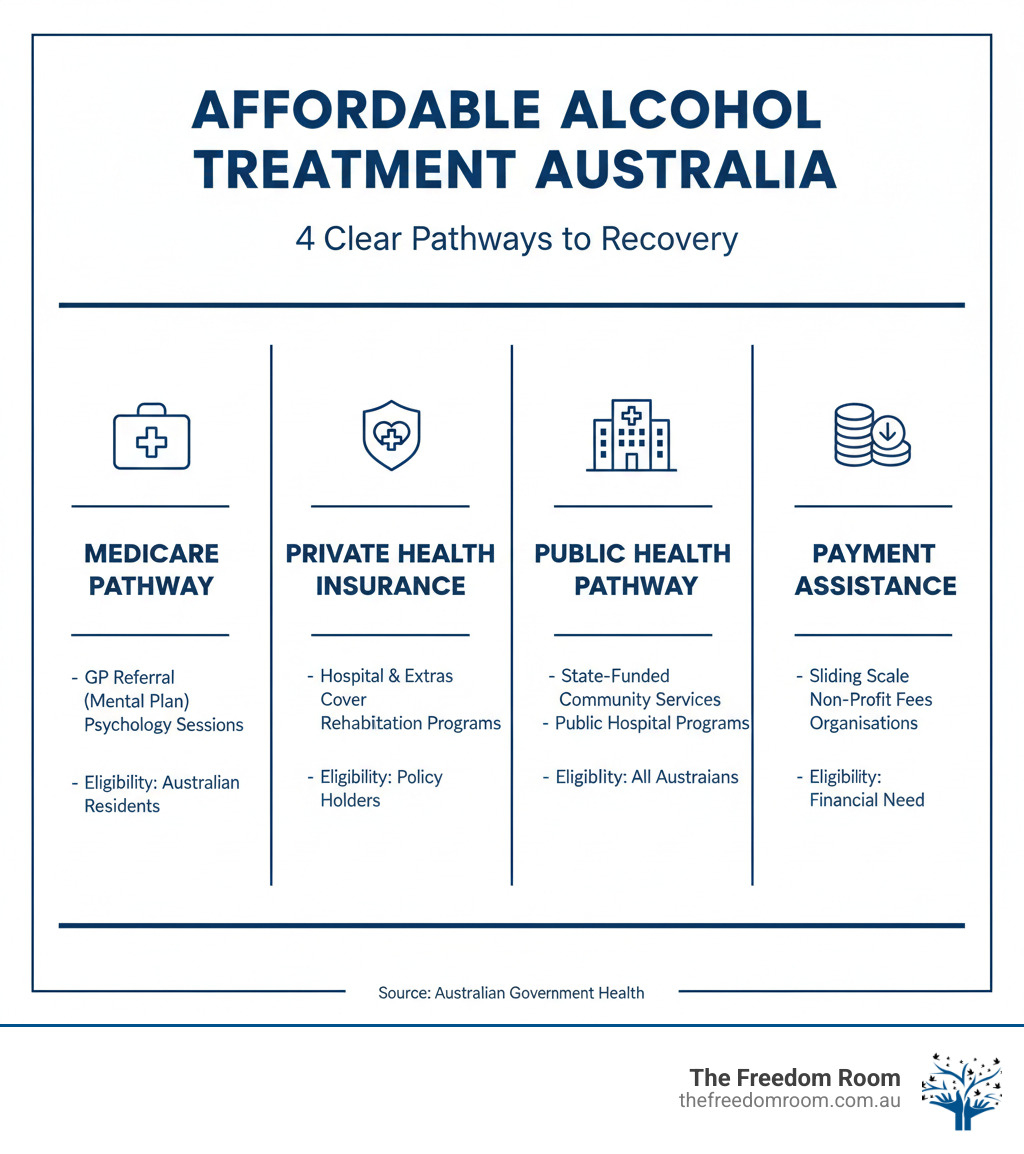
Access to affordable alcohol treatment in Australia is facilitated through various pathways, including Medicare rebates, private health insurance, state-funded services, non-profit organisations, and income-based payment plans.
Key Pathways to Affordable Treatment:
- Visit a GP to discuss a Mental Health Care Plan for Medicare-subsidised psychology sessions.
- Contact a private health insurer to verify hospital and extras cover for rehabilitation.
- Explore state-funded community health centres and public hospital programs.
- Inquire directly with treatment centres about sliding scale fees and payment plans.
- Connect with charitable organisations offering low-cost or subsidised care.
- Consider outpatient programs, which typically have lower costs than residential treatment.
The Perception of High Costs
Concerns regarding the cost of recovery are prevalent. A significant number of Australians postpone seeking assistance due to the perception that treatment is financially inaccessible; however, this is often not the case.
Alcohol use disorder affects hundreds of thousands in Australia, and affordability is a major barrier to getting support. This concern is understandable, as navigating payment systems can feel overwhelming when already dealing with the stress of alcohol dependence.
The Reality of Accessible Care
Australia’s healthcare system, in conjunction with community resources and private options, renders effective treatment more accessible than is commonly perceived. Whether through private health insurance, Medicare, or state-funded services, there are genuine pathways to care.
Access to recovery is a fundamental need. Established systems are in place to support individuals in initiating the process of achieving an alcohol-free life.
Affordable alcohol treatment basics:
Understanding the Cost of Alcohol Rehabilitation
The cost of alcohol rehabilitation varies significantly. This variation is due to multiple factors, and a clear understanding of these elements is essential for making an informed decision about affordable alcohol treatment that aligns with individual circumstances.
Key Factors Influencing Treatment Costs
The type of treatment program, its duration, the facility’s location, and the level of care all play significant roles in determining cost. Some centres offer basic, evidence-based treatment, while others provide additional amenities that increase the price.
Luxury rehabilitation facilities with resort-style amenities have higher costs than standard centres. However, therapeutic outcomes are often comparable when both types of facilities utilise evidence-based approaches. The efficacy of treatment is primarily determined by the quality of the clinical program and the individual’s commitment to recovery.

Inpatient vs. Outpatient Program Costs
Inpatient programs require living at the facility, receiving 24/7 medical supervision, therapy, meals, and accommodation. This comprehensive support involves higher costs due to the 24/7 care and accommodation expenses involved.
Outpatient programs allow an individual to live at home while attending scheduled therapy and support meetings. This flexibility allows individuals to maintain professional and familial commitments while receiving professional support.
The lower overheads of outpatient care make these programs more budget-friendly. For many Queenslanders, this is a practical recovery pathway. Exploring options through Alcohol Rehab Brisbane can show the full range of possibilities.
The Impact of Program Length and Intensity
Program duration influences cost. Short-term detox programs, lasting several days to a week, focus on safely managing withdrawal. Although it represents a lower initial investment, detoxification alone is seldom sufficient for achieving sustained recovery.
Longer programs, whether residential or intensive outpatient, require a greater financial commitment but offer more comprehensive support. They help address underlying causes and build a recovery framework. Investment in Long Term Alcohol Rehab Brisbane often correlates with improved long-term outcomes.
Intensive outpatient programs provide structured therapy several times per week while allowing an individual to maintain their daily routine. These programs offer a balance between comprehensive care and affordability. Aftercare planning extends support beyond initial treatment, helping with the transition back into daily life and significantly reducing relapse risk.
Exploring Your Options for Affordable Alcohol Treatment
The variety of treatment options for alcohol dependence can seem overwhelming. However, affordable alcohol treatment is available in numerous forms, each designed for different needs and stages of recovery. A clear understanding of the available options is crucial for making an informed choice.
Treatment is not one-size-fits-all. Some individuals benefit from residential care, while others prefer outpatient sessions that fit their lifestyle. The key is finding the right support for the specific situation and budget.
Overview of Treatment Modalities
- Medical detoxification provides medically supervised withdrawal management.
- Residential treatment involves living at a facility for intensive, round-the-clock support.
- Outpatient programs allow an individual to attend therapy while living at home.
- Individual counselling offers one-on-one time with a therapist.
- Group therapy brings people together to share experiences in a supportive environment.
- Support groups provide ongoing peer-led community connection.
Each of these can be combined to create a personalised treatment plan that fits individual needs and financial circumstances.
Types of Therapy in Alcohol Treatment
Effective therapy addresses the thoughts and feelings that contribute to drinking patterns. Two common approaches are Cognitive Behavioural Therapy and Emotional Freedom Techniques, which provide practical tools for managing cravings and building a foundation for sobriety.
Cognitive Behavioural Therapy (CBT) is a talking therapy based on the principle that thoughts, feelings, and behaviours are linked. CBT helps individuals identify and change unhelpful thinking patterns, gain a clearer understanding of behaviour, develop problem-solving skills, and build confidence. The individual and their therapist collaborate to create a custom treatment strategy. Our approach to CBT for Alcoholism equips individuals with lasting skills.
Emotional Freedom Techniques (EFT), or tapping, is an evidence-based tool for stress relief. It involves gently processing difficult emotions by tapping on the body, which helps individuals move from a state of being overwhelmed to a state of calm. An EFT practitioner guides the safe release of emotional trauma, with the goal of removing its emotional charge. Tapping on acupressure points sends a calming signal to the brain’s alarm system, disrupting the stress response and allowing the nervous system to rebalance.
The Role of Support Groups and Counselling
Connection and community are integral components of the recovery process. Support groups provide a space to share experiences with others who have similar experiences, which reduces the isolation common in alcohol dependence. These groups provide encouragement and accountability, which are vital for long-term sobriety.
Professional guidance through individual and group counselling is also critical. Counsellors provide expert strategies, facilitate discussions, and offer personalised insights. They help individuals develop coping mechanisms, address underlying issues, and establish healthy habits. This combined approach strengthens the recovery framework. We encourage exploring Alcohol Addiction Support Groups as a cornerstone of the recovery journey.
Navigating Financial Pathways to Affordable Alcohol Treatment
The cost of treatment should not prevent recovery. Across Australia, financial pathways make affordable alcohol treatment a reality. These include private health insurance, Medicare, government programs, non-profits, and payment plans.
Understanding these options is crucial to ensure financial concerns do not become a barrier to accessing care. Various pathways exist to facilitate access to quality treatment.

Using Private Health Insurance and Medicare
Private health insurance can provide valuable support for affordable alcohol treatment. Many policies include hospital cover for inpatient rehab. It is important to contact the provider to understand the specifics of the cover, including waiting periods, excess, and gap fees. Extras cover may also provide rebates for psychology sessions.
Medicare also provides critical support. A Mental Health Care Plan from a GP gives access to Medicare rebates for up to ten psychology sessions per year, with more if needed. This reduces the cost of counselling. A GP is the initial point of contact for accessing this subsidised mental health support.
Finding State-Funded and Non-Profit Services for Affordable Alcohol Treatment
For those without private health insurance, the public health system and non-profit sector offer essential support for affordable alcohol treatment. State-funded services through community health centres and public hospitals offer programs like detox and counselling, often at no or low cost. Demand can be high, leading to waiting lists, but the care is professional.
Non-profit and charitable groups also play an invaluable role. They are mission-driven and offer free or low-cost counselling, peer support, and referrals. They understand financial barriers and have deep community connections to provide guidance. Local services can be explored through resources like Find drug and alcohol support services in your area.
Understanding Payment Plans and Sliding Scale Fees
Many treatment centres offer flexible financial arrangements. Payment plans allow the cost to be spread over time into manageable instalments, easing the immediate financial burden.
Sliding scale fees are another option. Fees are adjusted based on an individual’s income, so those earning less pay a reduced rate. This ensures quality treatment is accessible to everyone, regardless of financial situation.
It is advisable to inquire directly with treatment providers about these financial arrangements. A direct conversation can often identify suitable solutions, thereby reducing financial stress and allowing the individual to focus on recovery.
The Long-Term Value of Investing in Recovery
While the initial cost of treatment is a primary consideration, it is essential to view recovery as a long-term investment in one’s future. The financial burden of untreated alcohol dependence is substantial and can far exceed the cost of seeking professional help.
The Hidden Costs of Untreated Alcohol Dependence
Addiction has hidden costs, including lost productivity, risk of job loss, and mounting healthcare costs for related illnesses. Legal fees and debt are also common. The true cost of inaction is clear when looking at the broader picture of alcohol harm in Australia, as documented by Australian statistics on alcohol harm.
Choosing affordable alcohol treatment is a proactive step toward rebuilding one’s life and creating new opportunities.
Health and Wellbeing Benefits of Recovery
An individual’s physical health typically improves dramatically upon cessation of drinking. The liver can begin to heal, sleep quality often increases, and energy levels may return. The mental health benefits are equally profound, with reductions in anxiety and depression often replaced by greater clarity and peace of mind.
Financial and Relational Restoration
Financial stability can be restored as the capacity for consistent work and sound decision-making returns. This allows for career advancement, effective financial management, and the ability to build savings.
Crucially, recovery provides the opportunity to rebuild interpersonal relationships. Trust with family and friends can be restored, and individuals can become more present and engaged with their loved ones.
These combined benefits create a foundation for a fulfilling and meaningful life. The investment made in Alcohol Addiction Recovery can yield significant, lifelong benefits.
Conclusion: Initiating the Path to Recovery
This guide has outlined the various pathways to affordable alcohol treatment in Australia. From Medicare and private health insurance to public services and payment plans, numerous options exist to ensure individuals can access the necessary support to overcome alcohol dependence.
Initiating the recovery process is a significant step, particularly when financial concerns are present. However, it is important to recognise that accessible and effective solutions are available. Recovery encompasses more than the cessation of drinking; it involves rebuilding one’s life and establishing purpose, representing an investment in future health, relationships, and wellbeing.
The journey to recovery is an achievable goal that begins with seeking professional help. By understanding the available financial and therapeutic options, such as those detailed in our Affordable Addiction Treatment Services, individuals can make informed decisions and access the support necessary to build a foundation for a fulfilling, alcohol-free life.
Frequently Asked Questions about Affordable Alcohol Treatment
What should I look for when choosing an affordable alcohol treatment centre?
When searching for an affordable alcohol treatment centre, consider several factors to ensure quality care. Verify the centre’s accreditation and licensing to confirm it meets professional standards. Staff qualifications and experience are also crucial; a skilled, compassionate team contributes significantly to positive outcomes. Look for centres using evidence-based methods like Cognitive Behavioural Therapy (CBT) and Emotional Freedom Techniques (EFT). Finally, consider if the program structure (inpatient or outpatient) suits your needs and inquire about aftercare support.
Are there completely free alcohol rehab options in Australia?
Yes, free alcohol rehab options exist in Australia. The public health system offers state-funded services through public hospitals and community health centres, providing subsidised or free treatment for eligible individuals. Many non-profit and charitable organisations also offer free services like counselling and group therapy. Self-help groups like Alcoholics Anonymous (AA) also provide free, peer-led support meetings nationwide. Due to high demand, some free services have waiting lists, but many centres offer interim support.
What is the first step to finding affordable alcohol treatment?
The most effective first step is speaking with a GP. They can assess an individual’s needs, create a Mental Health Care Plan (MHCP) for Medicare-subsidised psychology sessions, and provide referrals to other low-cost options. Contacting a national alcohol and drug support helpline can also provide immediate guidance. When potential providers are identified, it is advisable to contact them directly to ask about payment options like sliding scale fees or payment plans. Seeking assistance is a critical step, and numerous pathways exist to support the recovery process.