

Why Recovery Doesn’t Have to Mean Rehab
Alternatives to rehab offer effective pathways to recovery for many Australians. If you need flexibility, privacy, or a different approach to overcoming alcohol addiction, understanding your options is the first step toward making the best choice for your unique situation.
Quick Answer: Top Alternatives to Traditional Rehab
- Outpatient Therapy and Counselling: Attend individual or group sessions while maintaining your daily life.
- Medication-Assisted Treatment (MAT): Use prescribed medications and therapy to reduce cravings.
- Telehealth Services: Access remote therapy and medical support via video or phone.
- Peer Support Groups: Join community-based programs like SMART Recovery, AA, or LifeRing.
- Holistic Approaches: Incorporate yoga, meditation, nutritional therapy, and mindfulness.
- Sober Living Homes: Live in transitional housing with peer accountability and structure.
For many, entering a residential rehabilitation facility is impractical due to work, family, or financial commitments. You may also feel uncertain about such a significant step, or perhaps traditional rehab has not worked for you in the past. The encouraging truth is that recovery is deeply personal, and what works for one person may not work for another.
Research shows that outpatient programs can be as effective as inpatient treatment for many individuals. This guide explores the full range of evidence-based alternatives to rehab available in Australia, from medical interventions to community support. Recovery is not about fitting into a predetermined mould; it is about finding the path that helps you build a sustainable, fulfilling life free from alcohol dependence.
Understanding the Traditional Treatment Model
For many Australians, residential rehabilitation is the most familiar path to recovery. These facilities provide a structured, safe environment away from daily triggers, which can feel essential for recovery.
Traditional rehab involves living at a centre for a set period, from weeks to months, with 24-hour care from medical and therapeutic staff. It often begins with medically supervised detoxification to manage withdrawal symptoms safely, as alcohol withdrawal can be dangerous without clinical oversight. This immersive approach addresses the physical, psychological, and social factors of dependence. For more information, see our guide on Alcohol Use Disorder Treatment.
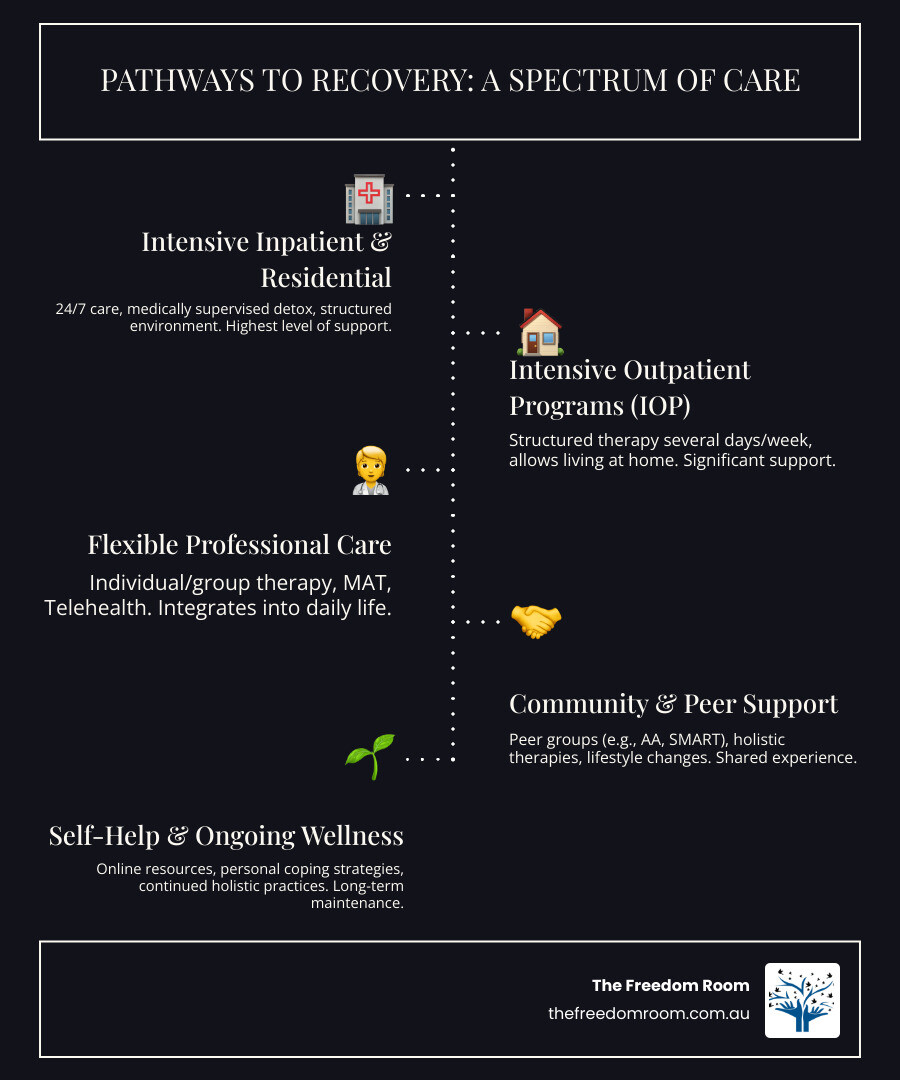
While residential rehab is the right choice for some, it is just one point on a broad spectrum of care. Exploring alternatives to rehab is increasingly important for Australians seeking a different path to recovery.
The Core Components of Professional Treatment
Evidence-based alcohol treatment, whether inpatient or outpatient, typically includes several key elements.
- Assessment and planning: A thorough evaluation of your health and circumstances to create a personalised treatment plan with clear goals.
- Medical care: Addresses the physical effects of alcohol dependence, including managing withdrawal and treating co-occurring conditions.
- Therapeutic intervention: Talk therapy helps explore the root causes of addiction and develop coping strategies. Cognitive Behavioural Therapy (CBT) is particularly effective, and our services include Cognitive Behavioural Therapy Alcohol to support this work.
- Education and life skills: Provides practical knowledge for sober living, such as stress management and communication skills.
- Relapse prevention: Focuses on identifying triggers and creating a long-term plan to steer challenges after treatment.
Levels of Care in Addiction Treatment
Professional addiction treatment is offered at different intensities of support.
- Outpatient services: The least intensive level, where you live at home and attend scheduled therapy sessions.
- Intensive outpatient or partial hospitalisation programs: A more structured option where you attend treatment for several hours a day, multiple days a week, but return home each evening.
- Residential treatment: Involves living at a facility for a period, receiving structured therapy in a sober environment.
- Medically managed intensive inpatient treatment: The most intensive level, offering 24/7 medical and nursing care for severe cases.
When Inpatient Rehab May Be Necessary
While this guide focuses on alternatives to rehab, inpatient treatment is necessary in certain situations.
- Severe substance dependence: Alcohol or benzodiazepine dependence often requires medically supervised detoxification to manage dangerous withdrawal symptoms like seizures.
- Risk of complicated withdrawal: A history of delirium tremens or other serious withdrawal complications makes a residential setting essential for safety.
- Co-occurring severe mental health conditions: Significant depression, anxiety, or psychosis alongside alcohol dependence may require integrated, supervised treatment.
- Lack of a safe or supportive home environment: If your living situation is unstable or filled with triggers, rehab offers a safe space for early recovery.
- Previous unsuccessful attempts at outpatient treatment: If less intensive approaches have not worked, a residential program may provide the necessary structure.
Professional and Medically-Supervised Alternatives to Rehab
For many Australians, stepping away from daily life for residential treatment is not a viable option. Professional, medically supervised alternatives to rehab offer the support you need without putting your life on hold, allowing you to maintain work, family, and privacy.
Research supports these approaches, with a 2014 study in the Journal of Substance Abuse Treatment finding that outpatient programmes can be as effective as inpatient treatment for many people. Success lies in matching the care to your needs, staying engaged, and building a strong support network.
Therapy and Counselling Outside of a Rehab Setting
Accessing quality therapy while maintaining your routine is one of the most effective alternatives to rehab.
-
Individual therapy offers a private space to work one-on-one with a qualified psychologist or counsellor. Here, you can really dig into your specific triggers, build effective coping strategies, and map out your personal recovery goals. Our Addiction Recovery Counseling services are designed to give you this kind of focused, personalised support.
-
Group therapy brings together people facing similar challenges. This creates a powerful sense of shared experience and mutual support. It’s a safe environment where you can learn from others, share your own journey, and even practice new social skills in a supportive setting. We offer dedicated Group Therapy for Alcoholism to help foster these vital connections.
Cognitive Behavioural Therapy (CBT) is a proven approach that helps you identify and change the unhelpful thinking patterns and behaviours that fuel drinking. It is based on the idea that our thoughts, feelings, and actions are interconnected. Our Cognitive Behavioural Therapy Alcohol services integrate this practical approach.
Acceptance and Commitment Therapy (ACT) teaches you to accept difficult thoughts and feelings without fighting them, while committing to actions that align with your values. This psychological flexibility is useful for managing cravings and emotional triggers. Learn more about Acceptance and Commitment Therapy (ACT).
Emotional Freedom Techniques (EFT), or tapping, is an evidence-based tool that gently processes emotional stress. By tapping on specific acupressure points while focusing on a distressing emotion, you send a calming signal to your brain’s alarm system. An EFT practitioner guides you to release emotional trauma safely, helping to clear the emotional charge from past events so they no longer hold power over you.
Medication-Assisted Treatment (MAT)
Medication-Assisted Treatment (MAT) is a highly effective alternative that combines prescribed medications with counselling. It addresses the neurobiological side of addiction, helping to normalise brain chemistry so you can focus on psychological recovery.
Medications like Naltrexone, Acamprosate, and Disulfiram work by reducing cravings, easing withdrawal symptoms, or creating an unpleasant reaction to alcohol. When combined with therapy, MAT provides a comprehensive foundation for lasting recovery. Many GPs can prescribe these medications or refer you to a specialist. The National Institute on Alcohol Abuse and Alcoholism offers valuable information on treatment options.
The Role of Telehealth and Digital Tools

Technology has made professional support more accessible than ever, especially for Australians in regional and remote areas.
Virtual therapy sessions via phone or video eliminate travel and can be scheduled around work and family. Medicare and many private health insurers in Australia now provide coverage for these services. For those outside major cities, telehealth is a lifeline connecting you with addiction specialists.
Beyond formal therapy, recovery apps offer daily support, progress tracking, and motivational resources. Online forums provide another layer of connection, offering anonymous, around-the-clock encouragement from others in recovery.
Community, Peer, and Lifestyle-Based Support
Recovery does not happen in isolation. The connections we make and the daily choices we make are vital for building a life free from alcohol. For many, community, peer, and lifestyle support systems are powerful alternatives to rehab that feel personal and sustainable.
Shared experience is a powerful tool against the isolation of addiction. Building a sober network provides emotional support and practical wisdom from people who have walked a similar path. Our services emphasise Peer Support Recovery as a cornerstone of lasting change.
Peer Support and Community Groups
Peer support groups offer help that professional treatment sometimes cannot, creating a space where people gather as equals with a common goal.
- 12-step programs like Alcoholics Anonymous (AA) use a structured approach based on 12 principles. They promote abstinence through mutual support and regular meetings. While millions have found recovery through AA, its spiritual emphasis does not resonate with everyone.
- Non-12-step alternatives offer different frameworks, often focusing on self-empowerment and science-based methods.
- SMART Recovery uses Self-Management and Recovery Training based on CBT principles. It focuses on building motivation, coping with urges, managing thoughts, and living a balanced life.
- LifeRing Secular Recovery is an abstinence-based program that emphasises personal empowerment and strengthening your “Sober Self” through peer support.
- Women for Sobriety is designed for women, using 13 acceptance statements to build self-esteem and emotional growth.
The main difference between these approaches is philosophy. 12-step programs incorporate spirituality, while non-12-step groups are typically secular and focus on self-empowerment. The key is to find a group where you feel safe and understood. For more options, explore our Alcohol Addiction Support Groups resource.
Holistic and Lifestyle-Based Alternatives to Rehab
Recovery involves rebuilding your entire life. Holistic approaches focus on the mind-body connection to build resilience and overall wellbeing.

- Yoga combines movement, breath work, and meditation to reduce stress and anxiety. It helps you reconnect with your body and process emotions in a healthy way.
- Mindfulness and meditation are scientifically backed for their role in recovery. They teach you to observe cravings without acting on them, creating a space for choice. Research shows meditation can reduce relapse rates.
- Nutritional therapy addresses deficiencies caused by alcohol misuse, which can improve mood, energy, and mental clarity.
- Exercise and physical activity reduce cravings, improve mental health, and boost self-esteem, providing structure and a natural way to manage stress.
Our Holistic Addiction Recovery Services integrate these practices for comprehensive healing.
Sober Living Homes
Sober living homes are a middle ground between intensive treatment and independent living. These residential facilities offer a safe, substance-free environment where people in recovery live together.
They provide transitional support, bridging the gap between treatment and everyday life. The structured sober environment reinforces healthy habits through house rules, regular meetings, and peer accountability. Unlike residential rehab, sober living homes do not provide formal clinical treatment; instead, they focus on community and daily living while residents seek their own outpatient support. This gradual return to independence significantly improves the chances of long-term sobriety.
For further support, explore our Post Rehabilitation Support options.
Choosing Your Path and Navigating Practicalities
Selecting the right recovery path is a deeply personal decision. There is no single formula that works for everyone. The process begins with honest self-reflection about the severity of your alcohol use, your health, and your home environment.
Professional guidance from a GP, psychologist, or addiction specialist is invaluable. They can provide a thorough assessment and help you weigh your options objectively. Our Developing Coping Mechanisms Guide offers further insights. Choosing alternatives to rehab means choosing a path that fits your life and increases your chance of sustainable recovery.
Harm Reduction vs. Abstinence
A significant decision is whether to pursue complete abstinence or a harm reduction approach.
- Abstinence means stopping all alcohol use entirely. For many, especially those with severe dependence, this is the safest and most effective goal. Most traditional programs, including AA, are built on this principle.
- Harm reduction focuses on reducing the negative consequences of alcohol use without demanding immediate cessation. The goal is to minimise risk and improve wellbeing. This might involve reducing the frequency or quantity of alcohol consumed.
The right choice depends on the severity of your alcohol use, your health, and your personal readiness for change. Some people start with harm reduction and later move to abstinence. Neither path is superior; what matters is finding an approach that supports your long-term health.
Cost and Accessibility of Rehab Alternatives
One of the most compelling advantages of alternatives to rehab is that they are often more affordable and accessible than residential programs.

Outpatient therapy, peer support groups, and telehealth services generally have lower costs than residential rehab. In Australia, Medicare provides rebates for mental health treatment under a Mental Health Care Plan, and private health insurance may also cover some services.
Free community resources like AA, SMART Recovery, and LifeRing are also highly valuable, providing substantial support without a financial burden. Creating a sustainable recovery plan means balancing your therapeutic needs with your financial reality. A plan that fits your budget is more likely to succeed long-term. Our Affordable Addiction Treatment Services can help you identify options that work for you.
Ready for Change? Let’s Build a Stronger, Alcohol-Free Future Together
Recovery is a personal journey, and as this guide has shown, many effective paths exist beyond traditional rehab. These alternatives to rehab can be custom to fit your unique needs, circumstances, and values, whether it is through outpatient therapy, peer support, or holistic practices.
The most important step is finding the right fit. Taking that step requires courage, and by seeking information, you are already demonstrating remarkable resilience.
At The Freedom Room Wellness and Recovery, we understand this journey from the inside. Our team brings lived experience to every session, offering compassionate, personalised support from our base in Strathpine, Queensland. We integrate evidence-based therapies like CBT and EFT to create a support framework customised for you.
We are here to empower you to make informed choices. If you are ready to explore how you can achieve sobriety while maintaining your daily life, we invite you to learn more. Visit our guide on How to Get Sober Without Going to Rehab to find practical strategies that can work for you. Your stronger, alcohol-free future is within reach.
Frequently Asked Questions about Alternatives to Rehab
Are alternatives to rehab as effective as inpatient programs?
Yes, for many people, alternatives to rehab can be just as effective. Research shows that outpatient care can achieve similar outcomes to residential treatment. Success depends on matching the treatment approach to your specific needs, including the severity of your dependence, your support network, and your level of engagement.
How do I know which alternative is right for me?
Start by assessing the severity of your alcohol use, your mental and physical health, and the stability of your home environment. Consider your personal beliefs, such as a preference for secular versus spiritual programs. We strongly recommend consulting with a GP, psychologist, or addiction specialist. They can provide a professional assessment and help you create a personalised plan.
Can I combine different types of alternative treatments?
Absolutely. Combining different treatments often creates the most robust and sustainable recovery plan. For example, you could combine Medication-Assisted Treatment (MAT) from your GP with weekly therapy and participation in a peer support group like SMART Recovery. This layered approach addresses your wellbeing from multiple angles and can be adjusted as your needs evolve.