

Why Breathing Exercises Are Essential for Addiction Recovery
Breathing exercises for addiction offer a powerful, evidence-based approach to managing stress, anxiety, and cravings during recovery. These simple yet effective techniques help calm your nervous system, reduce the intensity of withdrawal symptoms, and provide healthy coping strategies when you need them most.
Quick Guide to Breathing Techniques for Addiction Recovery:
- 4-7-8 breathing – Inhale for 4 counts, hold for 7, exhale for 8 to quickly calm anxiety
- Diaphragmatic breathing – Deep belly breathing to activate your body’s natural relaxation response
- Box breathing – Equal counts of inhale-hold-exhale-hold to improve focus and manage overwhelm
- Breath retention – Holding breath after inhale or exhale to help eliminate cravings
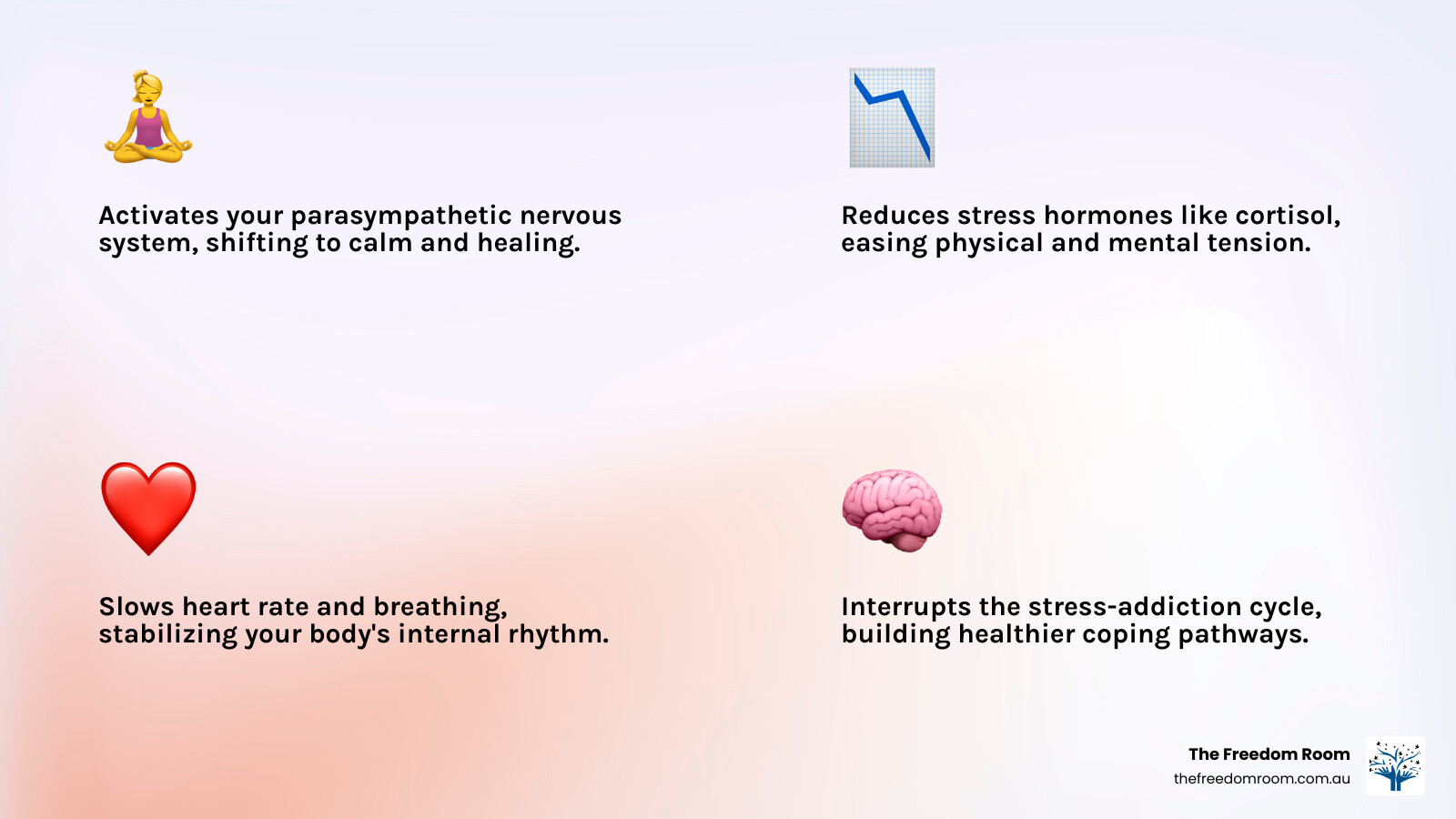
Research consistently shows that controlled, conscious breathing activates your parasympathetic nervous system – shifting your body from a stressed “fight-or-flight” state to one of calm and healing. This physiological change is particularly crucial for people in recovery, as stress and anxiety are major triggers for relapse.
When you’re struggling with addiction, your body often exists in a constant state of heightened stress. Your heart races, breathing becomes shallow, and stress hormones like cortisol flood your system. This creates a vicious cycle where physical discomfort increases cravings, making recovery more challenging.
The good news? You already have the most powerful tool for breaking this cycle – your breath. Unlike other coping strategies that may require special equipment or specific environments, breathing techniques are always available to you. Whether you’re facing intense cravings, social anxiety, or overwhelming emotions, these practices provide immediate relief and long-term benefits for your recovery journey.
Must-know breathing exercises for addiction terms:
The Vicious Cycle of Stress, Anxiety, and Addiction
When you’re battling addiction, anxiety often becomes an unwelcome companion. Anxiety and addiction frequently occur together, creating a complex relationship where each condition feeds into the other. Many people find themselves using substances as a way to self-medicate against life’s overwhelming anxieties.
Understanding how your body responds to stress is crucial for breaking free from this cycle. Your nervous system is naturally designed to protect you through what’s commonly called the fight-or-flight response. When you perceive a threat – whether it’s a speeding car heading toward your child or an important presentation at work – your body floods with stress hormones like adrenaline and cortisol.
This response served our ancestors well when facing genuine physical dangers. However, in modern life, this same system can become overactive, triggering intense reactions to everyday stressors. For people with substance use disorders, this heightened stress response creates a particularly challenging situation.
The problem intensifies when your stress response becomes disproportionate to actual threats or remains constantly activated. Your body stays locked in a state of high alert, with physiological effects of stress manifesting throughout your system. This chronic activation makes you more vulnerable to seeking relief through substances, creating the foundation for addiction’s vicious cycle.

How Stress Fuels Addiction
Stress acts as a powerful trigger for substance use, significantly increasing cravings and making resistance much more difficult. When you’re overwhelmed, your brain remembers that substances provided temporary relief in the past, creating intense urges to use again.
This creates what experts call a negative reinforcement cycle. You use substances to escape stress, but this temporary relief actually reinforces the behaviour. Meanwhile, the underlying stress often grows stronger, creating an even greater need for escape.
The challenge becomes particularly intense during relapse risk periods. Stress doesn’t just make you want to use substances – it actively hijacks your decision-making processes. Your stressed brain prioritises immediate relief over long-term recovery goals, making it incredibly difficult to stick to your sobriety plans.
Each time you turn to substances for stress relief, you’re strengthening neural pathways that connect stress with substance use. This makes future cravings more intense and automatic, as your brain increasingly views substances as the primary solution to any form of discomfort.
The Physical Toll of Anxiety in Recovery
When anxiety takes hold during recovery, your body experiences a cascade of uncomfortable physical symptoms. Your heart rate increases, breathing becomes shallow, and muscle tension builds throughout your body. Sleep becomes elusive, leaving you feeling exhausted and overwhelmed.
These physical manifestations of anxiety create a particularly challenging situation during recovery. The symptoms – racing heart, sweating, restlessness, and general discomfort – can closely mimic withdrawal symptoms. This overlap becomes genuinely distressing, as it becomes difficult to distinguish between anxiety and actual withdrawal.
The similarity between anxiety symptoms and withdrawal creates additional psychological pressure. You might question whether you’re truly healing or if your body is still craving substances. This uncertainty can increase feelings of hopelessness and make the urge to relapse feel almost unbearable.
Without healthy coping mechanisms like breathing exercises for addiction recovery, these overwhelming physical sensations can feel impossible to manage. Your body remains trapped in a stress response, making every day feel like a battle against your own nervous system.
How Breathwork Calms Your Body and Mind
There’s a fascinating truth about our physiology: it’s virtually impossible to maintain a state of panic whilst breathing slowly and deeply. This isn’t just wishful thinking—it’s how our nervous system is designed to work. When we engage in breathing exercises for addiction recovery, we’re tapping into one of the body’s most reliable pathways to calm.
Deep, controlled breathing automatically activates your parasympathetic nervous system—the part responsible for your body’s “rest and digest” mode. This physiological shift moves you away from the heightened “fight-or-flight” response that often keeps people struggling with addiction in a constant state of stress and hypervigilance.
The benefits extend far beyond simply feeling calmer in the moment. Scientific research on mindfulness and stress reactivity demonstrates that even brief breath-counting exercises can significantly reduce stress-induced negative moods and help people recover more quickly from situations that might typically trigger alcohol-seeking behaviours.
Conscious breathing creates a cascade of positive changes throughout your body. Your heart rate naturally slows as more oxygen enters your bloodstream. This slower heart rate signals safety to your nervous system, which responds by reducing the production of stress hormones like cortisol whilst increasing the release of endorphins—your body’s natural pain and stress relief chemicals.
These endorphins don’t just help you feel better; they actively support better sleep quality and emotional stability. For someone in recovery, this natural boost can be particularly valuable when managing the emotional ups and downs that often accompany the healing process.
Re-wiring Your Brain’s Response to Stress
Addiction fundamentally alters brain chemistry, disrupting the delicate balance of neurotransmitters that regulate mood, motivation, and decision-making. Substances artificially flood the brain with dopamine, hijacking the natural reward system, whilst chronic stress increases cortisol production. The prefrontal cortex—crucial for impulse control and sound decision-making—often becomes compromised in the process.
Breathwork offers a natural pathway to rebalance this disrupted chemistry. Regular practice helps restore dopamine levels naturally, supporting the brain’s healing reward system without artificial stimulation. Simultaneously, controlled breathing effectively lowers cortisol levels, creating space for clearer thinking and reduced anxiety.
Perhaps most importantly, conscious breathing strengthens prefrontal cortex function. This improved brain activity translates directly into better focus, improved decision-making abilities, and stronger impulse control—all essential skills for managing cravings and maintaining recovery.
This process demonstrates neuroplasticity in action—your brain’s remarkable ability to form new neural pathways throughout your life. Each time you choose breathwork over panic or substances, you’re literally rewiring your brain’s default response to stress, creating healthier patterns that become stronger with practice.
Gaining Control Over Cravings
When overwhelming emotions or intense cravings arise, taking a few conscious moments to focus on your breath creates something powerful: a pause between impulse and action. This seemingly simple act of counting each inhale and exhale fosters genuine mindfulness—a mental state where you become actively aware of your emotions and the specific triggers that activate them.
This awareness isn’t passive observation; it’s empowerment. Understanding your personal trigger patterns allows you to develop customised coping strategies that work specifically for your situation and lifestyle.
Breathwork provides a healthy outlet for the overthinking that often accompanies cravings. Instead of getting caught in spiralling thoughts about using substances, you redirect that mental energy into something that actively supports your recovery. The rhythmic nature of focused breathing naturally calms mental chatter whilst strengthening your capacity for emotional regulation.
This improved emotional regulation means you can respond thoughtfully to challenging situations rather than react impulsively. Over time, this builds genuine confidence in your ability to handle difficult moments without turning to substances for relief.
For additional support in developing personalised stress management strategies, explore our comprehensive stress management workshops, where you can learn these techniques alongside others who understand the recovery journey.
Practical Breathing Exercises for Addiction Recovery
When you’re navigating recovery, having practical tools at your fingertips can make all the difference. Breathing exercises for addiction are beautifully simple – they require no special equipment, cost nothing, and can be practised anywhere, anytime. Whether you’re at home, work, or caught off-guard by a craving in a social setting, these techniques form the foundation of a comprehensive recovery toolkit.
The beauty of breathwork lies in its accessibility. You don’t need to attend a class or wait for an appointment – your breath is always with you, ready to provide immediate relief and foster long-term resilience.

The 4-7-8 Method for Instant Anxiety Relief
When anxiety strikes or cravings feel overwhelming, the 4-7-8 breathing technique can be your lifeline. Often called the “relaxing breath,” this method works remarkably quickly to calm your nervous system and bring you back to centre.
The magic happens in that extended exhale – the 8-second release helps flush stress from your body whilst the breath retention builds your capacity to stay present during difficult moments.
Here’s how to practise the 4-7-8 breath:
Start by finding a comfortable position, whether sitting or lying down, with your back straight. Exhale completely through your mouth, making a gentle “whoosh” sound to empty your lungs. Close your mouth and inhale quietly through your nose for a slow count of 4. Hold your breath for a count of 7, then exhale completely through your mouth again with that “whoosh” sound for a count of 8.
Repeat this cycle four times, twice daily for maximum benefit. Many people find this technique particularly powerful when they feel a craving building – try it before acting on any urges, and notice how it creates space between the impulse and your response.
Diaphragmatic (Belly) Breathing for Foundational Calm
Think of diaphragmatic breathing as your daily foundation practice – the cornerstone of all breathing exercises for addiction. This technique teaches your body to breathe the way it was designed to, engaging your diaphragm for deeper, more nourishing breaths.
Most of us breathe shallowly into our chest, especially when stressed or anxious. Belly breathing reverses this pattern, activating your parasympathetic nervous system and creating a profound sense of calm that builds over time.
Getting started with belly breathing is wonderfully straightforward. Place one hand on your chest and another on your abdomen, just below your rib cage. Inhale slowly through your nose, allowing your belly to rise and push your bottom hand out whilst your chest remains relatively still. Exhale slowly through pursed lips, feeling your abdomen gently fall as you draw your abdominal muscles in to help push the air out.
Continue this rhythmic expansion and contraction for 5-10 minutes. With regular practice, your body will naturally return to this deeper breathing pattern, providing a constant source of calm and reducing the shallow chest breathing that often accompanies anxiety.
Box Breathing to Improve Focus and Manage Overwhelm
When your mind feels scattered or you’re facing overwhelming emotions, box breathing offers a simple anchor. This technique, used by athletes and professionals in high-stress situations, creates mental clarity through its steady, rhythmic pattern.
The “square” structure of this breath – equal counts of inhale, hold, exhale, hold – gives your mind something concrete to focus on, making it easier to steer stressful moments without becoming lost in them.
To practise box breathing, sit comfortably upright and exhale completely to empty your lungs. Inhale slowly through your nose for a count of 4, hold your breath for 4, exhale slowly through your mouth for 4, then hold your breath with empty lungs for 4. Repeat this square pattern for several minutes until you feel steadier and more focused.
This grounding technique helps interrupt the spiral of overwhelming thoughts, bringing you back to the present moment where you have choice and control.
An Introduction to Emotional Freedom Techniques (EFT)
Alongside breathing exercises for addiction, Emotional Freedom Techniques (EFT) offers another powerful tool for your recovery toolkit. Known as “tapping,” this evidence-based approach combines gentle physical stimulation with focused attention to help process trauma and reduce stress.

What is EFT and How Does It Work?
EFT works by addressing your body’s alarm system – the amygdala – which sits deep in your brain like a vigilant guard. When this small but powerful structure senses danger, whether real or perceived, it triggers your familiar “fight, flight, or freeze” response, flooding your system with stress hormones.
In recovery, this ancient survival mechanism can become overactive, responding to everyday stressors or memories of past experiences as if they were immediate threats. This chronic activation can keep you stuck in cycles of stress and craving.
The gentle tapping on specific acupressure points on your face and upper body whilst focusing on distressing thoughts or emotions sends a calming signal directly to your amygdala. It’s like reassuring that alarm system that the perceived threat isn’t as overwhelming as it feels, helping disrupt the typical stress response and allowing your nervous system to return to balance.
When combined with breathwork, EFT can create even more powerful results, as both techniques work together to regulate your nervous system and build emotional resilience.
The Role of an EFT Practitioner
An EFT practitioner serves as your guide through the safe processing of emotional trauma held in your body and subconscious memories. These trained professionals understand how to steer both everyday stresses and significant traumas, recognising that each person’s experience is unique.
The practitioner’s primary focus is ensuring you don’t relive traumatic experiences during sessions. Unlike some traditional therapies that might leave you feeling like you’ve “opened a can of worms,” EFT’s nature means you’ll typically feel better after sessions, as the technique works specifically on clearing negative emotions.
Professional EFT practitioners create a controlled, safe environment where you can process difficult emotions without being overwhelmed by them. Their goal is to help reduce the emotional charge of past events, allowing you to view experiences from a different perspective or find that distressing memories no longer trigger the same intense reactions.
Health Areas Where EFT is Beneficial
EFT recognises that all healing – whether physical or mental – has an emotional component. When emotional stress is cleared, your body can relax into its natural healing state, breaking free from the stress cycles that often keep people stuck.
EFT has shown particular benefit for addictions, anxiety, and depression – common challenges in recovery. It’s also valuable for processing trauma and PTSD, managing stress, and addressing childhood experiences that may underlie current struggles. Many people find EFT helpful for phobias, pain management, grief and loss, and building self-confidence and self-esteem.
The technique offers hope for those who’ve carried emotional burdens for years, providing a gentle yet effective path toward emotional freedom and lasting recovery.
Integrating Breathwork into Your Daily Life for Lasting Sobriety
The true power of breathing exercises for addiction emerges when they become woven into the fabric of your daily life. While practising these techniques during scheduled sessions provides valuable benefits, lasting change comes from making conscious breathing your natural response to life’s challenges.
Building this foundation of consistent practice creates genuine psychological resilience. When stress, anxiety, or cravings arise, you’ll have reliable tools at your disposal – techniques that feel familiar and accessible because they’ve become part of who you are.
Building a Sustainable Breathwork Routine
Creating a sustainable breathwork practice doesn’t require hours of your day. Small, consistent actions build the strongest foundations for recovery.
Begin each morning with five minutes of your chosen technique, perhaps diaphragmatic breathing, to establish a calm and centred tone for the day ahead. This simple ritual signals to your nervous system that you’re prioritising your wellbeing from the moment you wake.
Wind down each evening using the 4-7-8 method to promote restful sleep. Quality sleep strengthens your resilience and reduces vulnerability to triggers the following day.
Throughout your day, take micro-breaks for conscious breathing. Even three deep breaths every few hours helps reset your nervous system and prevents stress from accumulating. These brief moments of mindfulness can transform an overwhelming day into something more manageable.
Integrate techniques into existing routines rather than adding more tasks to your schedule. Practice box breathing while your coffee brews, or use belly breathing during your commute. This approach makes breathwork feel natural rather than burdensome.
The goal is developing an automatic response where conscious breathing becomes your first instinct when challenges arise, rather than your last resort.
Using Breathing Exercises for Addiction in Triggering Moments
The most transformative application of these techniques occurs in those critical moments when cravings or intense emotions threaten to overwhelm you. Whether you’re navigating a social situation, processing emotional distress, or encountering a familiar trigger, breathwork provides immediate support.
Creating space between impulse and action is perhaps the greatest gift these exercises offer. When a craving strikes, that surge of intensity can feel impossible to resist. By engaging in conscious breathing, you’re not fighting the craving – you’re giving yourself time to remember your choices.
This pause allows your prefrontal cortex, the brain’s decision-making centre, to come back online. In that space, you can access your wisdom, your reasons for recovery, and your commitment to your wellbeing.
Practising a breathing exercise before acting on any urge significantly increases your ability to choose a healthier response. The technique doesn’t need to be perfect – even a few conscious breaths can shift your entire experience of that moment.
The Broader Benefits for Your Wellbeing
While breathing exercises for addiction excel at managing cravings and stress, their benefits extend far beyond recovery itself. Consistent practice creates positive changes that improve every aspect of your life.
Improved sleep quality naturally follows regular breathwork practice. Deep breathing slows your heart rate and activates your body’s relaxation response, leading to more restorative sleep cycles. Better sleep strengthens your emotional regulation and decision-making abilities.
Improved emotional stability develops as your nervous system becomes more balanced. You’ll notice greater capacity to process difficult emotions without becoming overwhelmed, and increased ability to respond thoughtfully rather than react impulsively.
Increased mental clarity and focus result from improved oxygen flow to your brain. Many people report feeling more present, creative, and capable of handling complex tasks as their breathwork practice deepens.
Strengthened immune function occurs when chronic stress decreases. Research suggests that regular deep breathing practices support your body’s natural defence systems, contributing to better overall health.
Greater self-connection and resilience perhaps represent the most profound benefits. As you develop this relationship with your breath, you’re simultaneously developing a deeper relationship with yourself – one built on self-care, patience, and compassion.
These comprehensive benefits create a strong foundation for not just maintaining sobriety, but building a life that feels genuinely fulfilling and meaningful.
Ready for Change? Let’s Build a Stronger, Alcohol-Free Future Together
Breathing exercises for addiction represent one of the most powerful and accessible tools available for recovery. These evidence-based techniques offer a natural pathway to managing stress, reducing cravings, and building the foundation for lasting well-being. The beauty lies in their simplicity – your breath is always with you, ready to provide relief whenever challenges arise.
Recovery is fundamentally a journey of progress over perfection. Every conscious breath you take represents a meaningful step forward in your healing process. There will be difficult moments, but having these practical tools empowers you to steer them with greater confidence and resilience.
The Power of Professional Support
At The Freedom Room Wellness and Recovery, we understand the complexities of addiction recovery because many of our team members have walked this path themselves. This lived experience, combined with professional training, allows us to offer compassionate, evidence-based support that truly understands what you’re going through.
Our approach integrates multiple therapeutic modalities to create comprehensive healing. Breathwork forms a cornerstone of our treatment approach, providing immediate relief and long-term benefits. We also incorporate EFT (Emotional Freedom Techniques) to help process underlying trauma and emotional patterns that often fuel addictive behaviours.
Building Your Foundation for Success
The techniques you’ve learned throughout this guide – from the 4-7-8 method for instant anxiety relief to diaphragmatic breathing for foundational calm – become more powerful when practiced consistently within a supportive framework. Our personalised recovery programmes help you develop these skills whilst addressing the deeper emotional and psychological aspects of addiction.
We recognise that each person’s journey is unique. Some individuals benefit most from intensive one-on-one sessions, whilst others thrive in group workshops where they can connect with others facing similar challenges. Our flexible approach ensures you receive the support that best matches your needs and circumstances.
Your Alcohol-Free Future Awaits
Imagine waking up each morning with clarity and energy, facing life’s challenges with effective coping strategies rather than seeking escape through substances. This vision of an alcohol-free future isn’t just a dream – it’s an achievable reality when you have the right tools and support.
The breathing techniques and emotional processing methods we’ve explored provide the building blocks for this change. Combined with professional guidance and a supportive community, these tools become the foundation of lasting recovery.
Your journey towards freedom begins with a single decision to seek help. Whether you’re taking your first steps in recovery or working to strengthen existing sobriety, we’re here to guide you through every stage of the process.
Find our personalised recovery programs and find how our comprehensive approach can support you in building the stronger, alcohol-free future you deserve.