

Why Conflict is an Inevitable Part of Group Healing
Conflict resolution group therapy is a therapeutic approach that helps individuals develop essential communication and relationship skills by navigating disagreements in a safe, structured environment. Rather than avoiding conflict, this therapy accepts it as a powerful tool for personal growth and healing.
Key components of conflict resolution group therapy:
- Safe environment – Trained facilitators create structured spaces for healthy disagreement
- Skill development – Learn active listening, emotional regulation, and assertive communication
- Real-world application – Practice techniques that transfer to relationships outside therapy
- Therapeutic ruptures and repairs – Transform conflicts into opportunities for deeper connection
- Group cohesion – Build trust and support through navigating challenges together
Benjamin Franklin said that only death and taxes are certain in life, but conflict deserves a place on that list too. When people come together in group therapy, they bring different personalities, values, communication styles, and life experiences. These differences inevitably lead to friction.
This isn’t a flaw in the process, it’s the entire point.
Conflict in group therapy settings mirrors the challenges we face in our daily relationships. For those recovering from alcohol addiction, learning to steer disagreements without turning to substances becomes crucial for long-term sobriety. Research shows that when group leaders skillfully address ruptures and facilitate repairs, it leads to stronger therapeutic alliances and better treatment outcomes.
Group therapy becomes a microcosm of life, offering a controlled environment to practice new ways of relating to others. Instead of avoiding difficult conversations or numbing uncomfortable feelings, members learn to stay present and work through challenges constructively.
The therapeutic process recognises that healing rarely happens in isolation. In group settings, members find they’re not alone in their struggles whilst developing the interpersonal skills essential for maintaining recovery and building fulfilling relationships.
Learn more about conflict resolution group therapy:
Understanding Conflict in the Group Therapy Environment
When people gather for healing, disagreements naturally arise. This isn’t a sign that something’s gone wrong, it’s actually evidence that meaningful therapeutic work is taking place. In conflict resolution group therapy, we view these moments of tension as valuable opportunities rather than obstacles to overcome.
Think of it this way: if everyone always agreed on everything, how much real growth could actually happen? The friction between different perspectives, experiences, and personalities creates the very conditions where genuine healing can unfold.
Common Types of Conflict in Group Sessions
Group therapy brings together individuals with diverse backgrounds, communication styles, and ways of seeing the world. This beautiful complexity inevitably leads to various forms of disagreement.
Member-to-member disagreements represent the most common type of conflict in group settings. These might emerge from differing opinions about recovery approaches, personality clashes, or conflicting values and beliefs. Sometimes a comment that feels supportive to one person lands as criticism to another. These moments, whilst uncomfortable, often reveal important patterns in how we relate to others.
Member-to-therapist conflict presents another significant dynamic. Group members might challenge the facilitator’s authority, question therapeutic interventions, or express frustration with the group’s direction. These conflicts frequently involve transference and projection, unconscious processes where past relationship patterns get played out with the therapist. Rather than viewing these as problematic, skilled facilitators recognise them as rich material for therapeutic exploration.
Subgroup formation can create particularly challenging dynamics. When cliques develop or certain members consistently exclude others, it disrupts the sense of safety and belonging that’s essential for healing. These patterns often mirror family dynamics or social experiences that have caused pain in members’ lives.

The ‘Storming’ Stage and Other Natural Group Dynamics
Every therapy group follows a predictable journey through different developmental phases. Understanding these stages helps both facilitators and members steer conflict with greater confidence and purpose.
Tuckman’s model describes four key stages: forming, storming, norming, and performing. The storming stage is where conflict becomes most apparent and intense. During this phase, group members begin asserting their individuality, challenging established norms, and expressing disagreements more openly. Initial politeness gives way to authentic, sometimes uncomfortable interactions.
This storming period often feels chaotic and discouraging. Members might wonder if they’ve made the right choice joining the group. Some consider leaving altogether. However, research demonstrates the importance of educating group members that conflict is a likely part of the experience. When people understand that these challenges are normal and necessary, they’re more likely to stay engaged and work through difficulties.
Successfully navigating the storming stage leads to stronger group cohesion and deeper trust. Members find they can disagree, feel angry, or express disappointment without the relationship ending. This realisation becomes particularly powerful for those in addiction recovery, where relationship fears and avoidance patterns often contribute to substance use.
The process mirrors real-world relationship challenges, making the group a perfect training ground for healthier interactions outside therapy. Our Group Therapy for Alcoholism programs specifically utilise these natural group dynamics to strengthen recovery foundations and build supportive community connections.
The Therapist’s Role: Guiding the Group Through Disagreements
When conflict arises in group therapy, our role becomes both delicate and decisive. We’re not there to wave a magic wand and make disagreements disappear. Instead, we serve as skilled guides who help transform moments of tension into opportunities for profound healing and connection.
The beauty of conflict resolution group therapy lies not in avoiding difficult conversations, but in learning to steer them with grace and purpose. As therapists, we hold the space for these challenging yet transformative experiences.
Facilitator, Not Fixer: The Therapist’s Core Responsibilities
Think of us as facilitators rather than fixers. Our primary responsibility centres on creating and maintaining a safe, structured environment where honest expression can flourish without fear of judgment or emotional harm.
From the very first session, we establish clear ground rules that everyone understands. These aren’t rigid restrictions but helpful guidelines that allow authentic interaction to occur safely. We maintain neutrality and empathy, actively listening to all perspectives without taking sides or showing favouritism.
This approach models healthy communication for group members whilst helping to de-escalate tensions naturally. Rather than imposing our solutions, we guide the resolution process by empowering members to find their own answers. We help the group process the conflict, understand what lies beneath the surface, and practise constructive resolution strategies together.
Our core responsibilities include:
- Creating safety through clear boundaries and consistent support
- Maintaining neutrality whilst showing empathy to all members
- Modelling communication that demonstrates healthy conflict navigation
- Guiding findy rather than dictating solutions
- Empowering growth through member-led problem solving
Research on group leadership shows that when conflict erupts, the group leader’s response can determine whether the situation becomes destructive or therapeutic. You can learn more about this crucial aspect by reading The Tasks of the Group Leader when Conflict Erupts.
Proactive Strategies for Minimising Unnecessary Conflict
Whilst conflict serves an important purpose in group healing, we also work proactively to minimise unnecessary or destructive disagreements. Prevention often proves more effective than intervention after tensions have escalated.
Our process begins long before the first group meeting. Through thorough member screening, we ensure individuals are well-suited for the group experience and understand its collaborative nature. This careful selection helps create a foundation of compatibility and shared commitment.
From the very first session, we set clear expectations and goals whilst reinforcing the critical importance of confidentiality and mutual respect. We actively foster group cohesion, encouraging members to build trust and genuine connections with one another.
Early intervention becomes crucial when minor issues arise. By addressing small disagreements promptly and thoughtfully, we prevent them from growing into major disruptions that could derail the group’s progress. This approach helps cultivate a positive, supportive group climate where conflicts, when they do arise, can be steered constructively rather than destructively.
Ethical Considerations in Managing Group Conflict
Ethical practice forms the backbone of everything we do in conflict resolution group therapy. Our duty of care mandates that we ensure both the physical and emotional safety of every group member at all times.
Maintaining strict confidentiality becomes particularly important in group settings. We not only uphold this standard ourselves but also encourage and support group members in respecting each other’s privacy and vulnerability. We remain mindful of managing any potential dual relationships whilst ensuring fairness in all our interactions.
Thorough documentation of interventions and group processes proves essential for ethical accountability and ongoing improvement. We carefully record significant events whilst respecting member privacy and therapeutic boundaries.
Perhaps most challenging, we must recognise when to refer or, in rare circumstances, remove a member for the overall wellbeing of the group. This decision requires careful consideration of ethical guidelines, the impact on all involved, and consultation with supervisors or colleagues when appropriate.
Our commitment to ethical practice ensures that the therapeutic environment remains secure and beneficial for everyone’s recovery journey. For those seeking comprehensive support in addiction recovery, understanding this ethical framework forms an integral part of effective Addiction Recovery Counselling.
Core Strategies for Conflict Resolution Group Therapy
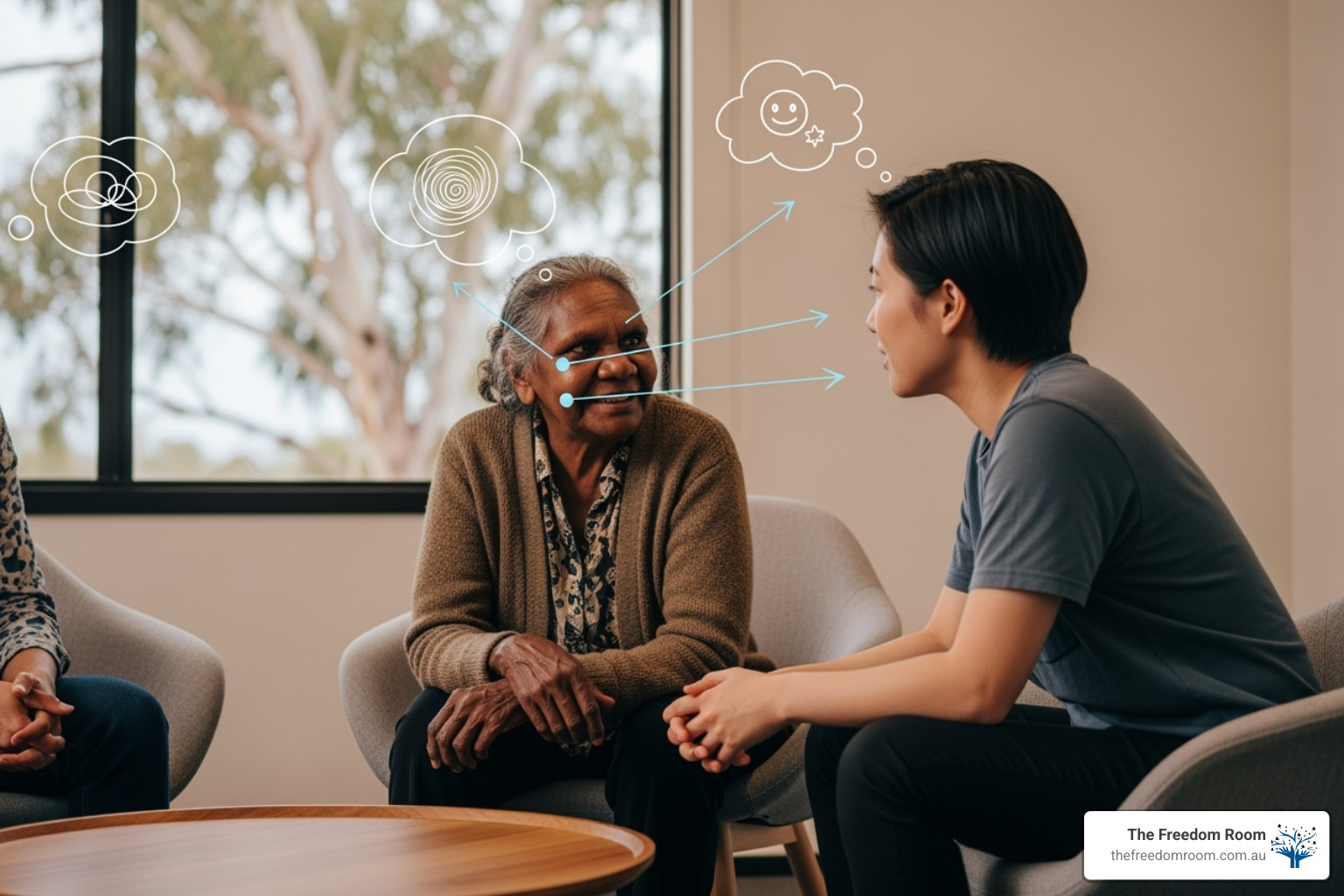
When we think about conflict resolution group therapy, it’s helpful to imagine building a house. You need solid foundations before you can add the walls and roof. The same principle applies to resolving disagreements, we need to establish core skills first, then build upon them with more advanced techniques.
The strategies we’ll explore aren’t just theoretical concepts. They’re practical tools that transform how people interact, both within the therapy room and in their everyday relationships. Each technique builds upon the others, creating a comprehensive approach to handling conflict constructively.
Building the Foundation: Communication and Emotional Regulation
The cornerstone of effective conflict resolution lies in how we communicate and manage our emotions. Without these fundamental skills, even the best intentions can quickly spiral into misunderstandings and hurt feelings.
Active listening forms the bedrock of healthy communication. This isn’t simply waiting for your turn to speak – it’s about genuinely absorbing what the other person is saying, understanding their perspective, and reflecting it back to them. When someone feels truly heard, they’re far more likely to extend the same courtesy in return.
We also focus heavily on teaching ‘I’ statements, which might seem simple but are remarkably powerful. Instead of saying “You always interrupt me,” a group member learns to express “I feel unheard when I’m interrupted, and I need a chance to finish my thoughts.” This subtle shift moves the conversation away from blame and towards genuine communication about needs and feelings.
Emotional intelligence plays a crucial role in navigating disagreements. We work with group members to identify their personal triggers – those specific words, tones, or situations that tend to escalate their emotional responses. Understanding these patterns is the first step towards managing them more effectively.
To support emotional regulation, we integrate evidence-based approaches like Cognitive Behavioural Therapy (CBT) and Emotional Freedom Techniques (EFT). CBT helps members recognise and re-evaluate unhelpful thinking patterns that often fuel conflicts. When someone’s automatic thought is “They’re attacking me,” CBT teaches them to pause and reframe this as “They have a different perspective, and I can listen to understand it.”
EFT, commonly known as “tapping,” offers a gentle way to work with the body’s natural stress response. During conflict, our amygdala can trigger that familiar “fight, flight, or freeze” response, flooding our system with stress hormones. The gentle tapping on specific acupressure points whilst focusing on the distressing emotion sends calming signals to this alarm system. This helps disrupt the typical stress response, allowing the nervous system to return to a more balanced state.
Over time, regular practice of these techniques helps retrain our responses to conflict, fostering greater inner calm and emotional resilience. Our Holistic Addiction Recovery Services often integrate these approaches to support overall wellbeing and recovery.
Navigating Ruptures and Facilitating Repairs in Conflict Resolution Group Therapy
In any meaningful relationship, there will be moments when things go wrong. In group therapy, we call these moments “ruptures”, strains in the therapeutic alliance or group cohesion that can range from subtle tensions to outright disagreements.
Subtle ruptures might look like a member consistently arriving late, withdrawing from discussions, or showing signs of frustration through body language. Overt disagreements are more obvious, direct challenges between members or conflicts with the therapist. Both types are significant and require attention.
The magic happens in the repair process. Research consistently shows that successfully identifying and repairing ruptures leads to stronger therapeutic outcomes and reduced dropout rates. When we address these disruptions thoughtfully, they become opportunities for deeper connection and trust.
This includes addressing challenging dynamics like microaggressions, those subtle, often unintentional comments or behaviours that can feel dismissive or discriminatory. When these occur, we guide the group to acknowledge their impact and process them constructively, ensuring everyone feels heard and respected.
The beauty of conflict resolution group therapy lies in changing these ruptures into learning opportunities. Members experience that relationships can weather storms and emerge stronger. This lived experience becomes a powerful template for handling conflicts in their personal relationships and recovery journey.
For those interested in the research behind this approach, studies on ruptures and repairs in group psychotherapy provide valuable insights into these therapeutic processes.
Addressing Persistent Issues and Difficult Dynamics
Even in well-managed groups, some conflicts seem to resurface repeatedly. These persistent patterns often reflect deeper relational dynamics that require a different approach than one-off disagreements.
Our strategy begins with identifying recurring patterns. We help the group recognise when they’re caught in familiar cycles – perhaps one member consistently feels excluded, or certain topics always lead to tension. Awareness is the first step towards change.
Collaborative problem-solving becomes essential here. Rather than imposing solutions, we guide the group in brainstorming approaches together. This process helps members recognise they’re not powerless in the face of conflict, they can actively contribute to creating a healthier group dynamic.
Understanding different conflict management styles proves invaluable. The five primary approaches each have their place: collaborating seeks win-win solutions through open communication; competing prioritises one’s own needs; compromising involves mutual give-and-take; accommodating focuses on meeting others’ needs; and avoiding sidesteps immediate confrontation. We help members recognise their default style and develop flexibility to choose the most appropriate response for each situation.
Sometimes, despite everyone’s best efforts, persistent conflict continues due to the complex interaction of personalities and histories within the group. It takes many people to make a group successful, but only one person can upset the balance and trigger ongoing ruptures. Dealing with these situations requires patience, insight, and unwavering commitment to the therapeutic process.
Our experience in Family Alcohol Counselling often draws on these same principles to steer complex family dynamics and support lasting recovery.
From Therapy Room to Real Life: The Lasting Benefits of Group Conflict Resolution
The most beautiful aspect of conflict resolution group therapy lies in how the skills learned within our sessions ripple outward into every corner of your life. These aren’t just therapeutic exercises confined to weekly meetings. They become part of who you are and how you steer the world.
Developing Transferable Skills for Healthier Relationships
When you master conflict resolution in a group setting, something remarkable happens. The active listening techniques you’ve practised don’t disappear when you walk out our door. Instead, you find yourself truly hearing your partner during a disagreement or genuinely understanding a colleague’s frustration at work.
Those ‘I’ statements you’ve been learning become second nature. Rather than saying “You never listen to me,” you find yourself expressing “I feel unheard when conversations move quickly, and I need a moment to share my thoughts.” This simple shift transforms potential arguments into opportunities for deeper connection.
The self-awareness you develop becomes invaluable. You begin recognising your personal triggers before they overwhelm you. Perhaps you notice that criticism makes you defensive, or that feeling excluded brings up old wounds. With this awareness comes choice. You can pause, breathe, and respond thoughtfully rather than react impulsively.
Your empathy grows stronger too. Having witnessed others share their struggles and perspectives in group, you become more skilled at understanding different viewpoints. Difficult conversations become less frightening because you’ve learned they can lead to greater understanding rather than destruction.
These skills build resilience that serves you well beyond therapy. Our Conflict Resolution Therapy programme focuses specifically on developing these transferable abilities that improve every relationship in your life.

Strengthening the Group and Individual Recovery Journeys
Something profound happens when a group successfully steers conflict together. The shared experience of working through disagreements creates bonds that run deeper than surface-level pleasantries. You’ve seen each other at your most vulnerable and witnessed the beauty of repair and forgiveness.
This deeper group cohesion creates a sanctuary where authentic expression becomes possible. Members feel safer sharing their real struggles because they’ve experienced how conflict can be resolved with compassion rather than judgment. The group transforms into a living example of how relationships can survive and even thrive through difficulty.
For individuals, particularly those in addiction recovery, these experiences become powerful evidence of personal growth. Successfully managing conflict without resorting to old coping mechanisms builds genuine self-esteem. You find you can face uncomfortable emotions and difficult conversations whilst remaining present and engaged.
Learning to set healthy boundaries becomes crucial for maintaining sobriety. In group therapy, you practise saying no, expressing your needs, and standing up for yourself in ways that respect both yourself and others. These skills prove essential when navigating relationships that may have previously triggered substance use.
The group becomes your training ground for building a resilient, sober support network. You learn how to maintain connections through disagreements, how to repair relationships when things go wrong, and how to create the kind of authentic bonds that support long-term recovery.
Interpersonal stress often serves as a significant trigger for relapse, making these conflict resolution skills vital for sustained sobriety. When you know you can handle disagreements constructively, the world becomes less threatening and more manageable. Our Group Therapy Addiction Complete Guide explores how these dynamics contribute to creating lasting change and meaningful recovery.
Ready for Change? Let’s Build a Stronger, Alcohol-Free Future Together
When you look back on your journey through conflict resolution group therapy, you’ll recognise something remarkable. Those moments of disagreement that once felt overwhelming have become stepping stones to deeper understanding and stronger relationships. Conflict isn’t the enemy we once thought it was, it’s actually one of our most powerful tools for personal growth and healing.
The change that happens through this therapeutic process is profound. You move from a place of avoiding difficult conversations to embracing them as opportunities for connection. The skills you develop, active listening, emotional regulation, and assertive communication, become part of who you are, not just techniques you remember from therapy sessions.
This journey empowers you in ways that extend far beyond managing disagreements. You find that you can face challenging situations without reaching for a drink. You learn to set healthy boundaries, express your needs clearly, and build the kind of relationships that truly support your recovery. These aren’t just therapeutic concepts, they’re life-changing realities that strengthen your commitment to an alcohol-free future.
At The Freedom Room, we understand this change intimately because we’ve lived it ourselves. Our team brings authentic empathy to every session, having walked similar paths of recovery and growth. We offer a compassionate, evidence-informed approach that recognises conflict as an essential part of healing rather than something to fear or avoid.
Your recovery journey deserves support that truly understands the challenges you face. We provide that understanding within a community where conflict becomes connection, disagreement becomes growth, and every challenge becomes an opportunity to build a stronger, more resilient version of yourself.
Find the Support You Need for a Lasting, Successful Recovery
Frequently Asked Questions about Conflict Resolution Group Therapy
What if I am afraid of conflict? Is this type of therapy still for me?
If you’re someone who breaks into a cold sweat at the thought of disagreement, you’re actually in perfect company. Many people who seek conflict resolution group therapy share this exact fear, and the therapy is specifically designed with you in mind.
Think of it this way: you wouldn’t expect someone afraid of water to jump straight into the deep end of a pool. Similarly, we create a safe, controlled environment where you can gradually wade into the waters of healthy disagreement. Our primary role is to ensure you feel secure throughout this process.
The beauty of this approach lies in its gentleness. You’re never pushed beyond your comfort zone or forced to participate in ways that feel overwhelming. Instead, we focus on helping you develop skills at your own pace, building confidence with each small step forward. Many clients find that their fear of conflict actually diminishes as they experience how constructive disagreement can strengthen rather than damage relationships.
How is conflict in group therapy different from a regular argument?
The difference between conflict in group therapy and a typical argument is like comparing a guided mountain climb with a trained instructor to stumbling around in the wilderness alone. In our sessions, every interaction is carefully facilitated by a trained therapist who ensures conversations remain constructive and respectful.
Unlike everyday arguments where people often talk past each other or try to “win,” conflict resolution group therapy focuses on understanding and growth. We guide members to explore the emotions and needs beneath their disagreements, practice active listening, and work towards solutions that benefit everyone involved.
The goal isn’t about being right or proving a point. Instead, we help transform disagreements into opportunities for deeper insight and skill development. This structured approach means that even when tensions arise, they become valuable learning experiences rather than destructive confrontations.
Can resolving conflict in a group really help with my addiction recovery?
The connection between conflict resolution and addiction recovery is profound and often underestimated. Many people struggling with alcohol addiction find that unresolved conflicts, damaged relationships, and poor communication skills create a perfect storm of stress that can trigger substance use.
Conflict resolution group therapy addresses these underlying issues directly. In our safe environment, you learn to practice assertive communication, establish healthy boundaries, and build genuine connections with others who understand your journey. These skills become invaluable tools for managing the interpersonal stress that might otherwise lead to drinking.
Think of it as building emotional muscle memory. When you’ve practised navigating disagreements constructively in group therapy, you’re better equipped to handle conflicts in your daily life without turning to alcohol as a coping mechanism. The supportive network you develop becomes part of your recovery foundation, providing both accountability and understanding when challenges arise.