

Family Support for Addiction Recovery in Albany Creek: An Essential Starting Point
Family support for addiction recovery in Albany Creek begins with the recognition that addiction impacts the entire household. When a loved one struggles with substance use, the family unit experiences significant emotional strain, financial stress, and a breakdown of trust.
The evidence is clear: Individuals achieve superior recovery outcomes when their family provides positive support. Research on family support improving outcomes With the right guidance, families in Albany Creek can shift from helplessness to becoming a significant force for healing.
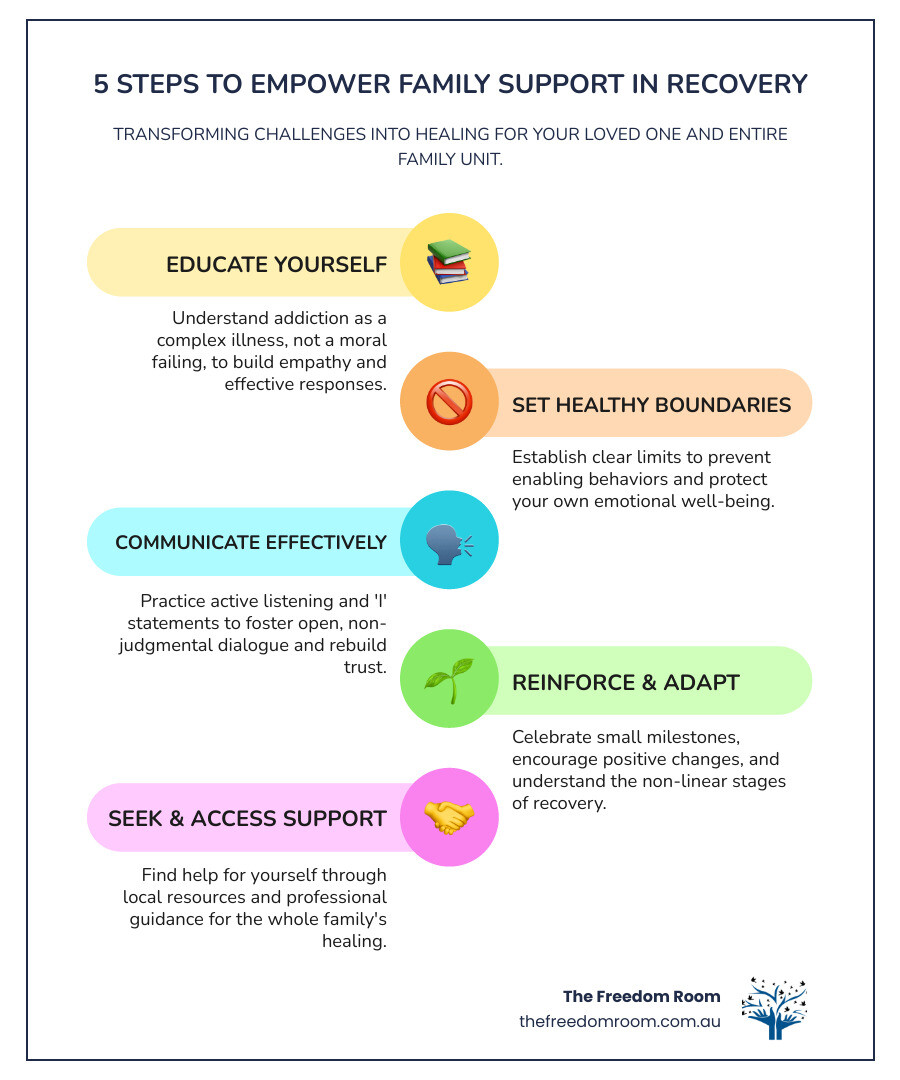
Effective family support involves several key actions:
- Educate yourself about addiction as an illness.
- Set healthy boundaries to prevent enabling.
- Communicate openly without blame.
- Reinforce positive changes and celebrate milestones.
- Seek support for yourself through local services.
- Understand the stages of recovery and adapt your role.
- Access professional help for the whole family.
This guide offers practical strategies for the Albany Creek community, as well as other parts of Australia, to navigate this process. It details how to build constructive support, communicate effectively, and locate local resources to facilitate family healing. The involvement of family is a critical component of recovery.
Understanding Addiction’s Impact on the Family Unit
Addiction is frequently described as a “family illness” because its effects extend to all members of the household. Recognising this is the first step in providing effective family support for addiction recovery in Albany Creek.
Emotional and Relational Strain
The emotional toll can be substantial, leading to chronic stress, anxiety, and apprehension about the future. Trust erodes, and communication may become strained or cease entirely.
Financial and Social Consequences
Practical aspects of life are also affected. Financial difficulties and social withdrawal are common as families may feel isolated or ashamed. Despite these challenges, research confirms that family support in addiction recovery makes a profound difference. Family involvement is a critical factor in initiating and sustaining recovery.
Understanding how addiction affects the family allows for a more structured approach to supporting a loved one while also protecting personal wellbeing. The journey involves difficult emotions, but it also holds genuine hope. Learn more about addiction and grief to better understand these complex feelings.
The Psychological Toll on Family Members
Living with a loved one’s addiction creates an enormous psychological burden. The chronic stress is relentless and can lead to burnout as family members neglect their own needs to manage ongoing crises.
This emotional strain can manifest in serious mental health conditions, including anxiety disorders and depression. A pervasive sense of helplessness may develop, stemming from an inability to control the situation. This constant worry can disrupt sleep and concentration, contributing to a cycle of dysfunction within the family.
Acknowledging these feelings is a crucial step. Experiencing such difficulties is a natural response to a challenging situation. Seeking support for one’s own wellbeing is a necessary action. Maintaining personal mental health better equips family members to provide the meaningful family support for addiction recovery Albany Creek requires. The healing of the family is interconnected with the individual’s recovery. Find emotional support for your family to strengthen the entire family’s journey.
Shifting from Dysfunctional Dynamics to Healthy Support
When addiction enters a family, everyone adapts to cope with the stress. These coping patterns, often taking the form of unhelpful roles, can become a barrier to recovery once healing begins.
For effective family support addiction recovery Albany Creek, recognising these dynamics is essential. The goal is to move from these protective but dysfunctional roles towards constructive support grounded in accountability and the patient rebuilding of trust.
From Unhelpful Roles to Healthy Ones
Family members often unconsciously adopt roles to manage the chaos of addiction. Shifting these patterns requires conscious effort and often professional guidance.
Common Unhelpful Roles:
- The Enabler: Shields the person from the consequences of their actions, often out of love, which inadvertently allows the addiction to continue.
- The Hero: Strives for perfection to create an outward appearance that everything is fine, hiding immense personal pressure and anxiety.
- The Scapegoat: Becomes the focus of family blame, acting out to draw attention away from the addiction itself.
- The Lost Child: Quietly withdraws to avoid conflict, often feeling neglected and lonely internally.
Moving towards recovery involves adopting healthier roles that nurture the wellbeing of all family members.
Constructive Healthy Roles:
- The Supportive Carer (with boundaries): Provides empathy and encouragement while holding the loved one accountable by maintaining clear, consistent boundaries.
- The Encourager: Focuses on celebrating small victories and reinforcing positive changes, which boosts motivation and self-esteem.
- The Communicator: Fosters open, honest, and non-judgemental dialogue, helping to rebuild trust and authentic connection.
Embracing these healthier roles is crucial for creating an environment conducive to family support addiction recovery Albany Creek. This change takes patience and practice. Fostering healthy relationships is fundamental to long-term recovery, and you can explore building healthy relationships in recovery on our dedicated page.
Practical Strategies for Family Support in Addiction Recovery
Effective family support for addiction recovery in Albany Creek is built on practical skills. Applying these strategies can transform a chaotic home into a stable environment, enhancing the chances of successful recovery.

Setting and Maintaining Healthy Boundaries
Boundaries are a foundational element of healthy relationships, particularly in families affected by addiction. They serve to protect the wellbeing of family members and prevent enabling behaviours. A boundary is not a punitive measure; it is a clear statement of personal needs and the natural consequences that will follow if those needs are not respected.
For instance, a statement could be framed as, “I feel concerned when the agreed-upon return time is not met. I require a return by midnight. If this does not occur, I will be unable to open the door until the morning.” Consistent application is essential for a boundary to be effective. This approach helps preserve personal energy and self-respect. For a comprehensive guide, see this resource on setting boundaries from Family Drug Support.
Effective Communication for Family Support in Addiction Recovery
When addiction has eroded trust, developing effective communication skills can help rebuild connections. Key techniques include:
- Active Listening: This involves giving the loved one full attention and seeking to understand their perspective without interruption. This practice demonstrates respect and encourages honesty.
- Using ‘I’ Statements: Concerns should be framed around personal feelings (“I feel worried when…”) rather than accusatory “you” statements, which can reduce defensiveness.
- Avoiding Blame: Conversations should focus on specific behaviours and their impact, rather than character attacks. Blame and lectures can increase shame and hinder communication.
- Expressing Empathy: An attempt should be made to understand the loved one’s struggles without condoning their actions. Empathy can foster a sense of collaboration.
Encouraging Positive Change
Actively encouraging positive change can significantly enhance a loved one’s motivation. This involves reinforcing their efforts in addition to setting boundaries.
Reinforce positive behaviours by acknowledging successes, regardless of their scale. Genuine appreciation is a powerful motivator. Celebrate small milestones, such as a day or week of sobriety, with positive reinforcement. This reminds the individual that progress, not perfection, is the objective.
It is also important to distinguish between natural consequences and punishment. Natural consequences allow the individual to learn from the direct outcomes of their choices, which is a more effective learning tool than punitive measures. Supporting their intrinsic motivation for change is more effective than using confrontation.
Navigating the Stages of Recovery as a Family
Recovery is a non-linear process with distinct phases. For family support for addiction recovery in Albany Creek to be effective, the family’s role must adapt as the loved one progresses.
The Family’s Evolving Role Through Recovery
Understanding the stages of recovery helps families adapt their support accordingly. The Stages of Change Model provides a valuable framework for this process.
- Pre-treatment: Denial is often high during this stage. The family’s role is to acknowledge the problem, cease enabling behaviours, and seek support for themselves.
- Early Recovery: Abstinence can introduce new stressors. The focus shifts to stabilising the home environment and beginning the family’s own healing journey.
- Ongoing Recovery: This stage involves rebuilding trust and addressing underlying relationship issues. Open communication is critical.
- Long-term Support: Trust is re-established through consistent, reliable actions over time. Long-term support requires understanding that recovery is a lifelong process. More can be learned about what this entails on our page about long-term addiction recovery.
Specific Challenges: Supporting an Adolescent
Supporting a teenager with a substance use disorder requires a tailored approach. Their developing brains and the power of peer influence make them particularly vulnerable. Early intervention is critical, as youth who do not receive help are more likely to struggle with lifelong substance use disorders.
A parent’s role is to model healthy behaviours and intervene when substance use becomes problematic. Communicating with a teenager requires patience. Conversations should be approached calmly, using “I” statements to express concern, and prioritising listening over lecturing. It is important to validate their feelings while clearly stating boundaries.
How Family Support in Addiction Recovery Reduces Relapse
Relapse is a common part of recovery, affecting 40 to 60 per cent of people in treatment. The family’s response can significantly impact a loved one’s willingness to return to recovery.
A lapse is a brief return to use, while a relapse is a return to old patterns. Neither is a failure, but a learning opportunity. Family members are often well-positioned to notice early warning signs, such as changes in mood or behaviour.
Creating a relapse response plan together during stable times can reduce panic. The plan should address immediate safety, steps for reconnecting with treatment, and reinforcement that a setback is not the end of the recovery journey. A supportive, empathetic response is more effective than reactions of shame or anger. Reminding the individual of their progress and expressing belief in their ability to regain sobriety can be beneficial. Evidence shows family involvement is a powerful protective factor against relapse.
Finding Support for Yourself and Your Family in Albany Creek
Supporting a loved one through recovery is a demanding process. It is common for family members to neglect their own wellbeing, which can lead to burnout. Prioritising self-care is not selfish; it is an essential component of providing effective family support for addiction recovery in Albany Creek.
This practice models healthy coping mechanisms and contributes to a more stable environment for all family members.

Local and National Resources
A variety of resources are available to provide support to individuals and their families.
- The Freedom Room: We offer family support services informed by lived experience. We use evidence-based methods like EFT and CBT to support the entire family unit.
- ADIS (QLD Health): The Alcohol and Drug Information Service provides 24/7 confidential phone support and referrals at 1800 177 833.
- Local GPs: A doctor in Albany Creek or North Brisbane can provide referrals to mental health professionals and addiction specialists.
- Peer Support Groups: Al-Anon, Nar-Anon, and Families Anonymous (FA) offer safe spaces to connect with others who have similar experiences.
Individuals are encouraged to find support for families in recovery through our services. Seeking support is a proactive step.
Why Your Wellbeing Matters
Family members often experience feelings of isolation, powerlessness, and grief. Processing these emotions is a vital part of the recovery process for the entire family. This may include navigating the grief of quitting alcohol and the losses associated with addiction.
Finding a supportive community can prevent burnout and assist in developing healthier coping mechanisms. Therapeutic approaches can be highly beneficial for family members. For example, Emotional Freedom Techniques (EFT) can help process stress and fear by sending calming signals to the brain’s stress centre. Cognitive Behavioural Therapy (CBT) helps to identify and change unhelpful thinking patterns, thereby building confidence and problem-solving skills.
The wellbeing of family members is deeply connected to the loved one’s recovery. A healthy family system creates a more stable, supportive environment for everyone. Taking care of oneself equips a person to provide the most effective support possible. We are here to help on that journey, and more can be learned on our page about emotional support for families.
Building a Foundation for a Healthier Future
The journey of family support for addiction recovery in Albany Creek highlights the importance of hope and resilience. It has been established that families can transition from unhelpful patterns to become a constructive force for healing through education, the implementation of clear boundaries, and effective communication.
Active family involvement significantly improves long-term recovery outcomes. At The Freedom Room, we recognize that this process requires support for the entire family. Our professional team, which includes individuals with lived experience, provides authentic guidance grounded in evidence-based methods like EFT and CBT to help families process complex emotions and build resilience.
Support is available for families navigating this challenge. Information on our alcohol family support services is available for those seeking to heal and build a stronger future together.
Frequently Asked Questions about Family Support and Addiction Recovery
What is the most important thing I can do to help my loved one?
The most effective approach combines several actions: self-education about addiction, setting clear and firm boundaries to avoid enabling, practising open and non-judgemental communication, and seeking personal support. A healthy support system is contingent on the wellbeing of the support provider.
How do I stop enabling without feeling like I am abandoning them?
Transitioning from enabling to supporting involves changing behaviours, not ceasing to care. Instead of shielding the loved one from the consequences of their actions, boundaries are enforced to encourage responsibility. Emotional support can still be offered, care can be expressed, and assistance in accessing professional treatment can be provided. The latter is one of the most supportive actions a family member can take.
What if my loved one refuses to get help?
This is a common and challenging situation. While an adult cannot be forced into treatment, a family member can control their own responses. This includes consistently enforcing boundaries, avoiding enabling the addiction, and focusing on personal wellbeing by seeking support or professional guidance. Frequently, when the family system changes and no longer accommodates the addiction, the affected individual becomes more likely to consider seeking help.