

Clinical Frameworks for Assisting Family Members Experiencing Substance Use Disorders
Determining the most effective methodology for supporting a family member with addiction represents one of the most significant challenges within the domestic and clinical spheres. This process requires a sophisticated balance of empathy, psychological resilience, and evidence-based intervention strategies. When a family member experiences a substance use disorder, the impact extends far beyond the individual, affecting the psychological, financial, and social stability of the entire household unit.
Data provided by the Australian Institute of Health and Welfare indicates that substance misuse is a prevalent issue that necessitates a comprehensive public health response. Research consistently demonstrates that the relatives of individuals with substance use disorders often experience heightened levels of stress and secondary trauma. Consequently, the provision of support must be structured and sustainable to prevent caregiver burnout and to facilitate long-term recovery outcomes for the individual in question.
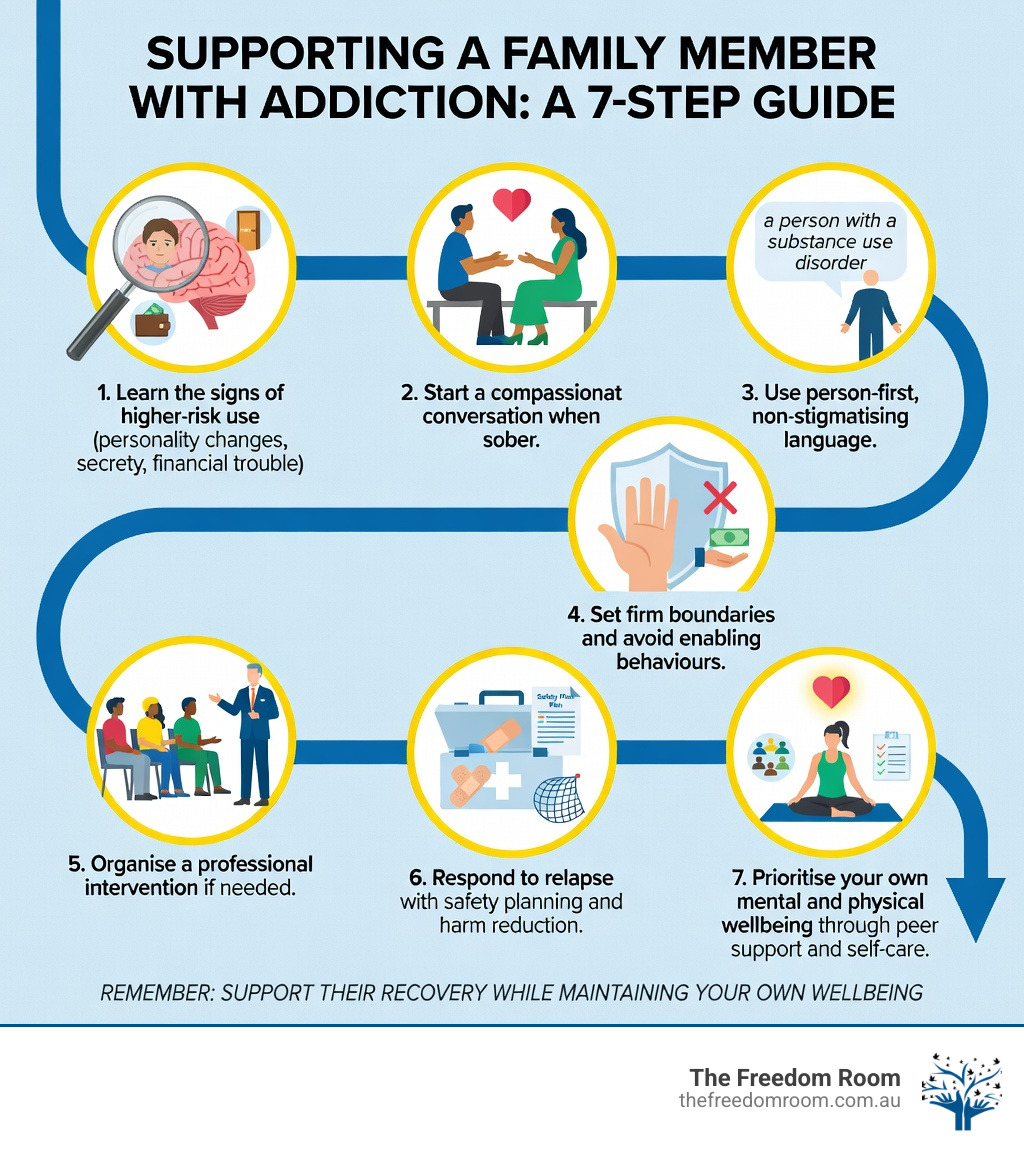
This professional guide outlines the essential components of effective family-based support, including:
- The identification of clinical indicators associated with high-risk substance use.
- The implementation of formal communication strategies is conducted during periods of sobriety.
- The utilisation of person-first language to mitigate the effects of social stigma.
- The establishment of rigorous boundaries to prevent the occurrence of enabling behaviours.
- The coordination of professional interventions when direct communication proves insufficient.
- The development of safety protocols and harm reduction strategies in response to relapse.
- The prioritisation of the caregiver’s psychological wellbeing to ensure the continuity of support.
The primary objective of these interventions is not to assume responsibility for the individual’s recovery, but rather to cultivate an environment that is conducive to clinical improvement while maintaining the health of the family system.
Professional Strategies for Supporting a Family Member with Addiction
To support someone well, it helps to understand that addiction is not simply a matter of poor choices or weak willpower. Research shows that addiction changes how the brain’s reward, motivation, and self-control systems work. Over time, alcohol or other drugs can start to feel essential, even when they are causing clear harm. Seeing addiction as a health condition, rather than a personal failing, can help families respond with more calm, compassion, and perspective.
The adoption of person-first language is a critical component of this professional approach. Referring to an individual as a person with a substance use disorder, rather than using stigmatising labels, assists in separating the individual’s identity from their clinical condition. This shift in terminology is essential for fostering a therapeutic environment and encouraging the individual to engage with professional services. Effective alcohol family support requires a commitment to active listening and the avoidance of unsolicited advice, which can often lead to increased resistance.
Identifying Clinical Indicators of High-Risk Substance Use
Early identification of problematic substance use is vital for improving long-term prognoses. Individuals often employ sophisticated concealment strategies, necessitating a high degree of vigilance from family members. Physical indicators may include significant fluctuations in weight, altered sleep architecture, or persistent lethargy. However, behavioural shifts are frequently more indicative of a developing disorder. These may include increased social isolation, the abandonment of previously valued activities, and a decline in occupational or academic performance.
Financial instability is a frequent secondary symptom of substance use disorders. This may manifest as unexplained debt, frequent requests for financial assistance, or the inability to meet basic fiscal obligations. In the Australian context, alcohol remains the most prevalent substance for which individuals seek clinical intervention. According to the Australian Institute of Health and Welfare, the societal impact of alcohol misuse is extensive, affecting a broad demographic spectrum. Understanding these Australian alcohol statistics allows families to contextualise their experiences within a wider public health framework.
Communication Strategies and Motivational Interviewing
Initiating a dialogue regarding substance use requires careful planning and the application of specific communication techniques. Such conversations must occur only when the individual is sober and in a stable emotional state. Engaging with an intoxicated individual is generally counterproductive and may escalate into unnecessary conflict. The use of “I” statements is recommended to convey personal observations and concerns without appearing accusatory. For instance, a family member might state that they feel concerned regarding the individual’s health, rather than making direct demands for cessation.
This approach aligns with the principles of Motivational Interviewing, a clinical technique designed to enhance an individual’s internal motivation for change. Families can offer practical assistance, such as facilitating access to medical consultations or researching evidence-based treatment programmes. For those seeking more structured guidance, resources on how to help an alcoholic or how to counsel someone with alcohol addiction provide essential frameworks for these complex interactions.
The Distinction Between Support and Enabling
A fundamental aspect of knowing how to support a family member with addiction is the ability to distinguish between supportive actions and enabling behaviours. Support involves assisting the individual with tasks they are genuinely unable to perform due to their condition. Conversely, enabling occurs when a family member shields the individual from the natural consequences of their substance use. This may include providing funds for substances, fabricating excuses for their absence from work, or assuming their domestic responsibilities.
The establishment of firm boundaries is a necessary therapeutic intervention. These boundaries serve to protect the family unit and encourage the individual to acknowledge the reality of their situation. For example, a family may implement a policy that the individual is not permitted on the premises while under the influence of substances. Maintaining these boundaries requires consistency and emotional detachment. Accessing emotional support for families is often required to help relatives navigate the guilt associated with enforcing these necessary limits.
Structured Intervention Frameworks
When informal communication fails to produce a behaviour change, a structured professional intervention may be warranted. This process involves a coordinated meeting where family members and close associates present the individual with the impact of their substance use and a clear treatment pathway. It is highly recommended that such interventions be facilitated by a qualified addiction specialist to ensure the process remains focused on clinical solutions rather than interpersonal grievances.
A successful intervention requires the pre-selection of a suitable treatment facility and the determination of specific consequences should the individual decline help. These consequences must be implemented immediately to maintain the integrity of the intervention. Further information regarding family support in addiction recovery can be obtained through Australian health services, which guide the logistical and psychological aspects of this process.
Managing Relapse and Harm Minimisation
Relapse is frequently observed as a component of the recovery process for chronic substance use disorders. Statistics indicate that a significant percentage of individuals will experience a return to substance use at least once during their recovery journey. In such instances, the immediate priority must be the safety of the individual and the family. If a medical emergency or overdose is suspected, the emergency services must be contacted via 000 without delay.
Families can assist by identifying environmental and emotional triggers that may contribute to a lapse. Developing a comprehensive safety plan, which may include the availability of Naloxone for opioid users or emergency contact protocols, is a vital harm reduction strategy. Following a relapse, it is important to maintain a professional and non-punitive stance, encouraging the individual to re-engage with their treatment programme. Consistent family support in addiction recovery reinforces the availability of clinical pathways to sobriety.
The Imperative of Caregiver Wellbeing
The psychological and physical health of the caregiver is a critical factor in the long-term support of an individual with a substance use disorder. Research suggests that a high proportion of caregivers experience significant health declines due to the chronic stress associated with their role. It is therefore essential for family members to engage in self-care and seek independent support. Addiction peer support groups, such as Al-Anon or SMART Recovery Family, offer evidence-based tools and a community of individuals with shared experiences.
In addition to peer support, caregivers should consider the following:
- Engaging in individual psychotherapy to address personal trauma and stress.
- Adhering to regular physical exercise and nutritional requirements.
- Maintaining social connections outside of the context of the family member’s addiction.
- Establishing periods of respite to ensure psychological recovery.
By maintaining their own health, caregivers are better positioned to provide the sustained, high-quality support necessary for their loved one’s recovery.
Professional Resources for Sustainable Recovery
The Freedom Room Wellness and Recovery, located in Strathpine, Queensland, provides specialised services for individuals and families navigating the complexities of substance use disorders. Our clinical approach is informed by both professional expertise and lived experience, ensuring that our clients receive empathetic and evidence-based care. We offer a range of personalised sessions and workshops designed to address the underlying causes of addiction and to build the necessary skills for long-term sobriety.
We recognise that the recovery process is a collective effort involving the entire family system. Our programmes are designed to be cost-effective and accessible, providing practical tools for daily management and emotional regulation. Whether you require alcohol family support or individual therapeutic intervention, our team is dedicated to providing the highest standard of care. We invite you to contact us to discuss how we can assist your family in achieving a lasting and successful recovery.
FAQ
What are the primary clinical indicators of high-risk substance use in a family member?
Clinical indicators often include significant alterations in personality, such as increased irritability or emotional instability. Behavioural signs include increased secrecy, the neglect of professional or domestic obligations, and a withdrawal from established social circles. Physical signs may include unexplained weight loss, fatigue, and a decline in personal hygiene standards.
How can enabling behaviours be effectively identified and mitigated?
Enabling is identified when a family member’s actions inadvertently allow the individual to continue their substance use without facing the natural consequences. This includes providing financial support, lying to employers, or assuming the individual’s responsibilities. Mitigation requires the establishment of clear, consistent boundaries and the refusal to intervene in the legal or financial repercussions of the individual’s choices.
What is the recommended course of action if a family member refuses clinical help?
If an individual refuses treatment, the family must focus on maintaining their own boundaries and psychological health. It is important to continue offering support for recovery while making it clear that enabling behaviours will not continue. Seeking professional guidance for the family and participating in peer support groups can provide the necessary resilience during this period.
Where can Australian families access peer support for substance use issues?
Australian families can access support through several national organisations. Family Drug Help and Al-Anon provide structured meetings for relatives of those with addiction. SMART Recovery Family offers evidence-based group sessions focused on practical coping strategies. Additionally, the National Alcohol and Other Drug Hotline, available at 1800 250 015, provides referrals to local services and clinical advice.